Anya Stanley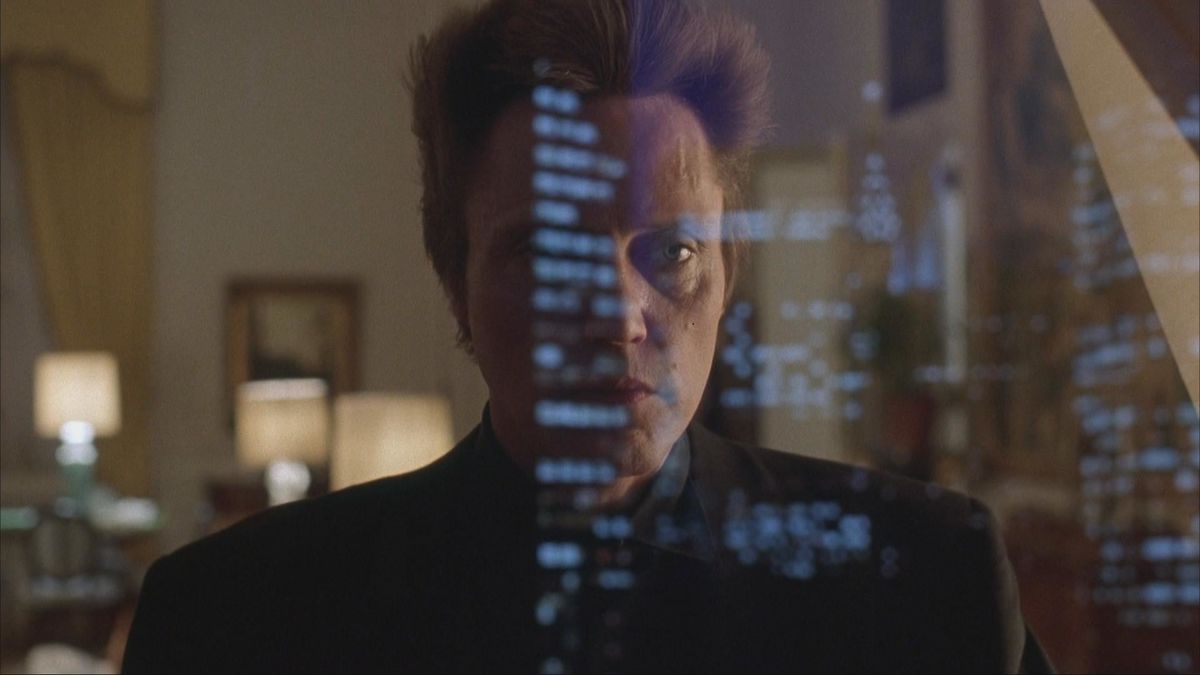
LUCIUS: Art thou not sorry for these heinous deeds?
AARON: Ay, that I had not done a thousand more.
So begins the monologue of Aaron, one of many scoundrels in Shakespeare’s Titus Andronicus, a tragedy which harbors no truly noble characters. All are guilty, all are deserving of revenge, and the power struggle between them results in one of the bloodiest free-for-alls the Bard has ever committed to parchment. Limbs fly, swords fall, innocence vanquished, and heads roll throughout Rome. The story isn’t so much a story of good vs. evil as it is a curious rubbernecking of a train wreck—who will emerge alive? Such is the appeal of Abel Ferrara’s 1990 feature King of New York, a vicious Shakespearean tragedy in spirit and scope.
Ferrara deals almost exclusively in moral relativism, and the city underbelly is his playground. The opening sounds of the film are of jailhouse clamor; Frank White is being released from prison. Filmed on location at Sing Sing, the world he currently inhabits is cold, sterile, and unforgiving—much like the streets he returns to. Immediately following his car’s emergence from the prison gates, we are treated to a glimpse of those streets; Emilio El Zapo (Freddy Howard) leaves his lush digs to make a phone call. In the booth, he is slain within seconds by a trio of White’s men, who make it clear to the dying drug lord that their boss is back and there will be hell to pay. Leaving incarceration and emerging into the scummy wasteland of The City That Never Sleeps, Frank White moves with gusto from one jungle to another.
King of New York sees a grown-up Abel Ferrara, one who wields technical discipline and a steadfast creative vision as the gunslinger wields his six-shooter. Holding intimate shots and letting the lens underline both setting and mood with restraint and intent, this gangster picture has a more patient eye than the frenetic gaze of his first “straight” (non-pornographic) feature The Driller Killer. From Ms. 45 onward, Ferrara becomes more and more discerning with handheld filming, though the New York filth aesthetics remain as unforgiving as ever, from shady district to messy borough.
It’s a story in which the stage is just as important as the players on it. “Violin Concerto Op.#8 Autumn” punctuates the night drive through his old stomping grounds, eventually overwhelmed by the scream of the train cutting through the evening air. The camera bathes subjects in harsh blue lighting, setting an immediate texture of coldness onto the environment. Ferrara’s style exposes substance lurking within, emphasizing the stony dog-eat-dog habitat that Frank feels relaxed in, as snug as his fitted suits. Asked if he wants to stop the car, Frank’s first words onscreen are a calm, “No.” The title sequence is embroidered with graffiti, prostitution, and vagrancy, all through the haze of cigarette smoke. It’s Frank’s world; we’re all just living in it.

Within that world, Frank doesn’t just want to survive, he wants to thrive at the “top o’ the world” like White Heat’s Cody Jarett. On a balcony at a black-tie event for the city, the bright lights of the skyscrapers loom over him, yet still out of reach. White vows, “If I can have a year, I’ll make something good. I’ll do something.” Given the crimes committed on screen already, the moment isn’t exactly Luke Skywalker gazing upon the double suns—White is a scoundrel with the same goals as anyone else. But time is an extravagance in a sphere where the clock is ticking on every life on screen. After handling a traitor later, Frank shambles outside to look at the city skyline like Jay Gatsby stretching his arms out towards the green light. The dream, for him and for most, is ever-elusive.
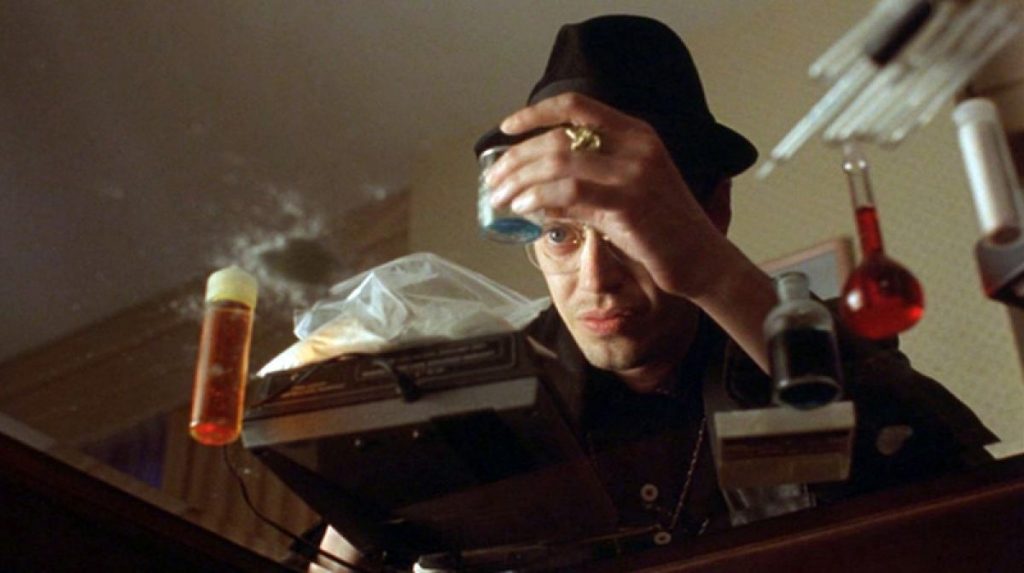
Yet, White is at home in all of the “notorious ills” he commits, as Titus’ Aaron is. Early in the film he is shown showering after his right-hand man Jimmy Jump (Laurence Fishburne) and his chemist Test Tube (Steve Buscemi) gun down a Colombian coke dealer. As the same Violin Concerto wafts through the air, Walken breaks the fourth wall and gives a little Mona Lisa smile that belies a Rorschach stoicism. “Don’t get it twisted,” that smile seems to say, “I’m not locked in here with you, you’re locked in here with me.” What he actually says moments later (after hearing that the Columbians are taken care of) is, “I must’ve been away for too long because my feelings are dead. I feel no remorse. Terrible thing.” Following his shower, a series of shots showcase the riches awaiting him: a bottle of Cristal on ice; luxurious white towels embroidered with the Plaza Hotel logo. Two beautiful women in lingerie. A bouquet of flowers with a “Welcome back, Frank” card. It’s clear that Frank White is already the titular king; he’s simply reclaiming his throne and taking out the trash.
In eliminating the competition, Frank exerts the same unblinking brutality as a certain aforementioned Shakespearean agent of vengeance. Held at screwdriver-point on the train, White doesn’t even blink. He flashes his pistol, prompting the group to back off. Before they disappear, he tosses the thieves a thick roll of cash and, with that Mona Lisa smile, tells them to come work for him (and they do). He exerts the same composed control when pulling power moves over his territory. “A nickel bag gets sold in the Park,” he tells Italian boss Artie Clay, “I want in.” Clay learns the hard way that Frank is not to be disrespected. He walks into the man’s poker den and shoots him dead on his own turf before offering work to the surviving criminals in the room. Among the knaves, he is not beloved. Coke mover Jimmy Wong sums it up best, “He aint got no fucking friends.”
On the flip side, Ferrara refuses to pigeonhole his leading man; Frank is also a city luminary. A trench-coated, strapped Robin of Locksley, White secures an uneasy alliance with Wong to push cocaine together, in the children’s wing of the very hospital that Frank wishes to patronize. Why does he want to fund the hospital? He tells a politician at a gala event, “Privileged districts shouldn’t be the only ones getting hospitals.” Following White’s ambush upon his ally, he attends a fundraising event for the Harlem hospital. The juxtaposition isn’t cut as sharply as the famous baptism sequence in The Godfather, but that’s because, unlike Michael Corleone’s moment of self-actualization as a villain, the duality is a universal constant in Frank’s world, where the wolves are also the shepherds.
Anti-heroes are a tightrope to walk; the depiction = endorsement crowd always has drafted tweets at the ready to cry “Glorification!” when a person doing bad things fails to be clearly immediately punished. Besides the fact that they unconsciously align themselves with Hays Code-era censors, these misguided attempts at criticism miss a crucial structural element of the anti-hero joint: the miscreant’s journey is compelling in part because, as awful as they are, the world they inhabit is far worse. The rise of Harold Bloom in Nightcrawler was not a glorification of his vulture-like opportunism. Rather, the film is a hearty indictment of the media landscape that enables and encourages Harold Blooms to thrive—he is merely vying for a rung on the ladder that is available (and aspirational) to most North American journalists. Likewise, in order to thrive, White steps into a role seemingly created for far worse men than he; in confronting one of his badged and armed pursuers, Frank points out the drug industry and how it got worse while he was in prison. He points out that each of the kingpins he killed were exploiting their own people and underage girls. “I’m not your problem,” he tells the weary cop, “I’m just a businessman.”
White isn’t the only morally gray character. Jimmy Jump hands change to some local kids to play an arcade game and gives their grandmother cash while he’s ordering food at the Chicken Hut, just days after putting holes in the Columbian dealer. He’s arrested by Officer Dennis Gilley (David Caruso) in another moment that pops off out of nowhere. Gilley, like all cops in the film, plays liberally with police conduct rules and intimidates his targets without having anything to arrest them for. It’s not as binary as white-on-black brutality, either; as officer Flanigan, Wesley Snipes exhibits a ferociousness that would bare its teeth again in New Jack City, just a year after King of New York’s release. He is bitterly referred to and threatened by Jimmy Jump as “Black man.” It’s a melting pot in which racial and class power dynamics certainly exist, but also one in which mayhem is the great equalizer; all are at the mercy of the bullet. The law dogs can be seen spreading love and good cheer at a wedding where they are celebrated by all in attendance, but they fight just as dirty as the criminals they chase. When semi-legal tactics fail to bring their man in, Gilley says with a chilling matter-of-factness, “There’s only one way to get Frank.” He proposes assassinating the crime boss and framing it as a gangland slaying. “Every time Frank kills somebody out there, it’s our fault,” he says. “Can you live with that? I can’t.” From wedding to extrajudicial murder to funeral, the cops are just as beholden to an indifferent cosmos that requires coldness for survival. Every major move in King of New York, from lawman to layman, is baptized in blood. It’s not a story of good men doing repugnant things or bad men doing the occasional good deed; in Ferrara’s realm, everyone is at once morally vile and motivationally validated in their actions. This is the world of anti-heroes, and there is no space for the neutral good.
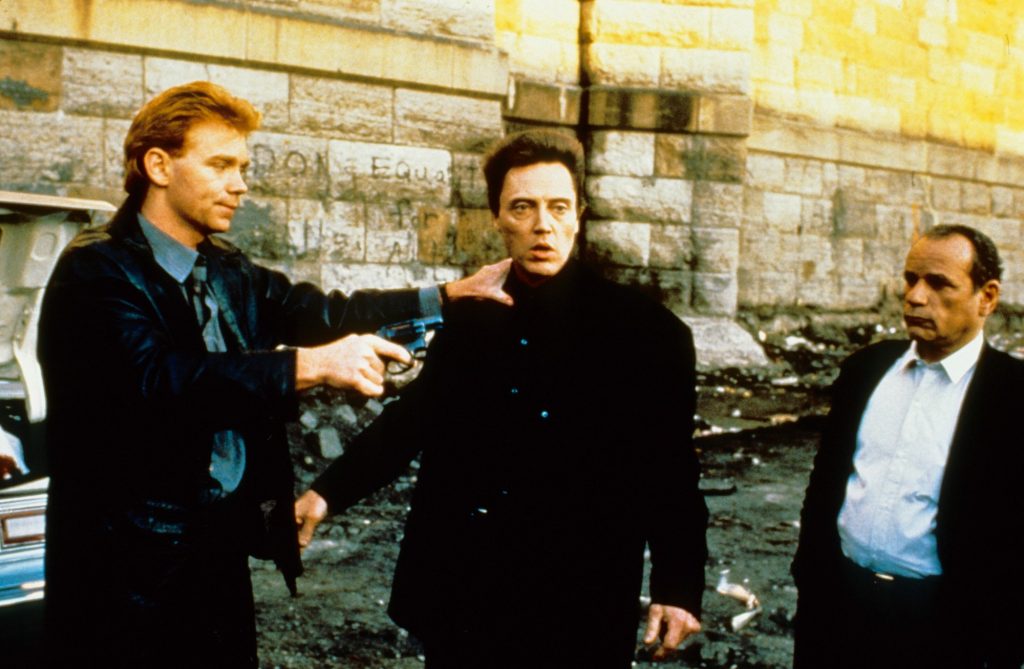
Ferrara and writer Nicholas St. John whittled away at the screenplay for five years, giving them ample time to hone a story that’s less a sequence of events and more a glimpse into a weeklong war campaign. The action turns on a dime; ultraviolence erupts with little to no buildup, the only fanfare the occasional balletic slow-motion death. Brute force erupts at parties, food runs, phone calls, card games, and funerals. It’s also an equal opportunity hellscape for the fairer sex —Raye (Theresa Randle) participates in the drive-by slaying of Wong’s men, popping out of a limo sunroof like a daisy and spraying the competition with bullets. Fishburne, in particular, shines as White’s loose-cannon lieutenant Jimmy, gleefully bringing the ruckus at a moment’s notice. He cackles like The Joker as he fires two pistols simultaneously from a speeding car under the Queensboro Bridge—if his boss is at home in gangland NYC, Jimmy Jump is just as snug in the chaos of battle. Despite the innate violence of the film entire, Ferrara achieves a sustained tonal climax by adding theatricality on top of firefights. After a chase, a gunfight erupts between the crooked cops and Jimmy. Jump and Flanagan finally have their showdown, exchanging barbs before Jimmy sneaks close and lights his enemy up at close range. Wesley Snipes’ eyes grow as wide as dinner plates under the street lights, immediately finding a vulnerability that his character had kept hidden behind badge and bravado. Jimmy doesn’t get much time to celebrate; Gilley sneaks up just as unexpectedly and shoots him. As he lay dying, Jimmy stays true to his unhanged form and howls and writhes as though he’s transforming into a werewolf under the moonlight.
That is not even close to the end of the violence; what follows is a race to the bottom as each agent of chaos avenges their own fallen. At the funeral for two fallen cops including Flanagan, Gilley is overcome with anger and grief and flees to his car. Because he could not stop for Death, it kindly stopped for him in the form of White, shooting him point-blank in the head with a shotgun before driving away. It reflects the musings of Titus Andronicus’ Aaron, who lists his sins with pride:
Oft have I digg’d up dead men from their graves,
And set them upright at their dear friends’ door
Even when their sorrows almost was forgot,
And on their skins, as on the bark of trees,
Have with my knife carved in Roman letters
‘Let not your sorrow die, though I am dead.’
It’s been a staple of the gangster picture since Tom Powers’ bullet-riddled body was delivered to his mother’s doorstep in The Public Enemy (1931). Time to grieve is time to breathe, and Ferrara suffers none of it. Time is a luxury for all— even Frank. In a standoff with the last cop on his tail, he’s told that he can’t hide behind hostages forever. His response is a succinct echo of the balcony declaration from earlier, “I don’t need forever.” But a year wasn’t enough to get to the top o’ the world. Lest you think Frank White is sorry for any of his actions, he remains a stone cold killer to the very end. But as with everyone in Ferrara’s cosmos, it’s a matter of perspective. To Frank, he’s just a businessman.