Jason Bailey
I have an early frontrunner for the most monstrous villain of the movie year, and his name is Donald Kincaid. He was a homicide detective with the Baltimore Police Department, and in 1983, he was the lead investigator of the death of DeWitt Duckett, who was shot and killed in a Baltimore junior high school hallway over a Starter jacket. Detective Kincaid accused and arrested three young men — Alfred Chestnut, Ransom Watkins, and Andrew Stewart — whom he knew were innocent of the crime, ignoring another, far more credible suspect, as well as the eyewitness testimony of Duckett’s friend Ron Bishop.
Kincaid is not the subject of Dawn Porter’s searing, searching documentary When a Witness Recants, and really, neither are Chestnut, Watkins, and Stewart, though much time is given to their stories. The real subject, of Porter’s film and the New Yorker article by Jennifer Gonnerman that inspired it, is Bishop, who says Kincaid threatened and browbeat him and another witness, in interrogations without lawyers or even parents present, into telling the story he wanted them to tell — and they did so, in fear (Bishop was 14 at the time). The three young men were convicted, and spent 36 years in jail before their tireless refusal to accept their fate led to their releases from prison in 2019.
The sections concerning their release are profoundly moving, as are the sections on the psychological damage of their time locked up and their difficulties reentering society; this took a toll on all of them, one that all the money and all the apologies in the world cannot correct. But the most masterful passages are its closing ones, when Porter seems to be setting us up for a warm, fuzzy, forgiving ending, and then robs us of it, because that would be phony, too simple, too easy. She instead goes with honesty, in all of its thorniness, and that’s a powerful note to end on.
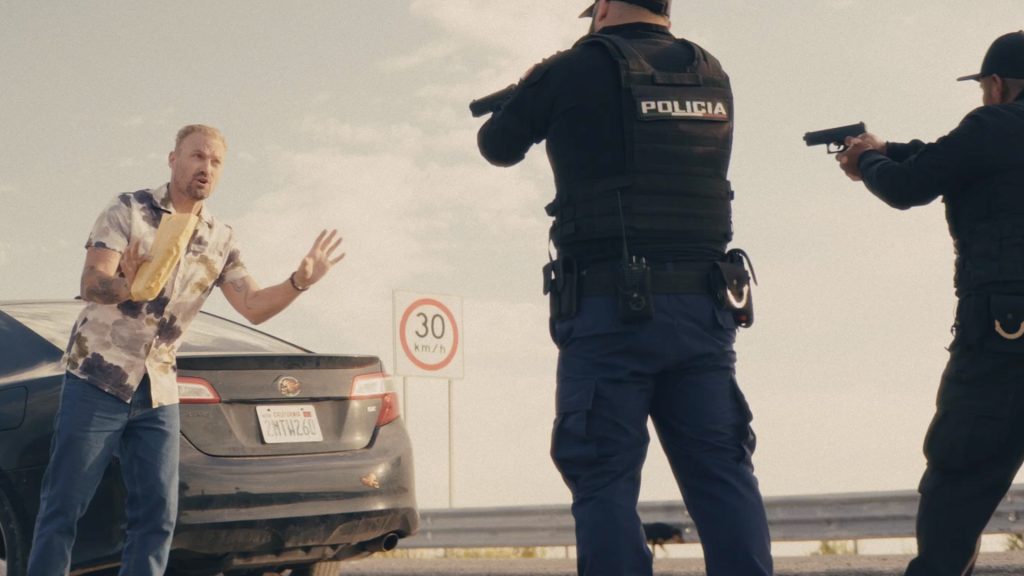
The biggest success story of Sundance 2025 was probably Train Dreams — high-dollar Netflix pick-up, surprising cultural penetration, multiple noteworthy Oscar nominations — and if I had to pick this year’s heir apparent, it would probably be Padraic McKinley’s The Weight. They’re markedly different in terms of genre (that was a character drama and memory play, this is a survival adventure) but both are picturesque, Pacific Northwest-set period movies that would have been major studio releases not that long ago.
Ethan Hawke (whose presence in a film that shares the title with a Band song feels predetermined) stars as a Depression-era widowed father who, in an unfortunate misunderstanding with a group of plainclothes cops, is separated from his daughter and sentenced to working a road gang under Russell Crowe (in the old-school character actor mode that is thankfully becoming his default). A wholly illegal opportunity to cut his sentence short presents itself, and he takes it, leading to five days in the wilderness, battling the elements and his fellow convicts. Director McKinley uses the fury and unpredictability of the outdoors to amp up the tension, and the camerawork and audio design are active and exciting; this neither looks nor sounds like a period prestige picture. It’s not only one of the best things I’ve seen at Sundance this year, but a sure-fire crowd-pleaser to boot.
About a third of the way into I Want Your Sex, its central characters — a provocative late-30s visual artist (Olive Wilde) and her twenty-something assistant (Cooper Hoffman) — have a spirited conversation about sexual freedom and generational norms. It’s the kind of scene that feels like the reason a movie was made, as a response to “this retro sex negativity” that is not only infecting personal relationships, but portrayals of them in… movies like this. And Gregg Araki (who, astonishingly, hasn’t directed a feature since White Bird in a Blizzard clear back in 2014) is the right director for this material; I Want Your Sex is a cartoonishly broad and goofy movie that also has things to say. Both things can be true.
Which is not to say that he entirely pulls it off — the story resolves itself in fairly predictable ways, and the final scene is a real miscalculation, a shrug emoji for a movie that should end with an exclamation mark. But Araki’s bright, bouncy style is a good fit, and his performers all come to play. Hoffman is doing the gee-whiz naive horny doofus thing that was also one of his dad’s specialties (the line between this and Happiness is short and direct). Wilde is very funny — she knows this woman backwards and forwards, particularly when things start to go awry for her, so she lets the mask of her too-cool persona slip, only to reveal… another mask. And Charli XCX plays delightfully and amusingly against type (her poorly faking an orgasm is one of the comic highlights). Special shout out to costume designers Monica Chamberlain and Adrianne Phillips; Wilde’s costumes are the perfect mixture of sexy, stylish, and mind-bogglingly stupid, and frankly, that’s a good description for the movie as well.

Wilde not only co-stars in but directs The Invite, a film with a similar interest in matters of sexuality, though dealt with in (ever so slightly) more polite terms. This story of two couples at a dinner party is a wickedly smart, quietly knowing, and frequently quotable exploration of marital ennui, sexual desire, and keeping up appearances. The dialogue (adapted by Celeste & Jesse Forever scripters Rashida Jones and Will McCormack from a play and film by Spanish director Cesc Gay) is convincingly conversational, but also often quotable, full of big laughs and uncomfortable truths in roughly equal measure.
The four speaking roles are played by Wilde, Seth Rogen, Penelope Cruz, and Edward Norton, and all four shine; Norton gets to call on his unsung gifts as a comic actor, Rogen gets to a point where everything he says is funny, Cruz has several line readings that will live in your head rent-free. Wilde may have the most difficult role, and she nails it, without sacrificing the quality of her direction — the tonal turns are gingerly navigated, except when they’re jarring on purpose. It starts out like Who’s Afraid of Virginia Woolf, turns into Bob & Carol & Ted & Alice, and earns comparison with both.
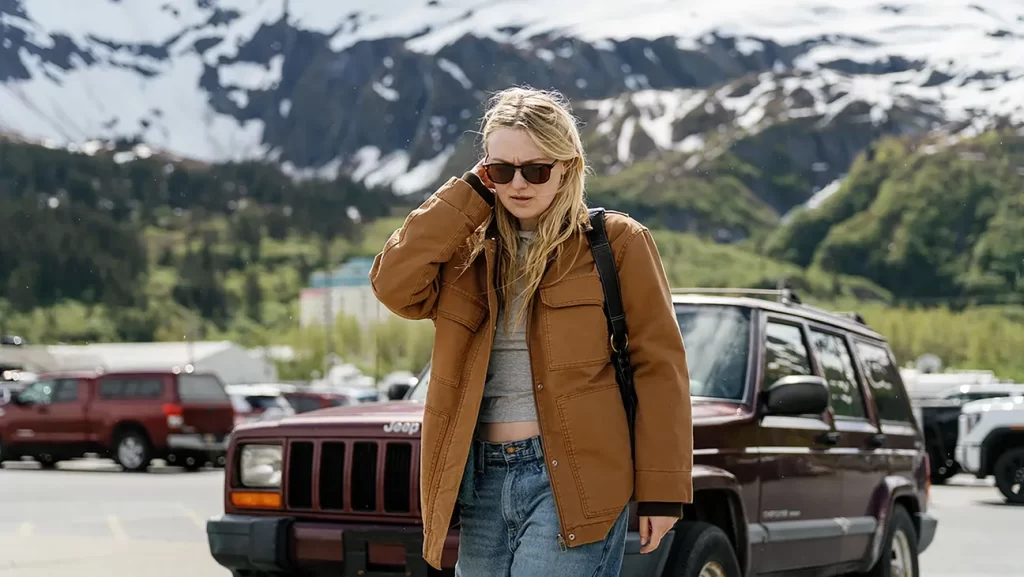
There’s so much that’s commendable about Vera Miao’s Rock Springs — the ambient yet unnerving tone, the director’s gift for stark compositions, the ambition of the storytelling — that one wishes it all hung together better than it does. In telling the story of a recent widow’s arrival in a coal mining community with her young daughter and elderly mother-in-law in tow, Miao takes a different approach and style in each of its three chapters, moving from domestic chiller to social horror to ghost story.
There’s never a moment’s doubt that Miao doesn’t have command of the frame, but the narrative gets away from her. There are individual moments of great power, but they’re undercut by meandering detours and unfortunate clichés (it’s 2026 and we’re still doing jump-scare nightmare wake-ups?). Rock Springs is an impressive debut, and Miao is undeniably talented. But all of its sturdy individual pieces just don’t quite snap into place.
However, another Midnight selection, Undertone, does all that and more. It plays like a blueprint for an indie horror flick, taking place in a single location, mostly focusing on a single character, and earning most of its scares via deft use of sound and cutting; it’s so small, yet so unnerving. Its story is quite simple: Evy (Nina Kiri) co-host of a paranormal podcast, is caring for her dying mother while recording an episode where she and her co-host Justin (Adam DiMarco) are listening to a series of unexplained but increasingly upsetting audio files that were sent to them anonymously.
As a central conceit for a low-budget scary movie, it’s ingenious; what we see in our mind’s eye is far creepier than anything even a big-budget genre movie can conjure up, though first-time writer/director Ian Tuason also has a strong sense of visual montage to complement the more nerve-jangling moments. And Kiri is quite captivating — and has to be, since she’s all we see for so much of the movie. She’s strong enough to carry off the uniquely experiential nature of the enterprise, allowing the viewer to hear and imagine things, and freak out, right alongside her.
I try not to watch television at film festivals, because, well, they’re film festivals. And that’s not me being snobby (okay, it’s not entirely me being snobby); unless you’re going to show me the whole thing, I don’t want to watch and review part of something. It presumably wouldn’t have been practical to screen the entire 15 hours of Mark Cousins’s latest, The Story of Documentary Film, but it fit into a scheduling slot, and my curiosity, as an admirer of his previous films, won out.
The first episode, an introduction and exploration of documentary cinema through the late 1920s, is pretty much what you’d expect if you’re familiar with his earlier, excellent The Story of Film: copious clips, split-screen comparisons, and close-reading and thematic analysis in Cousins’s searching, melodious voice-over. Noting that “half of all the films ever made have been documentaries,” Cousins delves into the ethical and factual tensions within early nonfiction cinema, noting how, from the very beginning, documentary filmmaking was a means of representation and education, consciously or not. Standbys like Nanook of the North and Grass are here, but Cousins doesn’t just play the hits, either; there are fascinating clips here from docs I’ve never even heard of.
Similar pleasures are offered by Public Access, David Shadrack Smith’s chronicle of how, from the 1970s forward, New York City’s Manhattan Cable Television established public television stations where anyone with the time and energy could put anything on television that they wanted. The original idea was community-based public service programming, but the broad (often non-existent) guardrails of cable turned NYC public access into a free-for-all of music, weirdness, and above all, lots and lots of sex.
Smith tells the story with genuine affection for the gonzo energy of those programs, and hits the highlights you’d expect — there’s ample time for TV Party, Midnight Blue, and the network of gay programming that would prove so vital, for culture and education, during the AIDS crisis. But he also makes the baffling decision to spend an outsized amount of time in the home stretch on Jake Fogelnest, whose Squirt TV ran on public access much later, in what becomes an unsuccessful detour from the era of interest. I’m not one for the “they should re-edit and take out this many minutes” school of film criticism, but if Smith dropped Fogelnest’s thread entirely, he’d have a tight 90-minute doc that I’d recommend more highly than this one.

“We need to document this,” Salman Rushdie said, after the attack that nearly ended his life in 2022. “That was my first conscious thought.” The result is Knife: The Attempted Murder of Salman Rushdie, Alex Gibney’s part bio-documentary, part day-by-day recovery narrative, detailing Rushdie’s 40 days in the hospital and months of physical therapy after that horrifying attack, and also the events that prompted that madman to try to kill him: specifically, the 1989 publication of Rushdie’s novel The Satanic Verses, and how it prompted a fatwa against him, by no less than the Ayatollah Khomeni.
The footage from that period remains chilling (riots in the streets, hanging in effigy, the works), but Rushdie is such a thoughtful writer and thinker that each stage of his life is drawn with clarity and precision; in his witty and eloquent narration, as well as his archival interview clips, he remains a fierce advocate and symbol. Gibney makes clever use of clips from old movies to capture the wanderings of Rushdie’s restless mind, and in the film’s boldest stylistic flourishes, illustrates an imagined conversation between the author and his would-be killer. Most effectively, he holds the footage of the attack until the film’s end, in what Rushdie dubs “a return to the scene of the crime,” and by the time we see the sheer savagery on display, it lands like a haymaker. It seems like a miracle he survived. We’re lucky that he did.
Of course, in spite of what you’ve seen in this space this week, not all documentaries must deal in grim matters of life and death. Alysa Nahmias’s Cookie Queens is the kind of feel-good doc that occasionally breaks out of a festival like this to something resembling mainstream success, and for good reason: it’s cheerful and upbeat, populated by charming characters and assembled with breezy panache.
It opens with jaw-dropping on-screen text: “Every year, Girl Scouts sell over $800 million in Girl Scout Cookies, in just six weeks.” Nahmias walks us through those six weeks by focusing on four girls, of different ages, locations, walks of life, and levels of ambition, and they seem like a good cross-section of experiences and attitudes. (They’re all also very good on camera, which helps.) It’s not all smooth sailing; we spend a fair amount of time with a Texas family who are really struggling to hit their goal (and will be left holding the financial bag if they don’t), and even the film’s super-seller, a record-breaker from North Carolina, has a push-pull with her go-getter mom that feels like something she’ll be talking to a therapist about in a few years. But even those conflicts are cleanly resolved, and on the way to their happy endings, Nahmias’s camera captures precious, unguarded moments between these girls and their family and friends. Cookie Queens is a little slick, sure. But it’s awfully hard to resist.
Efraín Mojica is both the primary subject and credited co-director (with Rebecca Zweig) of the semi-experimental documentary Jaripeo, in which Mojica shows “a little bit of what it’s like to be a young queer ranchero.” Set in and around the Los Fresnos Rodeo in the Mexican state of Michoacán, the picture is an exploration of gay subculture within this Mexican rodeo subculture, which first revealed itself to Mojica in little moments and subtle visual cues, even as a small child.
There are other subjects as well, many of them much more out, but there’s nothing schematic about the execution here; it’s a heavily stylized picture, visually arresting and tonally dreamlike. But what’s most memorable are the conversations, candid discussions of social norms and personal preferences and the like. Jaripeo ultimately does what the best documentaries do: it immerses us in a world we might not even know about otherwise, and helps us understand it.
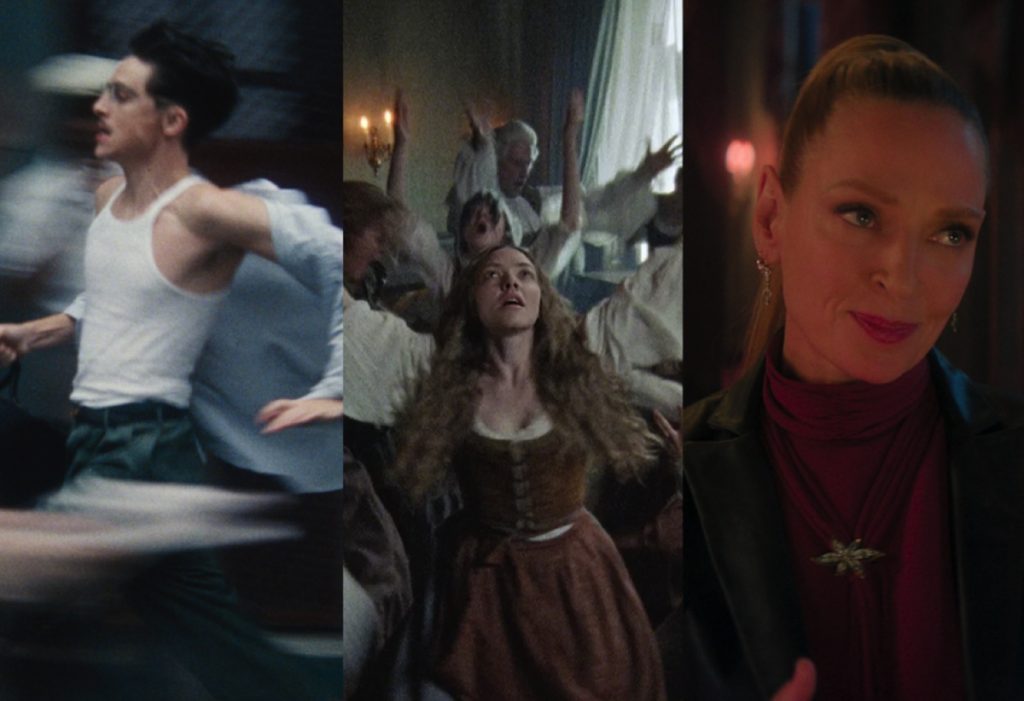
The questions I’ve been grappling with, both this week and in general, about the formal and ethical dilemmas of the celebrity bio-doc — namely, how do we keep them from all looking and sounding the same, and how do we keep them from being mere PR machines in exchange for access — are complicated nicely by Antiheroine, Edward Lovelace and James Hall’s portrait of Courtney Love, which begins with her proclamation that she’s ready to tell her own story (“I’m desperate to get what I have to say on the record”).
That kind of signposting is usually worrisome, an indication that we’re going to hear the most polite and flattering version of the subject’s story, but Love is also not like any other celebrity, and is willing to air much of her own dirty laundry. And she also provides the filmmakers with so much great archival video and imagery that they’re able to make a genuine movie out of it, using rapid-fire edits and the sheer volume of material to render the darker moments of the story visceral and scary. They also allow her to basically yadda-yadda the last twenty years (much is made of Hole’s breakup, but their 2010 reunion album Nobody’s Daughter isn’t even mentioned), but we get the gist of it; that complaint aside, this is a stellar documentary about a still-fascinating figure.
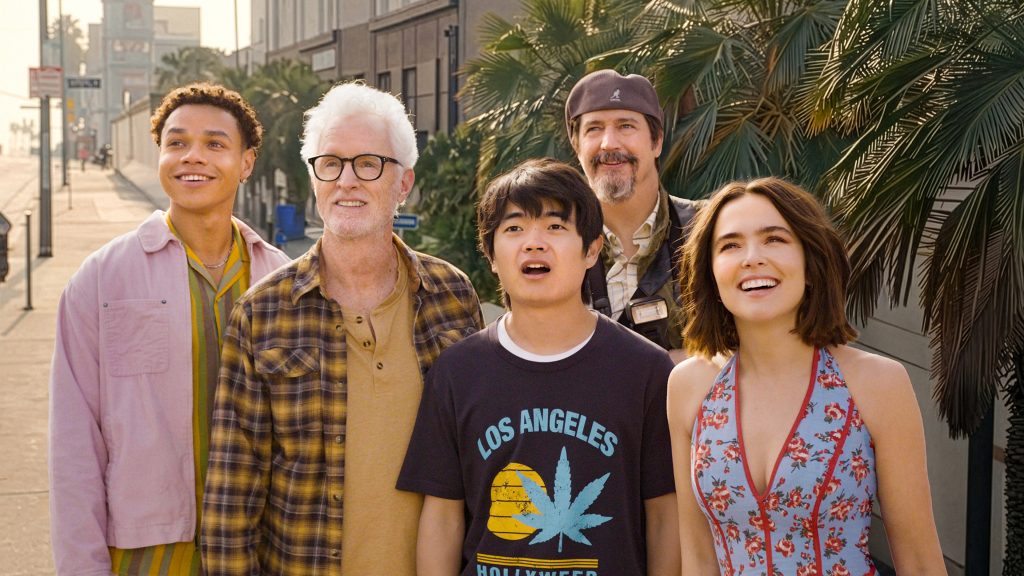
Early in Gail Daughtry and the Celebrity Sex Pass, we’re told that the title character is “a shining light around these parts,” which makes Zoey Deutch ideal casting; she’s so delightful, so utterly incapable of a false note, that it’s a shame to see her continue to flounder in subpar projects. And unfortunately, that’s an apt description of this gag-a-minute comedy — if anything, “subpar” is being kind.
And that’s a surprise, because it’s directed by David Wain, co-written with Ken Marino, and stuffed with fellow members of their beloved comedy troupe The State. Wain’s They Came Together, a bang-on spoof of the modern romantic-comedy, was a Sundance premiere as well, which explains why the festival premiered his latest; that’s the only plausible explanation, at least, since Gail Daughtry is so painfully, sweatily, sadly unfunny. The pace is fast and the energy is manic but there just aren’t enough laughs, and even late-in-the-game appearances by Jon Hamm and Paul Rudd can’t turn it around.
And with that, I’ve left the blistering cold of Park City for the last time — but watch this space for one more Sundance report, with thoughts on a handful of the films made available online over the coming weekend (check them out here).