Sean Burns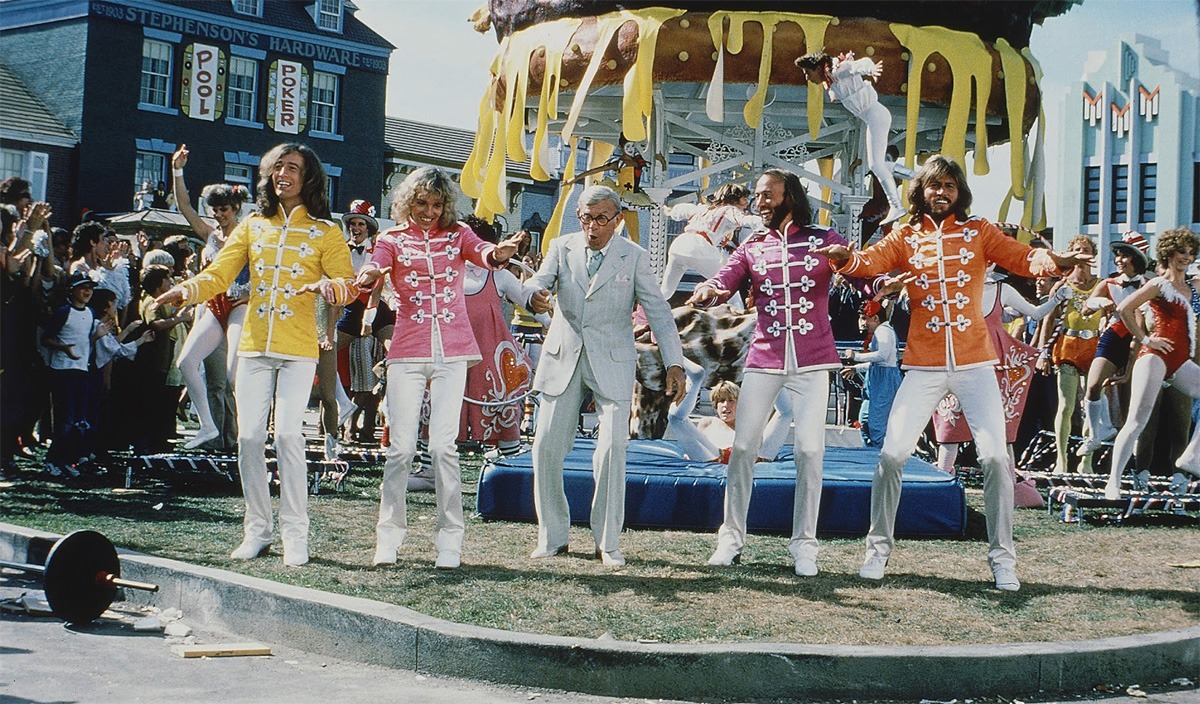
I saw a film today, oh boy.
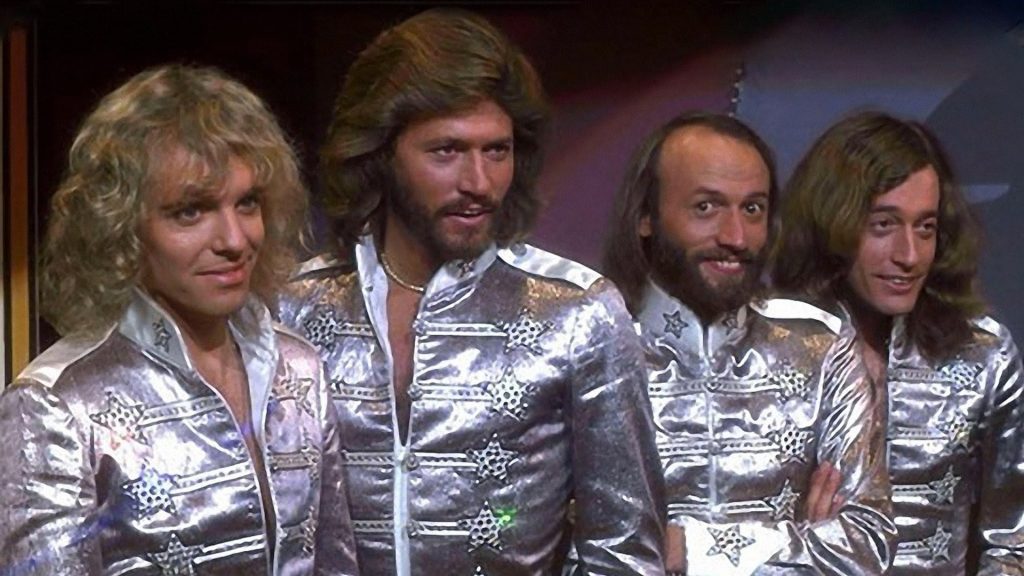
Frank Marshall’s terrific 2020 documentary The Bee Gees: How Can You Mend a Broken Heart chronicles the ups and downs of the trio’s durable, decades-long career with one notable exception, tellingly hilarious in its absence. The doc doesn’t make a single mention of 1978’s Sgt. Pepper’s Lonely Hearts Club Band, producer Robert Stigwood’s spectacularly ill-conceived big-screen extravaganza of tacky fashions and bad Beatles covers. Barry, Robin, and Maurice Gibb star as the titular band in a chintzy jukebox musical fantasia spun out of lyrics never meant to be dramatized. The film is so mind-bendingly awful that you don’t watch it so much as you stare slack-jawed at the screen, wondering why nobody’s loved ones intervened.
It’s the pop music equivalent of “The Star Wars Holiday Special,” the variety show trainwreck from later that year that was similarly stricken from the official record by an aghast George Lucas. Both take place in that gaudy, bedazzled twilight time between hoary “old showbiz” vaudevillian traditions of early television and the sleek, empty gloss that would come to define 1980s entertainment. It really was a ghastly aesthetic – everything looks like varying kinds of moldering, aged cheese. With lasers. (Presumably because of Star Wars, lasers were really big back then, especially “pew-pew” sound effects during songs.) The demolition derby of disparate sensibilities is how you end up with Earth Wind and Fire, Alice Cooper and Steve Martin all in movie that also features George Burns singing “Fixing a Hole.”
Burns plays Mr. Kite, who narrates Sgt. Pepper’s Lonely Hearts Club Band as if he’s not quite sure what he’s talking about, either. There’s not a word of spoken dialogue in the picture, leaving the rest of the cast to frantically bug out their eyes and wave their arms like mimes in distress while George Burns describes what they’re doing. In the happy little town of Heartland, Peter Frampton’s Billy Shears sings alongside the Bee Gees in a gazebo topped by a magical weathervane in the shape of Sgt. Pepper himself, a WWI hero whose horn somehow ended all the fighting. Billy romances his girlfriend Strawberry Fields (Sandy Farina) and everything seems dandy until the boys sign with Big Deal Records – a nefarious organization that happens to have the same logo as Stigwood’s RSO Records label.
The story is strung together out of stray lines from the 39 Beatles songs Stigwood had obtained the rights to. They’d tried something similar on Broadway in 1974 with Tom O’Horgan’s “Sgt. Pepper’s Lonely Hearts Club Band on the Road.” Some of the same principals were also involved in 1976’s notorious All This And World War II, in which a hit double album soundtrack of Beatles covers were accompanied by documentary combat footage of WWII, for reasons that have yet to be ascertained. The best story about that particular boondoggle was that Boston music critic Michael Fremer went to a screening after dropping acid and thought it was one of the most profound movies he’d ever seen. Fremer dragged all the local critics and music industry professionals he knew to another screening the very next evening, only to realize ten minutes in that he had been high out of his gourd and the movie was actually terrible. He spent the rest of his career apologizing.
There’s a sinister plot by mean Mr. Mustard and his henchman Brute to steal Sgt. Pepper’s enchanted instruments from Heartland, plunging this sweet, little community into doom and despair. (Brute is played in his screen debut by the Twin Peaks giant Carel Struycken.) The bad guys also kidnap poor Strawberry Fields and force her to listen to Aerosmith. This is supposed to turn her into “a mindless groupie” but Frampton gets there first, so he and Steven Tyler can have one of 1970s cinema’s most poorly choreographed sissy fights. Bily manages to kill Steven Tyler but accidentally takes out Strawberry as well. This was the portion of the film I saw on television as an extremely young child, and the only thing I can remember about it was that I got really upset that the pretty girl died. (Even at an early age, I couldn’t have cared less about what happened to Steven Tyler.)
I guess this means that the first time I ever heard “Carry That Weight,” it was in regards to Peter Frampton carrying his girlfriend’s glass coffin to the cemetery. Luckily that part didn’t stick with me, otherwise I probably never would have listened to The Beatles. Frampton’s Shears is so despondent, he attempts suicide by jumping off a one story building. But fear not, as that magical weathervane atop the gazebo comes alive in the form of Billy Preston – the fifth Beatle zapping laser beams out of his fingertips and reversing the course of Billy’s fatal (or at least somewhat injurious) plunge and bringing Strawberry back to life. “Get back, Loretta” he tells the comely female Lazarus, who doesn’t seem to think anything strange about being called Loretta, or, for that matter, being resurrected.
This prompts a reprise of the title track in front of that gazebo again, this time with an insane cavalcade of famous and semi-famous guest stars singing along and glimpsed for such fleeting moments, it’s a gift that the movie is on Netflix now so you can rewind to gawk at apparently everyone who was in Stigwood’s Rolodex and had the afternoon available. Peter Allen, George Benson, Donovan, Jose Feliciano, Yvonne Elliman, Keith Carradine – Carradine’s really into it – Tina Turner, Frankie Valli, Gwen Verdon, Helen Reddy, Dame Edna and Wolfman Jack, to name just a few. The forced conviviality of the finale is something to behold; in the New York Times, critic Janet Maslin compared Sgt. Pepper’s Lonely Hearts Club Band to “playing shuffleboard at the absolute insistence of a bossy shipboard social director.” I can’t think of a better way to describe what it’s like to watch Carol Channing boogie with Sha Na Na.
“Sgt. Pepper’s Lonely Hearts Club Band” is currently streaming on Netflix, for some reason.