Will DiGravio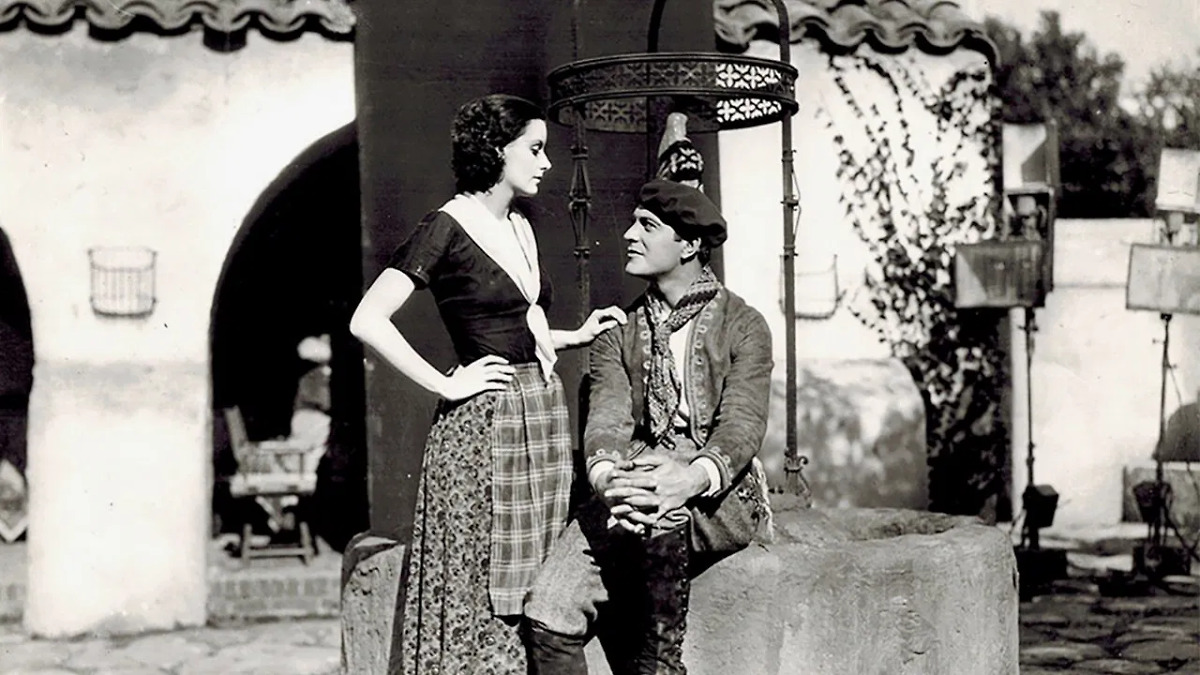
By the time Greta Garbo arrived in Hollywood, she was already a star.
In the summer of 1924, newspapers in St. Louis, Omaha, San Francisco, and Toronto covered the news that the 19-year-old Garbo won a national beauty contest in her native Sweden. American readers came to know her as the distant country’s “fairest daughter” and “most comely woman,” as the Minneapolis Star declared on its front page.
Garbo, formerly Greta Gustafsson, captured European audiences in a leading role for the first time earlier that spring, in Mauritz Stiller’s The Saga of Gosta Berling. Next came a meeting with Louis B. Mayer, who signed her—and Stiller— to a contract with his Metro-Goldwyn-Mayer and brought them to Hollywood in 1925. As Garbo sailed to the United States that summer, the Hollywood Daily Citizen reported on the woman “said to be the most beautiful and accomplished young actress of Europe.”
“Miss Garbo,” the paper predicted, “is scheduled for stardom.” Few prophecies have been better realized than this anonymous bit of page-five news.
In the history of movies, and indeed of celebrity writ larger, few stars were more starlike than Garbo. Theorists of film stardom remain fascinated by her: a singular on-screen presence, the way she reflected and informed the zeitgeist, and, in the case of early critics like Rolan Barthes, her face as depicted through the chemical and mechanical processes of film.
The levers of Hollywood naturally launched Garbo to new levels of global stardom, especially following Clarence Brown’s Flesh and the Devil (1926), the film credited with making her an international force of the motion picture screen. But that film was the last of three produced under the auspices of MGM’s “boy wonder,” the 26-year-old Irving Thalberg. Up first, on February 21, 1926, was Torrent.
Based on a novella by the Spanish writer Vicente Blasco Ibáñez, Torrent features Garbo as Leonora, a peasant girl in love with Don Rafael Brull (Ricardo Cortez), a nobleman and son of her landlord, Dona Bernarda (Martha Mattox). Our first introduction to Garbo comes in medium shot: she kneels before a well, praying that Don Rafael will pass her by. She sings to the birds, her eyes finding them on a nearby branch, playfully calling out to them.
To watch Garbo is to understand what Hitchcock meant he called silent movies the purest form of cinema. Each glance and movement seems to convey something about the complexities of Garbo’s character: the pleasure she feels to be in love in this cozy home with Don Rafael, and the sense that perhaps there is something greater out there, something that can only be obtained by following the birds wherever they go.
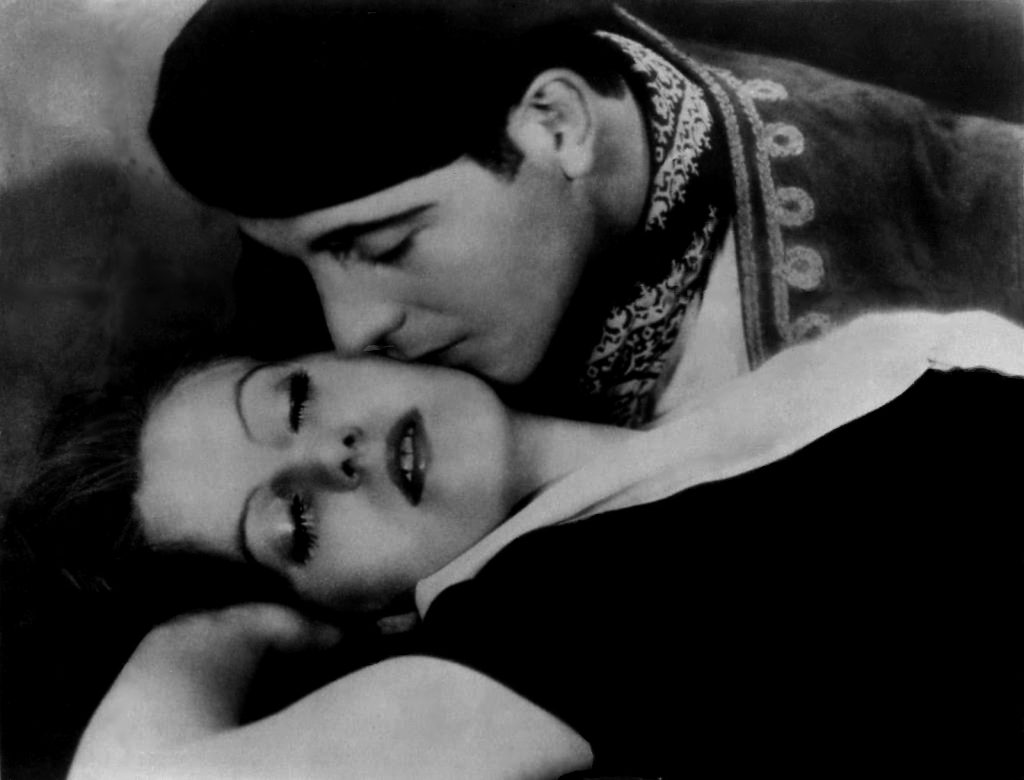
As Leonora and her family sit down for dinner, Dona Bernada knocks at the door. Perhaps as retribution for her son’s romance with their daughter, or maybe out of just pure greed, she informs the aged parents that they will need to leave their home—the bank has ordered it. Unknowing, Leonora and Don Rafael are kissing behind the house: her prayers have been answered.
Yet, as they kiss, Leonora continues to sneak glances towards the birds. Shot in medium close-up, we in the audience become fixated on her eyes, watching as they peel away from her lover’s face and up towards the skies. Little does she know that she will soon have no choice to flee the home like the birds and make use of her voice to, as one of the film’s intertitles informs us, “bring wealth and ease to her parents.”
“That God for tragedy,” Leonara’s father says. “It forces us to go forward.” And it does. Leonara makes it as an opera singer in Paris—she returns home by a different name, La Brunna, famous and triumphant. At first resentful, she once again falls for Don Rafael, who is engaged to another woman, after he needlessly risks his life to ensure her safety during the film’s titular flood. But as time passes by, the pair never rekindles, remaining fond for one another in a classic romantic tale of love never again finding its once torrential level.
Though we watch today with the gift of hindsight, we see how the film—it’s simple trappings and all—lays the foundation for Garbo’s stardom to come. Not only does it mirror her own life trajectory, from growing up poor to entertaining the world, but in her grace and command before the camera. “From the moment Torrent went into production,” the great Louise Brooks wrote in her memoir decades later, “no contemporary actress was ever again to be quite happy in herself.”
In many first films, the studios are trying to sell you a star. It’s true in Hollywood today. But here, the film is not selling a star; it is simply capturing one who already is.
“Torrent” is streaming on Amazon Prime, Tubi, and Hoopla.