Craig J. Clark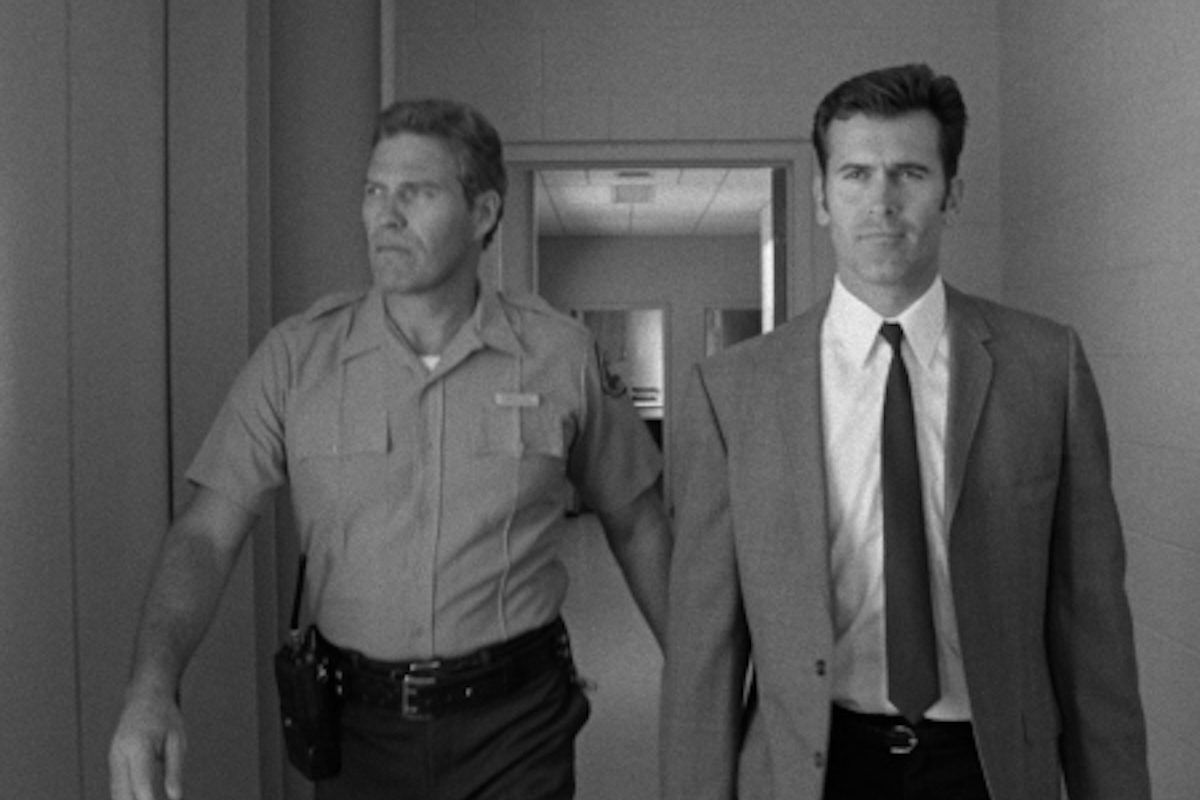
When Bruce Campbell revealed on social media last month that he has been diagnosed with cancer – a type that’s “treatable,” not “curable” – the news reverberated amongst his fans who have been following his screen exploits for the past 45 years. A fixture of Sam Raimi’s output ever since they burst onto the scene with The Evil Dead in 1981, Campbell has racked up an impressive resume of cult films, along with the occasional foray into studio fare. He’s also stepped behind the camera on a few occasions, headlined television series, and written books about his adventures in B-movie stardom. Effortlessly self-effacing, Campbell comes off as a guy who got lucky and has never stopped counting his blessings. And it’s impossible to underestimate his willingness to let himself look utterly foolish, a trait drummed into him by the near-constant abuse he suffered at his director’s hands throughout the Evil Dead franchise.
In light of where he got his start, it’s understandable that the majority of films Campbell has top-lined over the years have been in the horror and sci-fi genres. He broke the mold somewhat on the small screen, where he played the leads in The Adventures of Brisco County, Jr. and Jack of All Trades. In between those short-lived series, he also starred in 1997’s Running Time, a low-budget crime drama that has flown under the radar for the past three decades.
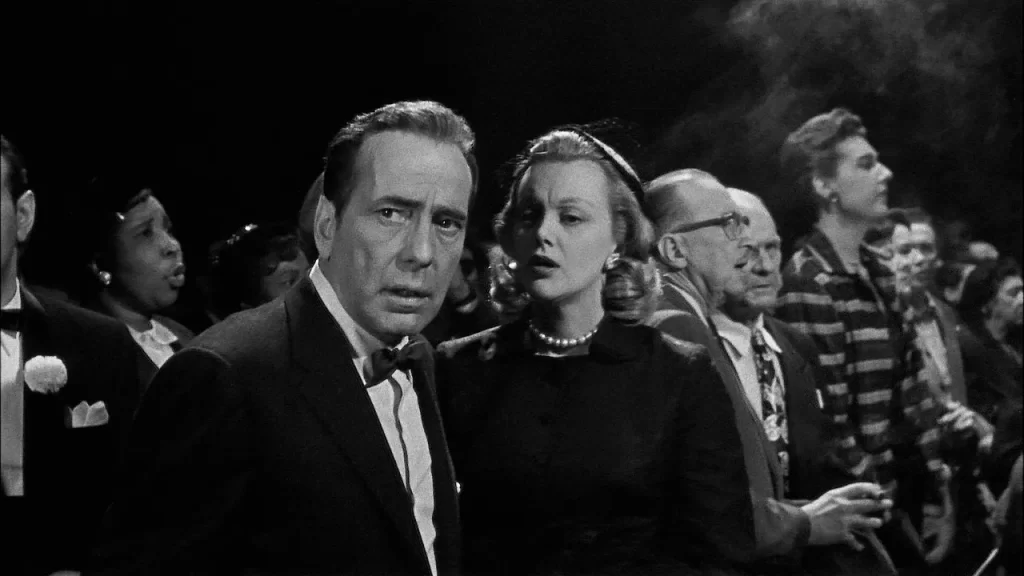
Written and directed by Josh Becker, a childhood friend and frequent collaborator who passed away in December, Running Time takes its title literally, since it plays like a cross between the Robert Wise boxing noir The Set-Up and Alfred Hitchcock’s Rope. From the former, Becker borrows the real-time conceit, combining it with the latter’s (mostly) seamless edits that make it appear to be one continuous take. Like The Set-Up, Running Time is more wide-ranging than Rope, which was confined to the soundstage and only used a handful of tricks to cover the reel changes. The lighter camera and Steadicam rig Becker had at his disposal made it possible for him to be more mobile and achieve smoother transitions, hiding cuts in swish pans and traveling shots (all done in real locations) that weren’t possible with 1940s technology.
In terms of its story, Running Time is a compact predecessor of Steven Soderbergh’s Ocean’s Eleven, opening with Campbell’s character Carl getting released from prison and immediately going ahead with the heist he planned while he was inside. Unlike Danny Ocean, who takes his time recruiting his crew, Carl is off and running the moment he’s picked up by his ne’er-do-well pal Patrick (Jeremy Roberts). While Patrick takes the wheel, Carl avails himself of the female company that’s been arranged for him. This, it turns out, is his old flame Janie (Anita Barone), which makes for an awkward reunion once they recognize each other.
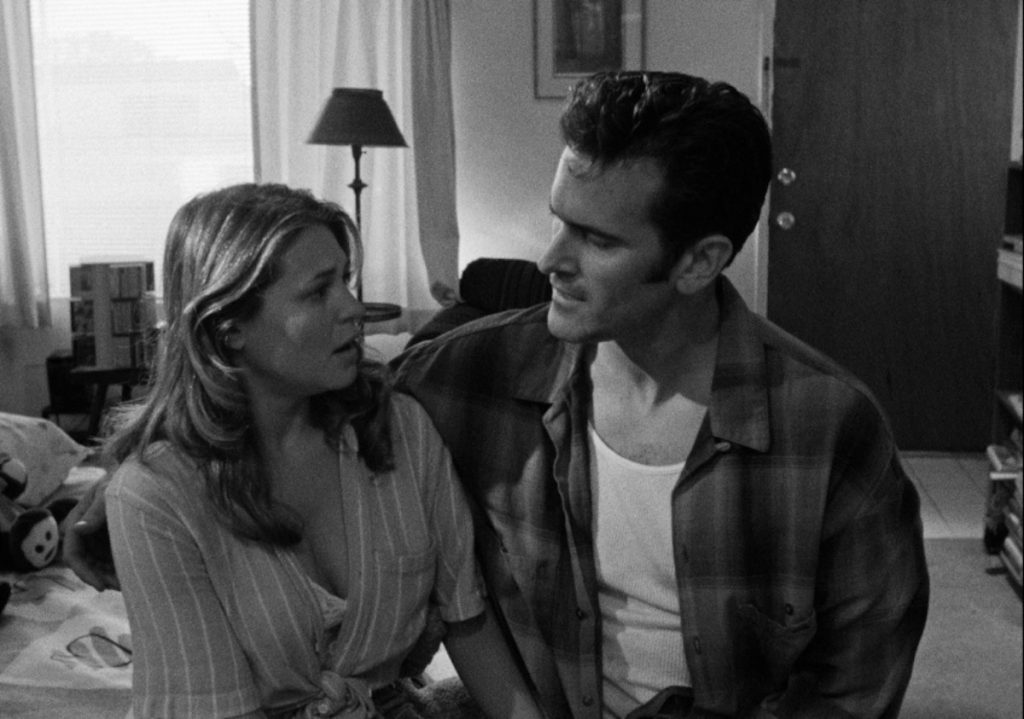
After Janie is dropped off, but not before giving Carl her address and phone number so he can look her up later, Patrick picks up their two accomplices, suave safecracker Buzz (William Sanford Davis) and jittery wheelman Donny (Gordon Jennison Noice). Carl can already tell his “simple and elegant plan” is in danger of unraveling, however, because Donny is clearly strung out. Other complications ensue – on the way to the job they get a flat tire that has to be changed in record time, the safe isn’t the model Buzz was expecting – and the plot’s relentless forward motion means the tension continues to build until it reaches a breaking point. Becker’s high-wire act is as fraught as the heist at its center (the analogue of The Set-Up’s boxing match), but with the aid of his actors and technicians, he pulls it off.
A key collaborator pitching in to keep Running Time ticking is editor Kaye Davis, who previously worked on Raimi’s Crimewave and Evil Dead II, and Becker’s Enemies: A Love Story. She recently returned to the fold to cut Campbell’s latest directorial effort, Ernie and Emma, on which they were joined by Running Time cinematographer Kurt Rauf, who also shot Campbell’s My Name Is Bruce, and composer Joseph LoDuca, a member of the Raimi Mafia from the beginning.
At the center of it all, though, is Campbell, who appears in nearly every shot in the film, ably carrying it for the 63 minutes that elapse between the Saul Bass-inspired opening titles and the closing credits. It’s an impressive achievement that should surprise and delight anybody who seeks it out. This is, after all, the Campbell who just a few years later took on the challenge of playing Elvis Presley in a nursing home going mano a mano with the Grim Reaper on two fronts. As no one who has seen Bubba Ho-Tep is likely to forget, the King was battling cancer even before a soul-sucking mummy showed up in his life. Now it’s Bruce’s turn.
“Running Time” can be found on a number of streaming sites.