Julia Sirmons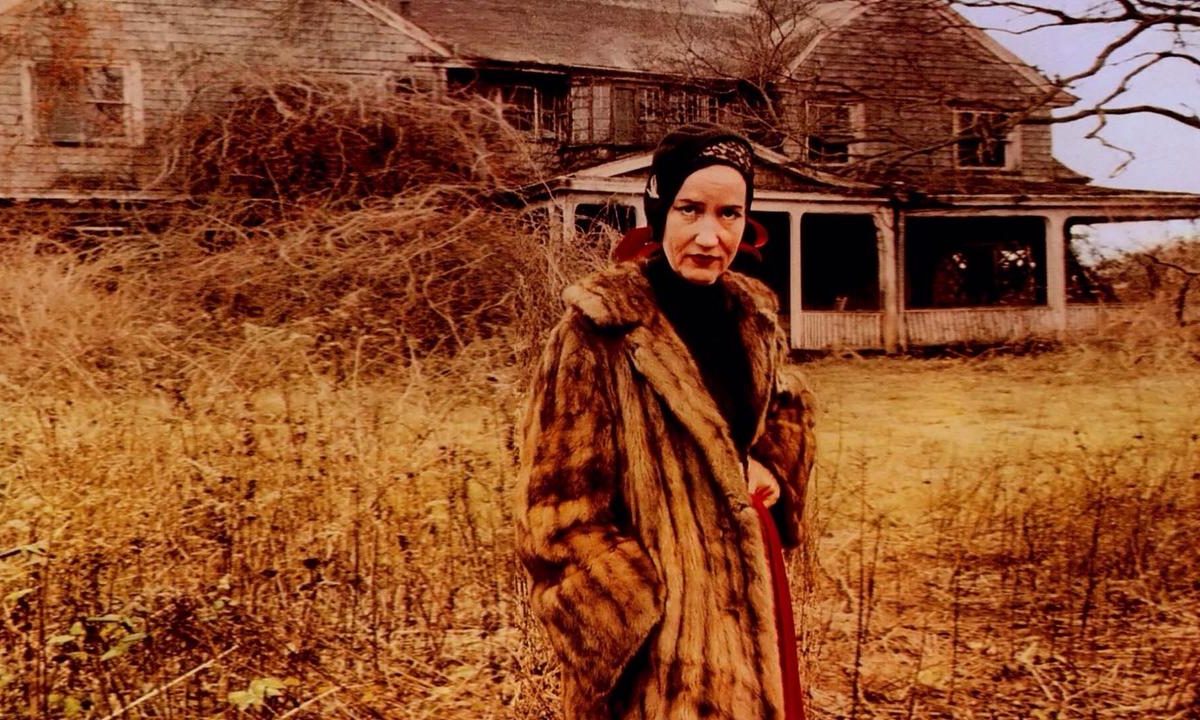
For a supposedly freedom-loving nation, America remains fascinated by its own “aristocracy.” Yet our reverence for the patrician class is eclipsed only by our obsession with their decline. In the ‘70s, Edith Ewing Bouvier Beale (“Big Edie”) and her daughter (also Edith, but called “Little Edie”) became the car crash du jour when their squalid living conditions embarrassed their cousin, national treasure Jacqueline Kennedy Onassis. If the tabloids made a meal of the Beales’ inexorable disintegration, their lifestyle also caught the more respectable eyes of documentarians Albert and David Maysles. Grey Gardens, the Maysles’ astonishing portrait of mother and daughter’s fading glamor and reclusive life, captures the women’s perverse codependency, but also their defiant vibrancy in the face of a world that’s beaten them down.
Charges that the Maysles exploited the Beales’ vulnerability don’t totally stand up to scrutiny. For whatever else she may be, Little Edie is a star. The camera loves her, and she loves it right back. (Grey Gardens would make her a queer icon.) Her personality, so singular and so unguarded, mesmerizes. She has a dizzy, sly girlishness that is surprisingly appealing in a woman in her 50s. Her epigrammatic pronouncements (“I only care about three things–the Catholic church, swimming, and dancing”) exhibit what she rightly calls her “staunch character.”
At some moments, her outré charm appears to be the result of an expected upper-class delusion, but mostly, you see how her high-society life must have stifled her. In the unforgettable moment where she shows off her “revolutionary costume”– a pair of shorts and hose under what seems to be a skirt fashioned out of not-quite-big-enough cloth and safety pins, along with her trademark head scarf–she explains, “I have to think these things up, you know?” This could mean that her reduced living conditions (and some weight gain) force her to dress herself on the fly. But it’s more likely that fashion is a creative compulsion for her, fulfilling a hunger to express her individuality. It’s what keeps her going in depressing circumstances. And you can’t wait to see what Edie will wear next: neck ruffs and fishnets, safari dresses and bath towels topped with golden brooches, and clashing prints reveal her good eye and verve.
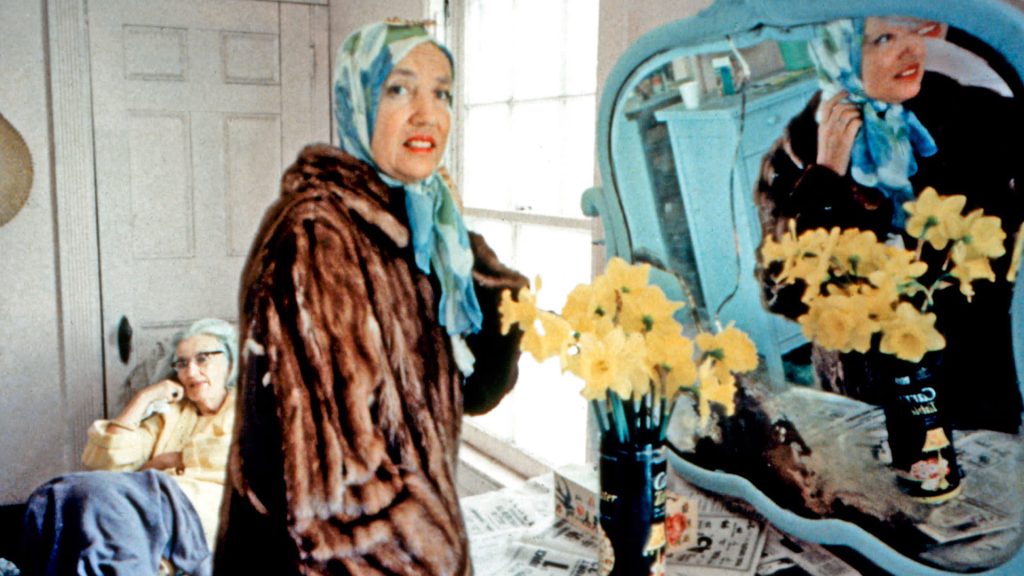
Compared to the fizzy charisma of her daughter, Edith is a compellingly awful but more conventional figure. She’s a Gorgon who holds court from a bed covered in old newspapers, food detritus, and bugs. Her cruelty to her daughter is often staggering and difficult for even the audience to endure. She nags and nitpicks and I-told-you-sos in an incessant train of demands and criticisms that must feel like death by a thousand cuts. (And is there a greater traitor than a mother who discloses to the camera how much ice cream her daughter eats?) Only once, when she and Little Edie are listening to Norman Vincent Peale (who preached The Power of Positive Thinking) on the radio, does she crack a bit. The camera zooms in, and for a moment, Edith’s eyes grow misty with tears. The Beale women, constantly arguing about the wrongs and wrong decisions of the past, could never pep themselves up with a bit more optimism. Perhaps Edith temporarily realizes the tragedy of this. But most of the time, all her pessimistic energy is directed toward hidingher daughter’s light under a bushel.
There’s an undeniable ickiness bound up in the captivating intimacy the Maysles draw from their subjects. There is so much unintentional side boob, and occasionally almost-full boob, on display. This level of disinhibition suggests some mental illness, and it does sometimes feel like the Beales are being offered up for us to goggle at. (There’s more flabby arm flapping than seems strictly necessary.) Photographs of the women in their glory days are fitting images to illustrate their state of mind, but at times, the contrast between past and present is cruel. In reality, Edith’s husband and Little Edie’s father, who lost all the money and abandoned the family, is largely responsible for their situation. If the Maysles were willing to stray from their “fly on the wall” approach to filmmaking and fill in this blank, we might admire the Beales more for their sheer survival instincts.
But Big and Little Edie nonetheless exercise agency. Both are thwarted performers–Edith trained as a singer, and Little Edie hoped to be an actress–and they leap at the chance to put on a show. Little Edie, in particular, boldly embraces male attention, playfully treating the Maysles like gentlemen callers. When we hear the brothers off-screen, they are gentle and respectful. Little Edie, at least, knows she’s in good hands. “You don’t see me as I see myself, she says. “But you’re very good, what you do see me as.” If Little Edie is half-preserved in amber, the Maysles still show her to be someone whose present is meaningful–a life well worth living. We may not see her as she wants to be seen, but that doesn’t mean we don’t see her in all her glory.
“Grey Gardens” is streaming on the Criterion Channel, HBO Max, and Shout Factory TV.