Sean Burns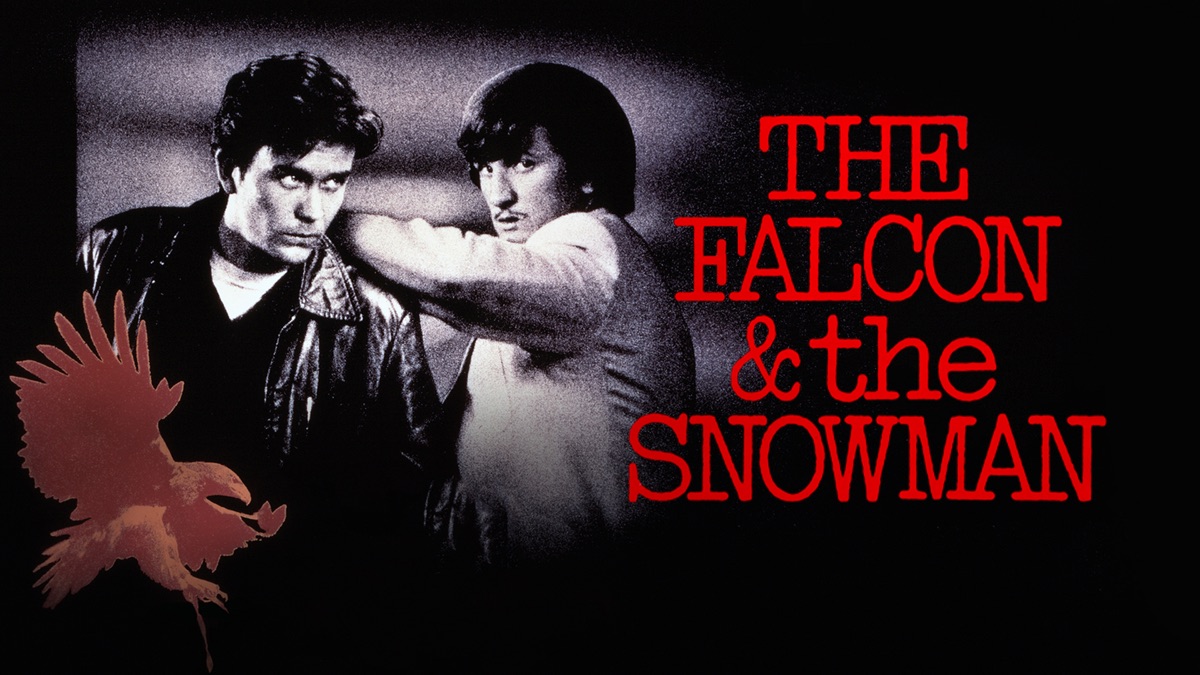
In 1985 it was morning in America. The country was riding high from the previous year’s summer Olympics in Los Angeles and Ronald Reagan’s landslide reelection. Rocky Balboa was winning the Cold War in the boxing ring while concert audiences in sold-out stadiums pumped their fists and sang along to “Born in the U.S.A” without really listening to the lyrics. Few movies were less attuned to the national mood than John Schlesinger’s The Falcon and the Snowman, a true-life tale of disillusionment and betrayal in which two clean-cut California kids from fine families were caught and convicted of selling government secrets to the Soviet Union.
They obviously didn’t do it for the money. Christopher Boyce and Daulton Lee’s paltry paydays from the Russians amounted to something like 70 grand, and the information they leaked was largely useless. Schlesinger’s film isn’t interested in the “hows” of their case so much as the “whys.” Why would these children of privilege who seemed to have everything going for them turn against a country that had given them so much? For heaven’s sake, they were altar boys together!
Scripted by Steven Zallian eight years before he’d win the Academy Award for writing Schindler’s List, the film teamed two of Hollywood’s most acclaimed young actors. Timothy Hutton was still basking in the glow of his Oscar win for Ordinary People, while Sean Penn was being hailed as the heir to Method greats like De Niro and Dustin Hoffman. Hutton’s Boyce is the brains of the operation — to the extent that there were any — a seminary school dropout whose FBI hero father (Pat Hingle) gets him a summer job shredding secret cables in an intelligence agency vault. His childhood friend Lee is a professional embarrassment to his wealthy Palos Verdes family, jaunting back and forth to Mexico as a two-bit drug dealer and part-time junkie.
Hiring the director of Midnight Cowboy seemed an inspired move, with the English filmmaker telling another story of mismatched American friends in over their heads. Penn’s nervy, rodent-like performance was seen by many as an homage to Hoffman in the 1969 Best Picture winner, even going full Ratso Rizzo in a parking garage scene when he dares a car to run him over. It’s a magnificently off-putting turn, all frayed nerves and twitchy paranoia with a voice as thin as his pencil mustache. Daulton Lee was the forerunner of Penn’s iconically obnoxious cokeheads in Carlito’s Way and Hurlyburly, but not all viewers found pleasure in his company. Pauline Kael famously wrote, “You feel as if the artist had disappeared, and you were left watching a twerp playing a twerp.”
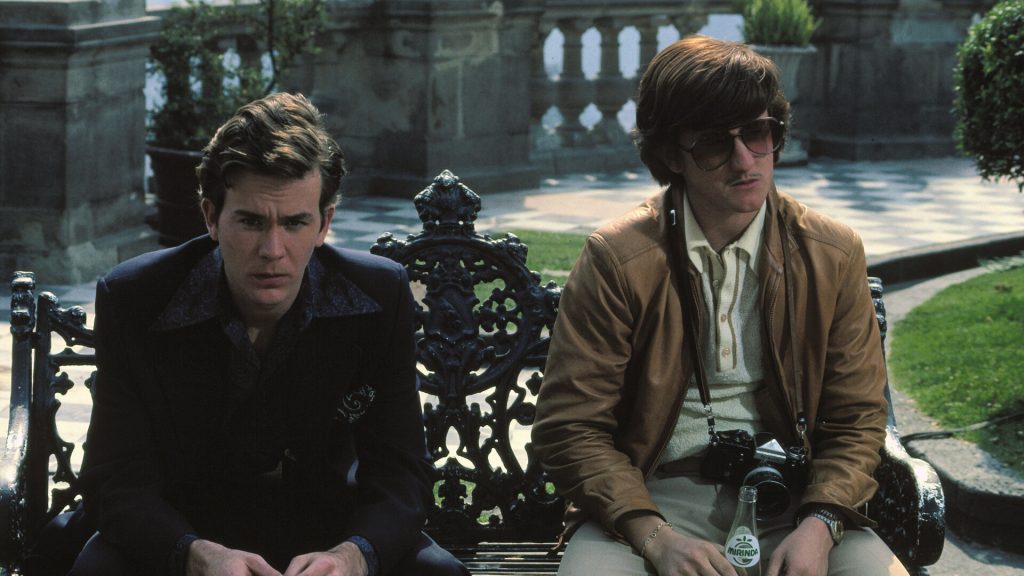
Working In the vault, Boyce occasionally happens upon misdirected cables from the CIA — cheeky accounts of ratfucking foreign elections and screwing over our allies. He’s supposed to just ignore this stuff and feed it to the shredder, but it gets under his skin. The real-life Boyce was said to often expound on his passionate convictions, but Hutton plays him at a haughty, interior angle, with motivations more personal than political. He can’t abide the unquestioning hypocrisy of his Company Man dad — who made his kids memorize “The Charge of the Light Brigade” — and Boyce doesn’t even try to conceal his contempt for the dim-bulb alcoholics in his office. Headed by the captivating Dorian Harewood as a Vietnam vet with some serious PTSD, this crew crassly uses the document shredder to mix margaritas while concealing the dirty deeds of a once-great nation. Boyce isn’t betraying the country as much as he’s proving how much smarter he is than these dopes while sticking it to his old man. He’s Benedict Arnold with an Oedipal complex.
Their plan is almost laughably stupid. Dauton simply strolls into the Russian embassy in Mexico City and asks if anyone there wants to buy some U.S. secrets. They soon end up in the hands of a KGB fixer perfectly played by the great English actor David Suchet, who would later go on to be Hercule Poirot on British television for 24 years. He doesn’t have to do much detective work here to see that these guys are in over their heads. Suchet has a marvelously deadpan way of looking like he’s having a tough time keeping a straight face, especially when Penn asks if the Russian government wants in on a smack deal he and his buddies have been cooking up in Costa Rica.
The Falcon and the Snowman is not exactly a suspenseful picture. The question isn’t whether or not they’re going to get caught but rather how much longer can these two knuckleheads possibly keep getting away with it. Tilted a few degrees in another direction, the movie could have been a slapstick satire to rival the Coen brothers’ Burn After Reading. But Schlesinger sees a tragedy in their youthful folly, with David Bowie mournfully singing “This Is Not America” over the closing credits.
The story got even stranger after the closing credits rolled. Boyce broke out of prison in 1980 and carried out some 17 bank robberies before being caught again. Daulton Lee was released on parole in 1998, and briefly worked as a personal assistant for a Hollywood movie star named Sean Penn.
“The Falcon and the Snowman” is streaming on Tubi and Amazon Prime.