Sara Batkie
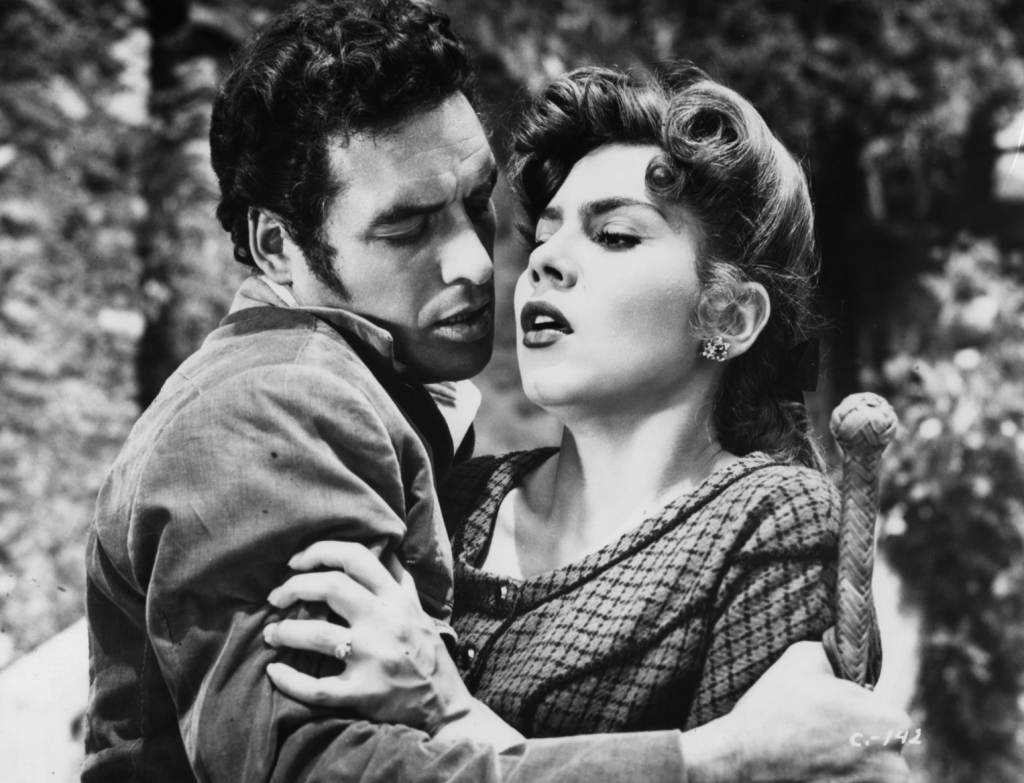
It sounds like the set-up of a Penthouse letter: a man wandering alone in an unfamiliar town misses the last bus out. A group of locals finds him a place to stay the night with a single woman who lives in an isolated, hard-to-reach house. They call her the “old hag” but she’s young and beautiful. She’s also eager to serve his every need, including sexual ones. But since this is Woman in the Dunes, the 1964 film from avant-garde Japanese provocateur Hiroshi Teshigahara, there’s something much stranger and more sinister going on here.
The man is an amateur entomologist and teacher who’s traveled to this remote countryside from Tokyo to collect and photograph insects. While out hiking the desert, he’s approached by an older man who asks if he’s doing an inspection for the prefecture. It’s the first sign that something here is awry, but the big city interloper is too patronizing to notice. After waking from a nap and being informed of his predicament, the man is brought to the woman’s house, which lies at the bottom of a pit surrounded by dunes. They’re polite with one another, though he’s dismissive of her provincial knowledge. Preparing to head out the next morning as planned, he finds the rope ladder has been pulled up. He’s as pinned in place as one of his specimens.
What ensues is a battle of the sexes of primordial proportions. The house, as it turns out, is under constant threat from the sand that surrounds it. Every night the woman must shovel it into boxes that are lowered down by the villagers, who take it to the neighboring factories to sell. Every morning they wake up with grain-laced skin. Water and food are rationed. There’s none of the man’s usual creature comforts like electricity and indoor plumbing. His attempts to bargain and blackmail his way out prove futile. So do his escape attempts. Eventually they settle into an uneasy union. “If I suffer, you suffer,” as the man puts it.
From the start, Teshigahara constructs a heightened, sensual atmosphere. The director’s background was in painting and pottery rather than film; he was also the heir to Sogetsu, a pioneering school of ikebana flower arrangement, and would eventually take over as headmaster in 1979. This artistic temperament is evident in how he captures the elements of the desert landscape, lingering over its sculptural intricacies with a near-microscopic detail. At times, the dunes don’t appear to be sand at all, but rushing water or drifting snow, even occasionally the whorls of fingerprints. These striking aesthetics are reflected in the structure of his characters’ bodies, particularly the woman whose curving form proves both enticing and unsettling to her captive.
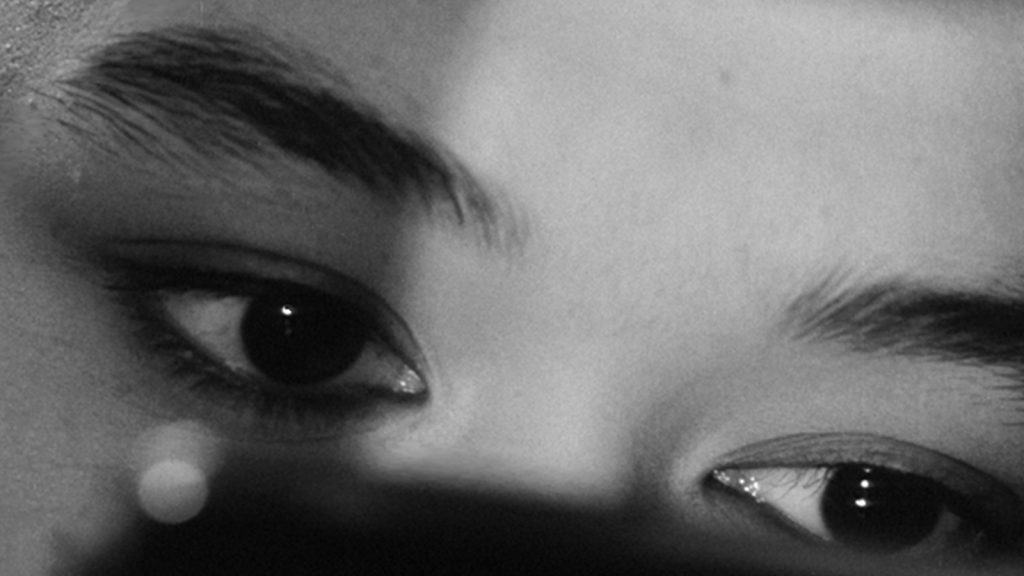
The film is at once spare and suggestive enough to invite multiple interpretations. It’s based on a novel by Kobo Abe, whom Teshigahara met when he joined the surrealist group Seiki mo Kai. The pair collaborated on multiple features, of which Woman in the Dunes is the second, and most celebrated. It would eventually garner Teshigahara a Best Director nomination at the Oscars. It’s a laudably unusual choice on the Academy’s part, indicative of not just Teshigahara’s technical mastery but a certain indigenous anxiety that the work is tapping into. Like Kafka and Beckett before him, Abe has a facility for rooting out the nightmarish potential of the everyday. “Without the threat of punishment, there is no joy in flight” goes the unattributed epigraph at the start of the novel. Teshigahara presents an elegant teasing out of this thesis.
Who is punishing whom here? There are several options to choose from, all plausible, none definitive. There’s the man, of course, who’s possibly being punished by the townspeople for his arrogance, which is no less risible to them for his affable ignorance of it. Early on, Teshigahara playfully punctures the man’s inflated self-image, visually juxtaposing wide shots of him in the vast landscape with extreme close-ups of the insects he gathers, essentially inverting how we usually view the world and our place in it.
Then there are the mysterious circumstances of the woman herself. She believes that she’s part of a collective – if her house were to collapse, others would follow, as she points out to the man – but her labor is also exploited by the townspeople, who don’t share the income they receive from their under-the-table deals with her. She could leave but the idea seems unthinkable. There’s nothing for her to do in the big city. “Isn’t it exhausting just walking around all day?” she asks the man who has no answer for her. And then there’s the parasitic dynamic that develops between the pair, one that she’s apparently been complicit in before. The woman’s husband and daughter were killed in a storm a year ago, but she confesses that the man is not the first to be enlisted as her “helper.”
Perhaps the biggest punishment is simply the one that awaits us all: the Sisyphean maintenance of living. In the daily grind of ritual, our identities become subsumed by our habits. We are what we do, and for whom. Beyond that, nothing is permanent, not even our own selves. The man has learned this lesson by the end. You can try your best to grab hold of something, but it will eventually dissolve beneath you.
“Woman in the Dunes” is streaming on the Criterion Channel and is available for digital rental or purchase.
“Crooked Marquee’s Bad Romances” is an annual spotlight on anti-Valentine’s Day favorites. Follow this year’s recommendations here; you can also read our entries for 2025, 2024, and 2023.