Crooked Marquee Staff
It’s easy to close your eyes and imagine how 2024 could have been a disastrous one for movies. New production was shut down for four months of the previous year by the SAG strike, which meant fewer new films in the pipeline (though a number of planned 2023 releases were delayed to maximize promotion—ya know, like Kraven the Hunter, lol). This decrease, at least in theatrical releases, made for slim pickings some weeks.
But my theory is that this is why some offbeat bets hit. The Substance has grossed $77 million worldwide as of this writing, $16 million of it here—a mighty impressive gross for a proudly repugnant mash-up of showbiz satire and body horror, released by a micro-distributor. Anora, meanwhile, has grossed a healthy $13 million domestic and another $15 worldwide, reminding us that a small, character-driven independent comedy-drama can also be quite the crowd-pleaser. The box office charts have, as expected, been dominated by sequels and superheroes, but $148 million for It Ends With Us, $74 million for Longlegs, and $68 million for Civil War are nothing to sneeze at. It’s not so much that the tide is turning; we’ll be in IP Hell for the forseeable future. But we’re seeing, time after time, that they’re not the only things that will make money.
Money is what makes the industry go around, but of course it’s not all that matters. The films that touched me the most this year ran the gamut from first-class genre movies to beautifully dramatized true stories to innovative dramas, all made with confidence, skill, and unapologetic emotion. These are my favorites:
JASON BAILEY’S TOP 10 NEW RELEASES
10. The Wild Robot
The best animated movie of a year chock full of good ones, Chris Sanders’s adaptation of Peter Brown’s children’s novel is both uproariously (and often darkly) funny and absolutely heart-wrenching, first deftly pinpointing the feelings of being abandoned and out of place, and then the heartache parade that is parenting. The animation style is striking, slick but with handmade rough edges, and the animal character designs are (appropriate to their scenarios) adorable and/or terrifying. But none of it would work without the brilliance of Lupita Nyong’o’s voice performance as Roz, the service robot who grows a soul; she does cheerful and robotic convincingly, but modulate the character just enough from scene to scene. It’s a terrific performance, and a terrific movie.
9. The Fire Inside
Director Rachel Morrison and screenwriter Barry Jenkins take from the true story of Claressa Shields, “the teenage phenom from Flint, Michigan” who won the gold medal in women’s middleweight boxing at the 2012 Olympics. We all have an internal moviegoing clock, and you may feel yours going cuckoo here; she wins that medal at the 2/3 mark, when we’re all expecting that to be the triumphant conclusion. And then, miraculously, the picture keeps going, subverting the sports-movie Cinderella story formula and reminding us of the reality of sports entertainment (and the tenuous place of women athletes within it). Morrison started out as a cinematographer—her credits include Mudbound and Black Panther—and her fight photography is expectedly kinetic. But she also finds the beauty in the everyday, creating a credible reality in which her actors (particularly Ryan Destiny and Brian Tyree Henry in the leads) can shine without seeming to show off. It’s a deeply moving film, and a reminder of the dimensions that are possible even within the most seemingly staid formulas.
8. September 5
Tim Fehlbaum directs and co-writes this tight-as-a-drum control room thriller, set on the last day of the 1972 Munich Olympics, in which the games were taken over by a hostage situation in Olympic Village—and the ABC Sports crew, which was only on hand to cover volleyball games and boxing matches, found themselves tasked with something entirely different. Peter Sarsgaard is in his best mode, the taciturn professional, as Roone Arledge, the ambitious sports producer who fought to keep the news division from taking over the story, but found himself and his team grappling with questions of journalistic responsibility they’d never had to consider before. Gripping from top to bottom, and boasting impressive supporting turns from John Magaro, Ben Chaplin, and “The Teachers Lounge” breakout Leonie Benesch.
7. Rebel Ridge
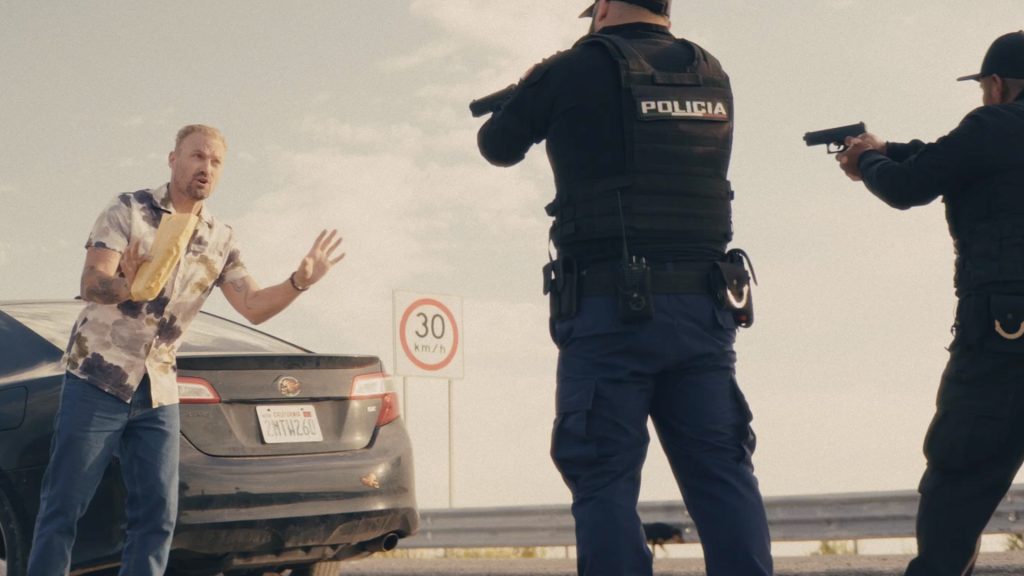
In a climate of big, lumbering, muddy messes that rarely manage to even quicken the pulse, Jeremy Salunier’s gripping thriller comes off as comparatively tight as a drum, a small-scale, small-cast thriller that acknowledges its influences (“First Blood” chief among them), and delivers the genre goods, all while smuggling in a pointed and angry critique of modern policing practices. Don Johnson continues to prove himself one of the most reliable utility players in genre cinema (the picture’s throwback exploitation picture energy recalls his similarly sharp turn in Cold in July), and AnnaSophia Robb has evolved into a terrific actor. But the show-out here is Aaron Pierre, who is spectacular as a man who tells you nothing, until he shows you everything. That Netflix financed this gem and then all but buried it —without even the customary bullshit weeklong run at the theaters they own in New York and L.A. — is the strongest proof yet that they should never be trusted with a great movie.
6. The Substance
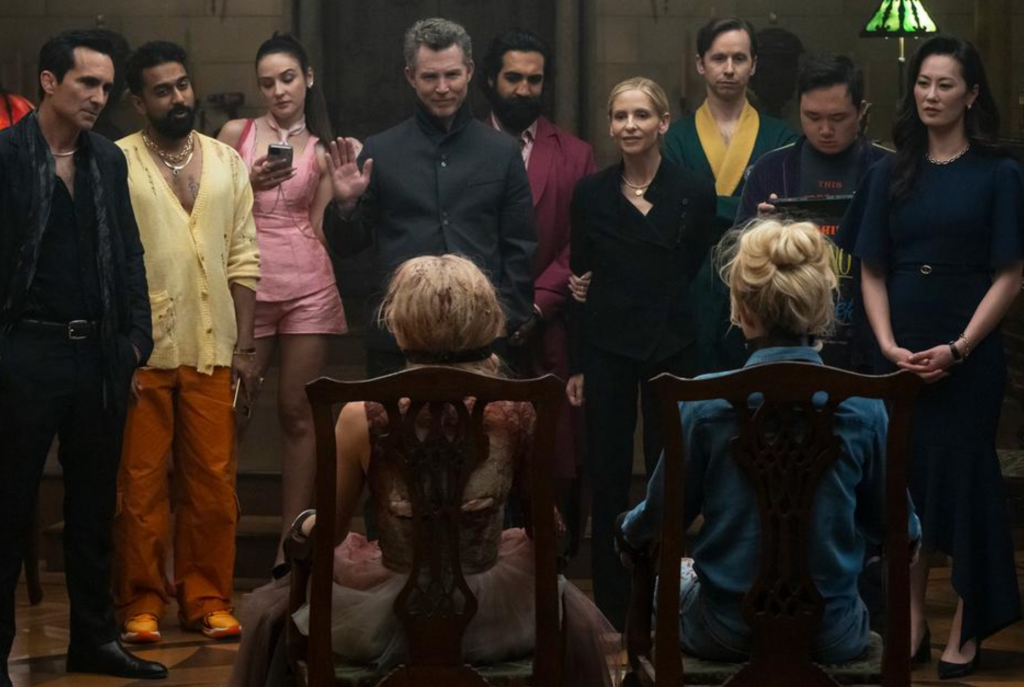
One of the year’s most divisive movies, and it’s not hard to see why; writer/director Coralie Fargeat’s heady brew of body horror and show-biz satire is deliriously, deliciously over the top, making its points (in terms of commentary and imagery) with the subtlety of a sledgehammer to the temple. There’s something invigorating about watching a filmmaker really and truly going for it, and the degree to which stars like Demi Moore and Margaret Qualley are willing to throw caution to the wind and go right along. It’s disgusting, it’s hilarious, it’s upsetting, and it’s one of the best movies of the year—if you’ve got the stomach for it.
5. The Brutalist
It was a pure matter of coincidental timing that I ended up watching Brady Corbet’s maximalist epic on the same day I needed to rewatch The Godfather Part II, but that’s one hell of a double-feature, and not just in terms of length. Corbet is tackling giant, important topics in this, his most ambitious feature to date: the immigrant experience, class commentary, creative narcissism, and the wobbly codependency of art and commerce. All throughout, the writer/director deftly fuses grand, classical Hollywood storytelling with contemporary style and technique, particularly in his unconventional (and often thrilling) shot selections and compositions. It gets darker and thornier in its second half, which has put off some critics, but not this one; it’s a knotty, difficult movie, and a towering achievement.
4. Sing Sing
Greg Kwedar’s moving prison drama is, first and foremost, a showcase for the considerable talent and gravitas of Colman Domingo, who continues to prove himself one of the most gifted actors of our time. Kwedar and co-writer Clint Bently based their script on the factual Rehabilitation Through the Arts program at Sing Sing Maximum Security Prison, in which prisoners learn social skills and teamwork by staging plays for “the population,” and much of the supporting cast is comprised of real-life alumni of the program. There is a plot, and it’s well-developed—Domingo is a founding member who feels pushed out by an intimidating new addition to the group—but the picture thrives in its quiet moments and lived-in details.
3. His Three Daughters
Three adult sisters assemble as their father, whose cancer is “very advanced,” is going into hospice care in this staggeringly good comedy/drama from writer/director Azazel Jacobs. The personality types are established early: the bossy one (Carrie Coon), the ne’er do well (Natasha Lyonne), and the peacemaker between them (Elizabeth Olsen), though one of the small miracles of Jacobs’s screenplay is how keenly it understands that we all end up merely filling the roles we’ve been placed in, no matter the accuracy. In fact, the intelligent and insightful writing makes it clear that they’re all flawed and complicated and petty and fascinating, caught at a moment in their lives of heightened emotion and elevated vulnerability, where everything is just raw, and so the wounds are even deeper than they initially appeared. Every performance is a winner, and the closing passages are just gut-wrenching.
2. Nickel Boys
RaMell Ross’s adaptation of Colson Whitehead’s novel is somehow both strikingly beautiful and utterly heartbreaking. It’s formally breathtaking, told first-person camerawork, initially from the point-of-view of a young Black man in the ‘60s-era South, though Ross brilliantly tinkers with that formal innovation as he tells his story. Whitehead’s book supplies a riveting narrative, and Ross is true to it, but he also has an impeccable sense for how efficiently a single image can tell an entire story story, and the subtle revisions of selective memory—the things you might remember, and the things you might choose, and work, to forget. It’s a stunning piece of work, and confirms Ross as a major American filmmaker.
1. Anora
Sean Baker has always been a filmmaker who finds beauty in the most unlikely of places, and in his latest film, he finds it in the neon sleaze of a Manhattan strip club. It is perhaps revealing too much to note that he adroitly captures the look, the feel, the very sound of these joints, but the scenes he sets there are less interested in bare flesh than in backstage chatter and shop talk between the employees. This is his fourth straight film about sex workers, but from the very first, he found the right approach, granting these characters a flawed but undeniable humanity; he doesn’t judge, but also resists the urge to veer into nobility and tragedy. In fact, Anora is a wildly funny movie; its centerpiece sequence, which veers from danger to slapstick to one-crazy-night farce, would’ve been a five-minute montage in any other film. Here, it’s something like half of the movie, and miracle of miracles, Baker sustains it. He was good from the jump, but he’s becoming a more accomplished filmmaker each time out, and here he’s made a film that burrows into your brain, like one of the earworm dance tracks that blast through the strip club speakers, and stays there.
RUNNERS-UP: Red Rooms, Love Lies Bleeding, Black Box Diaries, Ghostlight, Eno, My Old Ass, Janet Planet, The Piano Lesson, Strange Darling, Longlegs, Hit Man, Hard Truths, Separated, Daughters, Heretic, A Real Pain, The Order, Power, I’m Still Here, Flipside, About Dry Grasses, The Fall Guy, Challengers, Problemista, Beverly Hills Cop: Axel F.
That said, the work that I do (and the interests I cultivate) mean that I spent a fair amount of the year watching movies that came out before it. So here are the ten new-to-me movies from 2024 that I’m still thinking about:
JASON BAILEY’S TOP 10 FIRST-TIME WATCHES
10. Bless Their Little Hearts
American cinema is perpetually and woefully inadequate at telling stories of income inequality and class struggle, which is part of what made the films of the “L.A. Rebellion” of the late ‘70s and early ‘80s so powerful; they specifically address the systemic shortcomings that cause people to not only live in poverty, but stay there. That feeling of utter helplessness infests Billy Woodberry’s 1984 drama from its opening sequence, in which an instrumental version of “Nobody Loves You When You’re Down and Out” accompanies Charlie Banks (Nate Hardman) on his most recent visit to the unemployment office. At the time, the efforts of the Rebellion felt like America’s long-delayed answer to the neo-realism of Italy in the ‘50s, but now they play like dispatches from the working class, and assurances that even early on, Reaganomics was pure bullshit.
9. Scarlet Street
Fritz Lang produced and directed this 1945 banger which repurposes Renoir’s La Cheinne as a New York noir. Edward G. Robinson, smack dab in the middle of his wonderful period of aging vulnerability, is heartbreaking as a miserable pencil-pusher whose artistic ambitions make him an unfortunately ill-advised mark for a femme fatale (Joan Bennett) and her sleazy boyfriend (Dan Duryea). The turns of the plot are legitimately shocking, and Robinson’s work is first poignant and then haunting; witness his genuine, unguarded terror in the closing scenes, and the way he howls “KITTY!” in misery and fear. As Marvin Schwarz says, “What a picture.”
8. Nothing But a Man
Michael Roemer’s debut feature was, for quite some time, difficult as hell to see, and the opening credits provide a clue as to why: the songs, presented by “special arrangement with Motown Records.” Such special arrangements didn’t tend to include all future media formats, but thankfully, the Criterion Collection went to the trouble of restoring and releasing this keenly observed snapshot of the life of a Black couple in the ‘60s-era South — and the tensions of everyday interactions therein. The warmth and ease of the central relationship is overwhelming, uneasily coexisting with the interactions that its participants must navigate every day; those scenes are downright visceral, so infectious is the feeling of dread and discomfort. A modest masterpiece, boasting simple, direct, and impactful performances by Ivan Dixon, Abbey Lincoln, and a young (but already bruising) Yaphet Kotto.
7. Picnic at Hanging Rock
Peter Weir’s 1975 breakthrough film is a beautiful, visceral experience, casting a spell from its very first frame. Dramatizing the true story of a group of schoolgirls (and a chaperone) who vanish without a trace during a Valentine’s Day outing in 1900, it’s one of the great balancing acts of ‘70s cinema, telling real events in a grounded manner, but also unfolding with the feel and logic of a waking nightmare. It’s the kind of film you watch in a hush, so delicate it feels as though raising your voice will break the frame, all while gathering steam for its devastating conclusion.
6. A Story of Floating Weeds / Floating Weeds
A Criterion-prompted double feature of two by Yasujirō Ozu offered the rare opportunity to see a filmmaker tackle the same material twice, at two points in his life, in two different styles (cinematically, if not personally). A Story of Floating Weeds was made in 1934, a silent film in black and white; Floating Weeds was released 25 years later, in sound and color. As the title suggests, both are delicate and tender, stories of aging and rethinking, told with beauty and simplicity; Ozu’s direction is, as ever, direct and affecting, with compositions that are striking but never showy. Intoxicating, enchanting filmmaking.
5. Splendor in the Grass
Warren Beatty made his film debut, astonishingly enough, in this keenly observed and deeply painful coming-of-age drama from director Elia Kazan and writer William Inge. Set in the midwest, beginning in the 1920s, it’s a picture with much to say about the emotional and psychological tolls of being “good” (whatever the hell that means, in any era)—specifically, as Beatty’s golden boy and his beautiful girlfriend (Natalie Wood, never better) desperately attempt to keep their hormonal urges at bay. It’s full of moments of truth, big and small, none more devastating than in its unforgettable closing scene.
4. Black Narcissus
The release of the excellent, Martin Scorsese-presented documentary portrait Made in England: The Films of Powell and Pressburger prompted new appreciations of Michael Powell and Emeric Pressburger this year,; their films haven’t exactly disappeared in recent years, as they’ve long been recognized as among the finest filmmakers of their era, but curious cinephiles who’ve been meaning to get around to their work for years (hi) have been newly prompted to do so. This 1947 classic appears to be, and functions for no small amount of time as, a social drama, taking on hot-button issues of religion, patriarchy, and colonialism. Powell and Pressburger hit these notes so adroitly that the picture’s slow, deliberate turn from respectable drama to unhinged insanity is, in retrospect, something of a bait-and-switch; we thought we were watching A Nun’s Tale and then, in the blink of an eye, we’ve plunged headlong into a psychological horror movie.
3. Comrades, Almost a Love Story
You’ll have to reach into some of the sketchier corners of the Internet to find this 1996 gem from director Peter Chan, which isn’t legally streaming anywhere, nor is it available on domestic disc. That is, and I say this without hyperbole, a crime against cinema; it’s a film so warm, so stylish, so beguiling that I haven’t stopped thinking about it for months. Leon Li plays a Chinese mainlander and recent migrant to Hong Kong who meets another (albeit less recent) transplant, played by Maggie Cheung at her most bewitching. She first sees him as a mark, but then they become friends, and then something more—resulting in a charmer that’s something like When Harry Met Sally as helmed by Wong Kar Wai. Mark my words: some wise boutique label is going to snap up the licensing on this, and make a nice chunk of change on it.
2. The Ladykillers
There are but a handful of genuinely perfect comedies; this 1955 Ealing Studios effort from director Alexander MacKendrick (Sweet Smell of Success) is one of them. It’s a heist movie with a structure later swiped by Quick Change (and many more), in which the job itself is a breeze, and everything that follows is absolutely impossible. The complications come courtesy of the sweet little old lady (Katie Johnson, resplendent) from whom our criminal gang rents a room, and the Switch watch precision with which William Rose’s screenplay carefully tees up and swats down the turns of the narrative is awe-inspiring, up to and including the deliciously grisly fates that befall its criminal not-quite-masterminds.
1. Paris, Texas
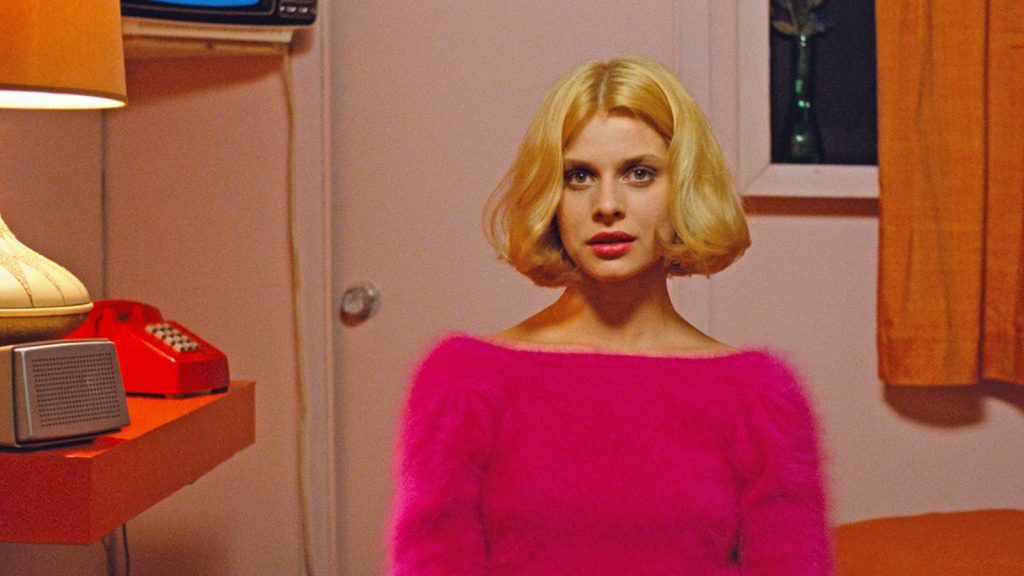
Harry Dean Stanton is captivating as an enigmatic drifter who wanders back into the lives of his brother (Dean Stockwell), his son (Hunter Carlson), and, most trickily, his estranged wife (Nastassja Kinski). Sam Shepard’s screenplay is filled with the expected memorable moments and searing insights, but the centerpiece section, in which Stanton finally comes face-to-face (sort of) with the love of his life, is one of the most moving things Shepard ever wrote, or that Wim Wenders ever directed. A rich, masterful film that reveals more with each viewing.

KIMBER MYERS’S TOP 10 NEW RELEASES
10. The Fall Guy
There is an alternate universe where this delightful action movie about action movies is the biggest blockbuster of the year, and I would like to live in that world. Ryan Gosling is the funniest comic actor working today.
9. Janet Planet
On my first viewing, Annie Baker’s directorial debut only mildly impressed me with its slow, quiet story of a little girl (Zoe Ziegler) and her mother (Julianne Nicholson) in western Mass. The second time around, I was in awe of its tenderness and detail. I love it so much.
8. A Real Pain
Other than a perfect performance by Kieran Culkin, what’s most impressive about Jesse Eisenberg’s film is its ability to navigate tricky tones. It balances between the oppositional comic energy of its leads and both individual and collective trauma.
7. Conclave
A political thriller in papal vestments, this drama is full of surprises — the largest of which is how much of a blast it is. It’s marvelously entertaining and silly for such a serious subject.
6. Rebel Ridge
A standout in the one-man army action movie genre, this Netflix original is as thrilling as it is incisive in its commentary about corruption. Jeremy Saulnier has shown promise over the years, but this is a real step up for him as a writer and director.
5. Challengers
Luca Guadagnino serves up a sexy sports movie where the real competition is off the court with Zendaya, Josh O’Connor, and Mike Faist steaming up the screen. Is tennis always this much fun? Have I been missing out?
4. Anora
Sean Baker continues to be the king of making movies about people on the outskirts of society. Mikey Madison is an absolute treasure.
3. Love Lies Bleeding
Rose Glass has made an exhilarating neon noir, full of muscles, mullets, and murder. The blackly comic ending is the perfect finisher, leaving you buzzing with energy to burn (and crushes on stars Kristen Stewart and Katy O’Brian).
2. The Brutalist
This three-and-a-half-hour movie earns every minute of its screen time. Brady Corbet has architected something thrilling with this truly American tale.
1. Nickel Boys
RaMell Ross takes a lyrical approach rather than a literal one to his adaptation of Colson Whitehead’s Pulitzer-winning novel, and the results are astonishing. How did we get so lucky that a movie like this exists?
RUNNERS-UP: Didi, La Chimera, The Substance, Hit Man, Sing Sing, Dune: Part Two, Furiosa: A Mad Max Saga, Problemista, Robot Dreams, Evil Does Not Exist, Nosferatu
AUDREY FOX’S TOP 9 NEW RELEASES
10. Lisa Frankenstein
OK, yes, it’s goofy and cheesy and gloriously imperfect, but this is the closest thing I’ve seen in
years to the pure joy of a good, old-fashioned ‘80s horror comedy. Kathryn Newton stars as the
morbid, traumatized Lisa, a reserved high-school girl who is struggling with life at a new school,
her mother’s violent death, and her father’s subsequent remarriage to an evil stepmother who
refers to herself as an “IP: Intuitive Person” with nary a hint of irony. But things really take a turn
when a freak storm brings an undead Victorian musician to her doorstep, recently resurrected
and in need of a few key body parts. What’s not to love?
9. Humanist Vampire Seeking Consenting Suicidal Person
The idea of the reluctant vampire has been done before, but never with such an off-kilter sense of style as in Humanist Vampire Seeking Consenting Suicidal Person. (The name alone is enough to earn it a place on this list.) Sara Montpetit is Sasha, a young, sensitive vampire who discovers that she can only feed on someone if they actually want to die – a complication that exasperates her parents, who don’t understand why she can’t just get on with it. But when Sasha meets Paul (Felix-Antoine Benard), a high-school student who is exhausted by life, she might have just found a solution that works for everyone. Part vampire horror film, part coming-of-age teen romance, Humanist Vampire wins over audiences with its eccentric storytelling style, ghoulish sense of humor, and immense heart.
8. My Old Ass
As a millennial living in what are, presumably, the end days, My Old Ass struck an unexpectedly poignant – albeit somewhat morbid – chord with me. On the brink of graduating and moving away from her family’s cranberry farm for good, Elliott (Maisy Stella) celebrates by going out into the woods with her closest friends and doing some mushrooms. What she doesn’t expect to happen is to come face-to-face with the 39-year-old version of herself (Aubrey Plaza), who is equally weirded out by the situation. But it gives both Elliotts an opportunity to, for better or worse, commune with each other. What would you want to impart to the younger version of yourself, if you could? What information could you share that would make your journey through life even a tiny bit easier?
7. A Different Man
I’ll just say it: I’m all in on Sebastian Stan avoiding the easy path of leading man roles and instead embracing his inner weirdo. In A Different Man, directed by the fascinating indie filmmaker Aaron Schimberg and also starring his muse, the intensely charismatic Adam Pearson, Stan plays Edward, an aspiring actor with a severe facial deformity. He undergoes a medical treatment that turns him into someone who looks like … well, Sebastian Stan, but the effect the transformation has on his life isn’t quite what he expected. What do you do when you’ve built your identity around the idea that it’s your facial deformity that prevents you from getting what you want out of life, only to realize that the vibes were off with you as an individual all along?
6. The Count of Monte-Cristo
There have been a lot of adaptations of Alexandre Dumas’ classic novel The Count of Monte- Cristo over the years, but this is arguably the best – or at least, the one that captures its dark, vengeful spirit the most accurately. Pierre Niney stars as Edmond Dantes, a naive young sailor who is falsely imprisoned for several years, discovers a vast fortune, and swiftly decides to dedicate himself solely to revenge against those who orchestrated his downfall. Niney brings a calculating edge to the role, harsh and cruel when necessary, but still somehow magnetic. With energetic pacing and an engaging supporting cast, The Count of Monte-Cristo matches the brilliance of its source material.
5. Hit Man
There were few films released in 2024 as unabashedly fun as Hit Man. Starring an almost supernaturally charming Glen Powell as a nerdy philosophy professor turned pretend hit man, this Richard Linklater joint takes us on a rollercoaster ride that is at times hilarious, steamy, and unexpectedly dark. Come for Powell’s increasingly absurd character moments as different hit men, stay for the delightful chemistry between Powell and his beguiling femme fatale, played by Adria Arjona.
4. September 5
A film that has seemingly come out at exactly the wrong political moment, considering the horrifying violence currently being carried out against Palestinians, September 5 is nonetheless an astute thriller that examines the responsibility of the media in times of crisis. When a sports news team covering the 1972 Olympics in Munich ends up with a front row seat to a hostage situation, they’re eager to be the first on the scene, but also wildly out of their depth. They quickly learn that everything they do matters – the specific words that they choose to use in their reporting, whose voices they choose to highlight, and, heartbreakingly, what sources they choose to trust.
3. Small Things Like These
An understated drama set in 1980s Ireland, Small Things Like These probes small town life, and the various cruelties and evils we are willing to coexist with. We look the other way, simply because it’s none of our business, or because the price for speaking out is too high. Bill Furlong (Cillian Murphy) lives in close proximity to a Catholic home for teen mothers – an institution famously rife with abuse – but it’s only when he has a chance encounter with one of its inmates that he has to make a choice to take action, or live forever with the fact that he has failed to act. It’s one of Murphy’s least showy performances, but also one of his most powerful.
2. Anora
New York stripper Anora (a revelatory Mikey Madison) dreams of a better life – one that seems suddenly within reach when she embarks on a relationship with the impulsive son of a Russian oligarch (Mark Eydelshteyn). But everything falls apart when his parents learn of their quickie marriage, one that they’re determined to bring to an equally speedy conclusion. An edgy take on the classic Cinderella story that only director Sean Baker could pull off, Anora features unexpectedly complex performances from its entire cast, especially Mikey Madison and her henchman champion played by Yura Borisov.
1. The Brutalist
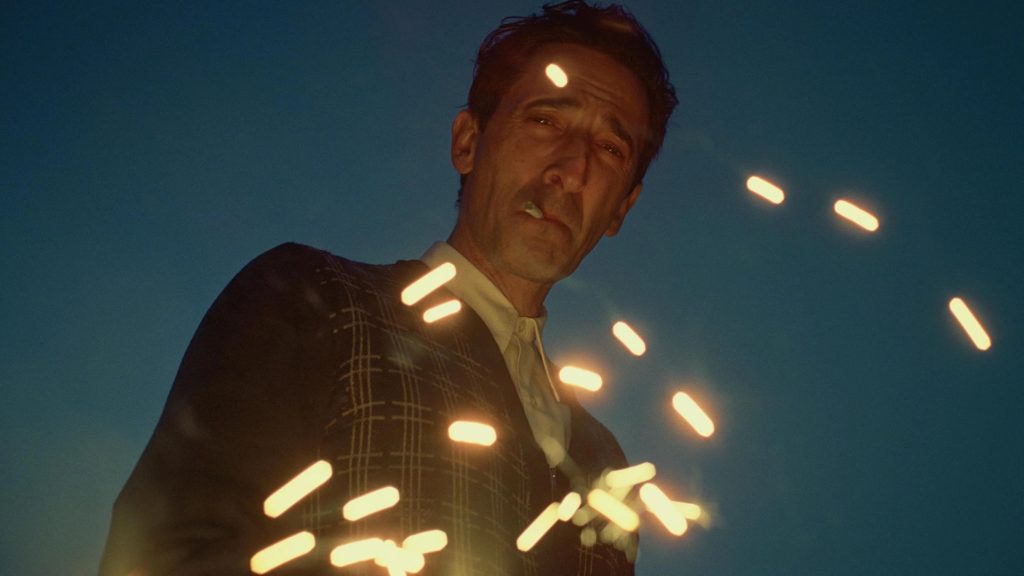
A stunning visual achievement, The Brutalist is director Brady Corbet’s magnum opus. As Hungarian architect László Toth (Adrien Brody) emigrates to the United States in the aftermath of the Holocaust, at first it seems as though he is being welcomed with open arms. But as time goes by, he and his family begin to realize the dark reality of the American dream. Running over three and a half hours but expertly paced, The Brutalist seems destined to become a modern classic.
CRAIG J. CLARK’S TOP 10 NEW RELEASES
10. Hundreds of Beavers
One of the biggest surprises in recent memory. My one regret is that I didn’t get to see it in a packed theater. The laughter such an event would generate could easily power a small city.
9. Rebel Ridge
Aaron Pierce delivers a star-making performance as a veteran with a particular set of skills who runs afoul of a corrupt small-town police department – or is it the other way around? Few directors working today are as good at ratcheting up and maintaining tension as Jeremy Saulnier, who also proves himself a sharp editor.
8. Between the Temples
A film so loose and ramshackle, it seems like it could fall apart at any moment, but its hook – a cantor struggling with a personal loss reluctantly agrees to tutor his grade-school music teacher when she decides to have a belated bat mitzvah – is made fodder for both raucous comedy and serious soul-searching by director Nathan Silver, stars Jason Schwartzman and Carol Kane, and the rest of the cast.
7. Anora
Astounding work all around. Mikey Madison is the real deal. Sean Baker’s knack for illuminating the inner lives of those who live and work on the margins of society is a true gift.
6. Nosferatu
It’s telling that no two Nosferatu are alike. F.W. Murnau’s laid down the template, but Werner Herzog’s can’t be mistaken for anyone else’s work. The same goes for Robert Eggers’s interpretation, which turns the story into a psychosexual odyssey that foregrounds the character of Ellen Hutter (fearlessly played by Lily-Rose Depp) and gives her more agency than she’s ever had before.
5. A Real Pain
Jesse Eisenberg’s sophomore outing in the director’s chair shows him to be a sharp-eyed chronicler of human (mis-)behavior. When Roger Ebert said movies were machines for generating empathy, this is precisely the kind of movie he was talking about.
4. Daaaaalí!
The second Quentin Dupieux feature to reach these shores in 2024 – the first, Yannick, arrived on MUBI in the spring – Daaaaalí! is the perfect marriage of subject matter and Dupieux’s absurdist proclivities. Catching this at the Music Box with a small but appreciative audience was among the highlights of my year.
3. Rite Here Rite Now
The Satanic Swedish metal band Ghost is something of an acquired taste, but for the initiated, this hybrid concert film (co-directed by indie stalwart Alex Ross Perry) is the perfect encapsulation of the group’s ghoulish appeal and front man Tobias Forge’s well-honed sense of showmanship. It’s the next best thing to seeing them live.
2. In a Violent Nature
I wrote about this at length in October. While it continues to provoke debate, I maintain it’s the best horror film of the year, a savvy upending of slasher conventions that still delivers the gory goods.
1. Ryuichi Sakamoto | Opus
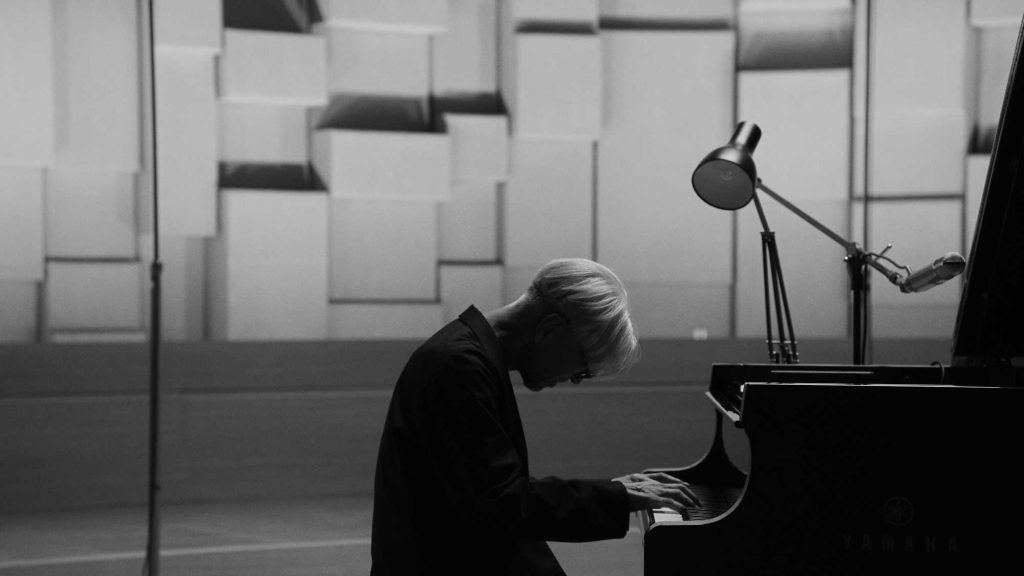
Sakamoto’s passing in early 2023 was a great loss, but he left behind one last gift for his fans: this stripped-down performance film (directed by his son, Neo Sora) in which he runs through 20 of his most iconic songs on the piano. There’s no audience. No between-song banter. No unnecessary distractions. Just the man and his music. It’s the most moving film I saw this year.

ZACH VAZQUEZ’S TOP 10 NEW RELEASES
10. A Real Pain
As someone who grew sick of the guy a few years back, it really pains me to admit that Jesse Eisenberg does, indeed, have the juice.
9. Hit Man
This is my first best of the year list in a while to not feature a Tilda Swinton movie (The End just barely missed out). If I can’t have her on it, I can at least have Glenn Powell playing Tilda Swinton.
8. Snack Shack
I was initially annoyed when this moved from being a teenage version of California Split into a more traditional coming-of-age comedy, but goddamn if it didn’t sink its hooks into me by that point. The most surefire way to get me to love a character: have them constantly get their ass kicked.
7. Evil Does Not Exist
Evil may not exist, but nature does. And you can only push it so far.
6. Anora
God love a brassy broad. Gena Rowlands would be proud.
5. Red Rooms
The scariest movie of the year. In terms of slow-dawning horror, hard pressed to think of anything in recent memory that tops THAT scene.
4. A Different Man
It’s no accident that a character is styled to look like Woody Allen at one point. Self-immolation as an act of self-discovery. Or maybe it’s the other way around.
3. Furiosa: A Mad Max Saga
Can this be the best Mad Max movie even if Mad Max isn’t really in it? I wouldn’t have thought it possible, but…
2. The Beast
A.I. will streamline the quality of human life by killing the human soul. The past, present, and especially future is doom, doom, doom, all the way down.
1. Christmas Eve in Miller’s Point
Hilarious, heartbreaking, haunting. This aint neo-realism, but it feels real. If the American cinema has a way forward, it’s through movies like this.
HONORABLE MENTIONS:
Megalopolis
Is this a good movie? Certainly not. Is it a bad movie? Often, if not entirely, yes. But is it a legitimately great movie, despite not being a good movie and often a bad movie?
Maybe.
Drive-Away Dolls
“Will no one save Curly?”
JOSH BELL’S VODEPTHS TOP 10
Even as Netflix and Amazon Prime Video spend hundreds of millions of dollars on original movies, there’s still a stigma attached to films that are released direct to VOD and streaming services. But beyond the expensive drivel those major streaming outlets typically highlight, and often hidden amid reams of cheap filler, there are entertaining and accomplished gems like these 10 films.
10. The Silent Hour
Once-promising journeyman director Brad Anderson delivers his best movie in years with this efficient Die Hard-style thriller starring Joel Kinnaman as a hearing-impaired cop trapped in a partially renovated building with a deaf witness who’s been targeted by criminals for elimination. The action is clear and swift, and there’s just enough character development to stay invested in the outcome.
9. The Sales Girl
A far cry from the Mongolian movies that usually make it to the U.S., this sweet coming-of-age dramedy follows a timid college student who begins asserting her independence in various areas of her life after taking a temporary job behind the counter of a sex shop. It’s an insightful portrayal of modern urban Mongolian life and a gentle, appealing story about a young woman finding herself.
8. Prom Dates
Hulu’s deal with teen-focused production company American High has yielded quite a few likable, funny movies — like this one — that the streaming service seems determined not to promote. This one-crazy-night comedy about a pair of best friends desperately searching for last-minute prom dates is sensitive and progressive without holding back on the vulgar humor.
7. Lowlifes
Tubi originals have been stealthily improving, and the free streaming service’s best movie of 2024 is a clever horror comedy that subverts genre expectations. The seemingly clueless tourists are the ones who pose the real danger, as a backwoods hillbilly family invites the wayward strangers into their home and pays the delightfully mean-spirited price.
6. Swan Song
This straightforward but fascinating documentary incorporates complex personalities into its largely procedural account of the National Ballet of Canada’s 2022 post-Covid reopening production of Swan Lake. Director Chelsea McMullan knows when to sharply challenge historical gatekeeping in ballet, and when to step back and let the breathtaking artistry speak for itself.
5. The Paragon
The dry humor in this New Zealand sci-fi comedy makes its limited resources into an asset, as a washed-up tennis pro finds himself in the middle of a battle for the fate of the universe. Writer-director Michael Duignan even finds room for some poignant character development amid sarcastic jokes about the constraints of his low-fi multiverse saga.
4. Knit’s Island
Like the higher-profile Netflix movie The Remarkable Life of Ibelin, this documentary explores the complex relationships within an online gaming community by directly depicting the game itself. The filmmakers immerse themselves entirely in a post-apocalyptic open-world game where players go on power trips, form makeshift communities, and test the boundaries of both the game and their own emotional states.
3. My Sole Desire
This French drama set in a strip club deftly avoids clichés of stories about sex workers without downplaying the characters’ sexual expression. Two dancers engage in a tentative offstage romance while also taking genuine pleasure in their creative striptease performances, in a movie that places equal value on the sensual and the everyday.
2. Starring Jerry as Himself
The title character of this alternately heartbreaking and heartwarming docufiction hybrid is a Taiwanese-born retiree in Florida who loses his life savings in a scam. Jerry then gets to realize his long-standing dream of making a movie when he stars in the engrossing thriller-style re-enactments of his ordeal, alongside his actual family members.
1. The Young Wife
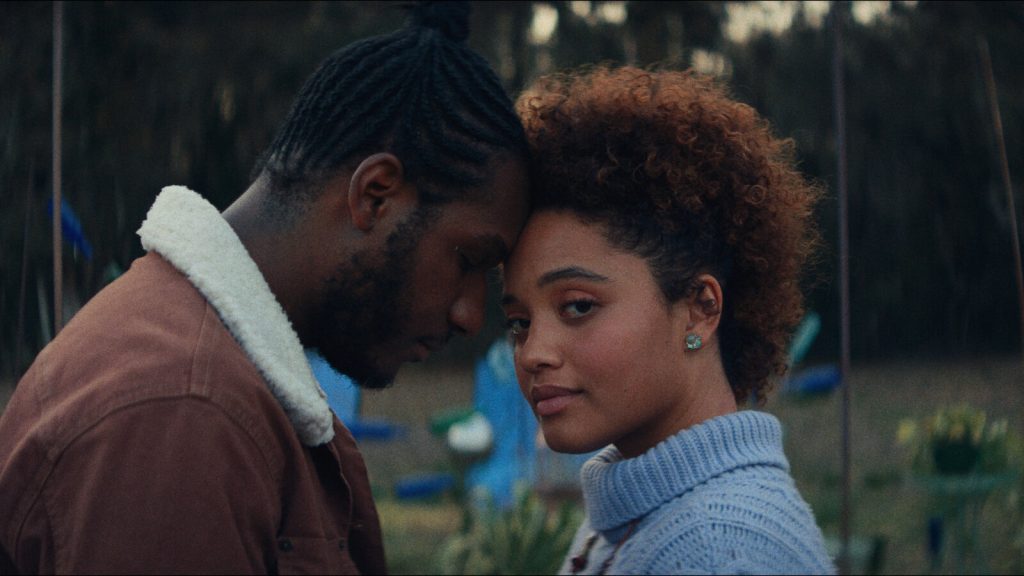
The best DTV release of 2024 is also one of the year’s best movies, period. It’s a travesty that the second feature from Selah and the Spades writer-director Tayarisha Poe was released with such little fanfare, because it’s a joyous, gorgeously rendered celebration of nuptial chaos, starring Kiersey Clemons as a formidable but anxious but bride-to-be in a lightly dystopian future.