Max Borg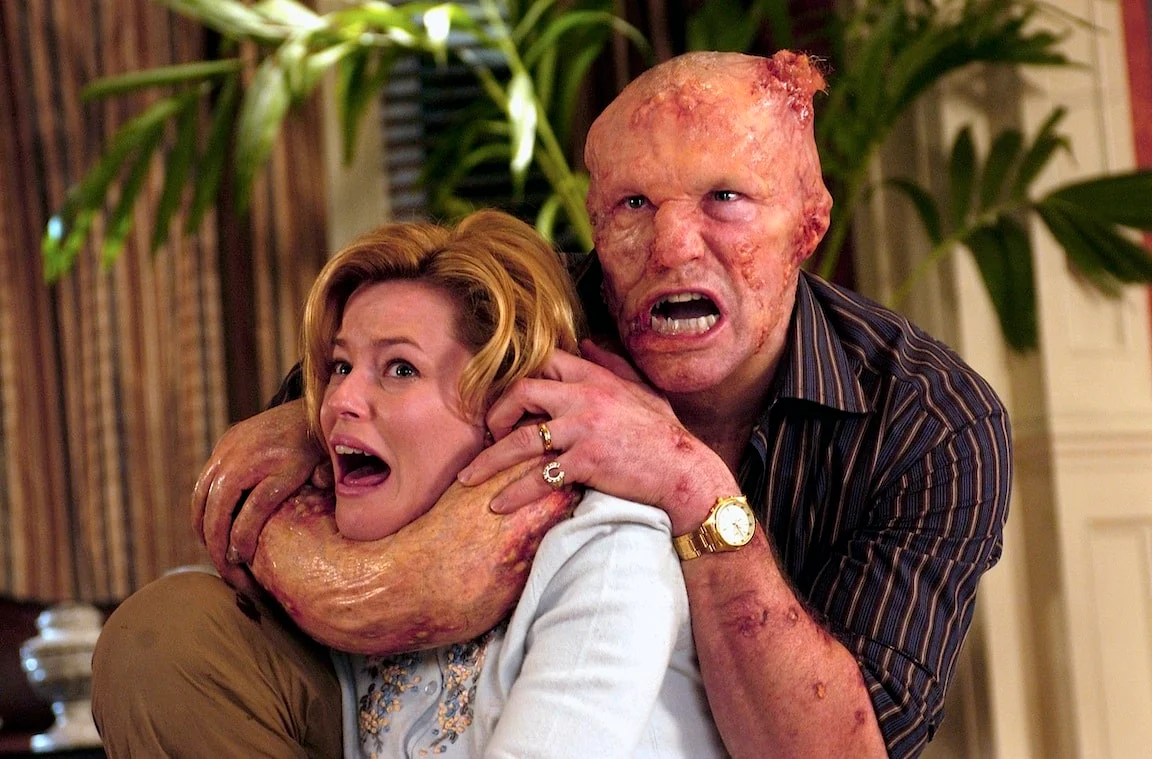
On March 31, 2006, American audiences discovered Slither. Or rather, they didn’t: made for $15 million, it grossed only $12.9 million theatrically before finding its crowd on DVD and experiencing a popularity boost to match the evolution of its director’s career. For this is not just any old low-budget horror-comedy. It’s the directorial debut of one James Gunn, now a major figure in superhero filmmaking.
Having cut his teeth as one of Lloyd Kaufman’s disciples over at Troma Entertainment, Gunn graduated towards more mainstream projects in the early 2000s, landing high-profile writing gigs at major studios. In 2002, he made his Hollywood debut with Scooby-Doo, and two years later, with Dawn of the Dead and Scooby-Doo 2: Monsters Unleashed, he became the first screenwriter to have two different movies open at the top of the box office charts on consecutive weekends.
That success earned him the necessary clout to direct one of his own scripts and keep his ideas unaltered (while he ultimately did enjoy the Scooby-Doo experience, the first film was severely toned down from the PG-13 draft he was originally hired to write). Enter Slither, a throwback to body horror movies from the 1970s and ‘80s (the theatrical poster, with mysterious creatures crawling into a bathtub, is reminiscent of another celebrated debut, David Cronenberg’s Shivers). Specifically, it’s the body of a man named Grant, who turns into a monstrous, tentacled entity after being infected by an alien parasite which also turns other people into mindless zombies.
Buried under layers of prosthetics for most of the duration, the actor cast to play Grant was none other than Michael Rooker, anointed into Gunn’s cinematic family in cheekily disgusting fashion. Nathan Fillion and Elizabeth Banks, the two leads, would also go on to frequently collaborate with the director, as would Gregg Henry, who plays Mayor MacReady (named after Kurt Russell’s character in The Thing). Gunn’s then-wife Jenna Fischer also pops up in a memorable supporting role, while his younger brother Sean – at the time arguably the more successful of the two, thanks to his role on Gilmore Girls – has a blink-and-you’ll-miss-it cameo. The aforementioned Kaufman also began a tradition of appearing briefly in his former protégé’s work.
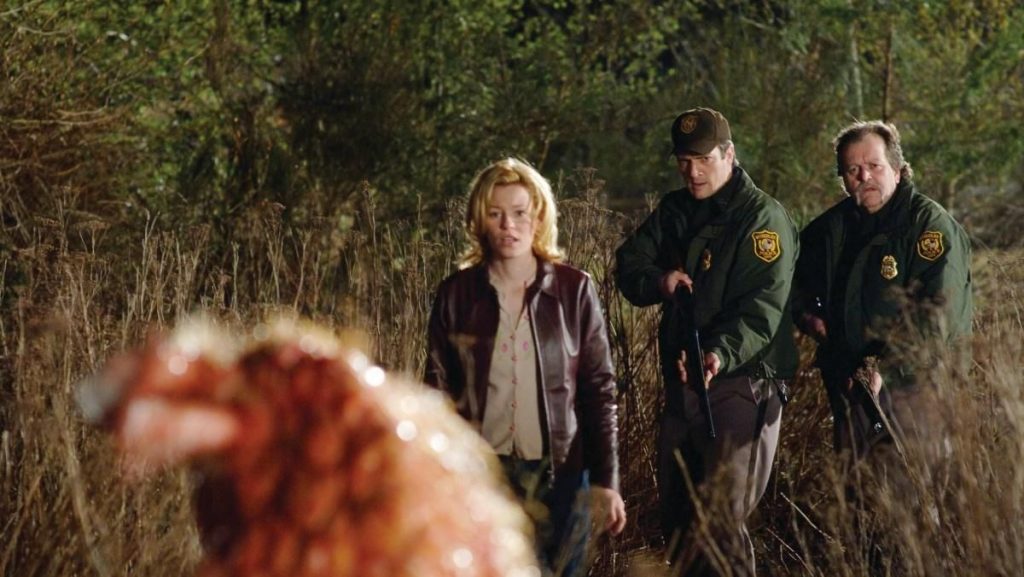
But the real star of the whole thing was, and still is, the man in the director’s chair. Revisited now, it’s funny to notice how Slither effectively set the tone for Gunn’s subsequent career, and specifically his need to occasionally return to his grimier roots after tackling something more akin to four-quadrant entertainment. Back in 2006, this was basically a palate cleanser after two scripts about a talking dog; nowadays, the likes of The Suicide Squad and its HBO Max offshoots Peacemaker and Creature Commandos serve a similar purpose in between installments of Guardians of the Galaxy and Superman, albeit with bigger budgets.
Sure, Dawn of the Dead was a suitably R-rated affair, but it was still backed by Universal and directed by someone else (Zack Snyder, making his Hollywood debut), so not all of Gunn’s ideas translated to the screen exactly as he had conceived them, partly to avoid an NC-17. The same studio did end up distributing Slither in several territories, but the movie was a fait accompli when they acquired it, having been produced independently in Canada. One can only imagine how hard it must have been for them to sell a film that, for all its charms, is a gleefully gruesome piece of work, perhaps to a fault: when commenting on the disappointing box office, The Hollywood Reporter went as far as saying the movie could have killed horror comedies’ commercial viability for the foreseeable future. It certainly didn’t help with the international rollout (my first memory of seeing it, after it definitely didn’t find its way to a theater anywhere near me, is on Finnish cable television late at night in the summer of 2007).
But much like the parasites at its center, Slither eventually spread among the gore aficionados, turning into the ideal calling card for someone whose off-kilter sensibilities were apparently the shot in the arm Marvel and DC Comics blockbusters sorely needed. And it all began with Michael Rooker transforming into a creature so disgusting, it makes Cronenberg’s Brundlefly look like a Calvin Klein model.
“Slither” is available for digital rental or purchase.