Jason Bailey
Every Tuesday, discriminating viewers are confronted with a flurry of choices: new releases on disc and on demand, vintage and original movies on any number of streaming platforms, catalogue titles making a splash on Blu-ray or 4K. This twice-monthly column sifts through all of those choices to pluck out the movies most worth your time, no matter how you’re watching.
PICK OF THE WEEK:
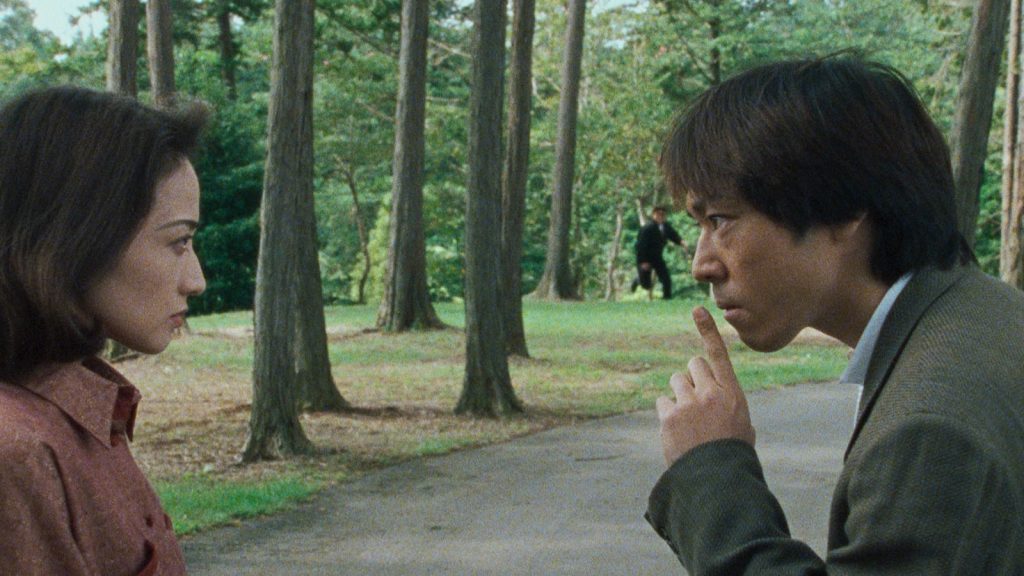
Birth: When Jonathan Glazer’s Sexy Beast follow-up (a new addition to the Criterion Collection) hit theaters in 2004, the reviews tilted negative, the Manhattan milieu and slightly supernatural themes prompting unfavorable comparisons to Rosemary’s Baby. It’s not only unfair, but inaccurate; this is an inversion of that narrative, in which the pixie-cut female protagonist was the only sane person amongst a crowd of crazies. This time around, after some resistance, she has bought into the somewhat supernatural premise, and the people around her are trying to talk her down to earth. As such, the picture’s success relies almost entirely on Kidman’s performance—specifically, the extent to which we see her thinking, deciding, realizing things as the character does—and it’s one of her best. Glazer also makes fine use of Anne Heche’s unpredictable energy, and the automatic air of respectability and gravitas you get when you cast Lauren Bacall. And there may be no filmmaker who’s made better use of Huston’s whole genial patrician thing, particularly in the perfect moment when that performance goes from meticulously controlled to absolutely unhinged. It’s a perfectly modulated break with reality, and frankly, you can say the same about Birth itself. (Includes archival interviews, featurettes, trailer, and essay by Olivia Laing.)
ON 4K/ BLU-RAY / DVD / VOD:
One Battle After Another: The twist of watching Paul Thomas Anderson’s scarily prescient picture at this specific moment is that certain touches that might have played like satire not too long ago — like the cabal of white supremacist power brokers in politics and business who are “dedicated to making the world safe and pure” — now feel like straightforward fact. The intensity of the dread Anderson is building throughout (underlined by the merciless plinking of Jonny Greenwood’s score, the sound of an anxiety attack) is multiplied exponentially by the world it’s being unleashed in, and as we watch military men kidnapping American civilians in broad daylight, it feels pressing and urgent in a way this filmmaker’s work hasn’t before. It’s not a throwaway that we catch Bob watching The Battle of Algiers on TV, but it doesn’t feel aspirational, or hyperbolic. It simply feels that this, like that, was the movie for the moment. (Also streaming on HBO Max.)
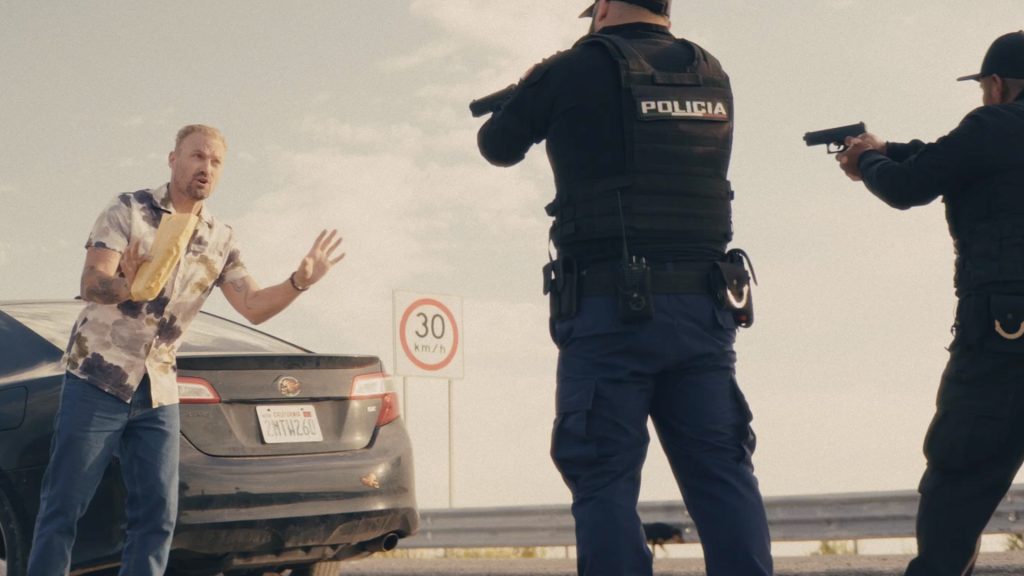
Roofman: Derek Cianfrance is not the first filmmaker you’d think of to helm a lightweight combo of crime caper and romantic comedy — the director of Blue Valentine and The Place Beyond the Pines tends to trudge through weightier waters than that. And that might be why this one feels so sui generis; he brings a sense of gravitas to what could have been a throwaway, aided immeasurably by the considerable chemistry and charisma of leads Channing Tatum and Kirsten Dunst, who play (respectively) a criminal on the lam and the single mom he falls for. We see all sorts of filmmakers trying to reanimate the cinema of the ‘70s with camera tricks and period music, but here’s a director who’s attempting the wild tonal swings and lived-in authenticity of that era, and pulling it off. (Also streaming on Paramount+.) (Includes deleted and alternate scenes and featurettes.)
ON BLU-RAY / DVD / VOD:
Fackham Hall: Much was made last year of Akiva Schaffer and company somehow successfully rebooting the Naked Gun franchise, and deservedly so. The Zucker-Abrams-Zucker brand of big-screen spoofery — winking anachronisms, cheerful vulgarity, background gags, merciless overkill, and outright silliness — is so difficult to replicate that it was something of a miracle, so it’s all the more shocking that director Jim O’Hanlon and his five-man writing team pulled it off as well. Their targets are British period dramas in general and Downton Abbey in particular, with Damian Lewis and Katherine Waterston as the lord and lady of the titular estate. Thomasin McKenzie (really showing her range last year, between this and The Testament of Ann Lee) is delightfully game as their daughter, pressured to marry for money in order to save the family; Ben Radcliffe is charming as the con artist who is her one true love. The gags fly so fast and furious that the occasional clunker doesn’t even matter; another joke will come along soon enough. (Includes deleted scenes.)
Orwell: 2 + 2 = 5: Raoul Peck’s latest is a close cousin to his masterpiece I Am Not Your Negro, again spotlighting the work of a timeless author solely by his words, accompanied by images from both the times that inspired them and the current political moment that they may as well be commenting on. But one can forgive him for repeating himself, since he does it so effectively. The subject, obviously, is George Orwell, an author whose ideas and terminology seem to only grow more relevant with time, yet are often carelessly deployed by those who don’t understand them, or even to mean the opposite of what he intended (ironically enough). It’s impeccably assembled, using everything from film adaptations of his novels to contemporary war footage and acts of political violence (Mr. Trump, as you can imagine, gets plenty of screen time) to illustrate such undeniable notions as “The very concept of objective truth is fading out in this world.” By the time he’s giving us pointed examples of newspeak in 2025, it’s clear that Peck has made the movie of the moment. “All that matters has already been written,” Orwell is quoted as writing early in the film, and by the time it’s repeated at the end, it’s a real you can say that again moment.
Shelby Oaks: The feature directorial debut of YouTuber Chris Stuckman starts off as a clever Blair Witch riff, detailing the disappearance of a quartet of YouTubers (naturally) who host a paranormal investigation show. It’s a clever opening, both in terms of style and exposition (if Blair Witch was a faux-documentary, this is a faux-true crime documentary), even if the actors aren’t terribly convincing interview subjects. After the title drop 17 minutes in, that conceit is abandoned for a more straightforward narrative approach, as the sister of the show’s primary host takes up the search, with increasingly unnerving results. Stuckman’s got the goods as a filmmaker — the picture is creepy as hell, well-constructed and tightly executed – even if he loses the thread a bit in the closing stretch. (Includes audio commentary, featurettes and episodes, trailer, and TV spots.)
ON 4K:
House Party: If you’re old enough to remember its original release, there’s something simply delightful about the Criterion Collection adding this 1990 teen comedy to its storied ranks — a reminder, alongside such previous Criterion releases as Fast Times and The Breakfast Club, that sublime filmmaking can often come in disreputable packages. House Party may have looked like an attempt to package hip-hop pop stars Kid ’n Play in a dopey Elvis-style teensploitation picture, but the writing/producing/directing team of Reginald and Warrington Hudlin filled their picture with warm moments, pointed commentary, and terrific supporting players. Chief among them is the late, great Robin Harris, a brilliant stand-up and live wire character actor who passed away just as he was making his name, whose turn as Kid’s curmudgeonly pop is both uproariously funny and subtly humane. (Includes audio commentary, interviews, cast reunion, original short film, trailer, and essay by Michael Harriot.)
Captain Blood: “Your sacred duty, rogue, is to your king,” Irish doctor Peter Blood is told early in Michael Curtiz’s swashbuckler, to which he replies, “I thought it was to my fellow man.” This 1935 classic (new to 4K from Criterion) hits different today, is what I’m saying, and the subtext is unexpected if all you’ve seen is Errol Flynn on a pirate ship. That’s really what makes Captain Blood so special; the adventure is all packed into the second half, with an opening hour that carefully establishes the characters, their political conflicts, and the interpersonal dynamics between Flynn’s Captain Blood and Olivia de Havilland’s rich aristocrat. Their chemistry is electric, and Curtiz’s direction is energetic and well-paced. (Includes audio commentary, documentary, radio adaptation, trailer, and essay by Farran Smith Nehme.)
The Dead: I’m not sure there’s ever been a final film that felt more like a final film than John Huston’s, this 1987 adaptation of the James Joyce novella that spends much of its brief running time reckoning with mortality itself (as well as with the tension between tradition and modernism). The setting is Dublin, 1904, where a modest dinner party prompts a group of friends and relations to contemplate their lives, for better or worse. It’s one of those wonderful stories that’s small in scope but vast in its emotional impact, casually funny and often devastatingly heartbreaking. (Includes behind-the-scenes documentary, interviews, audiobook excerpts, and essays by Michael Koresky and Tony Huston.)
Kiss of the Spider Woman: Fresh from its surprisingly unsuccessful movie musical adaptation, Criterion releases a lush 4K of Hector Babenco’s 1985 original (itself based on a novel by Manuel Puig). William Hurt and Raul Julia are cellmates, political prisoners in a Brazilian dictatorship; the apolitical Hurt is imprisoned for being gay, so he passes the time by weaving elaborate, cinematic tales of love and intrigue for the revolutionary Julia. It’s narratively dazzling, intermingling present, past, and fantasies, which Babenco brings to life with impressive flexibility of styles and aesthetics. Hurt’s swishy characterization hasn’t aged that well, but the connection between these two fine actors is compelling, and the turn to straight-up nail-biting thriller in the third act is genuinely impressive. (Includes documentary, interview, featurette, and essay by B. Ruby Rich.)
Diva: This arthouse hit from 1981 gets a 4K bump from KL Studio Classics, and looks and sounds as crisp and invigorating as it ever has. It’s a thrilling story of obsession, murder, and surreptitious recording, in which a young postman’s obsession with a legendary (but unrecorded) opera singer leads him to make a high-quality bootleg of her performing, only to get it mixed up with a recording incriminating a dirty cop. It’s easy to pinpoint the influences director and co-writer Jean-Jacques Beineix is working from, but like Tarantino a decade later, he so thoroughly ingests and synthesizes those influences that the resultant style is purely of his own making. (Includes audio commentaries, introduction, interviews, featurettes, and trailer.)
The Grey: Hands down best film of Liam Neeson’s surprising action hero second act, this 2012 banger (out in a new 4K steelbook from Shout Factory) stars Neeson as a near-suicidal Alaskan oil worker whose team is downed in a plane crash in the frozen forest, where they try to stay alive as the haunted sound of howling wolves surrounds them. It’s a bracing picture, but when director Joe Carnahan stops to take a breath, he makes it a good, full, deep one; a campfire scene not only shades in the details of the rather stock characters (the entire supporting cast is unassumingly great), but gives Neeson a powerful speech about the things “that make you want the next minute more than the last,” the things that are, for lack of a less worn phrase, worth fighting for. The Grey has depths and weight that are unexpected, from the bravura scene early on where Neeson guides a dying man into the darkness to its unexpected turn towards existentialism near its gutty ending. It’s a tough nail-biter with a still-surprising thoughtful streak. (Includes audio commentary, deleted scenes, and trailer.)
Leaving Las Vegas: Director Mike Figgis and stars Nicolas Cage and Elisabeth Shue were all, in their own ways, frustrated by the turns of their careers and the state of commercial moviemaking when they teamed up for this 1995 adaptation of John O’Brien’s semi-autobiographical novel (new to 4K from Shout Selects). Cage stars as Ben, an alcoholic screenwriter who takes stock of the disrepair of his life, and resolves to go to Vegas to drink himself to death; Shue is the call girl who becomes his companion and then his caretaker. There are so many clichés built into the narrative that it’s easy to imagine seventeen ways this could’ve gone poorly, but Figgis’s sensitive screenplay, and his wise decision to shoot in real locations on 16mm, grounds the picture in the kind of barely-veiled reality in which Cage and Shue’s evocative performances can live and breathe. (Includes audio commentary.)
Cloud Atlas: This sprawling, nearly three-hour adaptation of a novel many thought unfilmable (also new to 4K from Shout Selects) was adapted and team-directed by the Wachowskis and Run Lola Run director Tom Tykwer; the Wachowskis took three of the six storylines, and Tywker took the remainder, the two units shooting concurrently with shared casts (most of the actors appear, in some form or another, in all six stories). The stories aren’t just separated by time—they run the gamut from science fiction to historical drama to journalistic thriller to slapstick comedy, and the juxtapositions are sometimes tough to negotiate, a few of the key sequences coming off with the jarring incongruity of channel-surfing. But it’s a strategy that pays off more often than not, as the fluidity of the filmmaking is remarkable, whether in big, thrillingly intercut action beats or little transition moments (one person will go to a door and knock, and another door will open decades or even centuries later). This does not feel like a film that was directed in two halves, it’s so surprisingly consistent and unified, and the multi-genre mash-up is less discombobulating than it sounds; the filmmakers are like particularly adroit DJs, pulling and sampling everything from Parliament to Mantovani. It’s big-canvas, visceral filmmaking, as challenging and chancy as mainstream movies are likely to get in these timid times. (Includes documentary, archival featurettes, and trailer.)
Rabid: Director David Cronenberg followed up his debut feature Shivers with this similarly gnarly horror thriller, again exploring the societal effects of a horrifying outbreak among the young and beautiful people. This time, the setting is a remote plastic surgery clinic, where a young woman (Marilyn Chambers), taken in after a horrifying motorcycle accident, gets a skin graft that turns her into a carnivorous “crazy.” Cronenberg retains the unsettling quality of his first film, and the general griminess of the best of ‘70s indie horror, while expanding the scope of his filmmaking and the bleakness of his storytelling. And while Chambers may have been best known for her more adult-oriented pursuits, she finds just the right mixture of bloodthirsty monster and sympathetic protagonist. (Includes audio commentaries, new and archival interviews, video essay, trailer, and TV and radio spots.)
The Great Silence: Of the many, many makers of Spaghetti Westerns that populated Italy’s film industry after the stunning success of Sergio Leone, few were as preternaturally gifted and as mercilessly nihilistic as Sergio Corbucci, whose advocacy by Quentin Tarantino has all but single-handedly made him an icon among a certain type of cinephile. His best-known picture is Django, but this 1968 bruiser (making its 4K debut from Film Movement Classics) is probably his best, a bleak and beautiful Western epic that combines the brute force of Corbucci with the burning intensity of Jean-Louis Trintignant (in the leading role of a mute bounty hunter) and the all-out cuckoo-bananas insanity of Klaus Kinski as the villain. Corbucci’s visual flourishes and narrative relentlessness are on full display, and the 4K restoration brings out all the beauty of the high-contrast photography — it feels like we can gawk at every flake of the snowy landscape. (Includes audio commentaries, interviews, featurettes, alternate endings, trailers, and essays by Nick Newman, Elena Lazic, and Filipe Furtado.)
ON BLU-RAY:
Maraschino Cherry: Vinegar Syndrome and its various adults-only partners have done a yeoman’s job of restoring and presenting the work of four-star erotic filmmaker Radley Metzger, and the work he did both under his own name and his nom-de-porn Henry Paris. This 1978 effort, new from Quality X, was the last he made under the Paris pseudonym, and nicely underscores the contrast between the two filmographies: Metzger took erotica seriously, but not pornography, so his hardcore Henry Paris pictures approach sex with slapstick silliness and winking goofiness. That’s certainly the case here, as he tells the story of Manhattan bordello owner Maraschino Cherry (Gloria Leonard) and the one-day crash course in the business of pleasure that she gives to her visiting sister Penny Cherry (Jenny Baxter). The performers are engaging, the sex is suitably salty, and Metzger’s sense of humor remains a welcome balm to the dead-serious business of porn. (Includes audio commentary, interview, trims and outtakes, trailers, radio spots, and essay by Ashley West.)
Smoke and Mirrors: The Story of Tom Savini: This 2015 documentary from director Jason Baker isn’t exactly a first-class piece of filmmaking — it’s technically amateurish and barely interrogates the contradictions of its subject, special effects and makeup master turned actor and general cult figure Tom Savini. But Savini has had such a fascinating career, so full of memorable credits, unexpected career turns, and casual brushes with greatness, that the viewer’s attention never wavers. And Savini is such a genial fellow, with so many funny stories and keen insights, that it’s hard to complain about any filmmaker with the good sense to train their camera on him. (Includes audio commentary, additional behind-the-scenes footage, home movies, and trailers.)
The Snow Creature: It’s easy to approach this fundamentally silly 1954 B-movie, new to Blu from Vinegar Syndrome Labs, as a Mystery Science Theater 3000 episode waiting for the riffs, and you may well get your money’s worth by simply doing that job yourself: the titular monster is laughable, the performers are wooden, and the leading man has a verbal resemblance to Johnny Carson that renders most of his line readings accidentally hilarious. But director W. Lee Wilder (Billy’s brother!) keeps things moving at a good clip — he’s just as aware as you are of how loopy this thing is — and it has that specific ‘50s monster movie energy that makes it quite a good time, if viewed late enough at night with the proper herbal or liquid accompaniment. (Includes audio commentary and interviews.)