Jason Bailey
Every Tuesday, discriminating viewers are confronted with a flurry of choices: new releases on disc and on demand, vintage and original movies on any number of streaming platforms, catalogue titles making a splash on Blu-ray or 4K. This twice-monthly column sifts through all of those choices to pluck out the movies most worth your time, no matter how you’re watching.
PICK OF THE WEEK:
His Girl Friday: Ben Hecht and Charles MacArthur’s stage hit The Front Page was first made into a film in 1931, but for this 1940 adaptation (a new 4K upgrade from the Criterion Collection), director Howard Hawks and screenwriter Charles Lederer famously turned star reporter Hildy Johnson into a woman, created a romantic history with editor Walter Burns as adversarial as their work relationship, and wound up with one of the great comedies of the era. It hasn’t lost a bit of its bite; this fast-talking, lightning-paced, whip-smart picture influenced everyone from Mamet to Sorkin to Tarantino. And the sexy spark of stars Cary Grant and Rosalind Russell still leaps from the screen — you can’t imagine her actually running off with boring old Ralph Bellamy, simply because she and Grant get too much pleasure out of pushing each other’s buttons. (Includes the full 1931 Front Page; interviews; featurettes on Hawks, Russell, and Hecht; radio adaptations; trailers; and essays by Farran Smith Nehme and Michael Sragow.)
ON MUBI:
The Mastermind: On a baseline level, it’s kind of insane to imagine Kelly Reichart, the maker of such low-key indie dramas as Wendy and Lucy and First Cow, helming a heist movie. She’s aware of that incongruity, and leans into it, making a modest, ‘70s-era character study that not only de-glamorizes the heist itself (lingering on logistics, miring in minutiae, the execution more clumsy than cool) but the romantic notion of the life of crime. The early scenes find quiet irony in the domesticity of Josh O’Connor’s title character, whose planning meetings are interrupted by his curious but clueless wife (Alana Haim) and whose heist is thrown a monkey wrench by a forgotten inservice day for his kids (“You two stay outta trouble,” he instructs them, handing them a few bucks). But the deeper it gets, the more ironic the title becomes, as the depths of his ineptitude are revealed. The jazz score by Rob Mazurek is appropriate, since the director is doing idiosyncratic variations on familiar themes, all while stubbornly refusing to take narrative shortcuts or go in easy directions. (Streams starting Friday.)
ON BLU-RAY / DVD / VOD:
The Long Walk: It’s a little nutty that, within the same year, we got two different adaptations of not just Stephen King books but specifically books written under his pseudonym Richard Bachmann (this and The Running Man). It’s even stranger that they’re both dystopian nightmares that now seem like chillingly prescient predictions of the current moment. Beyond that, it’s fascinating to contemplate the participation of director Francis Lawrence in The Long Walk, since it now seems like such an obvious inspiration for the Hunger Games franchise. As far as what’s onscreen, this is a brutal but exhilarating watch; the exposition is efficient, the characters are sharply drawn, and the acting is universally stellar, particularly Cooper Hoffman and David Jonsson as the primary participants and Judy Greer in a brief but devastating turn as Hoffman’s mom. And Mark Hamill (also seen in yet another 2025 King adaptation, The Life of Chuck) is a stunner, with a performance that’ll make you wonder how King wrote such a pointed parody of Pete Hegsmith clear back in 1979. (Includes featurettes and trailer.)
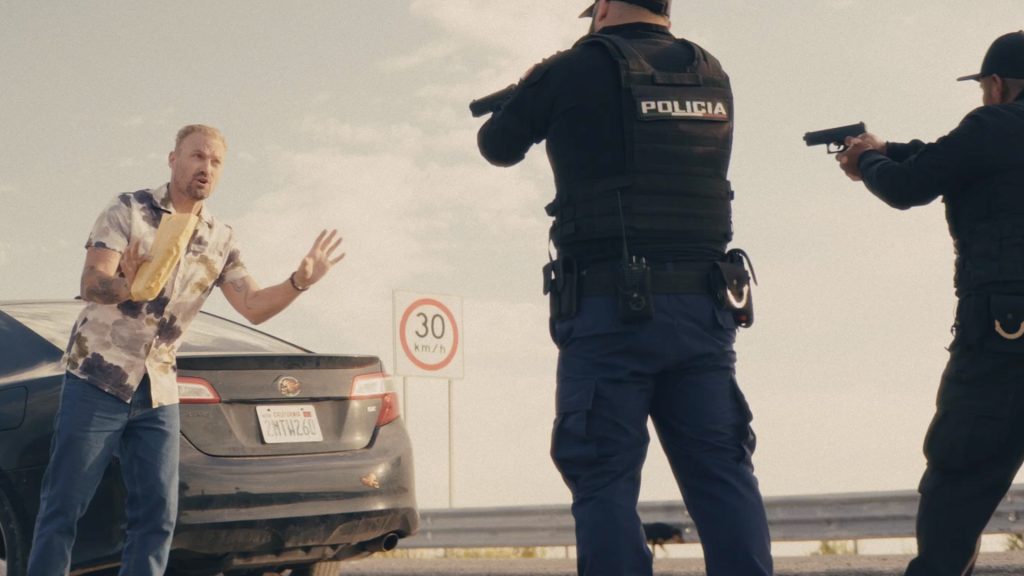
Kill the Jockey: What kind of movie is Kill the Jockey? It’s the kind of movie where our hero asks an underworld acquaintance for a gun, and when he’s handed the bag with the weapon, the tough guy adds, “I also put some hot dogs in there. You are too skinny!” It’s a crime thriller with a kooky, cockeyed approach, stylish and bewildering, right from the jump; the director is Luis Ortega, a filmmaker from Buenos Aires with a giddy absurdist streak and a gift for striking compositions (the cinematographer is Timo Salminen, Aki Kaurismäki’s go-to). What begins as a riff on American boxing noir turns into something much stranger, Lost Highway as remade by Almodovar, with an unexpected (and refreshingly cheerful) turn into a trans narrative. It doesn’t always land, and doesn’t make much sense. But it certainly doesn’t bore. (Includes interview, teaser, and trailer.)
ON 4K:
The Killer: The soulful ethos of director John Woo’s Hong Kong golden age—from 1986’s A Better Tomorrow to 1992’s Hard Boiled—was never more fully embodied than in Woo’s international smash, first released in 1989. Chow Yun Fat’s Ah Jong, a ruthlessly efficient assassin-for-hire, sports a taciturn morality and complicated masculinity, haunted by his sins and desperate to atone for them—and making this foreign action hero a welcome respite from the monosyllabic, blank-slate killing machines (Stallone, Schwarzenegger, et al) who were populating American screens of the era. The latest in Shout Factory’s “Hong Kong Cinema Classics” line is somewhat hobbled by its release chronology (it suffers a bit in comparison to Hard Boiled, which achieves the perfection Woo was seeking here), but… that central performance. Holy moly. (Includes audio commentaries, feature-length Woo documentary, interviews, deleted and extended scenes, trailers, and essays by Grady Hendrix, Victor Fan, Calum Waddell, and Brandon Bentley.)
I Know Where I’m Going!: An early Criterion title (spine number 94!) gets the 4K bump, and it’s a mighty one — a 1945 masterpiece from the Archers themselves, Powell and Pressburger, full of the lush cinematography and unapologetic romanticism of their best work. Wendy Hiller is prickly and perfect as a would-be bride whose trip to her wedding is waylaid by both an impassable storm and the sexy naval officer (Roger Livesey) who she ends up biding her time with. The Scottish settings are gorgeous and the vibes are immaculate, and Criterion’s restoration work is reference-quality as usual. (Includes audio commentary, introduction by Martin Scorsese, restoration demonstration, Mark Cousins documentary, photo essay and stills featurette, home movies, and essay by Imogen Sara Smith.)
Salaam Bombay!: Mira Nair’s first narrative feature (and international breakthrough) joins the Criterion Collection, where it seems a nice snug fit alongside clear influences like Bicycle Thieves and Rome: Open City — rife with documentary-style realism and observation, bolstered by stunningly naturalistic performances by its young leads. Shafiq Syed stars as Krishna, who is working a variety of hustles and schemes to put together enough money to make his way back home; Chanda Sharma is Sola Saal, the young prostitute whom he loves with purity. Their stories are the focus, though Sooni Taraporevala’s lived-in screenplay is full of side stories from the rich cast of characters. Nair adopts a tone that is both hopeful and realistic, best summarized by the insistence that “One day, in our India, things will be right,” a sentiment shared by a drunk in the back of a paddy wagon. (Includes audio commentaries, new and archival interviews, featurette, trailer, and essay by Devika Girish.)
At Close Range: Christopher Walken and Sean Penn can each lapse so easily into self-parody, particularly at this point in their respective careers, that it’s refreshing to revisit this brutal 1986 drama (making its 4K debut via Cinematographe) and be reminded of their genuine power and potency as screen actors. Penn and his real-brother Chris (aka Nice Guy Eddie) play the sons of Walken’s small-town tough guy, a figure of both fear and respect for his various criminal underlings and even more so for his sons. Nicholas Kazan’s sensitive screenplay and James Foley’s sure-handed direction carefully sidestep the potential for clichés, deftly navigating the bitter familial dynamics and toxic masculinity at the story’s slow-boiling center. (Includes new and archival audio commentaries, new and archival interviews, featurette, trailer, and essays by Cristina Caccioppo, Matt Lynch, Adrian Martin and Dan Mecca.)
Hearts of Darkness – A Filmmaker’s Apocalypse: Francis Ford Coppola’s Apocalypse Now was one of the most famously troubled productions in movie history. Going millions of dollars over budget and months over schedule, director Coppola battled a monsoon of woes, including replacing his lead, holding production when the replacement had a heart attack, grappling with an ill-prepared Marlon Brando, widespread drug use, coordinating helicopters with the Filipino military, and actual monsoons. This documentary, assembled from archival footage, outtakes, interviews, and Coppola’s wife Eleanor’s private recordings and journals, is ultimately a testament to the force of the filmmaker and his film, which could’ve gone off the rails in a million ways, and somehow never did. (Includes featurette.)
Awakenings: The monster success of 1988’s Big put actor-turned-director Penny Marshall in a position to make just about anything she wanted—so she made the switch from television and film comedy to this very serious drama. Awakenings tells the true story of Dr. Oliver Sacks’s experimental use of the drug L-Dopa to revive catatonic patients after years of, basically, sleep-walking. Marshall crafted the film as an unabashed tearjerker, but it was an effective one, boosted by strong performances by Robin Williams as the picture’s Saks stand-in and an Oscar-nominated Robert DeNiro as the first patient to come out of his coma (and, tragically, the first to feel the inevitable side effects). She made other, more popular movies, like the aforementioned Big and the later A League of their Own, but this may have been her most restrained and mature piece of work. (Includes featurette, archival interviews, and trailer.)
Wild Style: Charlie Ahearn’s 1982 portrait of NYC’s burgeoning hip-hop culture was, at its time, a vibrant and of-the-moment snapshot of the beginning of a scene. Now, forty-plus years later, it’s one of the very best time capsules of Gotham in the early ‘80s, and the confluences of adjoining subcultures (early rap, graffiti artists, breakdancing, and downtown visual art) that made the city so special. It tells a story, to be sure, with Lee Quiñones as a Bronx teenager working his way up in the world of graffiti taggers. But Ahearn had the good sense to incorporate plenty of real personalities, resulting in a kind of narrative/documentary hybrid that vividly captures one of the city’s most exciting periods. (Includes new and archival audio commentaries, interviews, panel discussions, featurettes, outtakes, and trailers.)
ON BLU-RAY:
Shawscope Vol. 4: Arrow Video’s latest collection of features from the immortal Shaw Bros. studio mostly eschews the kung fu and wuxia movies of their previous sets (though those elements are certainly present) to focus on some of their wilder offerings: the sci-fi, horror, and other genre exercises that the studio expanded into in the late ‘70s and early ‘80s to follow the predominant trends of the world box office. Some of them are downright silly — Battle Wizard, for example, features attack snakes and martial artists who shoot lasers out of their fingers — but they have such undeniable enthusiasm and kinetic action that it’s impossible not to get swept up. As has become their practice, Arrow centers the set around one giant title that represents the ethos of the group, and in this case, that’s Super Infra-Man (also known as simply Infra-Man), an utterly bonkers casserole of crazy costumes, wildly unconvincing mutants, a barely mobile robot superhero, and a villainess who hisses out lines like “NOW DO AS I COMMAND!” It’s a hoot, and that goes for most of the 15 movies in this super-sized collection. (Includes alternate versions, audio commentaries, interviews, video essays, archival featurette, trailers, TV spots, and radio spots.)
Return to Reason — Four Films by Man Ray: This Criterion Collection tribute to the French surrealist filmmaker Man Ray is not, as you might think from the title, merely a short film collection. These four shorts — Le retour à la raison, Emak bakia, L’étoile de mer, and Les mystères du château du dé — were assembled by producers Jim Jarmusch and Carter Logan, who also composed and performed the accompanying music as their avant-garde rock band SQÜRL. Their music is dreamy, appropriate accompaniment to the short films, whose images are bold and blurry, sad and striking, symbolic and silly, appalling and erotic. (Includes interview, concert performance, trailer, and essay by Mark Polizzotti.)
New Rose Hotel: Abel Ferrara was working at such a furious clip in the 1990s — I’ll let you surmise as to why — and at such a high level of quality that it’s inevitable that some of his output has been kinda-sorta forgotten. Based on a William Gibson short story and starring two of Ferrara’s most frequent collaborators, the aforementioned Christopher Walken and Willem Dafoe, this 1998 item (new to Blu from Cinematographe) is a strange hybrid of indie hang-out and cyberpunk sci-fi, with the deliciously dastardly duo hiring sultry call girl Asia Argento (never better) to seduce a scientist whom they’re trying to poach in a bit of industrial espionage. The narrative is pretty much secondary; this one is extremely vibes-based, with three charismatic actors behaving very badly, very entertainingly. (Includes audio commentary, introduction by Ferrara, interviews, vide essay, and essays by Filipe Furtado, Justin LaLiberty, and film Nick Newman.)
The Gods of Times Square: Richard Sandler is a New York photojournalist and documentarian, and it’s important to place the city before the profession, since so much of what he does is informed by where he is. Whatever the medium, the aim is authenticity; Sandler pushes to capture the “real” New York, warts and all, from street level and below. In his documentary montage films, Sandler takes his camera out to parks, street corners, and sidewalks, hanging out and shooting what he sees. His camera drifts from person to person, place to place, time period to time period, and he lets people talk — street people and artists and passerby, mostly the kind of folks who would be talking non-stop anyway, whether there was a camera pointed at them or not. This collection from The Film Desk (and endorsed by Josh Safdie, upon whom the influence is unmistakable) is somewhat deceptively titled; The Gods of Times Square is its centerpiece, but the two-disc set also includes five shorter but equally vital films: Through the Looking Glass, the gods of times squareD, Brave New York, Everybody is Hurting, SWAY, and Subway to the Former East Village. (Includes Sandler interview and the original Gods of Times Square StoryCorps audio episode.)
At the Circus: There’s as little consensus among the Marx Brothers fan community over which is their worst movie as there is as to which is their best. Some say the group hit rock bottom with their final film Love Happy, but that was years after their heyday and they mostly appear individually; others argue their nadir is The Big Store, but that was MGM burning off their contract, and that’s what it feels like. I’d argue that it’s this 1939 effort, the first really bad vehicle of their career, and all the more unforgivable for its proximity to greatness (this was only two movies after A Day at the Races!). The romantic leads are even more dire than usual, the comic set pieces feel like pale imitations of similar scenes in Races and A Night at the Opera, and Groucho’s doing a weird, high-pitched voice that’s grating at best. So why is it on this list? Two reasons: because any Marx Brothers movie, even a bad one, is still worth seeing (“The Marx Brothers have never been in a picture as wonderful as they are,” Cecilia Ager memorably noted), and because this one includes Groucho’s performance of his signature song “Lydia, the Tattooed Lady,” and for those three minutes and change, all is right with the world. (Includes short subject, cartoon, radio promos, and trailer.)