Max Borg
A few years ago, the Criterion Channel introduced a strand, to be updated periodically, devoted to the Film Foundation, Martin Scorsese’s non-profit organization focusing on the preservation and restoration of classic cinema. Also available on the platform is a selection of titles derived from the Foundation’s offshoot, the World Cinema Project. First established in 2007, its mission is the same as the main organization, but with special attention reserved for films produced in Africa, Asia and South America (or somehow tied to those regions, as in the case of the 1966 UK documentary Raid into Tibet).
The project has evolved over time, not least because of the people supporting it (one of the original members of the advisory board was the French filmmaker and historian Bertrand Tavernier, who passed away in 2021). But its core objective remains the same: to democratize access to underseen gems made outside of the mainstream system. Perhaps most amusingly, it has also highlighted how restoration is sometimes a requirement for more recent films: while the oldest film to have received this treatment is from 1931 (the Brazilian movie Limite by Mário Peixoto), the newest one was first released in 2000.
That film is Mysterious Object at Noon, the feature debut of Thai auteur Apichatpong Weerasethakul, now a regular at Cannes. The Criterion release from 2017 paired it with Lino Brocka’s Insiang, showcasing two different generations of great filmmaking from two underrepresented countries (by the time Weerasethakul gained attention on the festival circuit with his debut, Brocka had been dead for nine years). These disc releases – vital in an era where physical media are the subject of doomsday talk – have even made their way to international territories that don’t carry Criterion titles: our European readers might be interested to know equivalent box sets, with subtitles in English, are available in Italy and France, courtesy respectively of Cineteca di Bologna and Carlotta Films.
The World Cinema Project shines new light on a wide variety of projects, regardless of age or genre, once again refuting the notion – spread online by disgruntled superhero fans – that Scorsese is a gatekeeper. The very first film he chose to inaugurate the restoration program, complete with screening in Cannes’ increasingly prestigious Classics section, was the 1981 documentary Trances, a Moroccan production detailing the activities of the local music group Nass El Ghiwane. On a whole other end of the spectrum is 1934’s El fantasma del convento (known as The Phantom of the Monastery in the US), one of Mexico’s first horror movies.
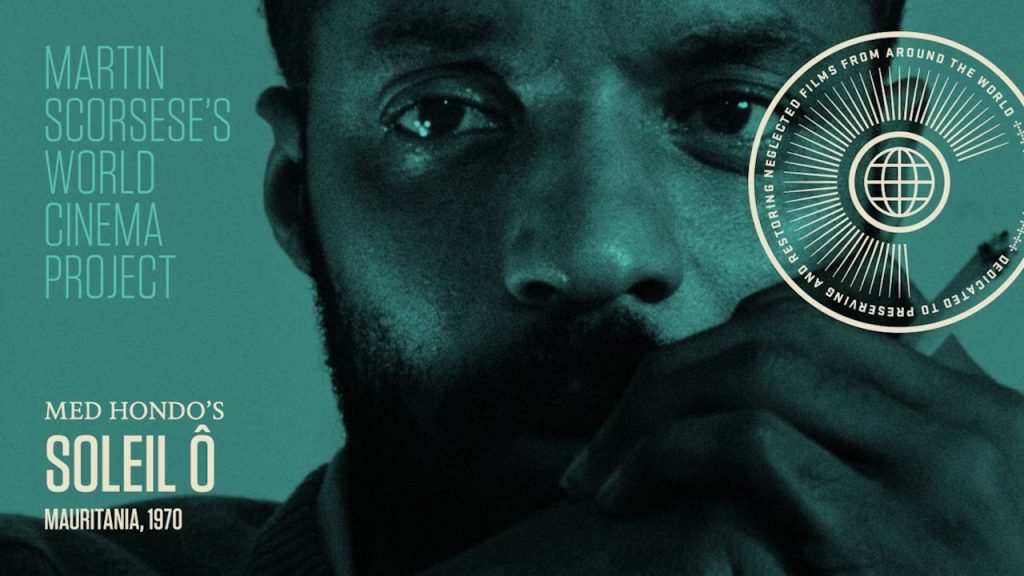
And while the occasional big name may pop up (Luis Buñuel springs to mind), the Project is generally a terrific gateway to get acquainted with less famous directors, and the fascinating lives they sometimes led in order to produce the titles meticulously restored under Scorsese’s auspices. Such is the case, for example, of Med Hondo, the father of Mauritanian cinema (his masterpiece Soleil Ô is part of the Criterion Collection). In order to fund his directorial work, which often dealt with the uneasy relationship between France and its former colony, Hondo worked as a voice actor, dubbing American performers for the French market. Most notably, he was the voice local audiences associated with several Eddie Murphy roles, up to and including Donkey in the Shrek franchise.
As previously mentioned, the initiative focuses primarily on works from Africa, Asia and South America, but on occasion it embraces the broader definition of “world cinema” as referring to films produced outside of the United States. Specifically, in 2018, the team chose the Finnish title Eight Deadly Shots, the 1972 magnum opus of director Mikko Niskanen, released as both a 145-minute theatrical film and a 316-minute miniseries for television. Frequently championed by the late Finnish critic and curator Peter Von Bagh, it underwent a painstaking restoration which resulted in a brand new 35mm exhibition print, screened in 2022 at events such as Il Cinema Ritrovato in Bologna, one of the key festivals for the World Cinema Project’s rediscoveries.
2022 is also, of course, when the British magazine Sight & Sound updated its regular poll asking critics worldwide to pick the best movies ever made. The latest iteration of this Top 100, the result of several individual Top 10 lists, included, in 66th place, the Senegalese drama Touki Bouki. While the diversification of the pool of critics involved in the voting certainly played a part, another key factor in that movie ending up on the list was the increased exposure it had been receiving since 2008, when the restoration gave new life to a milestone of African cinema. And whether on disc or streaming, it’s worth diving into that world to get a taste of some of the greatest movies you may never have heard of.
“30 Years of The Film Foundation” is streaming on the Criterion Channel.