Jason Bailey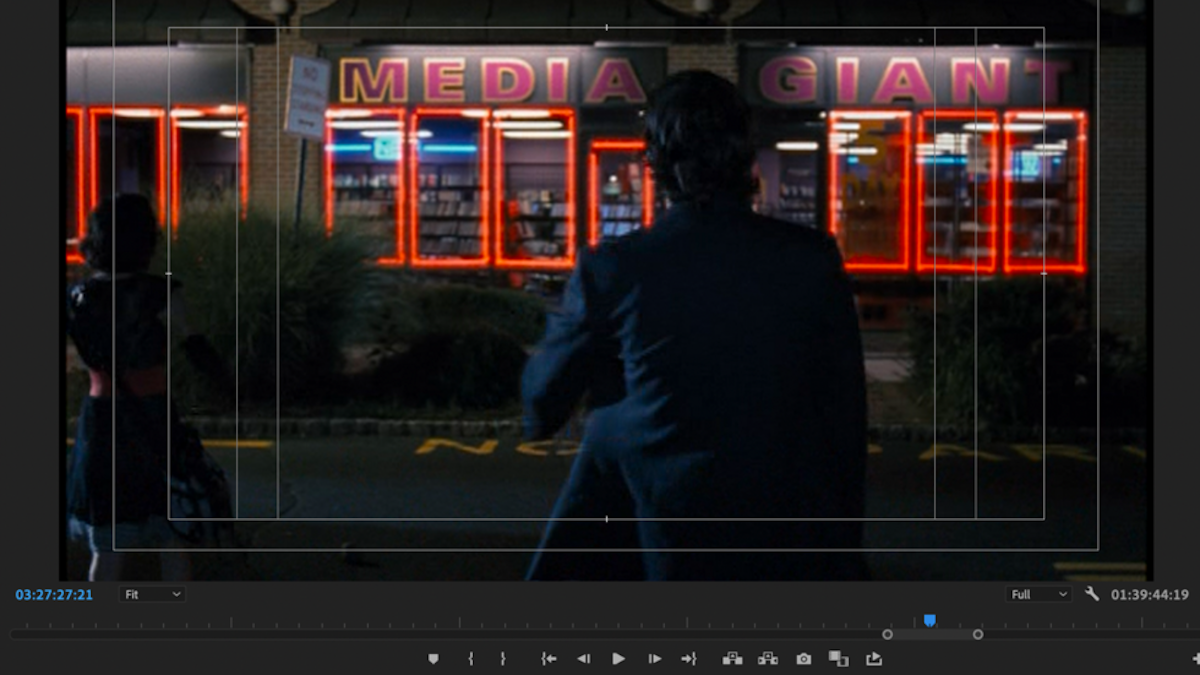
As a middle-aged film historian, ‘80s kid, and former video store clerk, I’m pretty much the straight-up bullseye target audience for Alex Ross Perry’s Videoheaven, and even I thought it was too damn much. Years ago, I started hearing whispers that Perry, a crackerjack filmmaker who’d also spent his formative years working at New York’s legendary Kim’s Video, was working on a definitive documentary about that store; as far as I can tell, he was scared off the project by the (mostly terrible) Kim’s Video documentary a couple of years back, and instead embarked on this project—a freewheeling video essay, clearly influenced by the masterful Los Angeles Plays Itself, comprised entirely of clips from movies set in video stores, accompanied by narration voiced by Maya Hawke (and, per the credits, inspired by and featuring selected excerpts from TK’s book Videoland).
Perry is, it must be noted, quite thorough; he pulls clips from mainstream movies, total obscurities, and everything in between, as well as delightful vintage ‘80s TV news clips about this incredible new phenomenon. Alas, he simply goes overboard. Clocking in just shy of three hours, it’s at least an hour too long—he makes his points, and then makes them again, and again. There are genuine insights here, chiefly that most movies dramatized the fears and inconveniences of the video store experience, mostly rendering it as a negative thing (even while the industry was kept afloat by video), so how much did these portrayals contribute to the decline and death of the industry? But those glimmers are ultimately buried in the overabundance of material. He could dig a terrific documentary out of Videoheaven, but right now, it feels like a first assembly.
Jeffrey McHale’s spunky and energetic It’s Dorothy! isn’t nearly as singular in its focus. It’s a lively and freewheeling picture, taking as its subject L. Frank Baum’s timeless protagonist in all her iterations and interpretations. McHale’s film excels when it hones in on its (seemingly) primary objective: to attempt to unravel and understand the lasting appeal of this story and its characters, using insightful commentary (by historians, authors, and actors) and clever cutting to interweave her story into our collective history, and view her through the many subtextual and political readings and codings that have kept the character alive.
The danger with this kind of anything-goes approach is that it can quickly get away from the filmmaker, and it occasionally does; some of the individual rabbit holes, particularly with regards to the various actors who’ve taken on the role in recent years, are dug into a bit too deeply, veering away from the matter at hand. But McHale always manages to bring his movie back around, and for most of its running time, It’s Dorothy! is engaging and entertaining.
As you can tell by now, this festival-goer tends to gravitate towards the documentary offerings at Tribeca, though Re-Creation, from narrative director Jim Sheridan (My Left Foot) and documentarian David Merriman is something of a hybrid; put as simply as possible, it litigates the 1996 murder of French filmmaker Sophie Toscan Du Plantier by envisioning a trial for the chief suspect which never occurred, and then only through the 12 Angry Men-style conflicts of its jurors. They’re played by actors (including Vicky Krieps), plus Sheridan himself, who takes on the role of the jury foreman.
The mixture of fact and conjecture is sometimes a lopsided one, and one that ultimately may cause some viewers to wonder who and what they can believe. But that’s also very much the subject at hand, and the more time we spend locked in that deliberation room, the more strangely riveting it becomes, often incisive, sometimes moody or even frightening. It’s a peculiar experiment, and I’m not entirely certain I wouldn’t have rather seen this story told as a straight documentary. But kudos to Sheridan and Merriman for finding a new approach, and exploring it with verve.
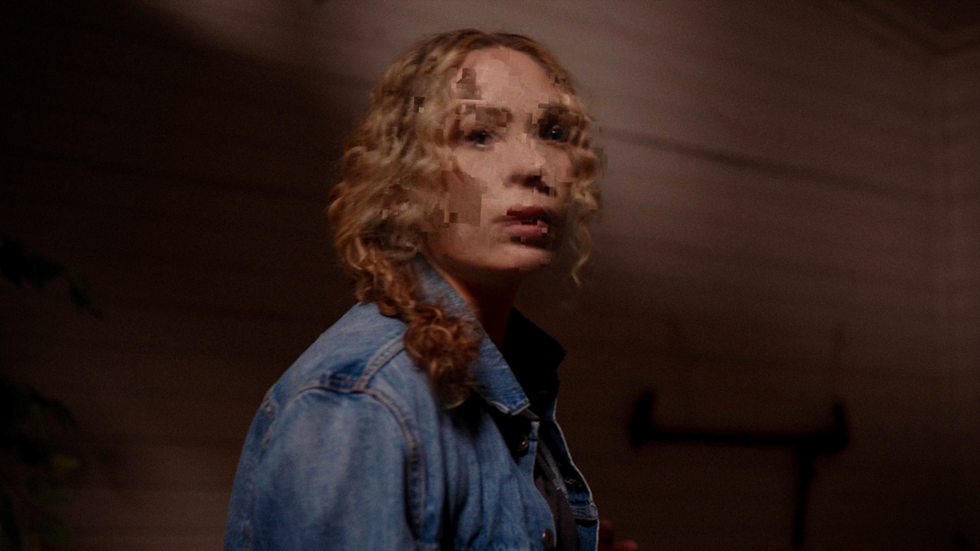
A somewhat more conventional mixture of narrative and documentary comes in the form of Paul Gandersman and Peter Hall’s Man Finds Tape, inasmuch as it tells a fictional story solely via the deft deployment of non-fiction devices—interviews, voice-over, fly-on-the-wall encounters, artful B-roll, 911 calls, Zoom recordings, surveillance footage, and (true to the title) archival videotapes. Gandersman and Hall understand what the Blair Witch guys knew, a quarter of a century ago: that there is something undeniably unsettling in the act of peering into the grainy and/or blocky murk and wondering what creepy thing you’re going to see.
However, unlike those behind too many faux-docs or found footage movies, these first-time filmmakers also understand they must present more than a gimmick. They so credibly establish the reality of their narrative (thanks, in no small part, to the tip-top performance of lead Kelsey Pribilski) that by the time the supernatural elements kick in, we believe them — the twists are suitably terrifying, and the low-fi effects hit just right.
The RZA’s memorable directorial debut, The Man With the Iron Fists, felt very much like him making a Quentin Tarantino movie (Kill Bill, for which he worked on the music, specifically); his latest, One Spoon of Chocolate, feels very much like him making a Jordan Peele movie (Get Out, which its opening sequence directly echoes, specifically). It’s a less successful riff, perhaps because it’s easier to pay homage to a shared legacy of kung fu movies than a specific cinematic voice, and RZA just isn’t a terribly sophisticated social commentator; he paints his picture with such broad strokes that the picture veers from uncomfortable brutality to wacky winking to point-blank obviousness with whiplash incongruity.
But that said, and perhaps due to nothing more than sheer dumb-luck timing, he’s drawing on social fears and cultural drumbeats that are often genuinely frightening, and he taps into them, albeit clumsily. It’s full of odd sidebars and loose ends, the physical and psychological brutality is often overwhelming, and the internal logic is, to put it politely, somewhat less than airtight. Yet it’s not easy to dismiss, and its closing section underscores RZA’s ability to tee up and deliver the kind of payoff his audience has been eagerly anticipating.
The Tribeca Festival runs through Sunday in New York.