Kimber Myers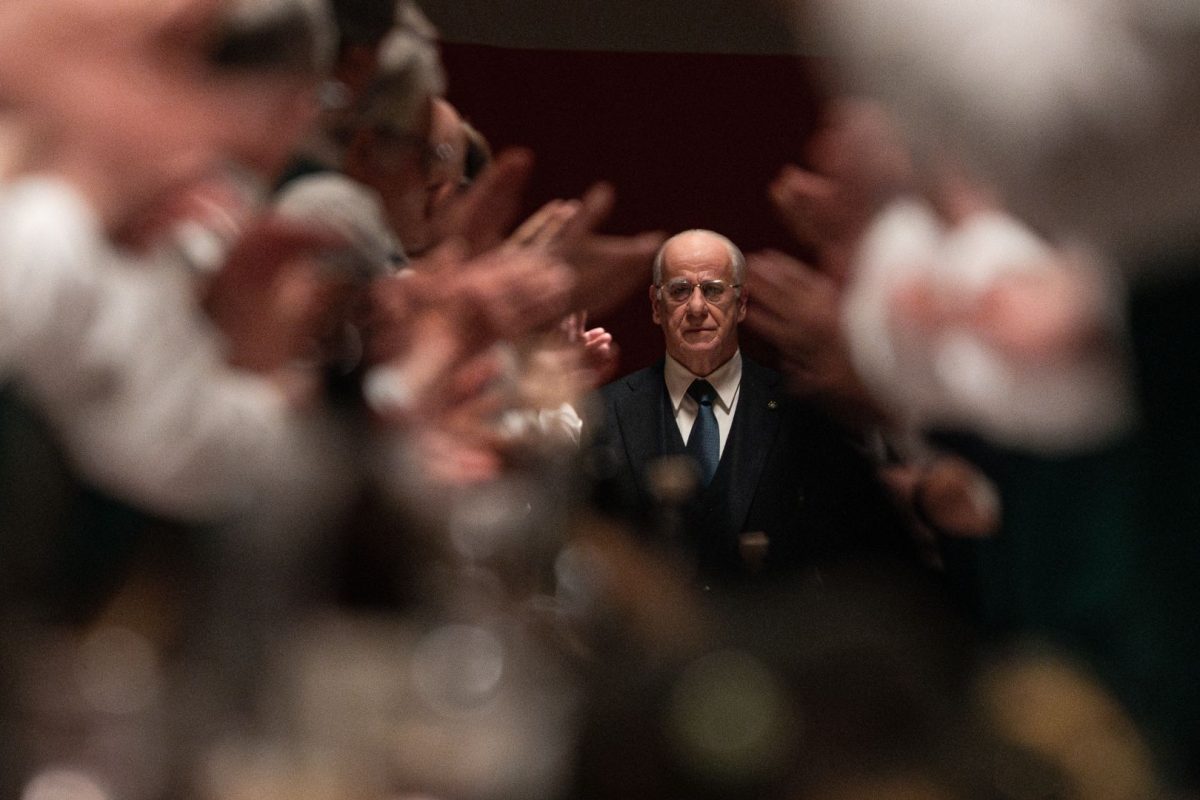
In his downtime away from his duties as president, the fictional Italian leader in Paolo Sorrentino’s La Grazia isn’t focused on governing. The opening sequence explains the powers of the Italian president according to Article 87 of the country’s constitution, set to a throbbing techno score as fighter jets leave green, white, and red plumes in the sky. (Because even in this civics lesson, we are watching a Sorrentino movie, and you either go big or go home.) Yet despite the bombast of this nationalistic opening, the first words we hear from President Mariano De Santis (frequent Sorrentino muse Toni Servillo) aren’t about the direction of his country. “I miss you, Aurora,” he narrates as he smokes on the roof of the Quirinal Palace, thinking about his late wife and who she cheated on him with. Though his protagonist is invented, Sorrentino uses the character to ruminate on the humanity of these often-larger-than-life people, revealing a real person behind the public figure who has concerns outside of politics. The president of Italy is largely a figurehead, and in La Grazia, this character is useful more in communicating ideas than creating verisimilitude.
In this role, Mariano doesn’t really do much governing, other than occasionally meeting with visiting heads of state and contemplating pardons. With just six months left in his seven-year term, the aging Mariano is struck by the things he can and cannot do with his time left—both in office and on earth. The main issue concerning his final moments in the position is, perhaps fittingly, a euthanasia bill that his daughter, Dorothea (Anna Ferzetti), encourages him to sign with little hope that he’ll actually take action. La Grazia is consumed by thoughts of how we leave this world, both in terms of our deaths but also in our legacy. But for Mariano, those thoughts don’t lead to much actually happening.
Nicknamed “Reinforced Concrete,” Mariano appears unmovable and unmoved, a stable force as Italy recovers from their previous president who threw the nation into a crisis. La Grazia is equally slow moving, punctuated by some scenes that bring life to a film that is largely more sedate and reflective than we’re used to from the director. It intentionally lacks the excess that marks much of Sorrentino’s filmography, like The Great Beauty and Loro, in both subject and style. Mariano is a study in mostly imposed restraint: Dorothea restricts her father’s diet to the likes of steamed fish, quinoa, and herbal tea, and his only indulgence is a single daily cigarette and a secret penchant for pop music. Is life even worth living if you can’t have pasta? And while La Grazia has some big moments and stylistic flourishes, this drama is generally more pensive, proceeding from scene to scene with less consistent rhythm than the pulsing songs that Mariano can’t resist tapping his feet along with.
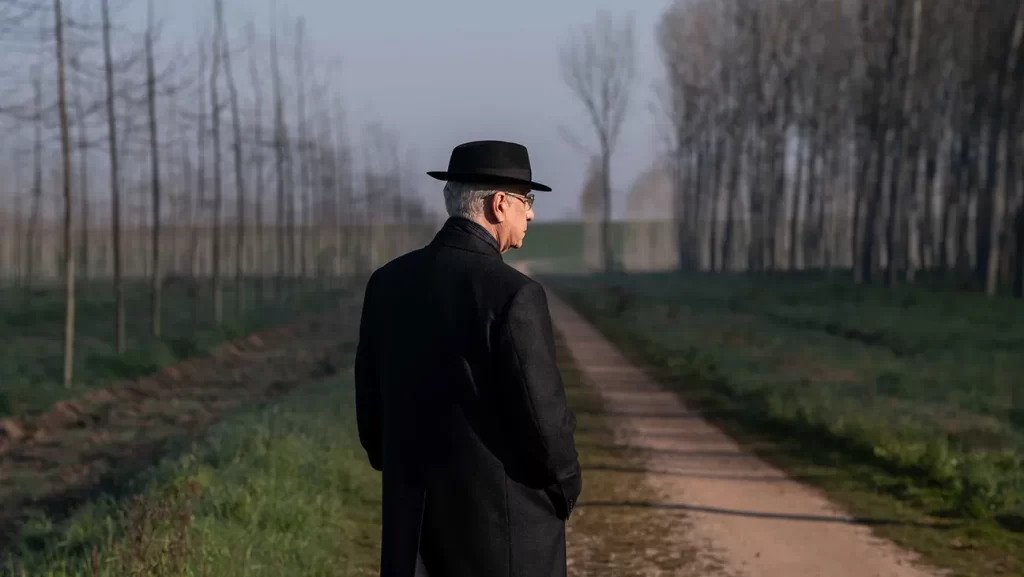
Unsurprisingly, there always excellent Servillo is the film’s MVP. Across eight collaborations with Sorrentino, he’s played similarly significant figures, like real-life prime ministers, but he brings something different to Mariano. He manages to make the man called “Reinforced Concrete” into something interesting and dynamic. A former judge, he struggles with the moral weight of his decisions, both personally and politically, with the strain subtly showing on his face. Less subtle is the role of his lifelong friend, art critic Coco Valori. Played with verve by Milvia Marigliano, she’s the type of stylish, brassy broad that we should all aspire to be once we stop giving a fuck.
At 55, Sorrentino is still relatively young, but La Grazia feels like the kind of movie a director makes as his swan song as he’s contemplating his own mortality and legacy. There’s a sense of finality that permeates its tone and arc, as it moves slowly yet gracefully toward its conclusion. This wouldn’t be the most fitting end for his filmography, but it wouldn’t be the worst way to go either.
B-
“La Grazia” is in theaters Friday.