Chloe Walker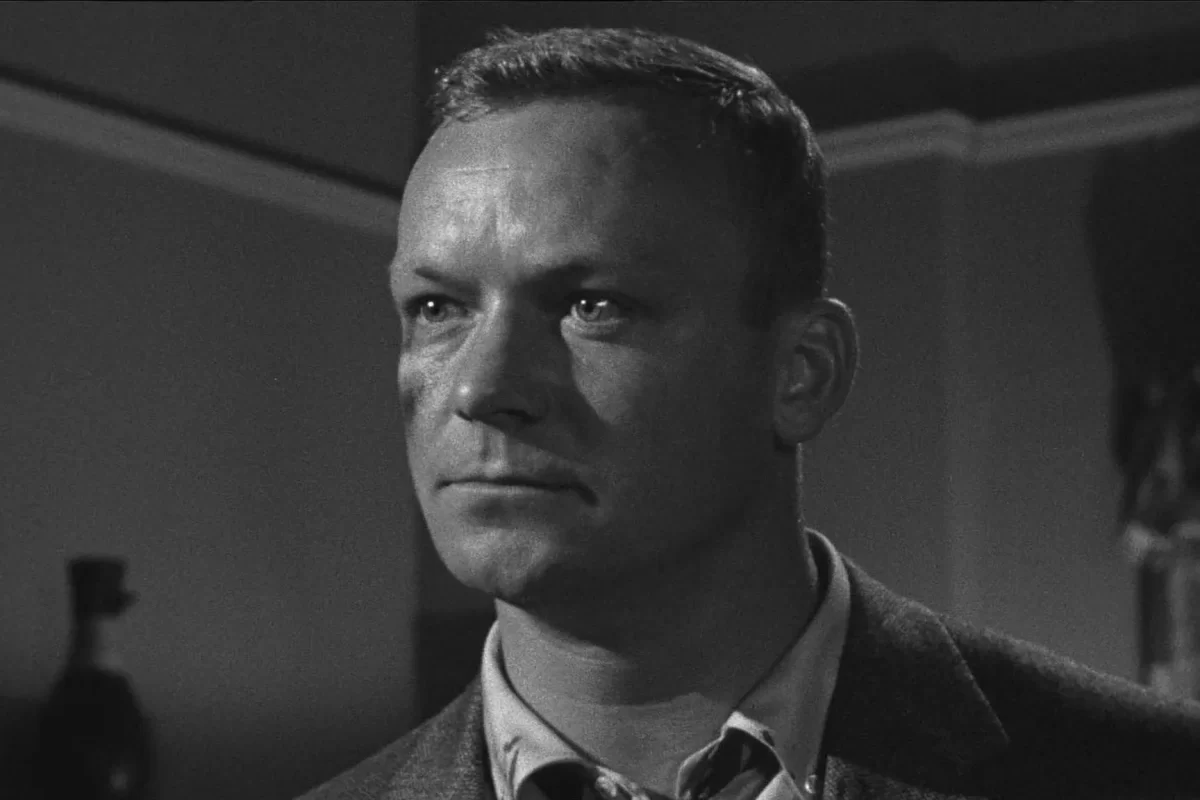
“Aldo Ray, you’re the luckiest guy in movies,” pronounced the trailer for one of his earliest, Pat and Mike. Considering he booked his first part after giving his brother a ride to an audition, was taken under the wing of legendary director George Cukor a year after that, and would soon star alongside legends like Rita Hayworth and Humphrey Bogart, there was certainly some truth in that statement. But the luck of the burly, gravel-voiced actor that Quentin Tarantino would later call “the patron saint of the fallen star” would not hold for long.
After a few bit parts, he hit the ground running under the guidance of Cukor. Ray starred in two of his 1952 films: as a comically dim-witted boxer in Hepburn-Tracy vehicle Pat and Mike, and as Judy Holliday’s husband in rom-com The Marrying Kind. Though Holliday was among the best comedic actors of all time, and had just won an Oscar for Born Yesterday, Ray is remarkably adept at keeping up with her in his first co-leading role. Also in the comedic vein was 1955’s We’re No Angels, where he, Bogart, and Peter Ustinov are a trio of prison escapees who end up helping a family that they’d been planning to rob. The least illustrious name of the leads by some margin, Ray’s earthy charm proved the glue that held the unlikely threesome together.
Then came Nightfall, Jacques Tourneur’s perennially underrated 1956 noir. Ray plays a freelance artist who runs into a pair of bank robbers on a camping trip; they terrorize him as they all hunt for an illicit fortune buried in the snow. Nightfall found a vulnerability in Ray that few other projects would, not just because he is the recipient of far more punches than he delivers, but because of the tenderness of his relationship with love interest Anne Bancroft.
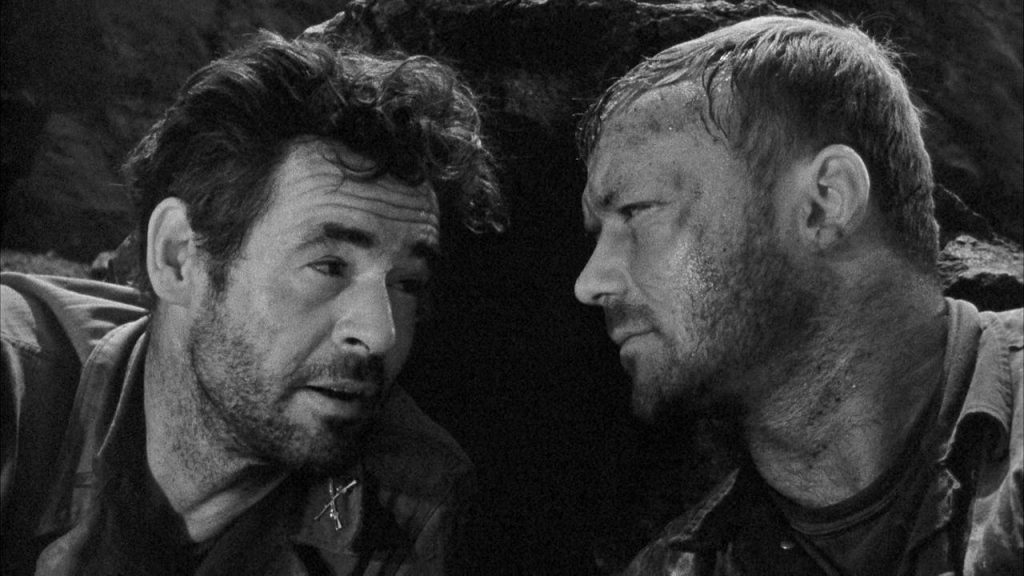
Surprisingly perhaps, that vulnerability was also found in several of his war movies, which made up a large part of his early filmography. In 1957’s Men in War, Ray is Sergeant Montana, forced to team up with Robert Ryan’s gruff Lieutenant to survive unyielding attacks from an unseen enemy. Amidst all the macho posturing, Men offered Ray another chance to exhibit unexpected tenderness in how gently Montana cares for his shell-shocked Colonel (Robert Keith). The earlier, more sentimental Battle Cry had also allowed Ray to expose the soft underbelly lying beneath that rough, raspy exterior.
A combination of elements caused Ray’s decline in Hollywood. Between the macho way he presented and the amount of military men he played early in his career, he felt typecast as tough guys. He had a long-standing problem with alcohol, which sometimes impacted on his ability to retain his lines. He was always battling Columbia over the parts he was assigned, and they cut him loose when his contract ended in 1958. As a result he spent much of the ‘60s working in Europe, in movies that were little seen in America. Three divorces in less than fifteen years had left his finances in dire straits, and lowered his standards for quality control.
And after that patchy decade was over, the size and quality of his roles diminished even further. His gruff voice and formidable physicality, which had only gotten bulkier over the years, meant that he was usually cast as one-dimensional figures of authority or heavies; often, both. These films, with titles like Bog, Flesh and Bullets, Human Experiments, and Death Dimension, were not the kind of projects that utilized the deft comedic chops he’d exhibited under Cukor, or afforded him the slightest complexity. In 1979, he even had a non-sexual role in the porno Sweet Savage. He never appeared ashamed, however, and in a 1991 Movieline interview boasted about winning an “adult film Oscar” for it. Poignantly, it was the first acting award he had won since Photoplay’s prize for ‘Most Promising Newcomer’ in 1955.
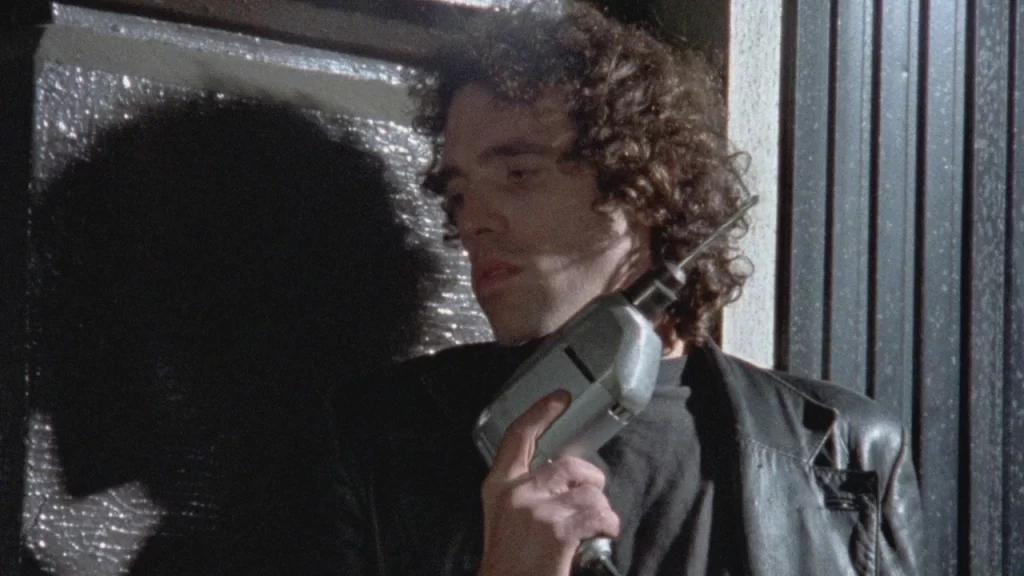
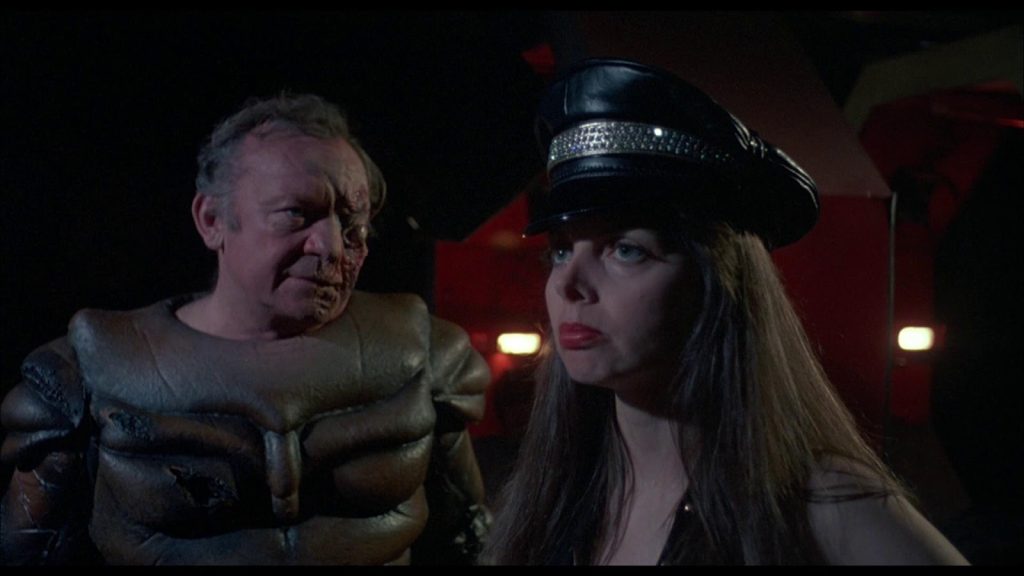
In general, the former star would only appear in a scene or two of these sub-par productions. He floats around in the background as a priest in 1989’s Blood Red. He gets killed immediately in 1979’s The Glove and 1983’s Vultures. He appears more in the baffling blooper real of 1985 exploitation horror Biohazard, struggling to remember his ridiculous lines, than he does in the main body of the movie. That was made by Fred Olen Ray (no relation), who also directed Aldo in Star Slammer the following year. Aldo was later quite open about the transactional nature of their relationship: he needed the money and Fred, whose films were cheaper than dirt and severely lacking notable names, benefited from putting Aldo’s on the VHS covers.
Still, amidst all the dreck, there were a few gems. In 1972’s And Hope to Die, a French heist movie directed by the multi-Oscar winning René Clément, Ray is boneheaded bruiser Mattone, who embarks on “one last job” alongside a criminal gang that also includes Lea Massari and his frequent co-star Robert Ryan. There’s not much to Mattone, a more menacing version of the character he played in Pat and Mike two decades earlier, yet Ray’s hefty presence adds plenty to the heady stew of tensions (he even spoke his own French!).
He was in a lighter heist movie three years later: Inside Out. It’s a silly jaunt, but a charming one, and it was the rare role from this era where he was playing neither evil nor a few sandwiches short of a picnic, and had a decent amount of screen time. And in 1982, he also ventured into voice acting for the sole time in his film career, lending that warm rasp of his to a villainous rat who has a change of heart in Don Bluth’s beloved The Secret of NIMH.
Towards the end of his life, even as he was undergoing chemotherapy for the cancer that would kill him, Ray participated in a lot of publicity. Although his downslide had been lengthy and dispiriting, he continued to present an optimistic front; in an Entertainment Tonight interview aired shortly before his death, he expressed a desire to keep acting despite his frightening prognosis. While he did admit regret at where he’d ended up, that rarely curdled into public resentment.
When he died in 1991, at just 64, obituaries unsurprisingly focused on the one decade of his stardom, and glided over the three where he’d circled the drain. Still, a century after his birth, the mark he left on cinema hasn’t altogether dissipated. Tarantino has spoken frequently about his fondness for Ray, naming Brad Pitt’s character in Inglourious Basterds for him and making him a character in his novelization of Once Upon a Time in Hollywood.
There’s also something to be said for the way Ray’s career path presaged those of actors like John Travolta and John Cusack: stars who spent a significant time on top, and then longer in the direct-to-video doldrums, only re-emerging into the land of cinematic respectability once in a blue moon.
These downslides are often viewed as sad or embarrassing, yet there’s also a bracing realism to that trajectory. However much the best of it feels magical, at the end of the day, acting is a job. Actors need money to pay the bills, just like us. That Ray lived out such a prolonged fall from grace in full public view, and was able to remain upbeat about it, speaks to a kind of bravery that they might not make movies about, but is nevertheless admirable.