Audrey Fox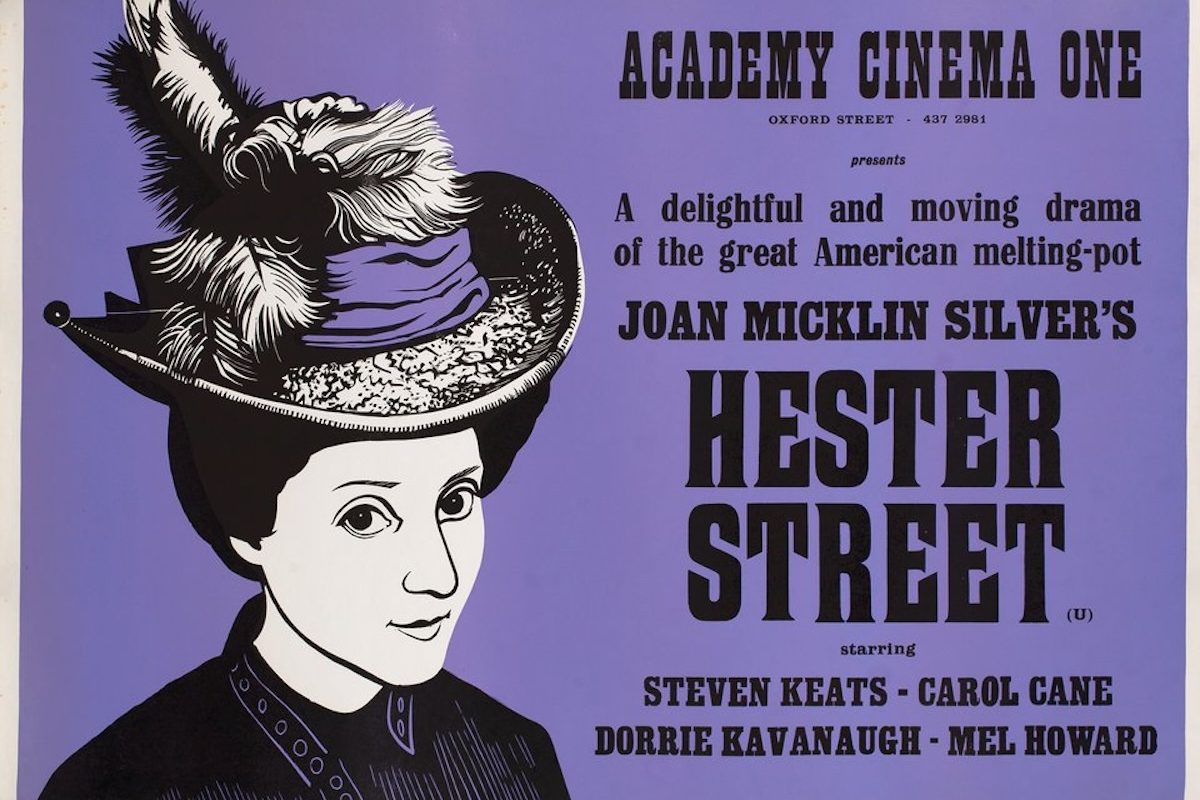
It is no easy thing to shed who we have always been. Hester Street is one of Joan Micklin Silver’s examinations of Jewish life in New York City, and it pits tradition against modern American culture as recent immigrants are seemingly asked to choose between the two. But in the end, Gitl (Carol Kane, in a role that earned her an Academy Award nomination) carves out a path for herself. She takes pieces of the Old World and blends them with her own needs and desires for her life in America, allowing her to stay true to herself rather than adhering to anyone else’s expectations of what it means to be a woman – an Orthodox Jewish woman, in particular – in a rapidly changing world.
When Gitl arrives in New York City with her young son Yossele (Paul Freedman), she expects to be reunited with the husband who had moved to America years earlier, working to save up money to afford passage for his wife and son. But the man she meets upon her arrival after a long journey is scarcely recognizable. He seems to have made every effort to throw off the trappings of his past, fully embracing a new American identity. Yankel (Steven Keats) is now Jake, and gone are his payot, the markings of an observant Orthodox Jew. And what’s more, he expects Gitl and their son to Americanize right along with him. Before long, it’s clear that he was happy with his young, flashy American mistress – but if his wife is going to be in New York, she’d at least better not embarrass him with her Old Country ways.
Throughout the first half, we see Jake’s idea of assimilating, for better or worse. From Americanizing his name and shedding the visible aspects of his Jewish identity to speaking English and embracing a brash “American” persona, Jake is devoting his life to pretending that he was never an immigrant at all. He barely conceals his disgust for his wife, who he perceives as frumpy and backwards. But his view of Gitl is fueled with self-loathing, as she reminds him of all the parts of himself that he’s tried so desperately to excise. Now that his family has arrived, he wants nothing more than to change them as he did himself, bullying them into being as American as he is. There is no middle ground when it comes to joining American culture, he believes – they all must assimilate fully, or they will be seen as nothing more than clueless immigrants straight off the boat.
But after the initial culture shock of life in the city and her husband’s increasingly abusive behavior, Gitl begins to find her own way of engaging with New York. As a traditional woman, the expectation may have been for her to obey her husband and respect his wishes for her conduct and their son’s upbringing. Instead, she makes her own choices, deciding what to wear and how to present herself while slowly acclimating to her new life. She finds ways to keep her culture in her heart, even as she becomes more at home in the hustle and bustle of American society.

She comes to a realization – one that Jake never had – that this act of migration is not a zero-sum game, that a person can keep the parts of their upbringing and cultural history that provide them with comfort and happiness, while also being open to new things. In this way, she embraces the American immigrant experience in ways that Jake is incapable of. By the end of the film, we see her happily divorced from Jake – an extraordinary step given her upbringing – and in a relationship with a new man. But while Jake finds comfort in the arms of an American woman, Gitl’s new partner Bernstein (Mel Howard) is a traditional Jew, signaling that although she now speaks English and shows her hair, she is making a conscious decision to maintain a connection to her heritage.
Themes are one thing, though, and execution is another. And as compelling as Hester Street’s ideas about the immigrant identity crisis are, the film would be nothing without the performance of Carol Kane in the lead role. Although she’s predominantly known these days for her comedic stylings, the vulnerability she brings to Gitl makes her sense of perseverance in the face of adversity all the more powerful. She’s supported by Joan Micklin Silver’s intelligently written script, which has a tremendous amount of empathy not just for Gitl but all the characters caught in the struggle of how to be.
As Hester Street draws to a close, we see her ride off into the sunset (metaphorically speaking) having resolved the conflict between her old life and her new one. By resisting the binary urge to fully Americanize herself or remain doggedly faithful to the ways of the Old World, Gitl finds for herself a much more fulfilling path. Jake seems angry all the time, because he’s expending so much mental energy in denying a part of who he is. But Gitl, in an act of pure will, is able to free herself from both that conflict and the toxic relationship that defines it.
“Hester Street” is streaming on the Criterion Channel, Kanopy, and Tubi.