Craig J. Clark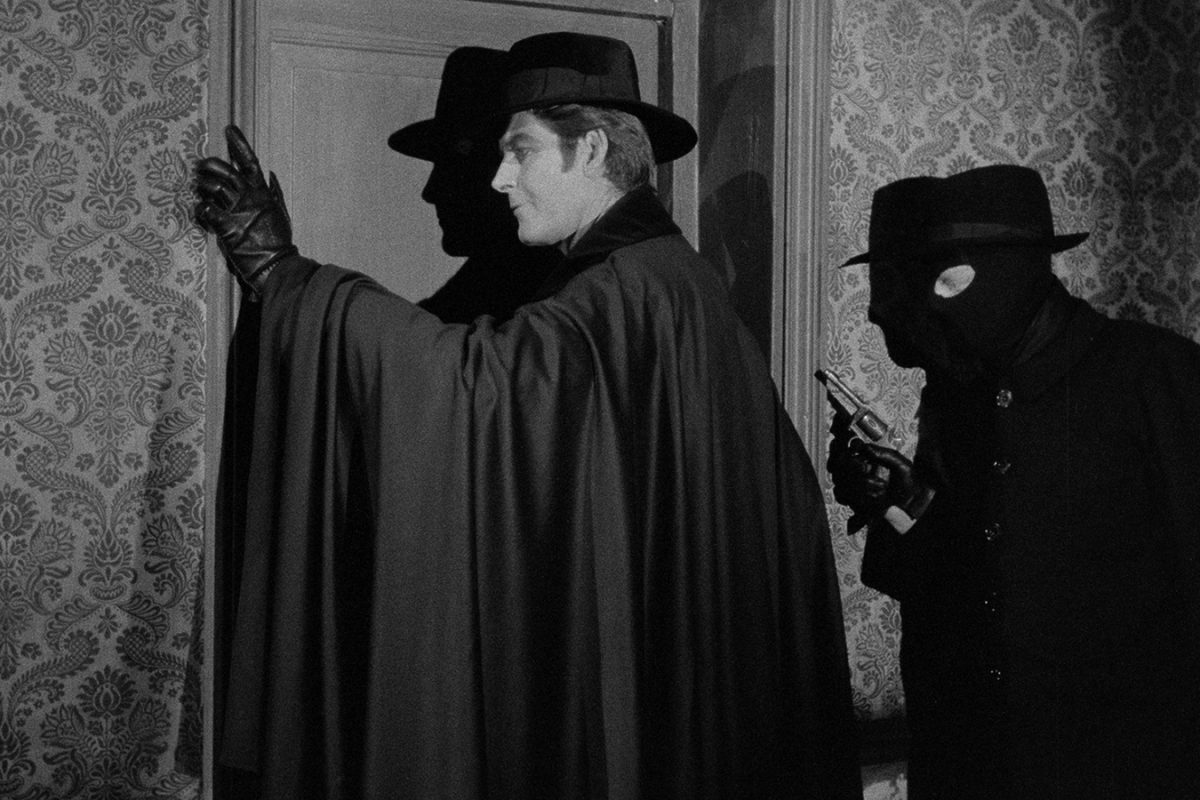
The camera starts low to the ground, centered on a pair of black dress pants and shoes. As it rises, their wearer is revealed to be in full formal attire, his outfit topped by an elaborate bird mask looking directly at the camera. After a moment, the head turns with a bird-like jerk and he approaches a white dove lying on its back on a nearby ledge. He takes the seemingly dead bird in his hands and carries it inside a chateau where a party is in full swing, its attendees also in bird masks. (Naturally, a few of them are penguins.)
Accompanied by Maurice Jarre’s ominous score, which drowns out the music the masked guests are dancing to, the mystery man glides through the crowd, attracting the attention of some of those he passes, until he reaches a raised platform. There, he dazzles his audience by bringing the bird in his hand back to life and releasing it, then does the same for several more he conjures out of nowhere. It’s a magical moment that sets the tone for what will follow. Georges Franju waited thirteen and a half minutes to introduce the title character of his 1963 film Judex. If he wanted that introduction to be memorable, he succeeded.
When Franju directed Judex, which was released in France 60 years ago, he was five features into a career in film that stretched back to the mid-’30s, when he co-directed a silent short (1934’s Le métro) with Henri Langlois and co-founded the Cinémathèque Française, also with Langlois. In the interest of preserving France’s film heritage, they collected the crime serials of Louis Feuillade, whose Fantômas films left a deep impression on Franju. Later, when he was denied the opportunity to remake them (losing out to André Hunebelle, who took the series far afield from where Franju would have), he accepted the consolation prize of Feuillade’s 1916 serial Judex, the follow-up to Les Vampires.
Its adaptation was undertaken by Jacques Champreux (Feuillade’s grandson) and Francis Lacassin, who boiled the twelve-chapter story down to its essence while playing up the outré elements that appealed to their director’s sensibilities. The result can be confusing for first-time viewers; it skips from one plot point to the next without much in the way of connective tissue, and introduces characters only to forget about them for long stretches. But Franju’s Judex casts a spell over anyone willing to forgo strict narrative coherence in pursuit of poetic beauty.
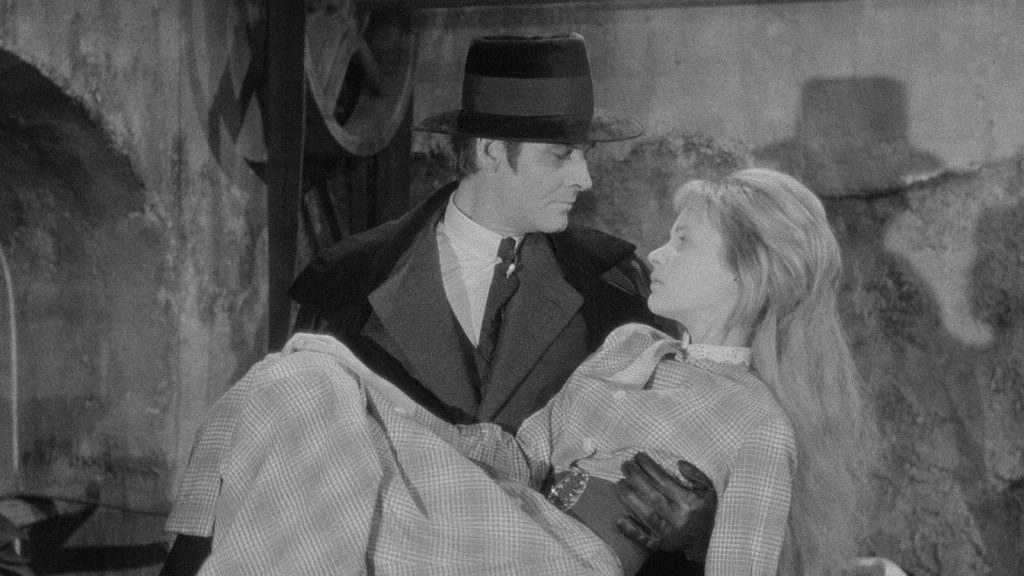
“In Judex, the setting and irreal atmosphere have just one purpose: to make the improbable story believable. To make the improbable realistic.” –Georges Franju
Since Franju took pains to treat the story’s fantastic elements as matter-of-factly as possible, his casting is key. For Judex, the director chose professional magician Channing Pollock, who could not only carry off the character’s signature hat and cape, but also perform the dove trick without the need for cuts or other camera trickery. As the villainous Diana Monti, he cast Francine Bergé, a young actress who effortlessly exuded the pure evil required for the role and looked as much at ease in a pilfered nun’s habit as a black body stocking with a dagger attached to her thigh. Franju’s ace in the hole, however, was Edith Scob (so haunting as Christiane in 1960’s Eyes Without a Face) as Jacqueline, the meekly innocent daughter of Favraux, a corrupt banker targeted by Judex, who seeks redress for the many victims of his unscrupulous business practices.
As a way of paying tribute to the crime serials that inspired them, Franju, Champreux and Lacassin set their film in the same time period (at one point, a character is seen reading from a Fantômas novel published in 1913) and employed silent film techniques like iris effects and ornate intertitles. They even include a stunt straight out of Les Vampires, when Judex scales a building where Diana and her accomplice/lover are holed up, and is followed in short order by four of his black-hooded assistants because like magicians, costumed avengers sometimes need backup. This is part of what makes Judex stand out in Franju’s oeuvre. It would be easy enough to make Judex a nigh-invincible hero. By exposing the chinks in his armor and emphasizing the extent to which chance plays in how things turn out, Franju and his collaborators make plain the happy ending for Jacqueline and Judex is as much a quirk of fate as it is a reflection of their moral rectitude.
In its closing moments, Judex is dedicated “in homage to Louis Feuillade,” but Franju hadn’t gotten his hero out of his system; one decade later he teamed back up with Champreux to make the eight-part television serial L’homme sans visage, about a masked, Fantômas-like villain and his monomaniacal search for the legendary treasure of the Knights Templar. This also saw the light of day as a heavily truncated feature called Nuits rouges (literally, “red nights”) and was re-titled Shadowman when New Line released it in the U.S. No matter what name it goes by, though, it’s the perfect complement to Judex. Should Criterion consider adding another Franju film to its Collection, it need look no further.
“Judex” can be found righting wrongs in its full Criterion Edition on the Criterion Channel.