Craig D. Lindsey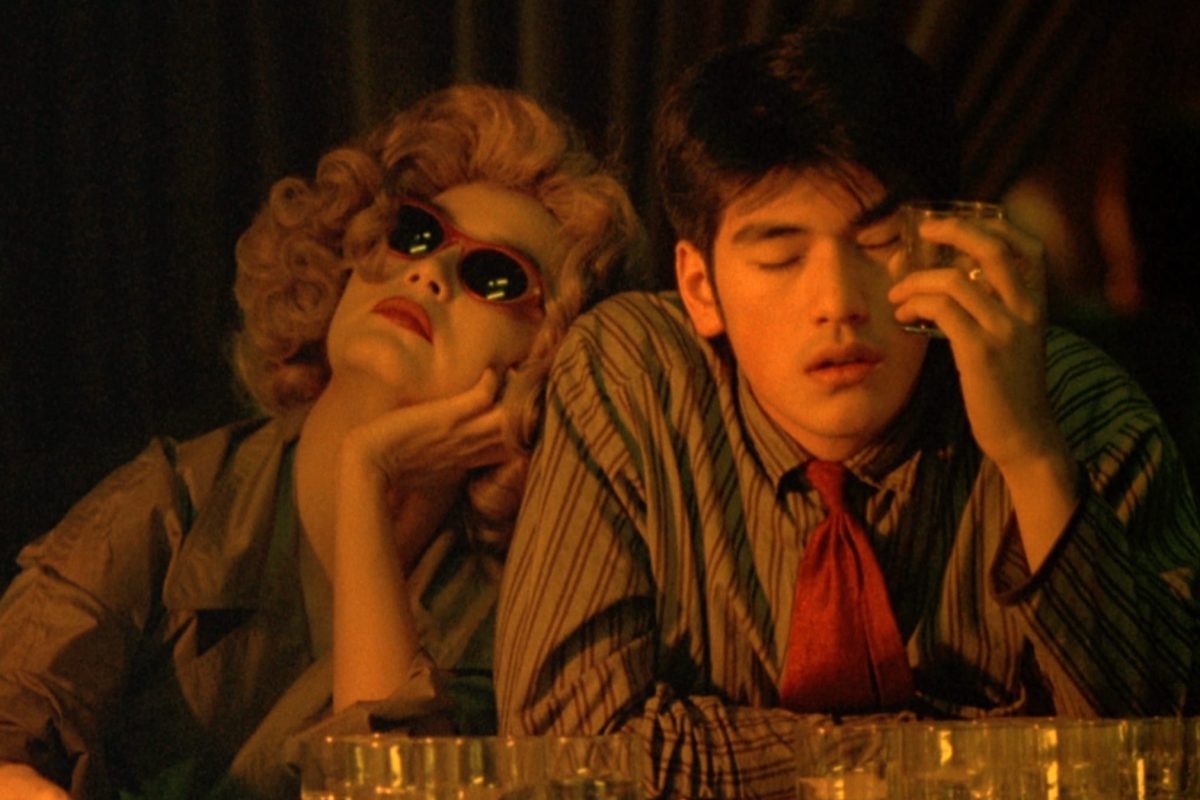
For Valentine’s Day, we’re once again looking at the wide variety of onscreen relationships: movies about ill-fated couplings, toxic partners, and unconventional romances, to help offset the sticky-sweetness of the season. Follow along here.
“I think he is one of the most inspiring filmmakers to come out in the last couple of years,” Tarantino said in 1996 about a little-known Hong Kong filmmaker named Wong Kar-wai. “When I saw Chungking Express, I felt we were going down the same road. I felt that touch of kinship or camaraderie, whatever an artist feels when he recognizes another artist’s song.“
It would seem fitting that Tarantino — whose vulgar, violent, Oscar-winning funhouse Pulp Fiction officially made him the filmmaker everyone paid attention to at that time — would introduce U.S. audiences to Wong, who was being compared to Tarantino. Both filmmakers were seen as cucumber-cool enfant terribles who grew up going to the movies with their mothers, and used that cinephilia to craft stylish neo-noirs for our pop culture-savvy times, full of gallows humor, slacker characters and kitschy-ass soundtracks.
With both men spending most of 1994 showing their respective, hipstery crime anthologies at various film fests, it was inevitable that their paths would cross. Tarantino saw Chungking at the Stockholm International Film Festival and eventually made it the first release of Rolling Thunder Pictures, his short-lived re-release wing at Miramax, two years later.
If there is one thing that separates Wong from his English-speaking counterpart, it’s his willingness to be romantic. Despite peppering some of his films — Pulp and Jackie Brown, for example — with amorous asides, that grindhouse junkie Tarantino couldn’t make a romantic movie if his life depended on it. Wong has made movies about characters who, even when they’re taking part in criminal activities, are still lonely people; at the end of the day, they just want to be loved. The hard-boiled literature of Raymond Chandler has obviously influenced both filmmakers. However, with Wong, some Raymond Carver is in there as well.
Consisting of two segments (Wong took the intended third segment, about a lovesick hitman, and expanded it into his 1995 follow-up Fallen Angels), Chungking is basically the same story told twice. The first story is the pulpiest of the pair — a less-salacious, melancholy spin on the ol’ dumb-schnook-falls-for-femme-fatale trope. The schnook is He Zhi Wu (Japanese actor/singer Takeshi Kaneshiro), a cop who, while running after a perp, bumps into an unnamed woman (Brigitte Lin), rocking a blonde wig, sunglasses and a powdery-faced scowl. As he explains in voice-over, he will fall in love with her 57 hours later.
It’s a rough 57 hours for the dame, a drug smuggler who loses the immigrant mules who were carrying her product at the airport. During that time, she engages in bloody gunplay with killers-for-hire and even briefly kidnaps a child in order to get info from the kid’s father. At a dive bar, the woman runs into Zhi Wu, who is unaware of who she is and the crime spree she just committed. Even though she initially dismisses Zhi Wu’s feeble pickup attempts, the mystery lady spends the night with him at a hotel. But don’t expect any freaky-sneaky action here; the woman passes out while Zhi Wu watches TV and gorges on room service food. Still smarting from a breakup, Zhi Wu is just pleased to be in the same room with a woman.
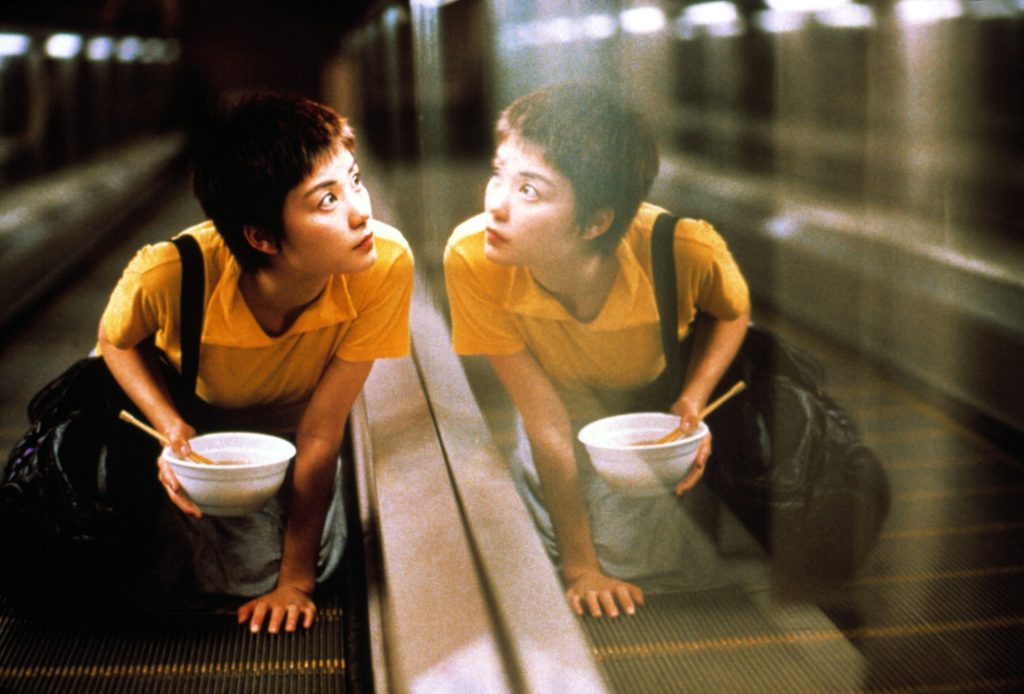
After that chance encounter, Zhi Wu bumps into another girl — fast-food joint employee Faye (Faye Wong) — which officially sets off the second story. Faye has the hots for another cop, only known as No. 663 (Asian matinee idol/WKW regular Tony Leung Chiu-wai), who frequents her spot. He’s also recuperating from getting his heart broken by a tasty flight attendant (Valerie Chow). To show how sensual their relationship was, Wong gives us a brief flashback to the cop and his girl, toying with model airplanes and fooling around in their undergarments to Dinah Washington’s “What a Diff’rence A Day Made.”
The flight attendant shows up at Faye’s spot with a letter and a key she wants to give the cop. When Faye discovers he is now working a day shift (she also gets his address by telling him she’ll forward the letter), Faye uses his key to make herself at home. She soon takes on the role of stealth housekeeper/caretaker, cleaning up his stuffy flat, throwing more fish in his aquarium, and slipping sleeping pills in his water bottle so he can sleep better.
Hiring the adorable Chinese pop star Wong was some clever, calculated casting on WKW’s part. A bashful, tomboyish little cookie who constantly listens to The Mamas and the Papas’ “California Dreamin’” (Wong’s Cantonese cover of The Cranberries’ “Dreams” also gets some soundtrack time), the character is pure Manic Pixie Dream Girl, showing up years before critic Nathan Rabin came up with the term. But Wong is a scrappy darling, making you root for her even when she’s doing stalkery shit.
While editing his epic wuxia adaptation Ashes of Time (which also stars Lin and Leung), Wong took a couple of months off to get back in the indie groove with Chungking. Set in Chungking Mansions, the Hong Kong tenement building that once housed a basement nightclub run by his father, the film is 98 minutes of Wong gleefully in his element. With businesses and people virtually stacked on top of each other, Wong presents a grungy, neon-soaked underworld where, despite the cramped, claustrophobic surroundings, people are still clamoring for a connection.
I’m sure the comparisons to Jean-Luc Godard — another outlaw, film-loving auteur — began with Chungking. The Wong/Leung section is definitely reminiscent of the free-spirited films Godard made with first wife/muse Anna Karina. But Wong gives props to both the French New Wave and the ‘80s cinema du look movement. The hyper-stylized first story, with its hand-held. herky-jerky action scenes shot by longtime WKW cinematographer Christopher Doyle and Andrew Lau, certainly brings to mind the trendy thrillers of fellow French provocateur Jean-Jacques Beinieix (Diva, Betty Blue).
Chungking only made $600,000 during its limited theatrical run in the States. In true Miramax fashion, Harvey and them skimped on the marketing, coming up with the trailer and poster a few weeks before the film hit theaters. Thankfully, it did make the cineastes — especially those film critics who wrote glowing reviews — around these parts crave more WKW. His following films (including his earlier As Tears Go By and Days of Being Wild) began showing up in stateside arthouses and rep theaters.
By the time he dropped his straight-up masterpiece In the Mood for Love in 2000, American audiences were fully aware what kind of filmmaker Wong Kar-wai is. He’s a romantic rapscallion, coming up with offbeat, visually sumptuous tales about cool, young, nattily dressed, sometimes dangerous, and usually lonely folk falling in — as that Steve Carell movie is called — crazy, stupid love.
“Chungking Express” is streaming on the Criterion Channel and Max, and is available for digital rental or purchase.