Audrey Fox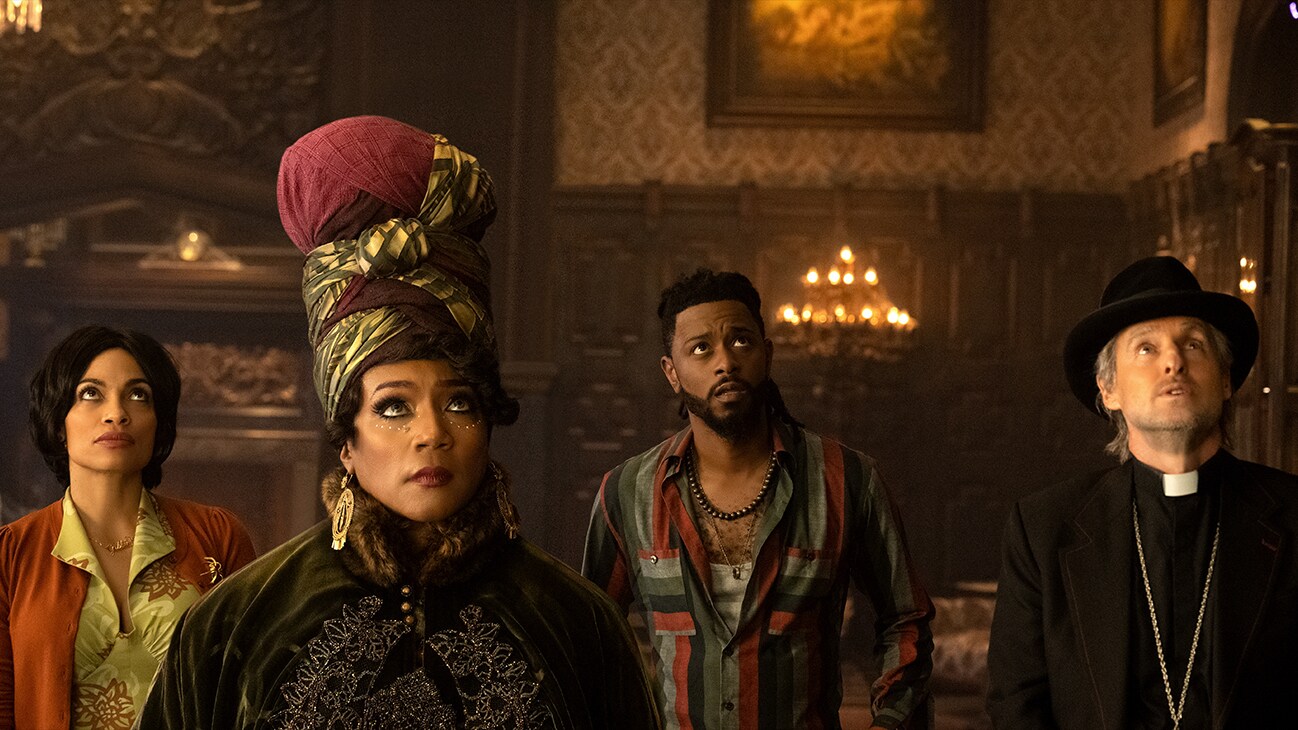
For a long time, the movie-to-theme-park-ride pipeline only flowed in one direction. You made a movie, and if it did well, it might eventually merit an attraction at Disneyland – that’s it. Before Pirates of the Caribbean: The Curse of the Black Pearl, there was little evidence to suggest that operating this process in reverse – that is to say, taking a pre-existing theme park ride and turning it into a major motion picture – could actually be successful. But 2003 saw two such films hit theaters, Pirates of the Caribbean and The Haunted Mansion, both with distinctly different approaches to the concept of a ride adaptation, with varying degrees of success. They serve as success stories and cautionary tales, pointing out exactly where these movies can go off the rails.
Pirates of the Caribbean is one of the older dark rides at Disneyland, officially opened in March 1967 with the added honor of being the last attraction that Walt Disney himself oversaw. Disney Studios began developing a script for the potential ride adaptation in the early 1990s, but at that point it was a virtually untested concept, and no one had very high hopes for it. Up until Pirates of the Caribbean, there had only been three film productions based on a Disney ride. Tower of Terror, starring Kirsten Dunst and Steve Guttenberg, was based on the Tower of Terror ride, but didn’t earn a theatrical release. Mission to Mars in 2000 was a box office failure, and the ride it was modeled on had closed years earlier, having been dubbed unpopular and dated. And The Country Bears, based on Country Bear Jamboree – well, the less said about that nightmare fuel, the better. So to say that there was little confidence in the concept is perhaps an understatement.
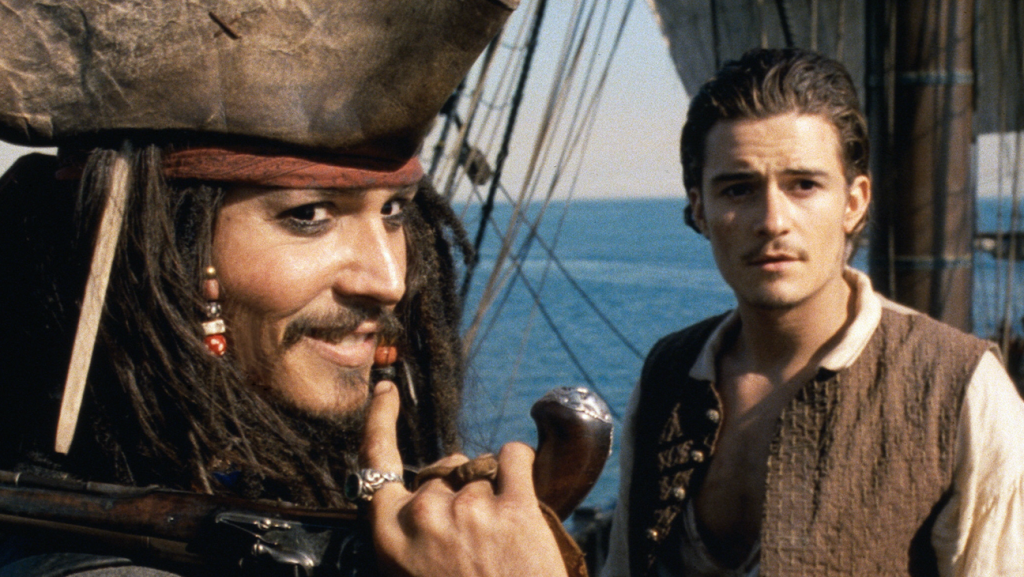
When Pirates of the Caribbean began to crystallize, there were talks of not even bothering sending it to theaters, instead releasing it direct to video. There were a number of red flags that made studio executives nervous: no one could remember the last time a pirate movie had been successful (and the disastrous reception of 1995’s Cutthroat Island was still fresh in their minds) and it didn’t have an A-list cast attached. Although Johnny Depp’s career shot into the stratosphere later, he spent the majority of the 1990s as box office poison, starring in weird little indies that didn’t make a lot of money, and who had even heard of Keira Knightley, then just 17 years old? Orlando Bloom was probably the most bankable star on the cast list, thanks to the Lord of the Rings trilogy which was then wrapping up, but even he was just one name on a long list of famous Fellowship members.
Despite these concerns, Disney went ahead with Pirates of the Caribbean, giving it a splashy summer release that made it a massive box office hit, turning its leads into mega-stars and spawning an entire franchise. Its impact was so great that Disneyland even went back and retooled some of the original ride to include more of Johnny Depp’s Captain Jack Sparrow. What Disney probably should have taken away from this unexpected success is that audiences like good old-fashioned swashbucklers, but if there’s one thing a studio can always be counted on to do, it’s learn the wrong lesson. They interpreted this as a sign that audiences wanted more theme park ride adaptations, and approached the release of their The Haunted Mansion film later that year with renewed confidence.
That confidence, it seems, was misplaced.
The Haunted Mansion performed respectably at the box office – although never approaching the heights of Pirates of the Caribbean – but it was utterly eviscerated by critics, who called it “disappointing in just about every way” (Orlando Sentinel) and said that it “exists primarily to make ‘Cat in the Hat’ seem a piece of beveled nuance by comparison.” (New York Times). The popular Disneyland ride, originally opened in 1969, drips with atmosphere and the potential for longer-form story-telling. The film, on the other hand, fails to capitalize on any of this. It structures itself as an Eddie Murphy comedy vehicle first and foremost, undercutting any of the ghostly ambiance it attempts to cultivate. Every time it tries to be spooky, the inherent goofiness of the production gets in the way. The Haunted Mansion showcases the fact that for one of these theme park ride adaptations to succeed, it can’t just replicate beats from the ride and expect that to be enough for audiences. Pirates of the Caribbean works because it’s not just about the ride; it stands on its own two feet as a high seas adventure. The Haunted Mansion doesn’t accomplish the same as a ghost story.
Disney expressed less interest in making more theme park ride movies after 2003. A few have trickled through, like Tomorrowland in 2015, but it’s only recently that they’ve taken another crack at that chestnut. This year’s adaptation of The Haunted Mansion hopes to avoid the sins of its predecessor. With a star-studded cast that includes LaKeith Stanfield, Rosario Dawson, Jamie Lee Curtis, Owen Wilson, and Danny DeVito, director Justin Simien uses the premise of the ride as a jumping off point to tell a supernatural tale that is as much about grief and longing as it is about things that go bump in the night.
When you ride The Haunted Mansion, your doom buggy takes home a few ghostly passengers, who beckon you to come back to their final resting place. The same thing happens in the film: After crossing the threshold of the mansion, each character becomes saddled with a ghost who follows them home, demanding that they return to the mansion. But these characters are pulled back not just by the ghosts, but by their own grief. The wife of Ben (Stanfield) died recently in a car accident, while Gabbie (Dawson) and her son Travis (Chase Dillon) have lost their husband and father. This incarnation of The Haunted Mansion has a pervasive longing for the beyond. When the villain of the piece reveals that the 1000th ghost in his collection (which he plans to choose from our cast of heroes) must be a willing soul, the prospect is not entirely unappealing, so laden are our characters with loss and heartache. Approaching the story from this angle, Simien brings a new and melancholy perspective, making this adaptation of The Haunted Mansion about more than just the ride.
It’s difficult to tell at this point what the larger impact of The Haunted Mansion will be. (Will it be completely cannibalized by the Barbie/Oppenheimer juggernaut? Probably!) But Disney hasn’t lost any of its enthusiasm for mining its theme park attractions for all they’re worth. In the past few years, there have been rumors of big screen adaptations of Tower of Terror, Space Mountain, Big Thunder Mountain Railroad, Journey Into Imagination – to say nothing of more potential Pirates of the Caribbean films and a sequel to Jungle Cruise. But whatever Disney’s plans for the future may be, we can only hope that they will finally absorb a fundamental lesson that has underscored so many of their successes and failures: Make a movie because you have a story, not just because you have the IP.