Craig J. Clark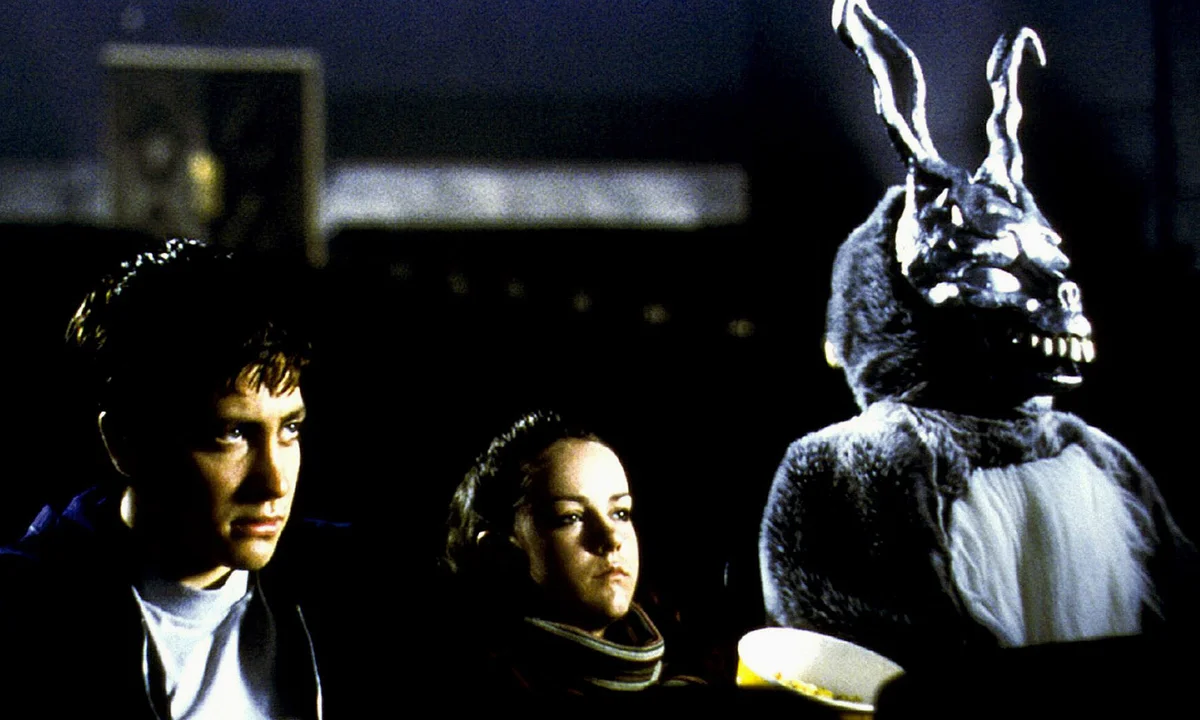
After his teenage son Donnie dodges a freak accident – a habitual sleepwalker, he wasn’t home when a jet engine landed in his bedroom – Eddie Darko is reminded of a high school classmate named Frankie Feedler, who died on the way to the prom. Based on his shell-shocked demeanor and hushed tones, Eddie probably hasn’t thought about Frankie in years, but he remembers how people spoke about him afterwards: “They said he was doomed.” And now he’s worried about his own son’s near-brush with death. If this were Eddie’s story, he might start investigating if the town of Middlesex, Virginia, has a history of sacrificing its alliteratively named young people once a generation for some arcane reason, but this is not his story. It’s Donnie’s, and it’s equally baffling.
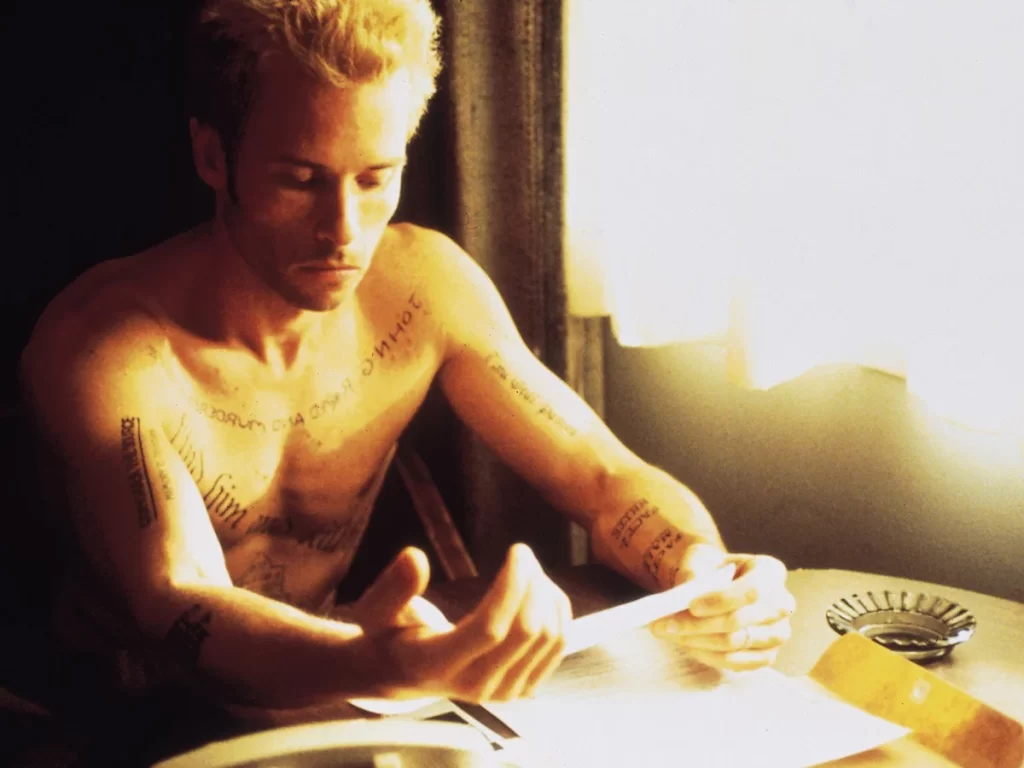
When Donnie Darko premiered at the 2001 Sundance Film Festival, distributors were wary, but it was eventually picked up by Newmarket Films, then chasing its success with Christopher Nolan’s Memento, and readied for release that October. A victim of poor timing, arriving just weeks after the 9/11 attacks, Donnie Darko was a commercial bomb, but some theaters held it over for midnight screenings. By the time it came out on video, it had a cadre of devotees ready to speculate about what it all meant and ferret out the clues first-time writer/director Richard Kelly left like breadcrumbs for them to follow. Anointed one of the first cult films of the 21st century, its status was confirmed by being an early addition to Wildflower Press’s Cultographies series, as well as the inaugural entry in Scott Tobias’s New Cult Canon for The AV Club. While some films shoot for cult status, Donnie Darko got there the old-fashioned way: by failing first and gaining a second life when it was rediscovered by viewers eager to get swept up in its mysteries time and again.
Of course, time itself is one of the film’s recurring themes. Once Donnie is informed by Frank, a masked man in a bunny costume, when the world will end, Kelly inserts captions pinpointing when pivotal events occur and counting down how much time remains of the 28 days and change Donnie has to figure out what’s going on. A key clue presents itself when he asks where Frank comes from, and Frank asks him right back, “Do you believe in time travel?” Soon after, while discussing the subject with his science teacher, Donnie is given a book called The Philosophy of Time Travel, passages of which Kelly incorporated into his director’s cut – which straightens out the film’s plot, but dispels its mystique.
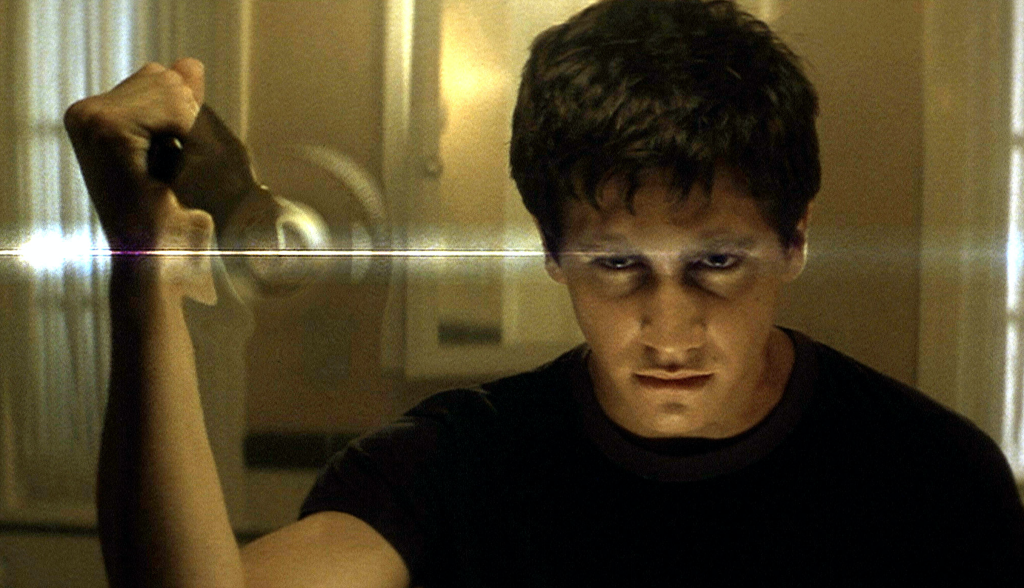
The same goes for the DVD commentary Kelly recorded with actor Jake Gyllenhaal for the theatrical cut, during which he reveals details about the plot and some of the characters that wouldn’t be apparent no matter how many times you watch it. Do one need to know that the “Mystery Woman” at the talent show is a scout for Star Search, which is how juvenile dance troupe Sparkle Motion gets picked to compete on the program? Not particularly. Nor is it necessary to know the identity of the “Man in Red Jogging Suit” who appears to be keeping tabs on Donnie. Turns out he’s a representative from the FAA investigating the freak accident that starts the film by… following a 16-year-old around? How does that not raise any red flags? Oh, right. It’s 1988.
The time period is established in ways both obvious (the first line of dialogue, spoken by Donnie’s older sister Elizabeth, played by Jake’s older sister Maggie, is “I’m voting for Dukakis”) and cheeky (The Evil Dead sharing marquee space with The Last Temptation of Christ). It’s also evoked by the soundtrack, highlighted by iconic sequences set to Echo and the Bunnymen’s “The Killing Moon” (unaccountably swapped out for INXS’s “Never Tear Us Apart” in the director’s cut) and Tears for Fears’ “Head Over Heels.” With his limited budget, Kelly couldn’t afford to put out a soundtrack album, but in the age of streaming playlists, it’s easy enough for fans to compile their own.
Over and above Kelly’s attempts to posit Donnie Darko as a puzzle to be solved (or have explained), it really lives and dies on its performances, especially Jake Gyllenhaal’s soulful turn as the title character, whose enigmatic smile is his response to a private joke he can’t let anyone else in on. And Mary McDonnell’s emotional journey as Rose Darko, the mother trying to understand him, is heartbreaking in its sincerity. Both were sorely missed at the end of the decade when the misbegotten mercenary sequel S. Darko (with Daveigh Chase the only returning cast member as the now 17-year-old Samantha Darko) limped into a direct-to-video release. That might have been its parent film’s fate once upon a time as well, but Donnie rose above the fray to become an enduring cult classic.
Where is Donnie? Why, he’s streaming just about everywhere you can imagine. (No access to wormholes or tangent universes necessary.) “S. Darko,” meanwhile, is only available for rent or purchase, but it’s best to follow Richard Kelly’s example and pretend it doesn’t exist.