Audrey Fox
Bradley Cooper’s latest bid for an Oscar, a biopic about the life and career of Leonard Bernstein, is filled with flashy, bombastic set pieces that immediately declare its presence on the big screen. But nestled within the dramatic conducting sequences and prosthetic noses of Maestro is a quiet moment of grief so understated that it almost feels like it was an accident that it was included in the first place. In the aftermath of Felicia Montealegre’s death from cancer, the rest of the Bernstein family leaves the peaceful seaside home where she had been convalescing. Here, something as small as an empty space in a car captures all the pain and loss they’re feeling, in Maestro’s most effective sequence of visual storytelling.
The relationship between Leonard Bernstein and his wife Felicia (played movingly by Carey Mulligan), as portrayed here, is not without its complications. Bernstein is an incredibly talented composer and conductor, but his genius can also be suffocating, a fire that needs to take in all the oxygen in a room. There’s little space for Felicia, outside of her role as Bernstein’s wife. And Bernstein can’t help but embarks upon a series of affairs, each one less discreet than the last. For a time, they go their separate ways, but there’s a tremendous amount of love between Leonard and Felicia, and it becomes clear to both of them that they need each other in their lives. They reconcile, and are genuinely happy for the first time in a long time – but then Felicia receives a devastating cancer diagnosis, and their world falls apart.
When she passes away, the Bernstein family is entirely bereft. It’s almost as though no one realized how powerful her presence was until it wasn’t there anymore. We are shown her devastating absence in one brief scene, which feels like a throwaway moment, but is one of Bradley Cooper’s most thoughtful pieces of directing in the entire film. The three Bernstein children – now grown adults – pile into the backseat of the family car, like they’d undoubtedly done hundreds of times before. They’re not little kids anymore, and they barely fit, but they squeeze in together. It doesn’t even occur to any of them to move next to their father in the driver’s seat – even if it did, it’s clear no one can stomach the idea of sitting in the front passenger seat, their mother’s spot. One of them occupying that space would be a tacit acknowledgement that she’s really gone. Staying in the back together is an attempt to cling to normalcy – although the passenger seat is empty, the emotional weight of the person not there is overwhelming.
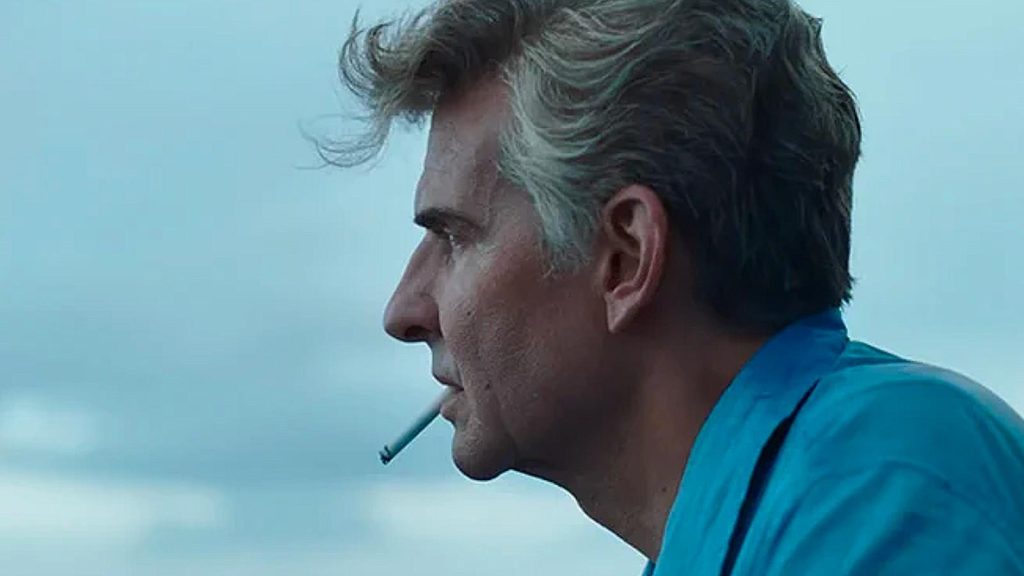
When Leonard climbs into the car, he takes on the fatherly role of chauffeur and gets behind the wheel. For a split second, he rests his arm on the headrest of the empty passenger seat, a familiar and intimate gesture that comes as second nature to him. But before his arm can even make contact with the seat, he pulls it back – almost immediately, as though it burned him. He too is silently struck by the absence of his wife in the most mundane of familial activities. In Bernstein and his children’s avoidance of the passenger seat, their grief manifests itself as a physical presence – even if it’s only an empty space. A hole isn’t nothingness, after all, and a void is defined as much by what isn’t there as what is.
Over the course of Maestro, the relationship between Leonard and Felicia plays out as high drama. The most important scenes showcasing their romantic connection with one another come with pomp and circumstance, from the self-indulgent musical number where Bernstein takes Felicia through a revue of his most famous compositions to the towering church performance that he conducts, full of emotion, as he and Felicia reconcile. Both of them are high-energy people who seem to feel the need to be “on” all the time, for better or worse, so it makes sense that so few of their romantic beats would speak softly.
But because of this tendency towards the grandiose – both between the characters and with Bradley Cooper’s directorial style in general – it makes the scene in the car after Felicia’s death all the more impactful. It doesn’t come accompanied with the soaring crescendo of a full orchestra or Cooper contorting himself into knots to prove himself worthy of an Oscar, and perhaps for that reason alone it stands out as one of the most surprising and emotionally genuine moments in Maestro.
“Maestro” is currently streaming on Netflix.