Chelsea Spear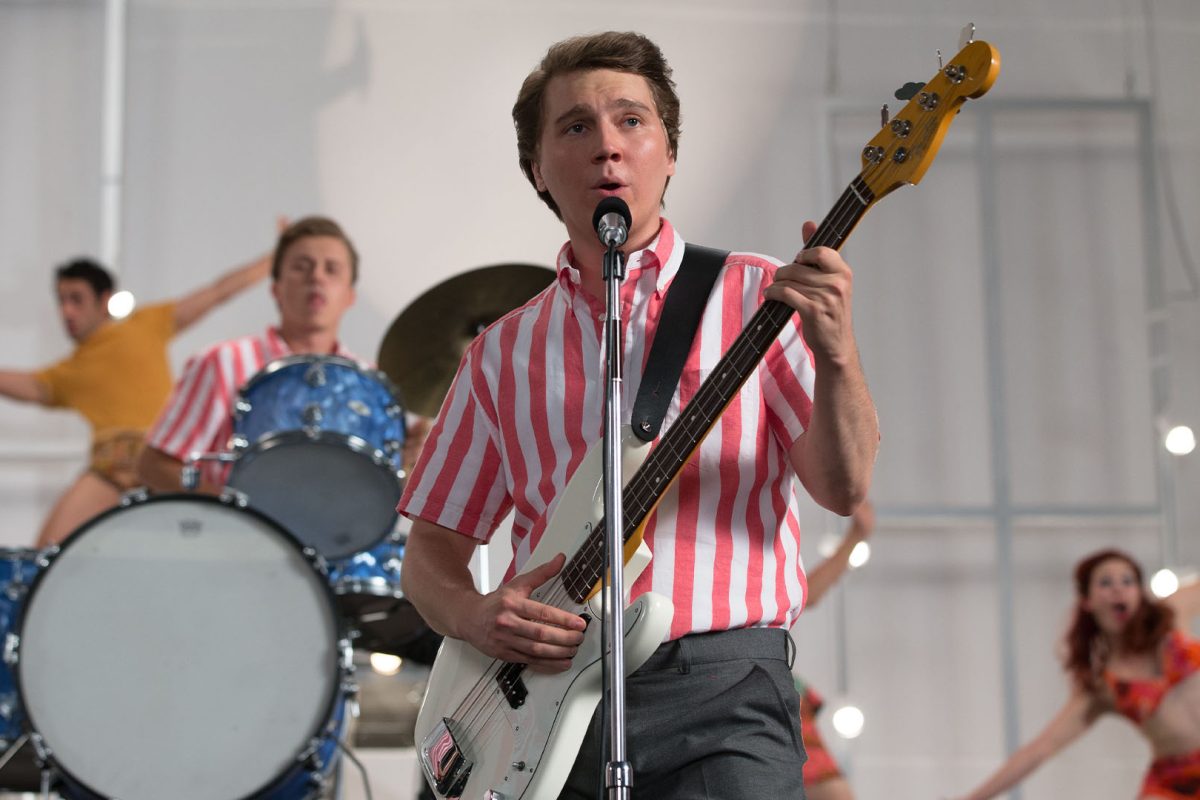
In the 2024 documentary The Beach Boys, a disc jockey describes the Beach Boys as “America’s band.” Their blend of pristine barbershop quartet-style harmonies and clean surf rock-inspired riffs wove together disparate elements of American pop and rock n roll music. Brian Wilson, whose songwriting defined the band in their most acclaimed periods, collaborated with lyricists like Van Dyke Parks and Tony Asher, who “documented an America that no longer exists,” as Parks would tell the Guardian in an appreciation for Wilson. Their album covers and promotional film clips, which showed the Boys driving Woodies and carrying surfboards on the beach, brought a sun-dappled vision of Southern California to a worldwide audience.
Behind the vocal harmonies and the Pendleton shirts, the story of the Beach Boys had more in common with epic Russian novels. Their overwhelming success was countered with power clashes among the extended Wilson family and Brian Wilson’s lifelong struggle with mental illness, and the contrast between their wholesome image and their complicated backstory played a role in their legendary status. While their story has many built-in narrative hooks for a feature film, their story has only intermittently made it to the big screen. How has Hollywood reinterpreted and refined the Beach Boys’ biography for a mass audience?
In the early 1990s, Brian Wilson had been released from an isolating treatment regimen administered by the controversial psychologist Eugene Landy. He reunited with and eventually married Melinda Ledbetter, who helped him leave Landy’s care, and had begun recording music with LA power pop legend Andy Paley. While the Beach Boys had been playing state fairs and summer stock theatres on the strength of their 1988 single “Kokomo,” a 1990 CD reissue of their masterpiece Pet Sounds had brought a counternarrative of Wilson as a key innovator of pop music in the 1960s and beyond to a wider audience. Don Was, an acclaimed record producer who collaborated with legacy acts like Bonnie Raitt and Elton John, made his directorial debut with I Just Wasn’t Made for These Times, a documentary snapshot of Wilson in the immediate aftermath of his departure from Landy’s care.
According to the press notes for I Just Wasn’t Made for These Times, Was “wanted to explain to the non-musician precisely why the phrase ‘Brian Wilson is a genius’ has appeared on the lips of three generations of musicians like holy gospel.” The film followed a similar format to Let’s Get Lost, in which photographer Bruce Weber followed Chet Baker on his last concert tour. The film has an elliptical structure that weaves among live-in-the-studio performances, archival footage, and interviews with friends and family members.
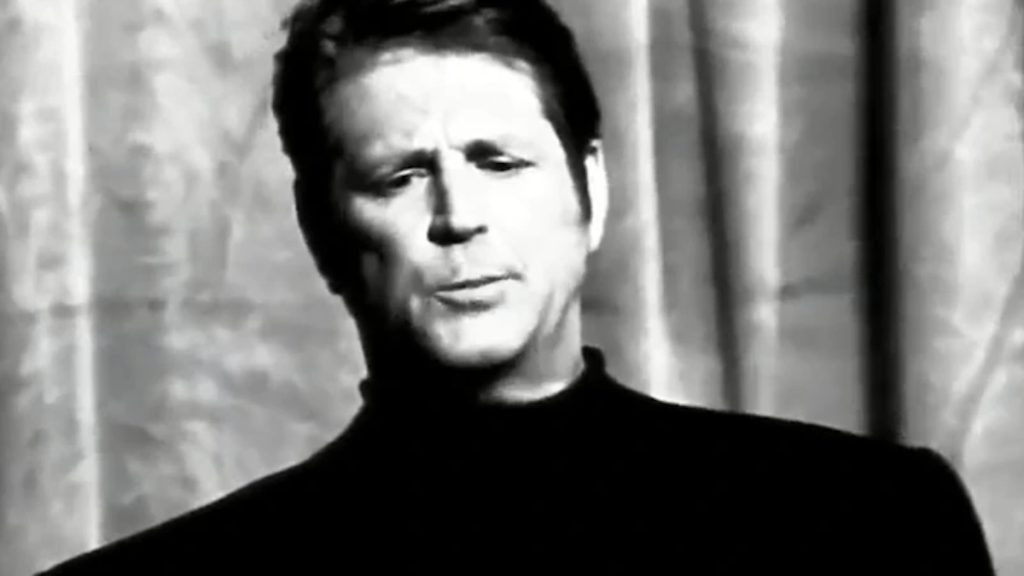
While Weber incorporated the seamier side of Baker’s public image, Was eluded to and frequently backed away from the family conflicts that fractured the Beach Boys. Instead, he focuses on Wilson’s brilliance and his ability to broaden what pop music could do. He contextualizes the ways Wilson changed pop music by interviewing his peers and the next generation of musicians who were influenced by Pet Sounds, and by allowing Wilson to perform songs from the then-unfinished album Smile with some of Los Angeles’ best session players at the time. After a manic appearance in the 1994 documentary Theremin: A Musical Odyssey, Wilson’s interview footage was more even-keeled and ruminative, and Was and cinematographer Wyatt Troll frequently shoot him in high-angled profiles to minimize his facial stims.
A Brian Wilson biopic had been in development since his split from Eugene Landy in 1990, with actors like William Hurt and Jeff Daniels rumored to playi Wilson. While the film was in turnaround, Wilson had experienced an incredible second act as a composer and live performer; he recorded an album with power pop revivalists The Wondermints, toured Pet Sounds at symphony halls, and recorded a new version of his unreleased masterpiece SMiLE. By the mid-2010s, pop music fans had accepted that he was a genius. Love and Mercy, a narrative film about the making of Pet Sounds and the original version of SMiLE and the effects of mental illness on Wilson’s life, premiered a few months after the release of Wilson’s 10th solo album, No Pier Pressure.
Love and Mercy star John Cusack described the film as “a companion piece” to I Just Wasn’t Made for These Times, and the documentary and narrative features share a character-driven, impressionistic structure. It jumps back and forth between the failure of Pet Sounds to find an audience on its 1966 release and the emotional turmoil that went into the original SMiLE sessions, and his courtship of Melinda Ledbetter and eventual departure from Landy’s care.
Where I Just Wasn’t Made for These Times treated his troubled upbringing and the contentious dynamic among the Beach Boys in a more circumspect way, director Bill Pohlad shows how Brian’s conflicts with the family authority figures were a recurring motif in his life, and how escaping this cycle by leaving Landy’s treatment played an important role in his career renaissance. Love and Mercy looks great, with its period perfect recreations of 1960s and 1980s Los Angeles, and Atticus Ross’s score pulls apart the multitrack recordings of Pet Sounds and SMiLE to highlight how groundbreaking Brian Wilson’s work was.
The intuitive, nonlinear editing distracts from the way Pohlad depicts Brian as the singular genius of the Beach Boys. Though his portrayals of father Murry Wilson’s cruelty and cousin/lead singer Mike Love’s musical conservatism and deliberate obtuseness fall in line with the stories we know about the Beach Boys’ studio years, the didactic dialogue and stagy performances feel over the top; they also overshadow the ways Pohlad has flattened the contributions of key collaborators like Van Dyke Parks, whose extended cameo flattens him into a name-dropping Yoda figure. Scenes in the 1980s work better, in part because you can’t compare it to any film or video from the era and in part because the performances are, for the most part, more subtle. Some of the tonal shifts are more abrupt, and there are scenes where Brian and Melinda come off as a gender-swapped manic pixie dream boy and brooding, soulful young woman.
Don Was and Bill Pohland looked at Brian Wilson as a singular figure who changed the sound of popular music. With the 2024 documentary The Beach Boys, directors Frank Marshall and Thom Zimmy put Wilson’s genius and mental illness in the context of his collaborations with the other members of his band.
The crew for The Beach Boys had unprecedented access to the band’s archives and included interviews and footage of members from various points of their band. By producing and distributing the film through Disney, however, some of the more controversial aspects of their history—such as Brian’s recollections of Murry’s physical abuse and Dennis Wilson’s collaboration with Charles Manson—are elided if not entirely ignored. Marshall and Zimmy further undermine the historical record in more subtle ways, like using AI to make the Beach Boys’ 1960s record covers widescreen or by running quotes from Paul McCartney through the voice-to-text converter.
Even with these confines, Marshall and Zimmy struck on interesting observations that crystallized the appeal of the Beach Boys over multiple generations. The interview with Mike Love, who has been a lightning rod for criticism among Brian’s partisans, is diplomatic and self-aware, and his observations about his relationship with Brian at the end of the film are poignant if this is your first time hearing him speak. An interview with music critic and cultural historian Josh Kun eloquently summed up the band’s appeal: After admitting he rejected the band when he first heard them, he realizes that “they went beyond surfing” on their albums, and finally observes that “they were participating in the creation of a Southern California dream.”
With the announcement of Brian Wilson’s death on June 11, the sun has set on this vision of psychedelic Americana. As one of the most influential bands of the multimedia era, there’s a wealth of TV and film appearances for new fans. These films are a good first step for those who want to understand why the Beach Boys, and Brian Wilson in particular, were so important to the evolution of pop music.