Chloe Walker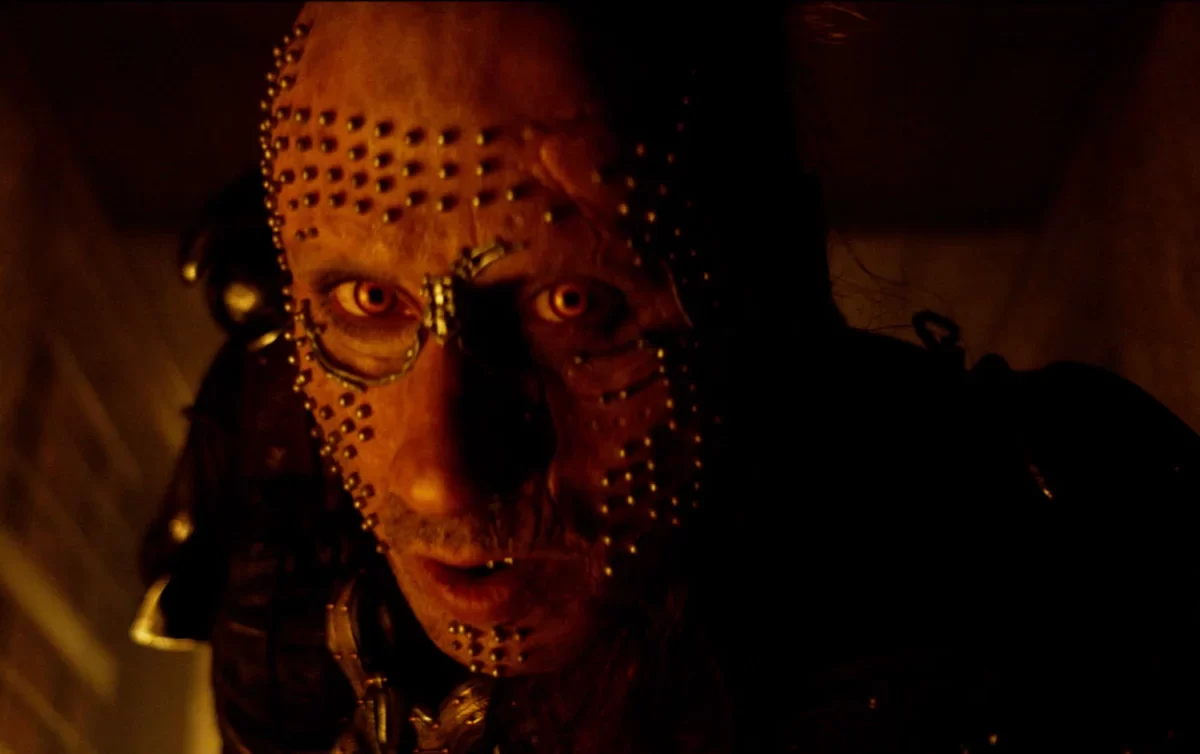
For a significant proportion of the 2010s, Matthias Schoenaerts appeared omnipresent, starring in a host of popular films across genres and languages, usually to critical acclaim. Though he’s never stopped screen acting, that period seems a long time ago now. What happened? And with several upcoming high-profile projects, including this week’s Supergirl, is a comeback on the horizon?
The hulking Belgian, who’d enjoyed acting success in his native country, burst onto the global cinema scene after his performances in a pair of European films made waves on the festival circuit in consecutive years. In 2011’s Bullhead, he’s Jacky, a farmer addicted to steroids after a childhood bullying incident left him castrated. In 2012’s Rust and Bone, he’s Ali, an MMA fighter who falls in love with Stephanie (Marion Cotillard), who’s just lost her legs to a killer whale.
Jacky is like a ferocious animal and a scared child fighting it out within the same bulky body. Ali defaults to brutality too, but with Stephanie (Marion Cotillard) he’s touchingly gentle. Both performances accrue their power from the contrast between the brute force of Schoenaerts’ physique and the wounded expressiveness of his eyes. His literal embodying of the characters’ feelings, with such nuance and intensity, propelled him through the language barrier.
Though his first two English-language films were less visceral, they took place in the same underworld milieu. Schoenaerts played villainous gangsters in Blood Ties and The Drop, his pitch-perfect accent work earning deserved plaudits (as it would throughout his future English-speaking roles). While in both he’s one of a large ensemble, his ability to quickly communicate a simmering, unsettling menace left a big impression.
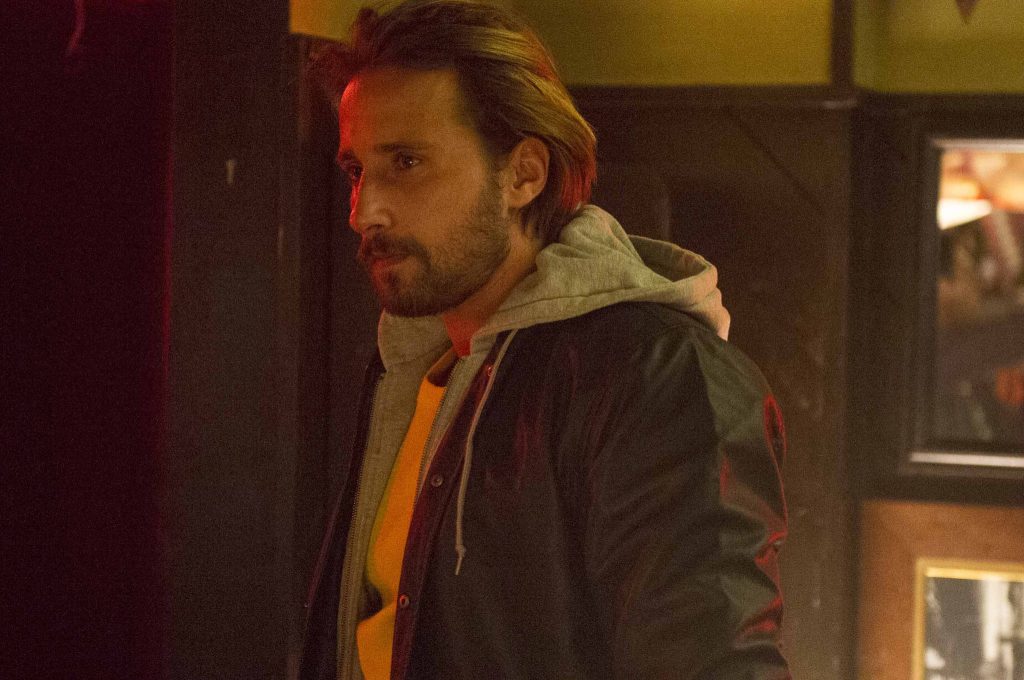
Then came his quartet of period dramas between 2014 and 2015: A Little Chaos, Suite Française, Far From the Madding Crowd, and The Danish Girl. These movies could hardly have been further from the two that gave him international fame. None of this quartet placed much importance on his brawny physicality; instead, all four found in him a magnetic stillness. This was best exemplified in Far From The Madding Crowd’s Gabriel Oak, the steadfast protector of heroine Bathsheba Everdene (Carey Mulligan). In the wrong hands, the flawless character could be boring, but Schoenaerts’ eyes yearn, hurt, and smoulder through the whole two hours in a host of ever-compelling ways. It’s a smaller, less obviously dynamic turn, yet he’s just as mesmeric as in Bullhead and Rust and Bone.
2015’s Disorder landed him back in that territory – no surprise, as writer-director Alice Winocour wrote it for him after admiring those two performances. Schoenaerts is Vincent, a soldier with PTSD who takes a job protecting the wife (Diane Kruger) and child of an arms dealer. Amidst all the violence – his own and others’ – Schoenaerts achingly evinces the loneliness of being trapped within his tormented brain. Again, he says all the important things with his eyes and his body; if Vincent had been mute, it would have made almost no difference to how the action plays out.
Schoenaerts starred in eight movies that premiered between 2014 and 2015. Then, a year off. After that came a long run of films in which he, the production itself, or both, made little impact. It’s a run that has continued to this day, with only a couple of exceptions.
His small role as Jane Fonda’s tormented son in Our Souls At Night was overshadowed by the final screen pairing of Fonda and Robert Redford. Schoenaerts reteamed with Bullhead and The Drop director Michaël R. Roskam for Racer and the Jailbird; though he was wrenching as the soulful gangster in love with Adèle Exarchopoulos’ race car driver, the ludicrous plotting was widely derided. He was chilling in sleazy spy thriller Red Sparrow – skincrawlingly evil, despite never raising his voice or committing any physical violence – but the film was lukewarmly received. While he and co-star Reda Kateb excelled in the tale of childhood friends now on either side of the law, Close Enemies was deemed overly derivative. His lead turn in submarine tragedy Kursk was praised, yet again, the release was met with a shrug. Conversely, Terence Malick’s A Hidden Life was lauded, but Schoenaerts only appeared in around five of the 173 minutes.
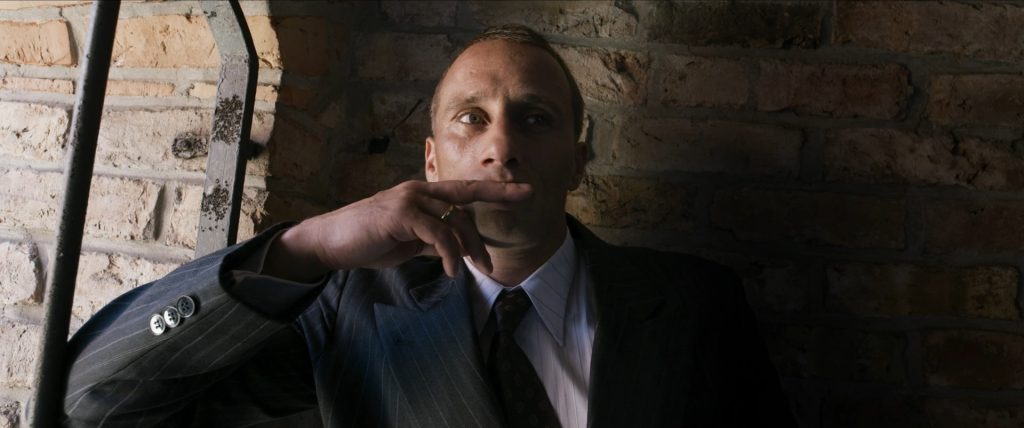
On it went, movie after movie. It wasn’t that his acting had worsened; he’s remained a formidable talent. It was the parts and the projects that were the problem.
Some of it was bad luck. He’d had two of his biggest successes with Michaël R. Roskam. Why wouldn’t it be third time lucky with Racer and the Jailbird? Acclaimed Danish auteur Thomas Vinterberg had directed him to great success in Far From the Madding Crowd. Why wouldn’t a star-filled story about a tragic real disaster be a hit? Alas, to paraphrase a maxim from a very different field, past performance does not guarantee future results.
Some of it came down to choosing supporting parts. Schoenaerts has proven repeatedly he doesn’t need much screentime to leave an indelible mark. His preference for quality collaborators over the showiest roles is admirable. Nevertheless, so many small supporting turns so close together has meant that, unsurprisingly, his characters have become less memorable than they were earlier in his career.
Additionally, although the contrast between his powerful physicality and tender interiority in Bullhead and Rust and Bone was the combination that caught the world’s attention, his English-language work has rarely tried to conjure that from him again, even when he has a main role. He’s an actor with lots in his toolbox, yet to take that out of it is like telling Nicolas Cage he couldn’t ever shout again, or Keanu Reeves he could only play artful killers, not goodhearted doofuses; you’d still get engaging performances, but you lose something significant.
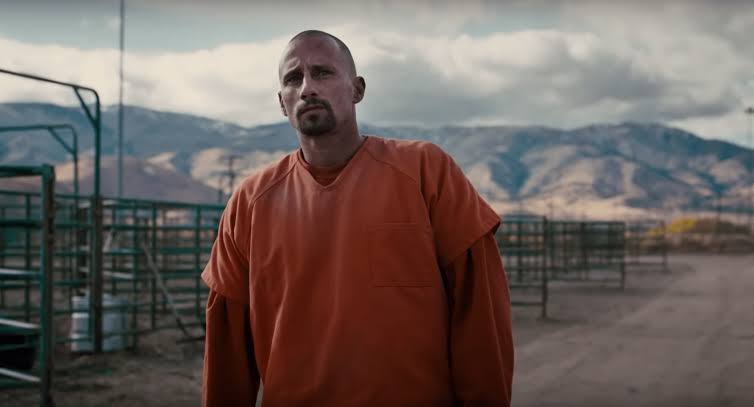
To date, 2019’s The Mustang was the last time Schoenaerts went full Schoenaerts. He’s Roman, a violent offender enrolled in a prison programme to train wild horses. It’s a great study of the contradictions that can make him such a captivating presence. Though he cuts an imposing figure, he spends most of the first act visibly afraid; while he carries the promise of eruption within him and sporadically succumbs, a heavy stillness dominates his performance. That director Laure de Clermont-Tonnerre seemed to understand how much Schoenaerts can transmit within that stillness, and gave him the space to do so, putting it right up there with his best work.
That was seven years ago, and there’s been nothing close to that depth from him since. His career has become dominated by mediocre to miserable ensemble pieces (The Laundromat, Amsterdam) and little-loved TV shows (The Regime, Django). There was some hope when the surprisingly characterful superhero movie The Old Guard arrived on Netflix early in the pandemic. Then 2025’s long-delayed sequel was so disdained it appeared to drag its predecessor’s reputation down with it. Looking at Schoenaerts’ recent CV, it’s hard to not think back to the work he was doing in the early-mid 2010s and think, “What a waste.”
But there are hopeful signs ahead. Playing the villain in this month’s Supergirl is not an obvious ‘return to form’ kind of turn, even if it is his most prominent role in a long time. Happily though, Schoenaerts has some other promising irons in the fire, too: among them another collaboration with Terence Malick, as well as ones with intriguing directorial up-and-comers Ellie Foumbi and Lola Quivoron. In at least a few of these projects, he appears to have a leading role.
Time will tell if Schoenaerts will be able to regain his crown as cinema’s most compelling current portrayer of tormented masculinity, or if this long downslide will become terminal. Fingers crossed, like some of his wounded, wounding characters, he’ll be able to find his way back.