Marshall Shaffer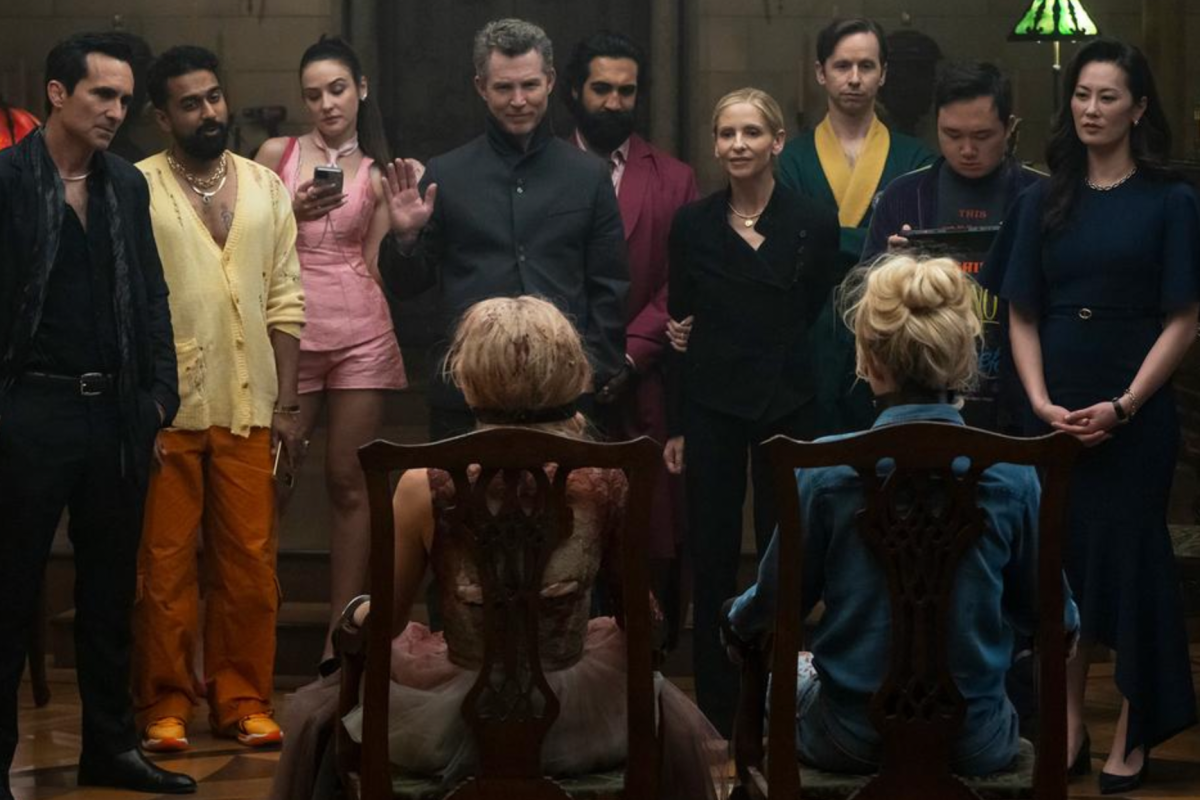
Despite a wave of populist thinking that has swept the globe and reshaped class consciousness, most of cinema’s so-called “eat the rich” movies lack any sense of radicalism in their social commentary. Most post-Great Recession cinema has barely progressed beyond Occupy Wall Street-era bromides – and many even reinforce the system they claim to abhor. “Replace the rich” might be a better tagline for films ranging from Triangle of Sadness to The Menu and more recent offerings like How to Make a Killing.
These films’ narratives tend to adopt a “bad apples” framing of an unequal society. It’s not that concentrated resources are bad, they seem to tell us, only that they rest in the hands of those who are undeserving or unqualified. By rising the ranks and demonstrating that they can inflict physical violence proportionate to the economic violence done to them, they perversely prove the meritocratic ideals that capitalism purports to uphold. Only something like Bong Joon-ho’s Parasite, which recasts this quest as tragedy, manages to hammer home that obscene wealth itself – not just the wealthy – represents a destructive societal force.
There’s an underlying message that reveals a presumed value system: of course, everyone wants to be rich. Those who sit atop society’s power structures might be abhorrent, yet these movies still posit their status as something aspirational. In the immediate aftermath of the 2008 financial crisis, this might have accurately reflected attitudes toward the economy. Richness stood for some semblance of financial probity, a reflection of hard work that might one day be in reach for anyone. After nearly two decades in a K-shaped economy, further stratifying the haves and the have-nots, those promises ring hollow.
Yet a bigger factor here has little to do with any data one might hear on CNBC. The slow drip of data emanating from the Epstein files has unveiled a web of coordinated corruption tied to his sex trafficking of underage girls. The more recent development of reading private communications between connected individuals has proved a mask-off moment for how wealth works. Further, the consistent presence of figures in the highest echelons of their fields, from academia to tech and even the government, has long fueled some of the most conspiratorial voices on the Internet since Epstein’s death was ruled a suicide in 2019.
Those consistent stories have begun to have a bipartisan impact on how people think about power and wealth in contemporary society. An NBC News poll found last month that 84% of American voters agreed with the statement “the very rich and powerful are above the law when they do something wrong, they look out for each other, using their power and connections to get special treatment.” Such agreement in a heavily polarized era is rare; seriously, find any individual or issue that polls that highly.

Ready or Not 2: Here I Come’s conception of a global cabal of elites often veers towards QAnon-levels of craziness. Chester Danforth, the head of the Satan-worshipping families improbably played by David Cronenberg, can simply make a phone call to approve a ceasefire and watch the cable news chyrons change in front of him. With one cryptic text to a group chat, he activates a global network of wealthy individuals to hunt Grace – and her younger sister, Kathryn Newton’s Faith – to claim their domain over the world.
This most dangerous game occurs on an old-school country club, complete with a golf course, and two participants boast of their ability to starve their prey of resources through their control of both the phone company and the police. With each additional hunter that they outmatch, the sisters realize the extent of the rot inherent to ensconced privilege and class. By the time Grace declares her final word on the matter – “someone had to burn it all down” – it’s clear that she means an entire system propping up this consortium of criminality, and not just those who do its bidding. (To his credit, Rian Johnson also achieved a similar catharsis in Glass Onion, albeit targeted at one bad actor rather than a broader billionaire class.)
The lengthy nature of developing films, especially those that touch on less commercial subjects like economic class, often leads to a slower metabolization of attitudinal changes. Unlike the latest season of HBO’s Industry, which morphed one of its leads into a version of Epstein accomplice Ghislaine Maxwell, cinema will be a bit slower to reflect the files’ impact on the collective psyche. For the time being, plot elements such as the shadowy, sinister Christmas Adventurers’ Club in One Battle After Another are fortuitously timed coincidences rather than direct responses.
But as screenwriters begin to process this shift, they’ll have a varied – if not voluminous – set of cinematic antecedents from which to pull. Arguably, the most obvious progenitor of an Epstein Files cinema would be a film made by someone convicted of statutory rape. Yes, Roman Polanski’s Chinatown mirrors the conspiratorial thrills about the hoarding of water rights in its disgust at the revelation of a sexually deviant power broker incestuously polluting his bloodline.
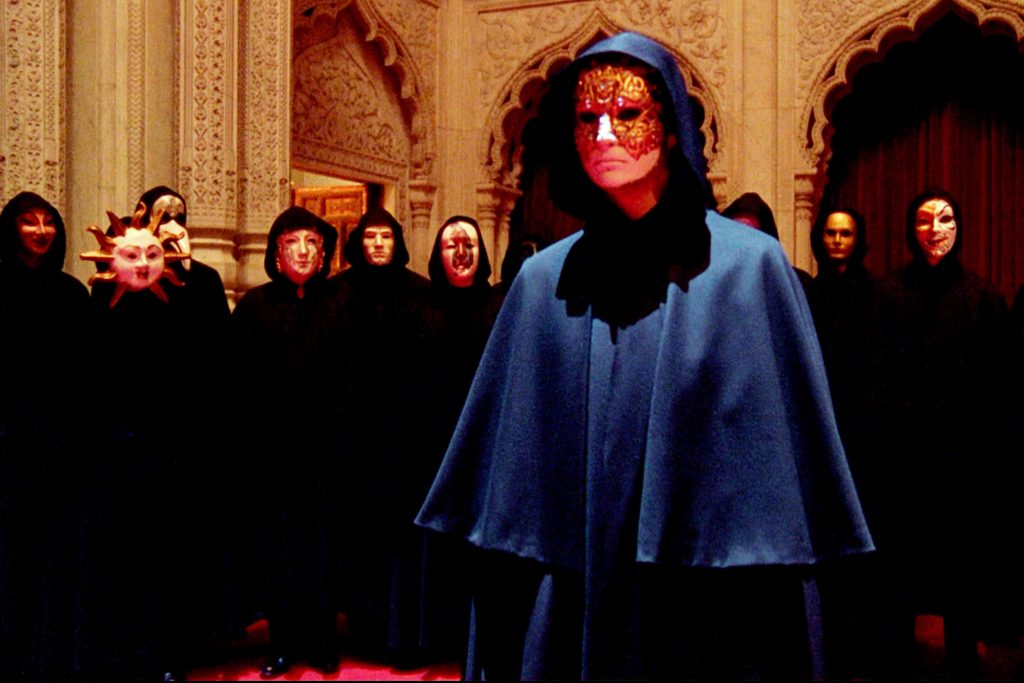
Stanley Kubrick’s Eyes Wide Shut, meanwhile, has seen a surge in viewership thanks to the Epstein Files dominating the news earlier this year. This follows from a growing wave of reappreciation that has corrected the confusion at the time of release. Its controversial masked orgy might have baffled contemporaneous viewers, but the scene makes total sense to a jaded 21st-century viewer. Society seems to run from shadowy rooms like these, where the upper crust can whet their erotic appetites with anonymity and without accountability.
More recent history offers fewer examples, with most economically-minded cinematic storytelling snapping into familiar Horatio Alger tales that still offered some hope of social mobility. But the occasionally nihilistic work, like Andrew Dominik’s Killing Them Softly, managed to slip through the cracks. “America’s not a country, it’s a business … now FUCKING pay me,” exclaims Brad Pitt’s hitman Jackie Cogan in a punchy final line dripping with disdain for a criminal underworld just as committed to stiffing average workers as the government. Such sentiments push Joaquin Phoenix’s mercenary into even darker places of the soul in You Were Never Really Here after he uncovers a ring of pedophiles that extends all the way to the governor of New York.
Movies made in the long shadow of the revelations about Epstein have tended to dwell in the tawdrier details of his pedophilic proclivities. Exploitation flick The Scary of Sixty-First from the reactionary Red Scare girls makes no effort to hide its ripped-from-the-headlines thrills. Zoe Kravitz’s Blink Twice, meanwhile, uses the tropical getaway of Channing Tatum’s tech billionaire as a would-be Epstein Island on which depraved businessmen inflict horrifying abuse on unsuspecting women.
No film tackling the cultural flashpoint so directly has managed to marry its depiction of rank sexual misconduct with a sense of true populist fervor. Works ranging from as highbrow as Martin Scorsese’s Killers of the Flower Moon and as lowbrow as David Ayer’s The Beekeeper have resonated with audiences by reveling in their depictions of an elite class with its tentacles in every facet of daily life. But these two trendlines recasting economic virtue as moral vice feel on an inevitable cinematic collision course, so be ready when such a zeitgeist-capturing work finally comes.