Steve Erickson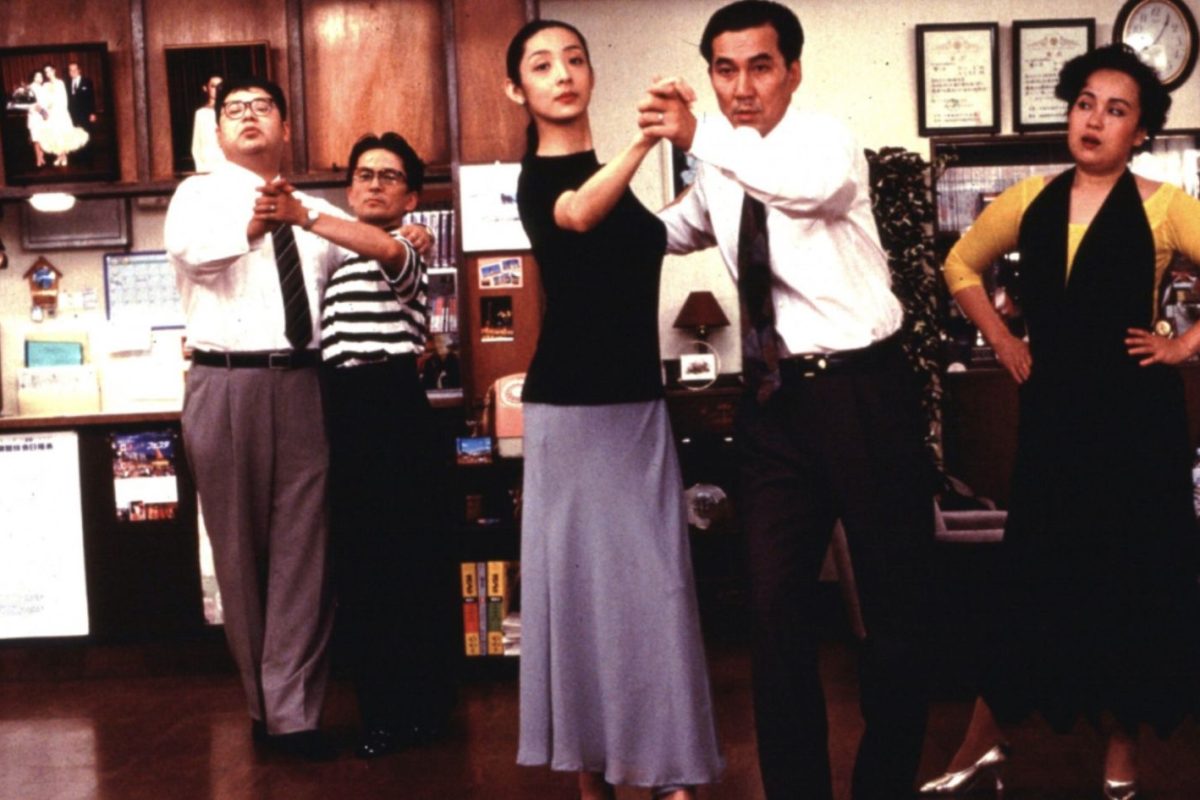
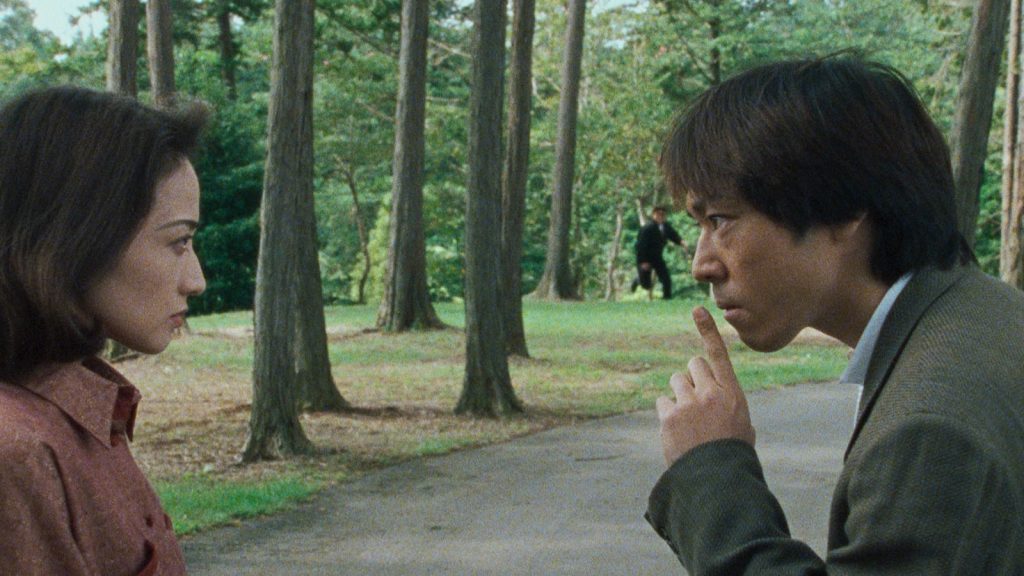
In 1996 and 1997, Koji Yakusho made the two films that would go on to define his career. At first glance, Shall We Dance? and Cure are poles apart; the former is a comedy about an uptight salaryman who finds new enthusiasm for life by taking up ballroom dancing as a hobby, while the latter is a horror film in which the actor plays a cop hypnotized into committing murder by the killer he investigates. Yet both describe a climate of severe emotional repression, where men in their 40s struggle to remain engaged by their marriages.
An enormous worldwide hit, Shall We Dance? was released by Miramax with (true to form) 15 minutes cut out. (Film Movement’s re-release marks the first time director Masyaki Suo’s cut will play in American theaters.) It grossed almost 10 million dollars here, with an American remake starring Richard Gere following in 2004. At this point, Cure is likely the better known of the two films, widely considered a classic, but it slowly built an international cult audience after taking four years to find a U.S. release. Yakusho would go on to play variations on the same grizzled, guilt-ridden detective in further Kurosawa films, which has helped define his image. While he’s had a long, varied career (including roles in Memories of a Geisha and Babel), Wim Wenders’ 2023 Perfect Days cast him in a role just as memorable as these early performances. His character’s peaceful contentment is the antithesis of many of the men he’s played.
Shogei Sugayama is a stereotypical salaryman, even down to the ultimate dull white-collar job: accounting. He’s worked hard enough to buy a house at 40, but he doesn’t get much enjoyment out of life. Attracted to a woman he sees in the window, he signs up for dance classes in order to meet her. However, he turns away from his adulterous desires. This mirrors the tension surrounding his character’s marriage in Cure; tracking down a serial killer might seem more exciting and socially productive, but it leads his character to a disastrous conclusion that harms his wife. He may not even be fully conscious of his own unhappiness, putting up a front of marital care, but whenever he turns away from her, he seems ravaged by anxiety. Shall We Dance? rarely feels as lighthearted as it intends to be. A cloud of unease hangs over the film

An introductory voice-over describes how expressions of affection in public are taboo in Japan, even among married couples. Sugayama’s co-worker dons a wig when dancing so he won’t be recognized, living out his fantasies as an alter ego. Shall We Dance? is permeated with the expectation that dancing is a euphemism for sex—while practicing dance moves with another man in the bathroom, Sugayama’s partner suddenly fakes a mild collapse when someone walks in, fearing they’d be mistaken for a gay couple. It’s a very brief joke, but a telling one.
In a profile of Yakusho for the Associated Press, Yuri Kageyama called Shohei Imamura’s The Eel, which also features the actor, “a bleak story of a normal life that goes awry, the daily challenge of trying to look for meaning amid betrayal, loneliness and abuse.” The darkness of so many of his characters – especially their potential for violence against women – seems just a step away from Shall We Dance? Here, it’s a very ordinary unhappiness; shame hovers over him, even though dancing itself defuses the film’s sexual tension. Rather than sleeping with the woman whose looks initially draw him into this world, he occupies himself by mastering it as a sport. When his wife talks about her discovery of his dancing and her unhappiness with their relationship, they’re posed in opposite directions, sitting at each point of a 90-degree angle.
The costume design and Yakusho’s body language change as Sugayama becomes happier. When he’s simply an accountant, he looks rather nerdy and schlubby. Without emphasizing this transition too much, he develops a sense of style, wearing suits that aren’t merely functional. As he first approaches dancing, he tends to look at his feet. His wife spots the difference when he gives it up.
Yakusho appeared in cameos at the beginning and end of Kurosawa’s Pulse, in which he may be the last man left alive in the world. That apocalyptic spirit could be found all over Japanese films of the period. As the country was affected by a recession, shrinking birth rates, a growing subculture of shut-ins, and the Aum Shinrikyo subway massacre, many of its ‘90s movies follow lonely, alienated people driven by suicidal and murderous urges. Watching Shall We Dance? for the first time, almost 30 years after its original release, clarifies just how much these fears even made it into populist entertainment. Nevertheless, it’s about finding solutions to those jitters rather than going further into a spiral of angst. The final scene even proposes dancing as the reignition of a marriage and birth of community.
The new 4K restoration of “Shall We Dance?” opens Friday at NYC’s Film Forum and will go wide in additional markets in the coming weeks.