Q.V. Hough
Are you tired of social media self-loathing? Well, I have good news: you can re-direct your negative vibes onto ill-fated movie characters who will have you screaming and cursing quietly as they get scorched by horrible summertime decisions. Here are four psychological thrillers — all currently streaming on Shudder — in which morally conflicted individuals try to avoid the summertime blues.
Downrange (2017)
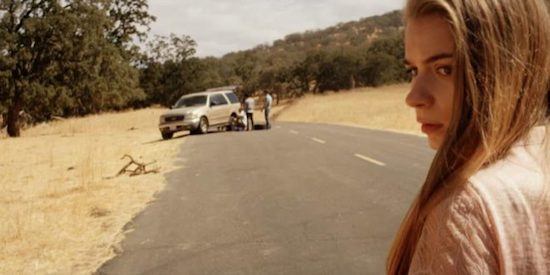 To be clear, this Ryuhei Kitamura film won’t inspire anyone to sign up for acting classes. And that’s just fine, because Downrange doesn’t take itself too seriously with its road-horror narrative featuring six chatty millennials and one tree-top sniper. Two characters are quickly eliminated, and that’s when Kitamura shows off his gnarly and deeply unsettling visual aesthetic. There are missing eyeballs and hungry crows; there are emotional male hipsters and strong-willed female characters, one of which is conveniently an “Army brat.” Spoiler: lots of chunky movie blood!
Despite its shortcomings, Downrange will keep most viewers engaged, whether it’s through the overt melodrama or the bold visuals. Remember when TNT aired Surviving the Game every weekend during the ‘90s? Downrange has a similar B-movie vibe: commit for the narrative thrills and stay to see who makes it out alive. Stephanie Pearson undoubtedly gives the best performance as Keren, even though she’s not immune to the collective OMG, seizure-like head-shaking amongst female cast members when something goes wrong. It’s actually quite enthralling to watch, as it’s unclear if Kitamura seeks high camp or if the performers are just trying too hard. Whatever the case, this is the rare film that successfully uses social media concepts to boost the narrative, if only briefly.
Sun Don’t Shine (2012)
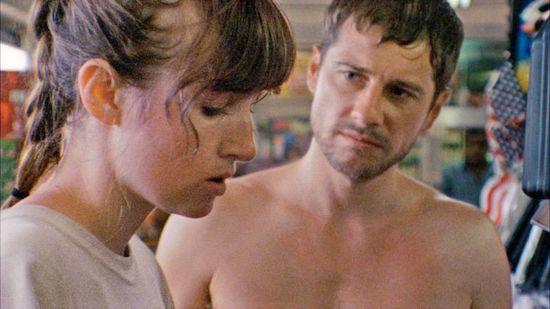 For a little more action — and a more polished film as a whole — I highly recommend this Florida-set thriller. Speaking of the Sunshine state, one of its most famous residents, Ernest Hemingway, once wrote a six-word short story that jibes with Sun Don’t Shine’s stripped-down despair: “For sale: baby shoes, never worn.”
Well, here are my six words for Sun Don’t Shine: “Amy Seimetz, Kentucker Audley, Kate Lyn Sheil.” OK, seven words; three indie all-stars.
After several viewings, Sun Don’t Shine viscerally connects because of its Hemingway-like qualities; the narrative keeps certain details below the surface, leaving the audience to piece everything together. However, it’s not exactly a cryptic film. There are clear goals, wants and needs for the central lovers, both of whom feel natural together yet still appear to be social outcasts. They connect, but they also need that day-to-day drama. That’s just how it goes, I guess — at least for lovers on the lam. In this scenario, Seimetz examines a specific time and place, pushing viewers to question the bigger picture, and whether the main players are legit outlaws or just a couple 20-somethings trying to overcome their worst summertime decisions. Always check the trunk.
Thou Wast Mild and Lovely (2014)
 Directed by Josephine Decker — one of the most transgressive indie filmmakers around — this atmospheric film ebbs and flows with summertime melancholy. When handyman Akin (Joe Swanberg) arrives at a farm, he’s greeted by the enigmatic Sarah (Sophie Traub) and her equally mysterious “father.” Most viewers will recognize the Malickian influence with the lush outdoor visuals and poetic narration, but Decker’s narrative style leans more toward a filmmaker like Claude Chabrol, a French New Wave icon who blended stylized formalism with transgressive concepts.
Traub delivers a memorable and highly sexualized performance, full of restraint and carefully timed movements. She’s a joy to watch, from beginning to end, always in motion. In contrast, Swanberg’s character isn’t quite as dynamic, though Decker’s screenplay reveals a man with deep-rooted psychological issues, some of which may not be entirely apparent on first viewing. With that said, Akin is a sympathetic figure, as he’s unfairly judged by his temporary boss while trying to cope with a recent loss. Then again, the farmhand creeps on the farmer’s daughter, and you know how that usually goes in the long run. In this case, however, Decker deconstructs narrative cliches about summertime farm romances, all the while incorporating thriller elements to keep the audience guessing as to which character is hiding the biggest secret. What matters the most, though, is how these individuals interpret and react to questionable behavior. They’re not quite “trapped” but seem to enjoy the wicked games that the long, hot summer inspires, especially when no one seems to be watching. Imagine Dostoevsky trying to throw some game at the farmer’s daughter.
Wake in Fright (1971)
 I’m ashamed to admit that I’d never heard of this psychosexual Australian thriller until I saw its streaming availability on Shudder. In 2018, it’s a relevant watch because of the toxic masculinity aspects, focusing on a financially challenged teacher named John Grant (Gary Bond) who fails miserably while trying to hang with hard-drinking locals in a town called Bundayabba. Visually, director Ted Kotcheff (First Blood, Weekend at Bernie’s) emphasizes the sun-scorched atmosphere and inherent challenges of living off the grid, but it’s the visitor’s pinball-machine-like beating that ultimately reveals Wake in Fright’s narrative depth.
John wants to get back to Sydney, but after gambling away his cash, he’s forced to find work and behave like a true Bundayabban. This isn’t Eat Pray Love — it’s more like Drink Drink F***, as in “F***, did I do that”” or “F***, who did I f***?” Poor John actually vomits during his first sexual experience in the Yabba, and it’s not even his worst late-night encounter during the trip. Guns. Face-to-face kangaroo combat. Wicked hangovers. Sheesh, this guy tries so hard but just doesn’t blend with the local alcoholics. Chances are that most viewers have never quite spiraled out of control like the blokes in this flick; it’s a film where grown men piss and moan when someone refuses to guzzle some brew. During the previously mentioned films, the characters can literally get out of town; they can choose to escape the madness. Here, in the ol’ Bunda, it’s a little more difficult, especially for easily influenced individuals with fragile personalities. The only cure for Wake in Fright is more Wake in Fright. Hair of the dog, Bundayabba-style. Don’t assume anything.
Anyway, have a great summer!