Jason Bailey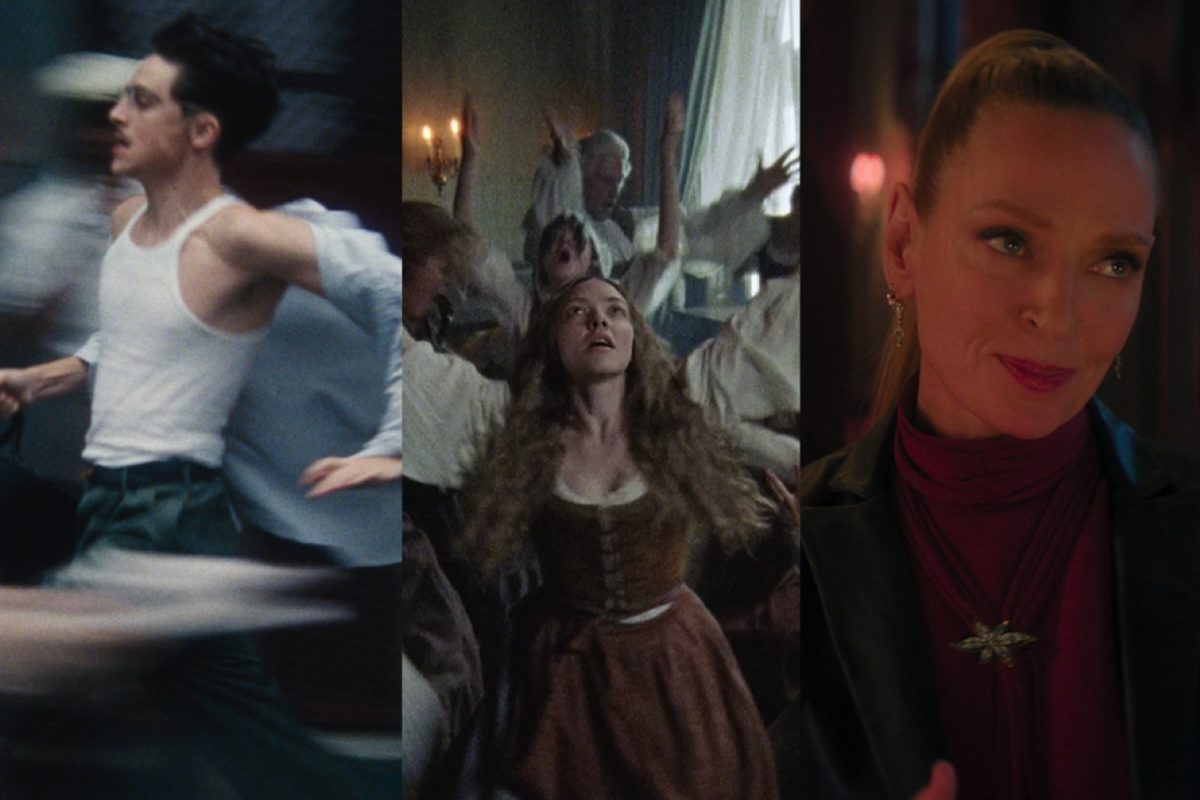
Every Tuesday, discriminating viewers are confronted with a flurry of choices: new releases on disc and on demand, vintage and original movies on any number of streaming platforms, catalogue titles making a splash on Blu-ray or 4K. This twice-monthly column sifts through all of those choices to pluck out the movies most worth your time, no matter how you’re watching.
PICK OF THE WEEK:
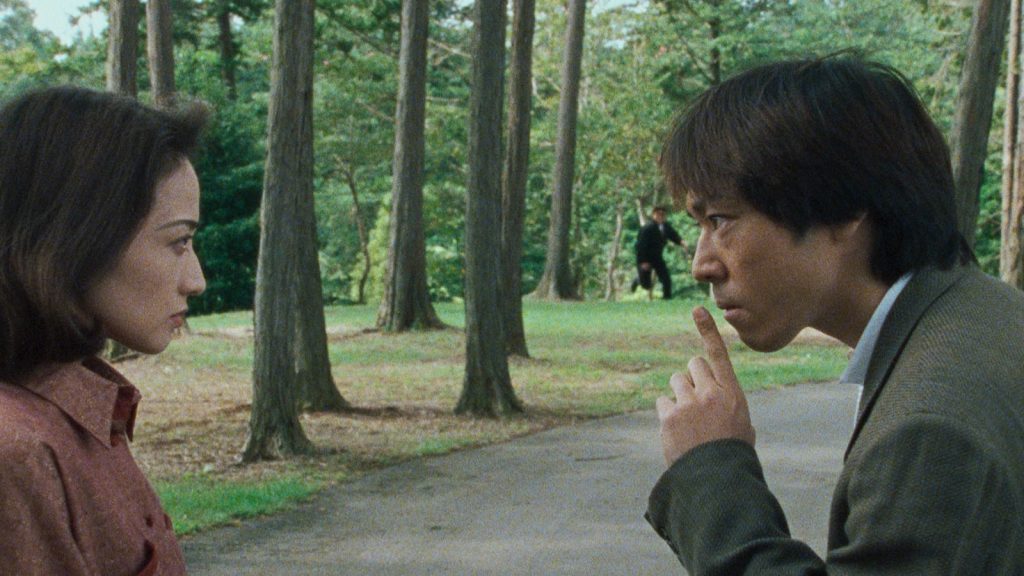
Cutter’s Way: Ivan Passer’s 1981 kinda-sorta mystery (out in a new, gorgeous 4K UHD special edition from Radiance Films) plays now like an essential, direct link between The Long Goodbye and The Big Lebowski – featuring, as it does, both the former’s Nina van Pallandt and the latter’s Jeff Bridges. He plays a handsome, empty stud, and it’s a good fit; Bridges was entering a rich period of playing golden boys who’ve lost their luster (The Fabulous Baker Boys, at the decade’s end, was perhaps the apex of this run), and here, he looks put together, but he’s completely broken. John Heard is astonishing as his best buddy, a roaring, drunken Vietnam vet with a missing arm, bum leg, and eye patch. Passer, a key member of the Czech New Wave, worked in a loose, shaggy style, and like his 1971 masterpiece Born to Win, Cutter is a burn-out hang-out movie. The drug of choice was heroin in that film, booze in this one, and his sense of lived-in atmosphere is so secure that we get the feeling, in the hung-over opening scenes, that this is how a lot of their nights (and mornings) play out. (Includes archival commentaries and interviews, featurettes, introductions, isolated score track, trailer, and essays by Christina Newland, Nick Pinkerton, and Travis Woods.)
ON HULU:
Sentimental Value: It’s full of inside jokes about Netflix distribution and inappropriate movies for children, but Joachim Trier’s Oscar winner is no inside-baseball show-biz satire; in fact, it’s perhaps not only his most moving picture to date, but one of his most relatable, concerned as it is with the complications of a tense familial dynamic. But the best movies are those that start about one thing, and by their end, you realize they’re about every thing. Sentimental Value is about family, yes. And then it’s also about depression and art and God and resentment and sex and longing and love and beauty and movies. Y’know — the important stuff.
The Testament of Ann Lee: Mona Fastvold, co-writer of The Brutalist, steps into the director’s chair for this utterly unpredictable and frequently thrilling historical drama (co-written with Brutalist’s Brady Corbet). Amanda Seyfried is a revelation in the title role, the founder and key evangelist of the Shakers, a Quaker sect known for their rousing services (the traditional Shaker songs are adapted by composer Daniel Blumberg, brilliantly). The dips and valleys of Lee’s eventful life are easy to imagine in a staid, traditional — that is to say, boring — biopic, but Testament is anything but; it’s thoughtful, strange, sexy, and sad, all in the same movie, sometimes in the same scene.
ON AMAZON PRIME:
Pretty Lethal: The inspired idea at the center of Vicky Jewson’s action/comedy is that the grace and athleticism required of competitive ballet dancers will also make them straight-up killers in hand-to-hand combat. It’s a sensible connection; the best sequences in kung-fu movies and Hong Kong action flicks have a balletic intricacy to their fight choreography, so director Jewson and screenwriter Kate Freund simply take that to its logical conclusion. The story here concerns a dysfunctional ballet troupe that gets waylaid en route to a competition in Budapest, with a detour that leads them to a sketchy bar in the middle of nowhere, populated by scuzzy criminals and owned by Devora Kasimer (Uma Thurman), who was herself a ballerina, once upon a time. There are strands of Die Hard and Hostel DNA here, with expert action beats and small nuggets of wit, even if the entire enterprise is somewhat infected by a sense of smug satisfaction. But the performers are all game — lead Maddie Ziegler, a Dance Moms alum, is particularly engaging, and Thurman fully understands the assignment — and it’s not a moment too long at 88 minutes.
ON NETFLIX:
Anatomy of a Fall: The opening line of Justine Triet’s thorny crime drama is “What do you want to know?” It’s a casual question, at the beginning of a semi-formal interview, but it becomes Triet’s key inquiry; it is asked by Sandra Voyter (Sandra Hüller, staggering), a novelist whose husband dies a few minutes into that grabber of an opening. He fell from a high window, so maybe he killed himself, or maybe he was pushed by his wife; Triet pointedly does not tell us, and Hüller’s performance is similarly enigmatic, creating quiet yet searing suspense throughout the investigation and trial that follows. Acting is tip-top across the board, not just from Hüller but from young Milo Machado Graner as her son, who has secrets and reserves of his own.
ON 4K / BLU-RAY / DVD / VOD:
Killers of the Flower Moon: Like his previous picture, the similarly sprawling and magnificent The Irishman, Martin Scorsese’s latest (getting a somewhat overdue 4K release from the Criterion Collection) is great in a fashion that seems particularly tied to his age and experience. He could not have made these films at 30, or 50, or 60. This is the work of a man who has now spent six decades making great movies, for whom that act has become something like second nature; if the 10,000 hours theory is correct, then few filmmakers have spent as much time making, and urgently thinking about, movies. That ease, that expertise, that skill is on display in every one of Killers’ 206 minutes. The scope, the scale, the ambition — no other filmmaker is doing it like this, and that’s all there is to it. (Also streaming on Apple TV+.) (Includes documentaries, interviews, press conference, featurette, trailer, and essays by Vinson Cunningham and Adam Piron.)
Marty Supreme: “And what do you plan to do if this little dream of yours doesn’t work out?” Marty is asked, and he replies, without hesitation: “That doesn’t even enter my consciousness.” Marty is a grinder, a hustler, and a fabulist, which makes him not dissimilar from the protagonists of the previous movies director Josh Safdie made with his brother Benny; like Uncut Gems’ Howard or Good Time’s Connie, he leaves a trail of chaos and wreckage in his wake. But Marty is more ambitious than those men, and Marty Supreme feels bigger than their films; it’s the story of a quintessential American, imbued with the kind of unearned confidence and unflagging bravado that manages (along with the out-of-period musical score and needle drops) to make it very much a story of who we are right now, and the kind of bullshit artists who got us here. (Includes audio commentary, featurettes, and camera test.)
ON BLU-RAY / DVD / VOD:
Zodiac Killer Project: Director Charlie Shackleton explains how he nearly made a true crime documentary, using a combination of location scouting footage, wry voice-over, and “evocative B-roll”—one of the many tropes of the true-crime doc that he explains, uses, and skewers here. The final product is an often hilarious deconstruction of the visual and narrative crutches of this lucrative, ubiquitous, and increasingly tiresome form, while also digging into thought-provoking questions of ethics and exploitation. It’s not a comedy, nor is it a spoof, but it feels like it could become the Walk Hard of true-crime docs, rendering them impossible to take seriously after you’ve seen it. (Includes “director uncommentary track,” Q&A, outtakes, camera test, and trailer.)
Lurker: This quietly menacing psychological thriller from writer/director Alex Russell was one of last year’s most promising debuts, a piercing examination of the spoils, attraction, and isolation of celebrity. The title character is Matthew (Théodore Pellerin), a likable-enough store clerk who carefully cultivates a bond with rising pop star Oliver (Archie Madekwe), working his way into his circle of friends and collaborators for reasons unknown — for a time. Russell has a good ear for the shrugging indifference of his Gen-Z characters, and a keen understanding of what they’re really saying when they seem to be saying nothing; Madekwe is a likable cipher, shifting with the winds, and Pellerin is skilled at playing both the character’s innocuous surface, and the quiet menace underneath. (Also streaming on MUBI.)
ON 4K:
The Blade: This 1995 Tsui Hark effort (a new addition to the Criterion Collection) is a bit of a mash-up, fusing the storytelling and convention of ‘70s wuxia movies with Hong Kong ‘90s action aesthetics. The result is a smashing entertainment, chock full of ingeniously constructed set pieces, and a fair amount of weirdness between them. Vincent Zhao is a capable leading man and Hung Yan-yan is a formidable villain, but the star of the show here is Hark’s impeccable visual sense; he fills every scene with fast, furious swordplay, relentless cutting, and clever weaponry. (Includes audio commentary, featurette, video essay, Q&A, alternate credits, trailer, and essay by Lisa Morton.)
The Big Heat: More fun from Shout Factory’s indispensable Hong Kong Cinema Classics, this time with a 1988 police procedural produced by the aforementioned Tsui Hark and directed by Johnnie To (one of his first gigs) and Andrew Kam (and others, apparently). David Wu’s synth score and editing are top-notch and the action beats are crisp and well-executed; a set piece in a hospital (four years before Hard Boiled, even) is especially memorable, and the ending is rip-roaring. But ultimately, The Big Heat is less reminiscent of John Woo and his ilk than the down-and-dirty New York cop movies of Sidney Lumet, examining the corruption and complexity of police, and the thin line separating them from the criminals they pursue. (Includes audio commentary, interviews, and trailer.)
Prison on Fire I & II: Another fine release from Hong Kong Cinema Classics, this one collecting Ringo Lam’s 1987 prison drama and its 1991 follow-up. The first is a well-made if fairly standard prison narrative, in which our unfairly imprisoned protagonist (Tony Leung Ka-fai) is sent to the big house and learns the ropes from a long-timer (Chow Yun-fat). There are moments of sudden, shocking violence (and toilet humor, incongruently), but most of the drama is drawn from the day-to-day doings of the place, with Lam and writer Nam Yin going deep into the weeds of a prison hunger strike. As with A Better Tomorrow, Chow Yun-fat steals the picture so effortlessly with his irrefutable charisma that he is made the central character in the sequel, who gets a soulful journey and true motivation for the prison escape that fuels this installment; the brawls are rougher and bloodier, Lam’s direction is increasingly kinetic, and the buddy byplay between Yun-fat and new addition Chen Sung-young is engaging. (Includes audio commentaries, new and archival interviews, and trailers.)
Hail, Caesar!: The Coen Brothers’ 2016 comedy (anew on 4K from Shout! Selects) is a valentine to the golden age of Hollywood, and is so full of frisky homage and good cheer (there are few sequences in recent movie memory with the joy of the Channing Tatum number) that it’s easy to overlook its more serious overtones – they’re returning to the questions of faith and morality that made A Serious Man (among many others) so compelling, and taking a sideways glance at the Communist “subversion” of Hollywood that’s both funnier and more knowing than something like Trumbo. Like so many of the Coens’ best works, it only improves with repeated viewings; what seem like aimless detours and strange indulgences later reveal themselves as inextricably linked. It’s a good time, but one that sticks with you. (Includes featurettes.)
Outbreak: It may still be too close to our own little dramatization of its central narrative for some viewers, but it’s nice to see Wolfgang Petersen’s taut 1995 virus thriller get the deluxe edition from Shout; he remains one of the unsung master craftsmen of the era, orchestrating a large and impressive ensemble cast through micro and macro conflicts with grace and ease. And casting Dustin Hoffman as the action hero lead — the Bob Odenkirk against-type move of its day — remains an inspired call. (No bonus features.)
Runaway Train: Andrei Konchalovsky’s 1985 adventure (making its 4K debut via KL Studio Classics) is a fascinating shape-shifter of a movie, starting as a hard-edged prison picture (complete with Danny Trejo’s film debut), then morphing into a prison break adventure, before settling into its final mode of relentless, white-knuckle action flick. Escapees John Voight (short-fused, mostly taciturn tough guy) and Eric Roberts (drawling chatterbox) try to high-tail it out of Alaska on a freight train just as, coincidence of coincidences, its engineer keels over with a heart attack; thus they find themselves thundering down the tracks at rapidly accelerating speeds, with no way for them or anyone else to stop the damn thing. The film is wound tight as a watch, its complications worked out with precision and intelligence, the stunts and effects particularly impressive. Yet the human element is what sticks here, thanks to the sensitive machismo of its players and the surprising profundity of its closing scenes – it is, after all, not every ‘80s action movie that ends with a quote from Richard III. (Includes audio commentary, new and archival interviews, and trailer.)
The Return of the Pink Panther: Complicated rights issues have perpetually kept this 1975 entry in the Inspector Clouseau series disconnected from the rest of the series, so it makes sense that it’s being released separately from KL Studio Classics’ recent 4K editions of the franchise. It marked star Peter Sellers and director Blake Edwards’ return to the character after an 11-year hiatus, following 1964’s A Shot in the Dark, and this is probably the best installment aside from that one; it reconfigures the series and the character, adjusting its style to directly parody the James Bond movies, which had risen in popularity during that absence (with the Kato/Clouseau dynamic mirroring the rise of kung fu movies as well). Christopher Plummer is a welcome addition as the new antagonist and Herbert Lom’s exceedingly unhinged Chief Inspector Dreyfus, but this is Sellers’s show, and he deftly handles both the considerable slapstick requirements and the witty verbal humor. (Includes audio commentary, interviews, archival featurette, trailers, and TV and radio spots.)
A Bridge Too Far: Richard Attenborough’s WWII epic (also hitting 4K from KL) was greeted with mixed reviews upon its release in 1977, and it’s not that the critics were wrong; A Bridge Too Far is too much, too long, too repetitive. But it’s also a large-scale WWII epic, filled with famous faces and impressive battle sequences and practical effects, and that’s not nothing. This kind of large-scale epic filmmaking is, sadly, mostly a thing of the past; they don’t make big war movies that often anymore, because the target audience for them is older than studios care about, and they don’t make movies on this kind of scale anymore, because it can all be done on a computer. But it can’t be done this well on a computer. They just don’t make ‘em like they used to anymore, the saying goes, and it’s a cliché, but sometimes clichés are accurate. (Includes new and archival audio commentaries and trailer.)
Uncommon Valor: First Blood director Ted Kotcheff followed up that monster hit with a peculiar prediction of its sequel: a flag-waving action spectacular centered on the rescuing of Vietnam War soldiers classified as missing in action who are still being kept as prisoners of war. It’s rife with heavy-handed symbolism and simplistic storytelling, but Hackman is so good, so simmeringly righteous in his indignation and quietly dignified in his grief, that you go along with him. The deeply-stacked ensemble cast — including Robert Stack, Fred Ward, Patrick Swayze, Randal “Tex” Cobb, Tim Thomerson, and Harold Sylvester — doesn’t hurt either. (Includes audio commentaries, new interviews, and trailer.)
Salem’s Lot: This two-part 1979 television version of Stephen King’s second novel makes its 4K debut from Arrow, and it’s a bit of a mixed bag; some of the staging and cutting is very “of the period” (which is to say, “corny”), lead David Soul is a bit of a stiff, and it’s frankly more creepy than scary. But creepy goes a long way in the hands of director Tobe Hooper (Poltergeist, The Texas Chain Saw Massacre), who stuffs the movie with loads of atmosphere, a wonderfully esoteric cast (including a fetching young Bonnie Bedelia and a shirtless Fred Willard), cheerfully over-the-top music, and a genuinely unnerving, Nosferatu-styled vampire monster. (Includes theatrical and mini-series versions, new and archival audio commentaries, alternate TV footage, new interviews and featurettes, and trailer.)
ON BLU-RAY:
A Man and a Woman: What’s most striking about Claude Lelouch’s 1966 drama (another new addition to the Criterion Collection) is his patience. He essentially spends his entire running time doing what most romances bang out in the first twenty minutes, unpacking an undeniable attraction with delicacy and maturity, forgoing gasping sex scenes with quietly observed glances, modulations in voice, stray touches, and similarly observed details. It’s the right approach for a movie about adults — it’s called A Man and a Woman, not A Boy and a Girl — and the simple act of attraction gets much more complicated with age. Yet it’s not a slog, either; Lelouch takes a frisky, innovative approach, using color saturation, cutaways, flashbacks, and fantasies to fill in the blanks, and to ultimately make the outcome all the more satisfying and bittersweet. (Includes interview, featurettes, short film, and essay by Carrie Rickey.)
Looney Tunes – Collector’s Vault Volume 2: Warner Bros.’ latest collection of Looney Tunes and Merrie Melodies cartoons, all new to Blu-ray, strikes a fine balance between early rarities — including black-and-white tunes of beloved characters in their embryonic forms, such as “The Daffy Duckaroo” — and all-time classics, like the Porky-and-Daffy spy cartoon “Boston Quackie” and “Ready-Set-Zoom,” which is, for my money, the quintessential Road Runner / Wile E. Coyote ‘toon. (Includes audio commentaries)
The Running Man: On the heels of Edgar Wright’s remake — sorry, re-adaptation of the Richard Bachmann/Stephen King book — the original 1987 version gets a “35th anniversary edition” Blu-ray re-release, and still plays quite well. Much of that is thanks to the smart screenplay by Die Hard co-writer Steven E. de Souza, which gets the tricky balance of slam-bang action and social satire just right; frankly, some of it predicts our current environment of proud ignorance, unapologetic deception, and dipshit flag-waving with so much prescience that the laughs sometimes stick in the throat. (No bonus features.)
The Man Who Came To Dinner: George S. Kaufman and Moss Hart’s hit Broadway comedy was first adapted to the screen by director William Keighley in 1941, with star Monty Woolley intact as Sheridan Whiteside, a journalist and radio personality inspired by the famed raconteur Alexander Wollcott. It’s one of their wittiest scripts, given a no-fuss-no-muss workover by Casablanca scribes Julius J. and Philip G. Epstein, and Woolley is a delight in the lead, as is Jimmy Durante as the Harpo Marx stand-in and Ann Sheridan as the glamorous gossip Lorraine Sheldon. Bette Davis co-stars as Whiteside’s personal secretary, and it’s not so much that she’s miscast as there’s just not much to the role (it would’ve been a hoot to see her play Sheldon), but it’s fun to see her in a lighter mode than usual, and Keighley’s direction is light and unobtrusive. (Includes archival featurette, short, cartoon, radio broadcasts, and trailer.)
The Gay Divorcee: Fred Astaire and Ginger Rogers’s first starring vehicle — after stealing the show in supporting roles in Flying Down to Rio — hits Blu-ray via Warner Archive, and it may well be the most charming release of the month. Based on the Broadway musical by Dwight Taylor, it immediately perfects the Fred-and-Ginger playbook, casting them as initial enemies who, via various screwball-style plot machinations and situations, become cozy lovebirds. Their first interaction, with Ginger’s dress caught in a trunk, is a comic highlight; their first dance duet, to Cole Porter’s inimitable “Night and Day” is adorable, delightful, perfection. Their dancing is impeccable, unsurprisingly, but what matters is how they generate real heat and real laughs, giving them as much of a rooting interest for viewers as any great rom-com couple. (Includes cartoons, short films, radio broadcasts, and trailer.)
4-Film Collection – Tennessee Williams: I’ve used this space before to advocate for Warner Archives’ discount multi-film Blu-ray sets, and this is yet another essential, collecting a quartet of the beloved Southern scribe’s finest film adaptations. The jewel in the crown, of course, is A Streetcar Named Desire, which has lost none of its considerable heat (or psychological complexity) in the years since it sent a thunderbolt through stage and screen. The astonishing beauty of stars Elizabeth Taylor and Paul Newman have only rendered Cat on a Hot Tin Roof more potent, while Newman is equally impressive in the markedly divergent lead of Sweet Bird of Youth, one of the under-discussed gems in the filmographies of both Williams and director Richard Brooks. But the most fascinating film of the bunch is Baby Doll, the controversial reunion of Williams and director Elia Kazan, a sweaty Southern Gothic in which Eli Wallach attempts to cuck Karl Malden, one of the oddest phrases I’ve ever typed. (Includes audio commentaries, featurettes, screen tests, and trailers.)
4-Film Collection – Humphrey Bogart: Bogie was such a standby of Warner Brothers that this set is able to easily sidestep the go-to classics — Casablanca, The Maltese Falcon, High Sierra, etc. — for a four-play of his most compelling deep cuts. The best of the bunch is probably They Drive By Night, a hard-nosed, tough-as-nails trucking drama with Bogart lending able support to the A+ cast of George Raft, Ann Sheridan, and Ida Lupino, but there’s a case to be made for Passage to Marseille, reuniting Bogart with Casablanca director Michael Curtiz and co-stars Claude Rains, Peter Lorre, and Sydney Greenstreet (among others) for a WWII drama using a complicated, rewarding nesting-flashback structure to tell a story of rising to the heroic occasion. Chain Lightning (a thoughtful post-war aviation drama) and Conflict (another Greenstreet collaboration) are also well worth your time. (Includes shorts, cartoons, newsreels, featurettes, radio broadcasts, and trailers.)
Give Me a Sailor: KL Studio Classics has made quite a sideline of releasing classic Bob Hope comedies on Blu-ray, so it’s a bit of a surprise that this month boasts two Hope pictures from Universal — but hey, the more the merrier. This 1938 service comedy was the third of his six pairings with comedienne Martha Raye, who here is Letty Larkin, a goodtime girl with the tremendous misfortune of being the sister of the much-desired Nancy (perpetual pin-up Betty Grable). Nancy is the dream girl of both Hope and his brother Walter (the rather stiff Jack Whiting). Raye is very funny and occasionally heartbreaking in her ugly duckling turn, and Hope is at his best — cool, breezy, and funny as hell.
The Big Broadcast of 1938: Hope and Raye were first teamed earlier that year in this Mitchel Leisen comedy, which also glimpsed at Hope’s cinematic future, via his teaming with frequent future co-star Dorothy Lamour. It was the last of four Big Broadcast movies, narrative features but essentially variety shows for radio talent; the leading role was written for Big Broadcast of 1937 star Jack Benny, but when he was unable to commit, W.C. Fields was slotted in instead. Fields is funny but strangely underwhelming (even in a dual role); Hope, in his feature debut, is low-billed but gets more screen time, ending up stealing the picture with his fast-talking energy and performance of the Oscar-winning song “Thanks for the Memory,” which became his signature tune.
This is the Night: One more classic comedy from Universal, this one a pre-Code marital farce featuring Lila Damita, Charles Ruggles, the forever secret weapon Thelma Todd, and Cary Grant in his film debut. Todd is underutilized and Grant clearly didn’t know what he was doing just yet, and Ruggles is a bit of a heel. But Damita is an absolute firecracker — fierce, sexy, and funny — and director Frank Tuttle juggles the personality types and personas savvily, working up a cheery, fizzy, screwball energy. (Includes black-and-white and color-tinted versions.)