Kimber Myers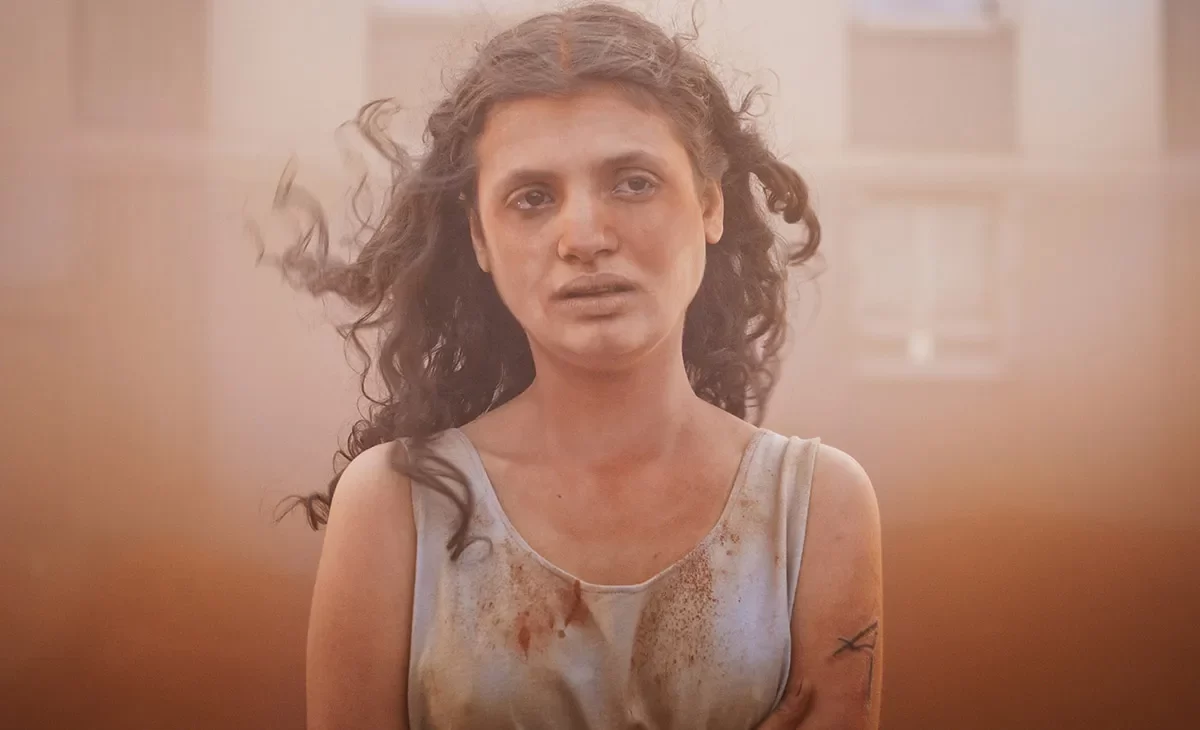
Julia Ducournau’s third feature is like a golf ball shanked by a pro; it’s hit with such power that it goes almost impressively far into the weeds. Alpha is a big swing—and an even bigger miss—from the talented director of Raw and the Palm d’Or-winning Titane. Those French films might not have been for everyone, with their lip-smacking cannibalism and mixture of brutal murders with actual auto erotica, respectively, but they were doing something and doing it with such verve. Meanwhile, Alpha is somehow doing too much and far too little. What made Ducournau’s previous work so compelling was how she combined tones and feelings. Raw and Titane were both disturbing, tender, strange, and funny, but Alpha is relentlessly grim, striking the same dour note over and over again for over two hours.
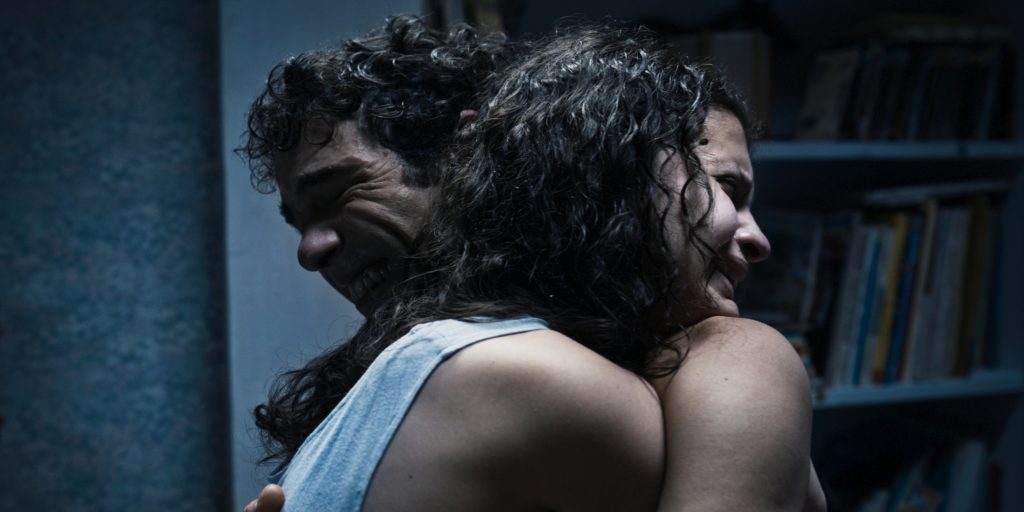
Granted, Alpha’s subject matter—or at least, its primary one among more than a few—isn’t really the stuff of comedy. Ducournau’s story about a 13-year-old who worries she may have contracted a mysterious virus is a clear allegory for the HIV/AIDS epidemic. Alpha (Mélissa Boros) gets a stick-and-poke tattoo at a house party, while Portishead’s “Roads” plays in the background. When she returns home, her mother (Golshifteh Farahani) sees the still-bloody “A” carved into her daughter’s arm and understandably panics. She’s a doctor, who is one of the few medical professionals who will work with the infected at a hospital, and she worries that her teenage daughter may be next to fall to the strange disease, which slowly turns its victims to marble. Complicating the story is Alpha’s uncle, Amin (a mindblowing Tahar Rahim), a drug addict who comes to stay with them. As Alpha awaits results of her blood test and her wound continues to bleed over everything, her classmates ostracize her and fear she’ll infect them too. The story shifts between the past and the present, where Alpha, her mother, and Amin wade through multiple crises.
For those who liked the gnarly body horror of Raw and Titane, there’s still some of that element present in Alpha. The eponymous character’s tattoo continues to weep blood for weeks, grossing out her peers and staining her clothes. Amin’s heroin addiction leaves him gaunt, with a rib cage heaving like there’s something alien inside while he’s in the throes of an overdose. Yet it’s the mysterious disease where Ducournau’s penchant for the subgenre manifests the most clearly. There’s an odd, unsettling beauty in the virus’s victims, whose bodies are slowly calcifying, and one scene between Alpha’s mother and a patient induces a full-body shudder. The patient screams in pain, and I gasped in revulsion while at once thinking, “That’s what we come to a Ducournau film for.”
Titane was many things, but it was certainly not a study in minimalism, and Alpha tries to cram in just as many ideas with far less success. There’s the AIDS metaphor and fear of infection, Amin’s drug addiction, Alpha’s coming-of-age story and social struggles, and a potentially fantastical element that I won’t spoil here (but that doesn’t fully make sense within the narrative). Alpha also feints at a theme about the struggles of North African immigrants in France, with multiple scenes of Alpha’s extended family and her isolation at school, but it isn’t well developed. So much is going on, and none of it really works, though there’s the promise of a tighter, stronger film in here somewhere.
Raw and Titane were oddly moving in their stories of loneliness, isolation, and human connection. Yet Alpha fails to connect emotionally, despite what should be a more affecting plot about a family working through both past traumas and current ones. With its inspiration in the AIDS crisis, this story is also far more based in reality than previous Ducournau films. (Apologies to all the cannibals and the murderous car fuckers out there; please do not come for me with your teeth or a hairpin). With all that in mind, its finale should be heartbreaking, but it’s mostly just baffling, especially coming from such a strong filmmaker.
C-
“Alpha” is in theaters Friday.