Kimber Myers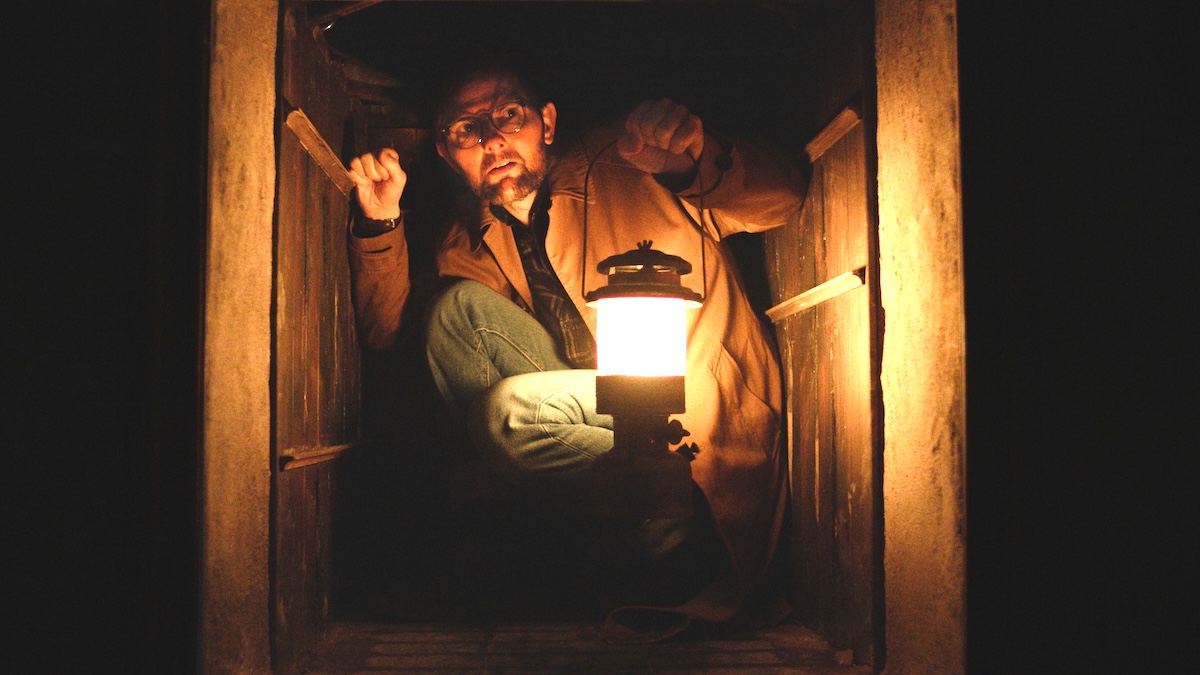
Hokum is so effectively unsettling that I wished it were shorter, just so I could’ve stopped feeling so full of dread. With his third feature, Oddity and Caveat director Damian McCarthy cultivates a near-constant state of anxiety for its 105 minutes, making the theater feel eerily claustrophobic. The well-executed jump-scares offer a momentary release from the building tension, but there’s no real respite. Even when I did escape the theater, Hokum followed me home.
Ohm Bauman (Adam Scott) is similarly unable to evade his predicament. Hell is other people, but being trapped alone with himself is no picnic either. The bestselling writer gulps down whiskey while he works to finish the final volume of The Conquistador Trilogy, while the world anxiously awaits the conclusion. He leaves his lonely, sterile home in Washington state to travel to rural Ireland to stay at the Bilberry Woods Hotel where his parents had their honeymoon, so he can scatter their ashes in a place that they loved. Even on a trip to a beautiful place with centuries of history and myth, Ohm never finds the vacation version of himself. He remains a scold and a skeptic, with little concern for how his cruelty affects those he encounters. He’s instantly judgmental of everyone he meets (while lacking good judgment) and disbelieving of people’s experiences with the supernatural (while he himself is haunted by childhood trauma). Yet instead of finding peace in the idyllic setting after putting his parents to rest, he finds that the inn is haunted, and a woman has gone missing.
After Oddity and Caveat, Hokum is the third one-word titled horror movie from director Damian McCarthy, but it also follows in their bloodied footsteps with its focus on dead women to drive its story. Hokum is littered with dead women. They’re mothers and wives and saviors, but they are all dead—and dead by the hands of men. Oddity and Caveat had similar elements at their creepy cores, but that isn’t to say that McCarthy is merely going back to the same (haunted) well, even as he’s revisiting familiar themes.
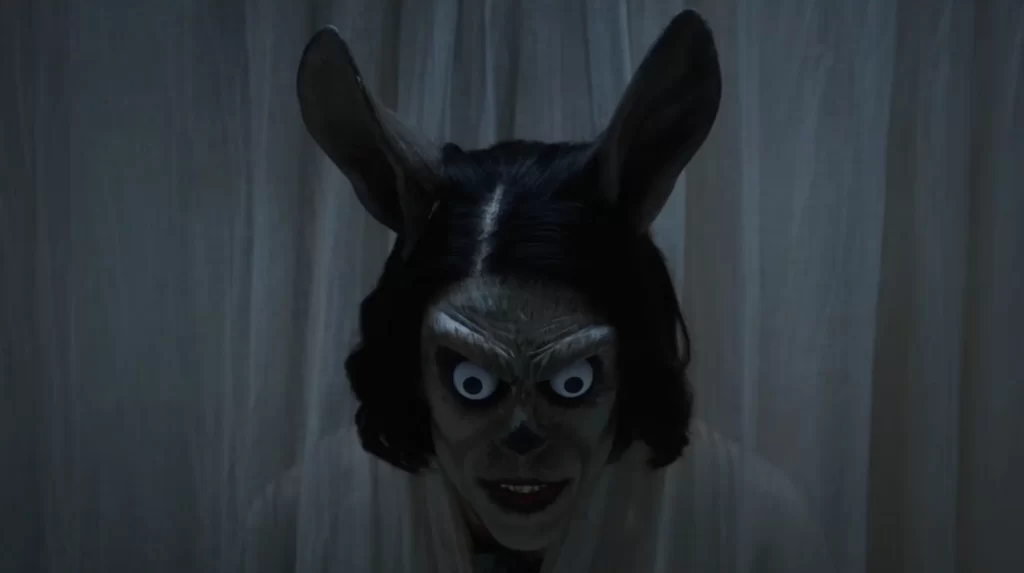
Hokum is a nice step up, building on the moody experiences of his previous work with a fully realized setting and a well-developed main character. Oddity had a wonderful sense of place and architecture with most of its scenes set in an isolated manor, and you really got a feel for its layout and how that affected the story. Hokum goes bigger, establishing the various rooms and floors of the hotel with a verisimilitude that a TripAdvisor visitor would appreciate. Design details really work to sell the horrors of this place.
With its setting at a remote, haunted hotel and its protagonist an asshole novelist, Hokum bears a passing resemblance to The Shining. And like Jack Torrance, Ohm Bauman isn’t a man we’re supposed to like, though that’s not to say he seems cinematically deserving of death like a throwaway character in a slasher film. McCarthy and Scott do a nice job developing Ohm and giving him an arc and depth that aren’t always present in genre films.
For a movie filled with the supernatural, Hokum’s finale still manages to strain credulity, but that’s not to say that it isn’t enjoyable in the weird way that horror movies bring pleasure (beyond their terror simply being over). McCarthy’s script intentionally avoids spelling everything out, which is appreciated since sometimes these movies can be incredibly stupid (or assume their audience is), but not everything seems to add up either. It’s not clear how much of that is intentional and how much is a real gap. Yet overall, Hokum does exactly what it intends to do, stirring up a suffocating miasma of terror and nerves.
B+
“Hokum” is in theaters this weekend.