Marshall Shaffer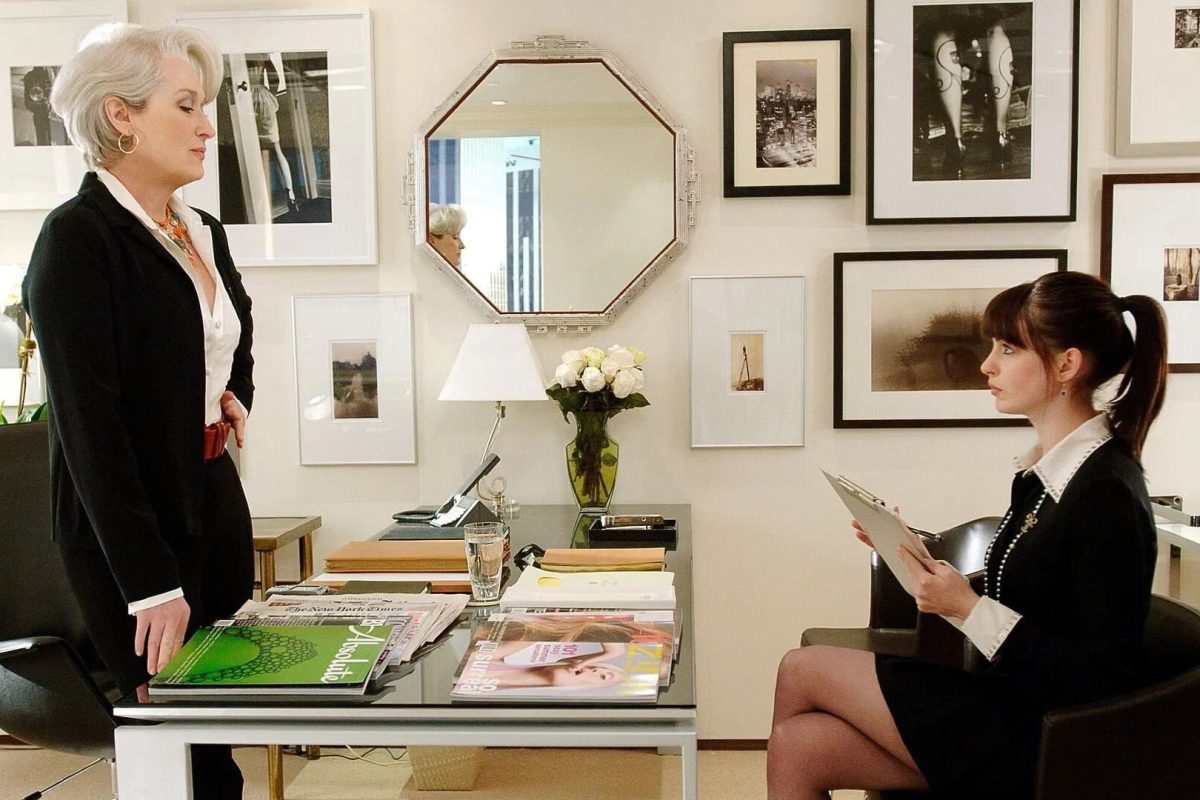
Two decades ago, David Frankel’s The Devil Wears Prada gave the world many enduring gifts, ranging from a renewed appreciation for Meryl Streep as a box office draw to a slew of memorable catchphrases. (Cerulean would never be the same.) But with its sequel reviving interest in an original that never went out of fashion, a new dimension of the beloved classic has emerged. This film was the unofficial onboarding document for millennials into the white-collar workforce, acclimating and acculturating them to the rules of capitalism and careerism.
The film might as well be a time capsule of millennial workism, a 2019 neologism coined by Derek Thompson to express “the belief that work is not only necessary to economic production, but also the centerpiece of one’s identity and life’s purpose.” The immersion of Anne Hathaway’s Andy into the working world captures the contours of the economy left for a new generation to enter. But her struggles with and departure from these conditions also hint at what they could (and could not) change with their idealism and ambition.
The Devil Wears Prada’s 2006 release could not have been more perfectly timed for impact. The elder end of the generation, which spans those born between roughly 1981 and 1996, had only just started their careers when the film hit theaters. But even for those on the younger end, who could not yet relate to the story of a lowly assistant learning the ropes of a demanding fashion magazine, its surprising box office durability led to strong DVD sales at the tail end of the home video market and constant cable reruns. It stuck around and became a form of folk wisdom for anyone tired of their parents’ platitudes and wanting to know how ladder-climbing actually worked.
The root cause of virtually any millennial worker stereotype lies somewhere in The Devil Wears Prada. Andy gets a real trial by fire as the second executive assistant to Meryl Streep’s titular tormentor, the editor-in-chief of Runway (because they couldn’t just come right out and say Anna Wintour’s Vogue). As the fresh-faced Northwestern journalism graduate hears time and again, a million girls would kill for this opportunity. But what Andy soon learns is that the competitive job is just as likely to kill her as she looks for fulfillment in employment.
After an upbringing marked by concerted cultivation by boomer parents, the first generation raised under enough American prosperity to collectively experience multiple life stages before entering the labor market, this is quite the comedown for millennials like Andy. She quickly receives the lay of the land from her stressed-out superior, Emily Blunt’s Emily. The boss is allowed to say or do whatever because they’ve earned it, and any amount of abuse and insult that flows from their mouth is to be tolerated. To expect Miranda even knows her name is too much to ask.
The worker’s job, both at Runway and the broader aughts economy, is to be a quiet cog in a larger machine. Andy’s expected to instantly become a mind-reader for her boss, despite receiving little on-screen training or guidance and being explicitly told never to ask Miranda a question. She’s taught to contort herself to the job because it certainly will not shift to fit her desires to grow and advance. Part of such a task in this industry is to look impossibly glamorous while earning peanuts to do decidedly unglamorous work. (Notably, Andy’s dad can slip her a check to help cover the rent, an admission that certain elite bastions require pre-existing privilege as the price of entry.)
Oh, and she can’t raise any issues about any of this, lest she be accused of being lazy and entitled or “whining” by older colleagues who have obliterated more of themselves. After speed-running the millennial burnout arc traced by Anne Helen Petersen, she’s put in her place by a reminder that paying one’s dues is a time-tested rite of passage. Trade some of the best years of a young life, this philosophy attests, for the hope of a future payoff. But the reward for Andy learning to excel in her position is not the desired gold star or even an acknowledgement of her progress; it’s just more work. “Let me know when your whole life goes up in smoke,” Stanley Tucci’s acerbic mentor figure Nigel warns. “That means it’s time for a promotion.”
But the deeper Andy plunges into Runway’s hierarchical expectations, the more she receives a paradoxical thrill and ick from the work. Meeting Miranda’s impossible demands, such as tracking down the unpublished final Harry Potter manuscript, introduces her to the unbeatable satisfaction of outperforming low expectations. But no sooner does Andy master one set of guidelines than she encounters another unwritten code governing career advancement. At a certain point, any vestige of meritocracy fades away. The name of the game is the performance of work and justifying to those in positions of power that their time spent crawling up the rickety ladder of success was not in vain.
As Andy gets a close view of Miranda’s machinations, she learns that the esteemed editor has managed to ensconce herself atop the publishing world through a combination of cunning and cut-throat instincts. She has to act boldly and unilaterally to preserve her position rather than simply falling in line with company mandates. It’s only once Andy begins to evince the inklings of a similar sensibility that she earns Miranda’s respect. At the end of the film, the plucky protagonist comes to the determination that she’d rather find a balance of personal and professional satisfaction on her own terms instead of making her boss’s exacting bargain.
The only real way to get ahead, The Devil Wears Prada argues, is to make it as far as you can following an older generation’s rulebook before chunking it out to chart your own path. But identifying that pivot point is a distinctly individual consideration that requires navigating a minefield of egos. Since the film’s release, these lessons have only been amplified and compounded by a mindset of corporate scarcity and job market precarity that never left following 2008’s “Great Recession.” It’s at this altar where millennials have prostrated themselves in sacrifice for the fleeting promise of upward mobility that seems to slip further away with each passing year … all while being shamed for having the audacity to enjoy an avocado toast.
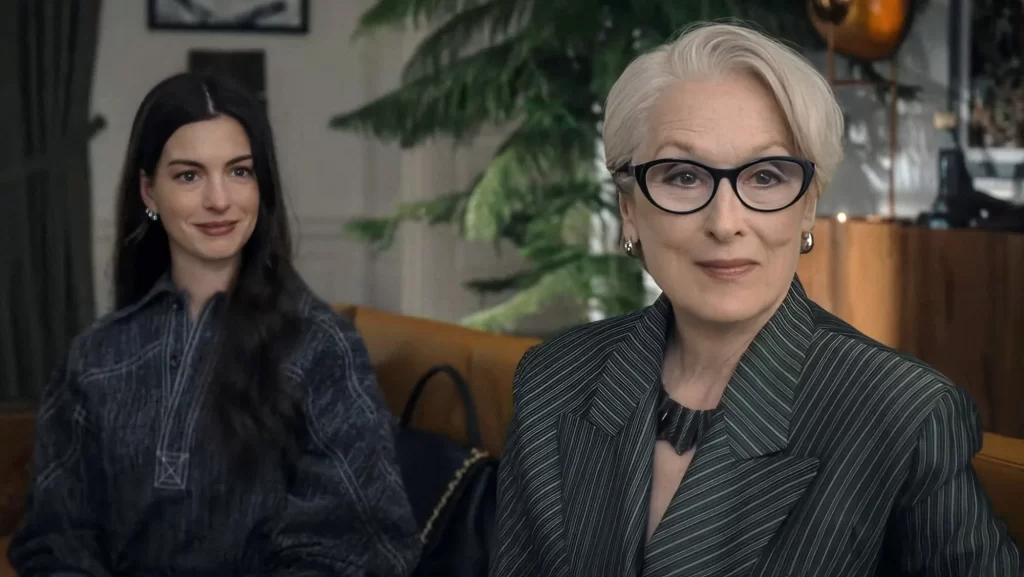
While it’s pleasant to reunite with familiar friends in The Devil Wears Prada 2, screenwriter Aline Brosh McKenna’s story cannot deny the macro-level forces that continue impressing upon the characters – and acutely racking the publishing industry. Andy might return to Runway as an award-winning journalist, but the earnest and eager writer remains stuck in the same cycle of frustration as she tries to get any morsel of feedback from Miranda on her performance.
Andy steps on many of the same rakes, sure, but something has changed this time around. As Emily incredulously notes, she’s more confident. Two decades of accumulating experience and soft power will do that to a generation, which now comprises the majority of the American workforce. She now possesses some modicum of clout and a backbone to begin bending operations to her will. The world of media and luxury might be fracturing around Andy, a prospect the film renders with groan-worthy accuracy for anyone who experiences this collapse themselves. Yet, remarkably, there’s faint hope visible.
Most of The Devil Wears Prada 2’s blinkered optimism derives from Andy’s ability to assert a vision of workplace leadership that respects the toil of aging elders while making way for compassion and idealism. (However much of it the billionaire overlords allow, that is.) Miranda might be content to rot away in a plush prison of her own workism, but Andy demonstrates a newfound millennial might to at least measure the dimensions of her own cell.
“The Devil Wears Prada” is streaming on Hulu, Disney+, and HBO Max. “The Devil Wears Prada 2” is in theaters this weekend.