Craig J. Clark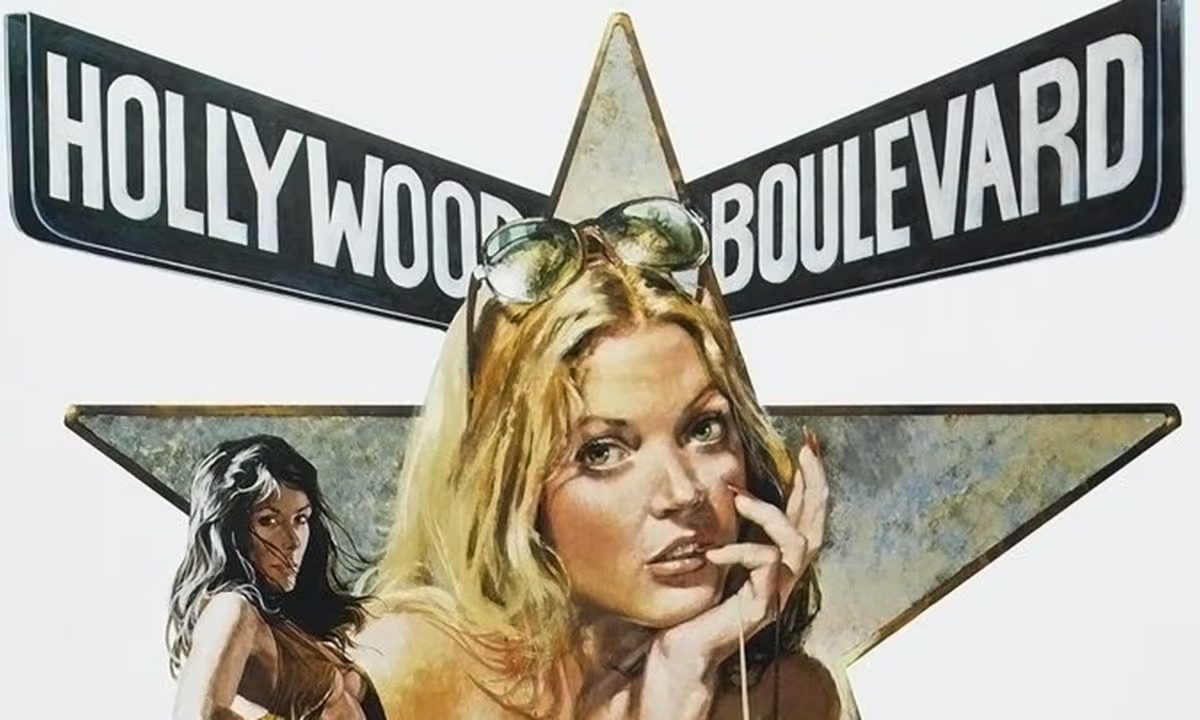
“It’s sort of like a home movie of what it was like to work at New World Pictures.” –Joe Dante
Throughout his lengthy career, Roger Corman habitually turned fiscally challenged productions into the stuff of legend. The most famous example is 1960’s The Little Shop of Horrors, which was shot in two days on a standing set he had access to. The frugal man who pulled that off was assuredly tickled when, half a decade into New World’s existence, its head of publicity and trailer editors pitched him the idea of making its cheapest picture.
Originally conceived as Free Popcorn (the filmic equivalent of a bar band calling itself Free Beer) and filmed under the title The Starlets, 1976’s Hollywood Boulevard was shot in ten days (five less than the typical New World film) on a paltry budget of $50-60,000 (depending upon who you ask). It looks more expensive than that, however, thanks to the stunts, explosions, and other shots co-directors Joe Dante and Allan Arkush culled from films in the studio’s library; they were intimately familiar with the stock on hand, having cut many of New World’s trailers. Shepherding the project was producer Jon Davison, whose association with Dante went back to The Movie Orgy, the 1968 epic (which only recently found a home on Blu-ray courtesy of AGFA) that provided the template for telling a story with repurposed footage.
A prime example of this is the moment when temperamental star Mary McQueen (imperiously portrayed by Mary Woronov) is being prepped for a scene where she’s to be chased by guard dogs and insists on “meeting them.” Pretentious director Eric Van Leppe (Paul Bartel in the role he was born to play) summons their handlers, but Mary recoils at how vicious the dogs are. Never mind that Woronov is reacting to footage shot years earlier in the Philippines, where Miracle Pictures’ latest opus, Machete Maidens of Mora Tau, is supposedly being filmed. Needless to say, the cast and crew of Hollywood Boulevard never left Los Angeles County.
As much as Mary wants to hog the spotlight, the film’s actual protagonist is Candy Hope, who’s recently arrived from Indiana with stars in her eyes. Played by Candice Rialson, who previously starred in New World’s Candy Stripe Nurses and Summer School Teachers, Candy is dazzled by Hollywood’s tourist sites – the Walk of Fame, Grauman’s Chinese, Schwab’s Pharmacy, the Sign – but has trouble landing a job and keeping her dignity intact at the same time.
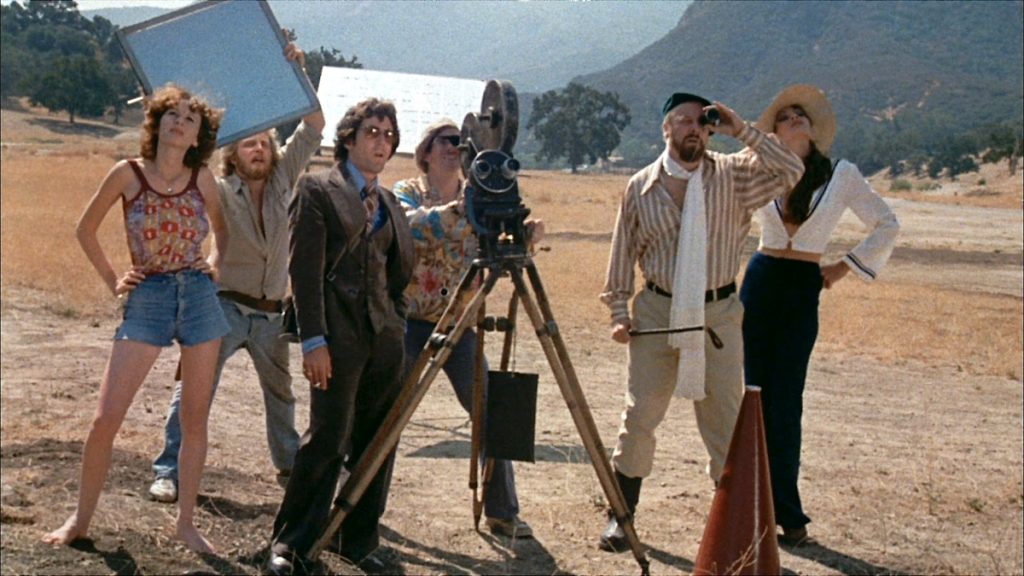
Even after lucking into an agent (Dick Miller as the second incarnation of Walter Paisley), Candy’s bumpy road to stardom includes driving the getaway car for a bank robbery, which allows Dante and Arkush to lift a car chase from Jonathan Demme’s Crazy Mama. Walter parlays that into a job as a stunt driver for Miracle Pictures, where Eric orchestrates a car stunt Bartel previously shot for Big Bad Mama. That’s also her introduction to harried screenwriter Patrick Hobby (Jeffrey Kramer, fresh off playing Deputy Hendricks in Jaws), which shows how savvy Candy is about the business – she sleeps with the writer.
The two Miracle productions Hollywood Boulevard spends the most time on are Machete Maidens (which incorporates footage from The Big Doll House, Women in Cages, and The Big Bird Cage) and the hastily tossed-together Atomic War Brides (which borrows props, costumes, and stunts from Bartel’s recently completed Death Race 2000.) Its production also sees the overarching plot shift into gear when Mary and Candy both survive attempts on their lives designed to look like accidents, much like the skydiving stunt that opens the film and the fatal shooting that wraps Machete Maidens on a bum note. While the latter is treated with the solemnity it deserves, Dante and Arkush signal the tone they’re going for when Mary’s skydiving double leaves a Wile E. Coyote-style hole in the ground.
Along with the murder mystery as its center, Hollywood Boulevard doesn’t shy away from the seedier side of exploitation filmmaking. There’s an audition that amounts to a wet T-shirt contest, the producer conducts callbacks in the back of a van, and Candy endures a humiliating rape scene, which Patrick rescues her from and has to calm her down afterwards. When she laments the state of her career following her dismal debut at a drive-in, Patrick assures her, “Nobody’ll see this picture. I ought to know. I’ve written five others just like it.”
When Hollywood Boulevard went out and did the same kind of business as Machete Maidens, its directors returned to cutting trailers, but Corman soon gave them solo features – Dante’s Piranha and Arkush’s Rock ’n’ Roll High School – which led to bigger and sometimes better things. Davison, meanwhile, served as producer on Ron Howard’s Grand Theft Auto and Piranha before hooking up with Zucker-Abrahams-Zucker to make Airplane! As for Corman, he returned to the well with Hollywood Boulevard II, released by his post-New World company, Concorde Pictures, 15 years later. Suffice it to say, lightning did not strike twice.
It’s a good picture, but some might consider it a miracle that “Hollywood Boulevard” is streaming anywhere.