Zach Vasquez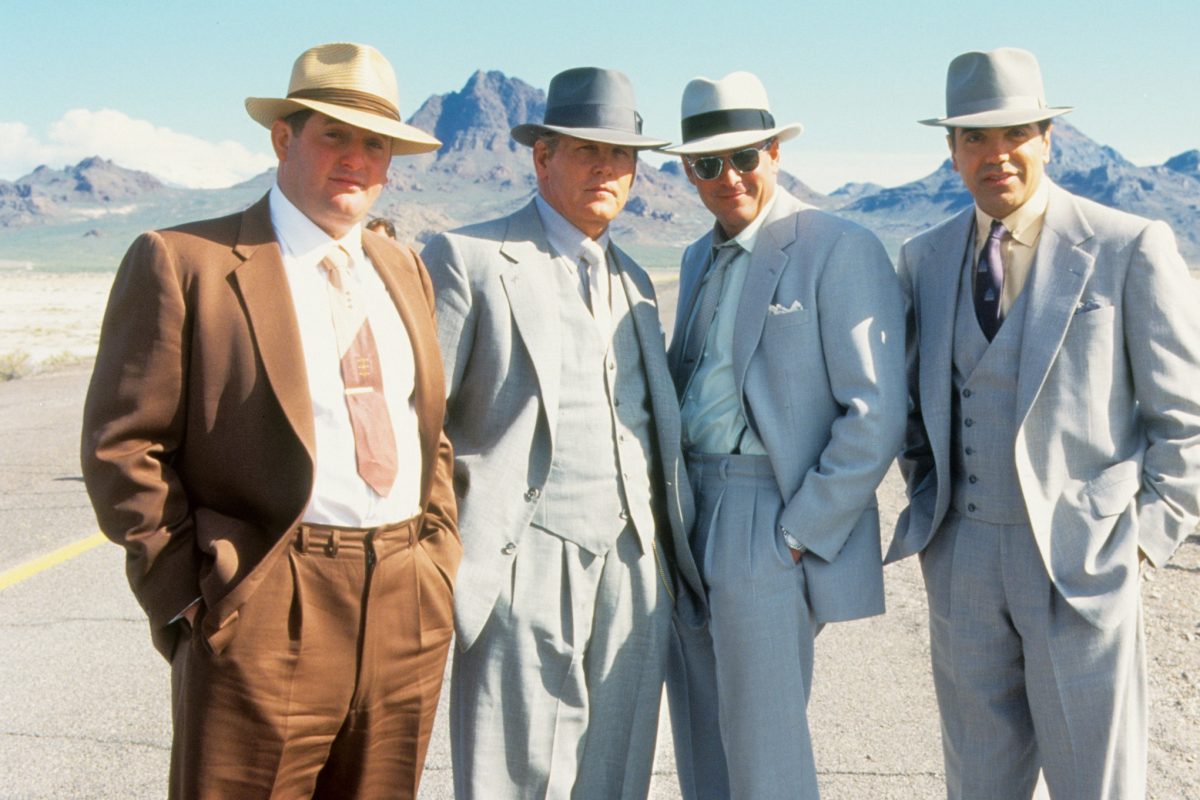
The late ‘90s. A mid-budgeted studio-backed neo-noir, set in 1940s Los Angeles, helmed by an underappreciated journeyman, boasting a ridiculously stacked ensemble cast, impeccable costuming and set design, and a hardboiled, but prestigious literary pedigree. The violence depicted is brutal, reflecting the psyches of its hulking policeman anti-heroes, members of the L.A.P.D.’s organized crime taskforce, whose ruthless tactics and disdain for civil liberties make them almost indiscernible from the criminals they battle—even as their haunted consciences and wounded hearts bend them towards a fiery, blood-soaked redemption.
No, the movie I am describing is not L.A. Confidential. It’s Mulholland Falls.
Released a year and change before Curtis Hanson’s critical darling, Mulholland Falls debuted to a much more muted response. Whereas Confidential would go on to nab a number of big nominations and awards—including the Best Supporting Actress Oscar for Kim Bassinger—and launch the American careers of its Ozzie stars Guy Pearce and Russell Crowe (while also helping move Kevin Spacey from support to lead roles) before being deservedly canonized as one of the great American films of the late 20th century, if not ever, Mulholland Falls would (apropos its title) fall into obscurity.
Was this an injustice? The answer isn’t so cut and dry.
On paper, Mulloland Falls seemed a sure thing. The sophomore feature of the Kiwi director Lee Tamahori (1950-2025), fresh off his breakout hit Once Were Warriors—high on the list of most successful and enduring New Zealand films—it was penned by National Book Award-winning novelist Peter Dexter (from a story by Dexter and Floyd Mutrux), with cinematography from the legendary Haskell Wexler.
An unflinching, modern spin on classic noir and detective tropes in the vein of Chinatown, the story concerns the gruesome murder of a mysterious woman named Allison Pond (a scorching Jennifer Connelly), and its investigation by the L.A.P.D.’s major case unit. This foursome—based on the real-life Gangster Squad, a group of detectives formed to keep organized crime out of L.A. by any means necessary—is led by Lt. Maxwell Hoover (Nick Nolte), a giant bruiser of a cop who has no compunction about committing first-degree murder if it means protecting the innocent, and his unfailingly loyal underlings (Chazz Palminteri, Michael Madsen, and Chris Penn). It’s revealed early on that Hoover was having a heated affair with Pond. Digging into her death, he realizes her neighbor/best friend (Andrew McCarthy) had been clandestinely filming her trysts, including those she had with Lt. Hoover, and, more importantly, the head of the U.S. Army’s Atomic Energy Commission, Gen. Thomas Timms (John Malkovich). This puts Hoover and his squad up against a powerful, nuclear minded-cabal within the military, who clearly are involved in the murder. Meanwhile, it also leads to a reckoning between Hoover and his loyal wife Katherine (Melanie Griffith).
Once again, on paper, this all sounds great. And indeed, the first act of Mulholland Falls seems to make good on its potential. The opening scenes, in which Hoover’s squad roust a newly arrived Chicago mobster (William Peterson), drive him out to the top of Mulholland Drive, throw him off a cliff and leave him for dead, is a jaw dropping bit of brutality and character building. These are not cops who bend the rules in the name of justice; they are out-and-out fanatics, not merely willing murderers, but sadists who take pleasure in their work.
This innate understanding, acceptance and unflinching depiction of L.A. law enforcement’s record of atrocity would seem to promise a truly transgressive deconstruction of the police procedural, but aside from a couple other scenes of violence—one in which Hoover casually kills a drug dealing pimp (a young Titus Welliver) by injecting a large dose of heroin directly into his jugular, and another in which he exacts revenge on some meddling Feds (a wonderfully detestable Daniel Baldwin, almost matching his big brother Alec for sleazy charm) with the help of his trusty blackjack—the movie never follows through with this thread. In fact, for the remainder of the film, the heroes are indistinguishable from your average TV cops. Instead, the characters revert to standard white hat/black hat roles.
The story likewise sputters out. The central mystery proves to be no mystery at all, and, as if you can feel Tamahori getting bored with it as it goes along, the pacing grows turgid. The final action set piece, which takes place on a military aircraft, is fine, but it’s par the course for movies of its day.
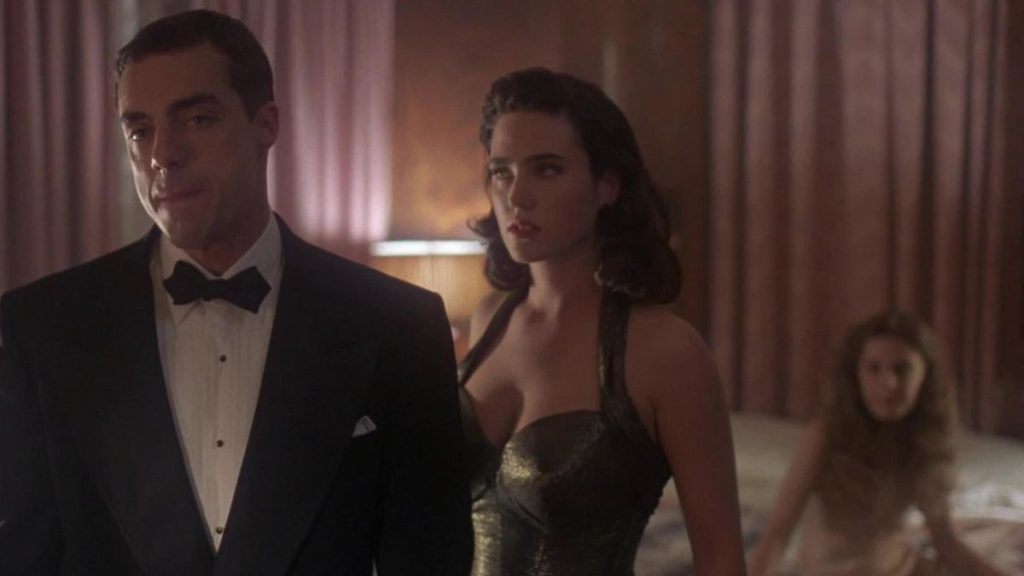
The film’s cast is sadly mostly wasted. Nolte makes for sturdy noir bruiser, reminiscent of Roberts Ryan and Mitchum, while Connelly is the platonic ideal of a raven haired femme fatale (even if that’s not quite what she is). But unlike other thrillers about a detective’s sexual obsession with a dead woman (Laura, Vertigo, etc), her haunting presence is hardly felt outside of the flashbacks that feature her. Her motivations in regards to the central conspiracy remain utterly obscure, and not in a way that heightens the mystery. She’s clearly physically modeled after Los Angeles’s most famous real-life murder victim Elizabeth Short, aka The Black Dahlia. Yet here she’s not some unsolvable puzzle or even simple cipher, but simply an underwritten part..
Ditto Melanie Griffth’s character, whose big moments all feel deliberately underplayed. You can see why the character, on the page, would be enticing for an actress of her stature, but unfortunately that doesn’t translate to screen.
Reservoir Dogs alumns Madsen and Penn also drop out about halfway through, making the viewer wonder why they were cast in the first place (Palminteri’s neurotic sidekick, thankfully, gets a full arc). Malkovich seems to be sleepwalking through his scenes, while Treat Williams makes for a fine but forgettable heavy. Rob Lowe, Louis Fletcher, and Ed Lauter all appear in blink-or-you’ll-miss-them cameos, but at least Bruce Dern makes a meal out of his one scene. (It’s also fun catching baby-faced Kyle Chandler in a small but pivotal role).
One gets the sense that there was a lot more meat to this story that was either left on the page or the cutting room floor. The end result adds up to an interesting artifact, but a boring, if handsome movie. Unfortunately, the experience of watching Mulholland Falls 30 years on from its original release leaves the viewer jonesing for the movies that do what it’s attempting to do better: Chinatown, The Untouchables, L.A. Confidential. (To be fair, there are also movies that do what it’s attempting to do worse: The Two Jakes, The Black Dahlia, Gangster Squad.)
Which isn’t to say there’s no reason to revisit Mulholland Falls. The filmographies of both Tamahori—which includes at least one legit masterpiece in his follow up film, The Edge (1997) and one all-time howler by way of his James Bond entry Die Another Day (2002)—and Dexter—whose self-adapted work such as Paris Trout (1991) and the gonzo The Paperboy (2012), as well as his original screenplays, including the blistering narco noir Rush (1991) and the nutty religious romantic comedy Michael (1996)—are equally worthy of, if not a full-on critical retrospective, then at least a double take.
At the risk of being condescending, that a mediocre movie could be made with this level of craft is almost unthinkable today, whereas 30 years ago, it was completely taken for granted. More than the noir movies of classic Hollywood that Mulholland Falls wants the viewer to recall, it’s mostly nostalgia for the ‘90s mid-budget adult thriller one feels when watching it today.
“Mulholland Falls” Is currently streaming on Amazon Prime, Hoopla, MGM+, and Tubi.