Kayleigh Donaldson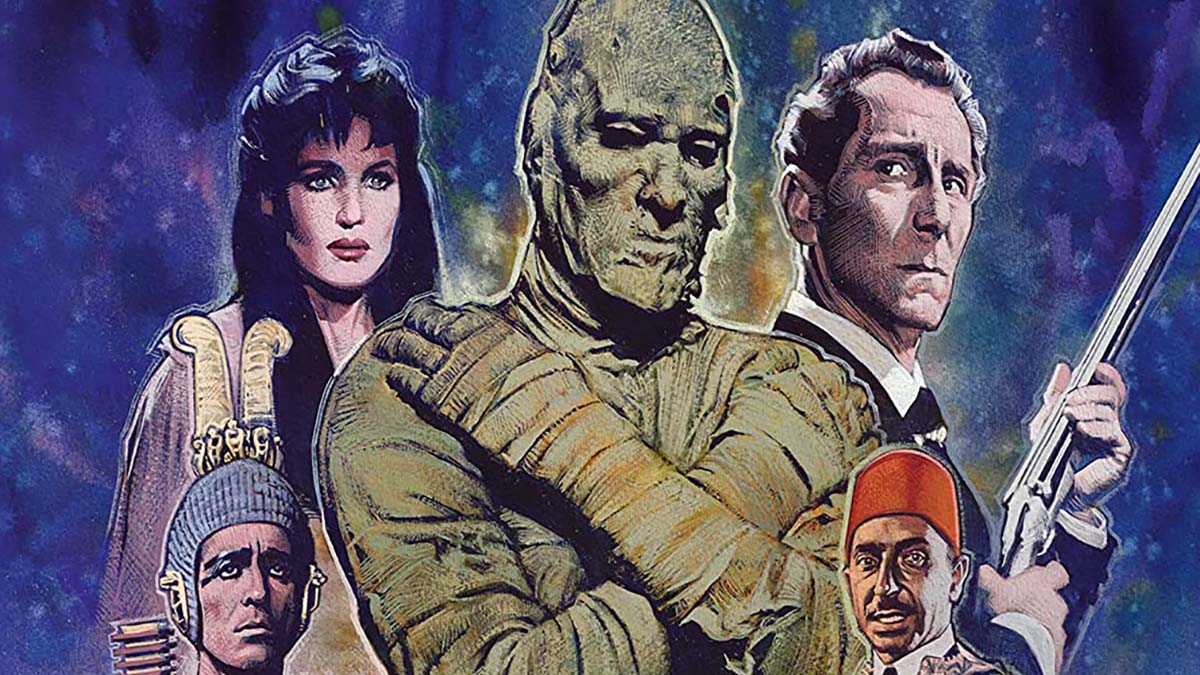
Lee Cronin’s The Mummy is the latest attempt by Hollywood to keep one of its foundational horror figures alive. Blumhouse and Warner Bros. have decided this latest iteration will be a full-on body horror involving a resurrected dead child, courtesy of the guy who made the surprisingly solid (and deeply gnarly) Evil Dead Rise. The original mummy movie, released in 1932, was a pre-Code supernatural title that arose as part of Universal’s Monsters franchise. Unlike Dracula and Frankenstein, The Mummy was not adapted from pre-existing material, but inspired by the era’s fascination with ancient Egypt and discovery of Tutankhamun’s tomb a decade prior.
Since then, the various remakes and re-imaginings of The Mummy have largely stuck to the basic narrative—white people accidentally unleash a curse and a mummy rises from the dead—but have to choose between a more horror-oriented focus or an adventure one (see Stephen Sommers’ popular trilogy and Tom Cruise’s failed entry into the Dark Universe). This might explain why there are so few mummy movies compared to its other undead contemporaries. One exception is the 1959 film from the stalwarts of British horror, Hammer.
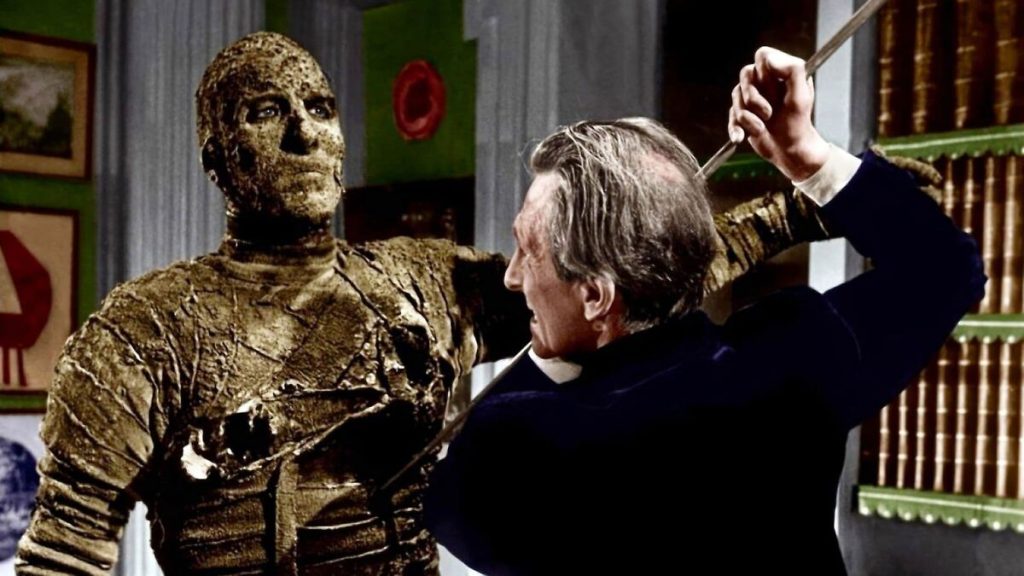
Directed by Terence Fisher and released only a year after their first-ever Dracula movie, Hammer’s The Mummy is an odd duck in their extensive catalogue. It was still early days for the studio, which hadn’t yet fine-tuned its formula (or descended into total tits-and-blood camp as it would by the late ’60s.) Some of this one plays as almost respectable, aiming for prestige more than old-school scares. This is also a more straightforward remake of the Universal movie, where other Hammer films would play around more liberally with public domain material or British horror tropes (although it borrows as much from the oft-forgotten sequels as it does the original.) But it does feature two of the most defining stars of Hammer in the leading roles: the legends Christopher Lee and Peter Cushing.
The film opens in Egypt, with father and son archaeologists Stephen and John Banning (Felix Aylmer and Cushing) searching for the tomb of Princess Ananka, the high priestess of the god Karnak. Inside the tomb, Stephen falls into a catatonic state, unable to detail what he has seen. Three years later, back in England, Stephen comes out of his stupor to warn his son. He accidentally revived the corpse of Kharis (Lee), the high priest of Karnak, and he’s out for revenge against everyone who desecrated Ananka’s tomb.
While The Mummy is technically horror, it’s more interested in creating an unnerving atmosphere than anything especially scare-focused. There’s a melancholic quality to its portrait of the vengeful but lovestruck mummy who silently trudges through England on his quest for revenge. Being undead is a true curse here. Kharis’s revival, raised from the dead from a bog, seems pained and undesired from its subject, who spends most of the film looking as though the flesh and bandages are rotting from his body. It makes him one of the gnarlier mummies in this genre, and easily the one for whom death seems the preferable option.
The movie is fascinated by ancient Egypt, albeit with the fetishistic gaze that is an unfortunate hallmark of most mummy movies, turning it into a place of equal parts exotic mysticism and murderous malice. That gaze did give the Hammer production team the opportunity to create some of its most lavish set and prop design. While the limited budget isn’t hidden (is it a Hammer movie if it doesn’t look somewhat cheap?), the flashbacks to Ananka’s funeral are resplendent with colorful details.
Really, the film seems to exist largely for this extended flashback, where the death rites of Ananka are shown with abundant attention from Fisher’s camera. It takes up a sizeable chunk of a slim 88-minute run time, which is already not overladen with plot. It certainly looks great, full of vibrancy in a way that many films of this type eschew (there’s not a single use of the tedious “hazy Arab desert” color palette that Hollywood has become so dependent on whenever it sets a movie in these locales). One can hardly blame Hammer for preferring a sound-set version of Egypt to yet another English country manor, but when the action does return to the main setting, the narrative feels less enthused. And it all ends with one of the most rushed conclusions the studio ever wrote.
Despite the white people approach to it all, and a ton of brownface, there is a fascinatingly anti-colonialist strain, as the invading archaeologists are slammed for their eagerness to raid another country’s precious history to stick in a dusty museum thousands of miles away. It’s a shame The Mummy didn’t lean into this aspect more, although that may have been too much to ask for a British film from the ‘50s. In fairness, it’s also an issue that no non-Egyptian-made mummy film before or since has confronted. For all of the genre’s fun and derring-do, it’s still rooted in colonialist claptrap.
While Hammer instantly made Dracula their own thanks to Lee’s brooding performance and a technicolor focus on blood and sensuality that the vampire genre had been sorely missing, their mummy movies never felt as fully formed. The Mummy is still the kind of enjoyable tosh the studio was so skilled at, but with style taking over substance, its potential was always rather limited.
“The Mummy” is available for digital rental or purchase.