Kimber Myers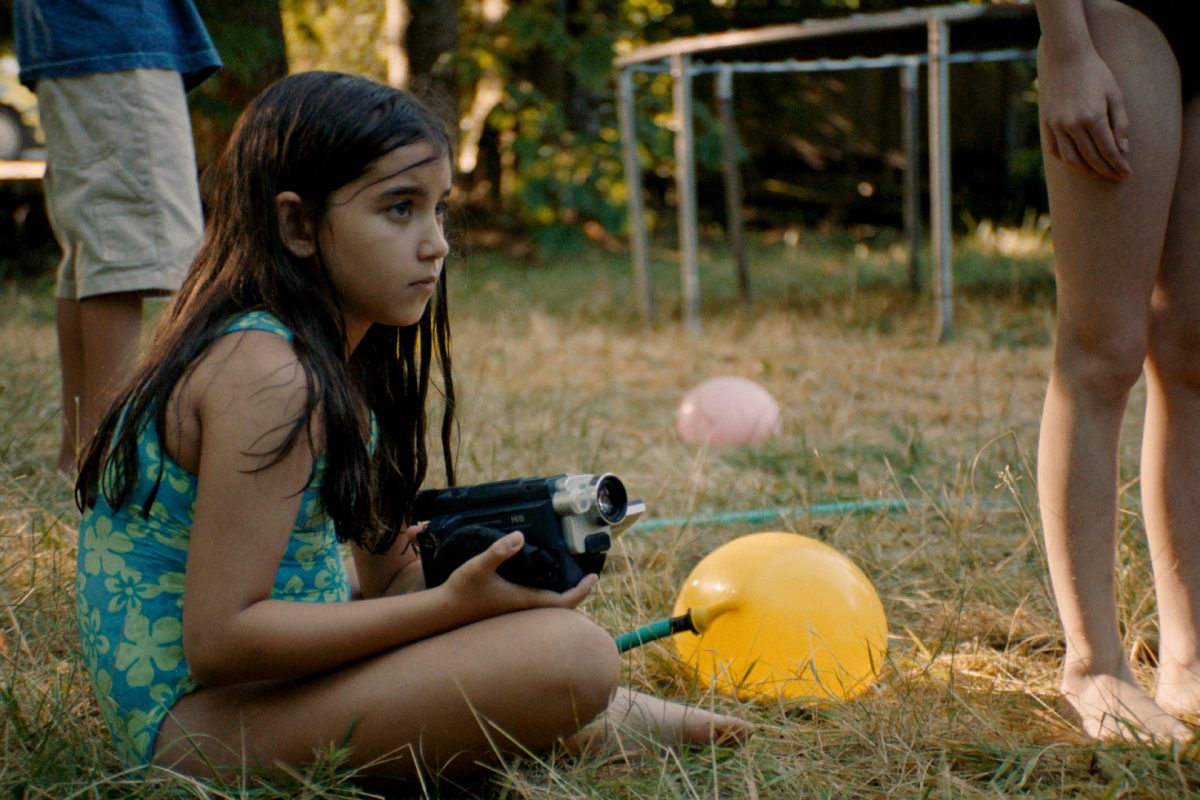
I went into Blue Heron cold, knowing little more than what I could glean from the enigmatic trailer and the snippets of rapturous buzz Sophy Romvari’s film earned on the festival circuit. It’s not entirely clear what it’s doing—or how powerful it will turn out to be—in its first half on an initial viewing. Blue Heron appears to be a straightforward but well-executed drama about a family trauma viewed through the eyes of a youngest daughter. However, about halfway through its 90-minute running time, Romvari upends our expectations and cracks open our hearts in the process. She’s made a film that is simultaneously tender and delicate – and wildly bold in its ambitions without ever feeling gimmicky.
Blue Heron is largely set in the relative quietude of Vancouver Island, Canada, in the late ‘90s, a seemingly more innocent place and time where Ch-Ch-Ch-Chia Pet ads played on TV and trampolines existed above ground without enclosures. Young Sasha (Eylul Guven), her parents, and three brothers arrive on the island in a moving van, and initially, things seem normal enough for the Hungarian immigrants in their new home. Sasha’s mother (Iringó Réti) and father (Ádám Tompa) try to parent her oldest brother, Jeremy (Edik Beddoes), with love and discipline, but he continues to misbehave and lash out. The phone rings with a call from a concerned neighbor, the police show up on the front door, or a night’s sleep is interrupted by the sound of broken glass, wreaking havoc on the lives of everyone in the home.
After making documentary shorts (featured on the Criterion Channel months before Blue Heron’s theatrical release), Romvari’s first feature blends narrative and documentary, blurring fiction and real-life through the lens of memory. In Blue Heron, it’s not always clear what is experienced and what is merely remembered through retelling— or how that retelling reshapes the events for both the person telling the story and those hearing it. Based on her own experiences, she explores how a family copes with a child struggling with behavioral and mental health issues and how it shapes their dynamic and everyday life in ways both major and mundane.

Yet what stuck with me about Blue Heron—beyond its narrative inventiveness that I will work not to spoil here—is how it doesn’t only dwell on the negative aspects of life in Sasha’s home. It’s clear that she—and all of her brothers—are adored by their parents and receive both attention and care. Her mom and dad are working to create a loving home for each child, while recognizing the difficulty of that endeavor with Jeremy’s actions. As Sasha, Guven gets to giggle and smile at the small joys of childhood, but it’s also clear what she’s absorbing from living in her home. She lies about a scary incident at a neighbor’s house, not to keep from getting in trouble but to guard her parents from having more to worry about. It’s so much for a young girl to bear, and her childhood experience is the type of thing to follow you into adulthood.
It’s rare for me to get to see a film twice before writing about it, but that opportunity presented itself with Blue Heron, and it felt like a gift. It wasn’t just the wonder that Romvari worked with the structure of her screenplay, which deserves a whole essay of its own to praise for those who’ve been lucky enough to see it. While Romvari weaves magic with her narrative, Blue Heron also evinces an incredible compassion for each of its characters and thoughtful care with details. It’s even more impressive on a second viewing, and I’m eager to see what additional beauty and depth it reveals on a third watch and beyond.
A
“Blue Heron” is in theaters Friday.