Jason Bailey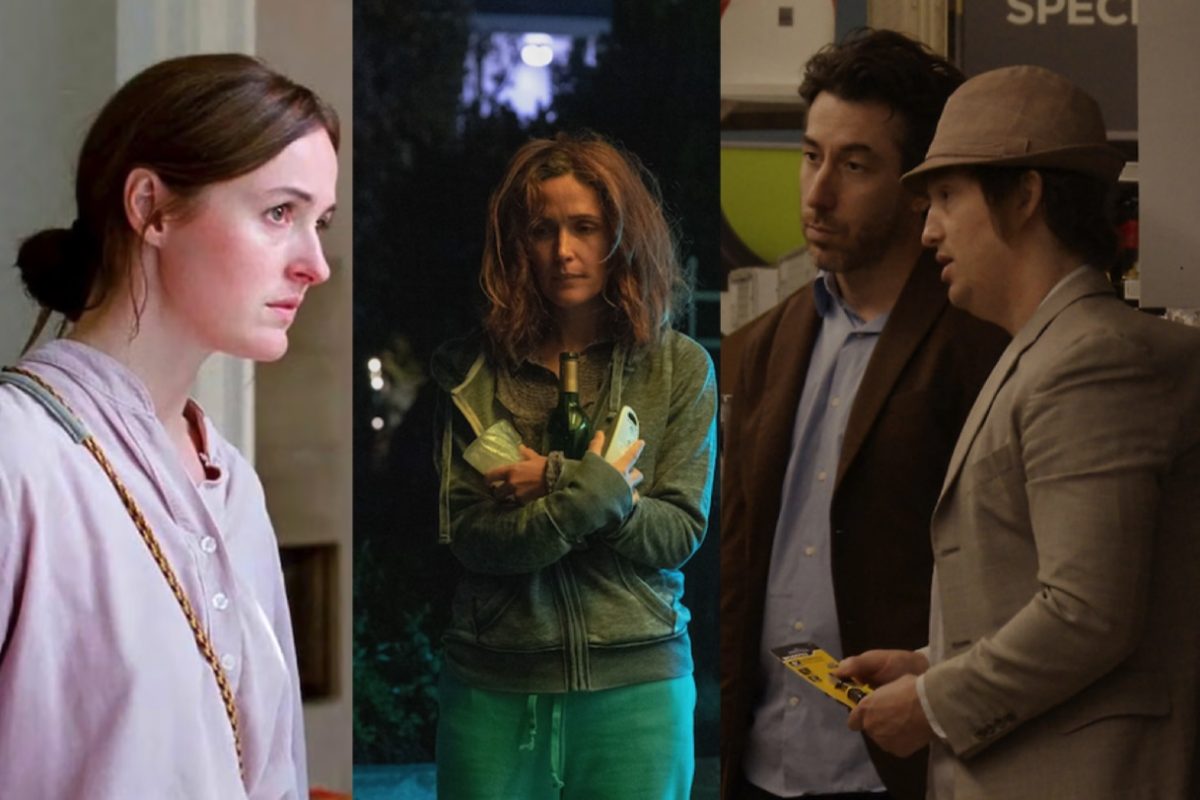
Every Tuesday, discriminating viewers are confronted with a flurry of choices: new releases on disc and on demand, vintage and original movies on any number of streaming platforms, catalogue titles making a splash on Blu-ray or 4K. This twice-monthly column sifts through all of those choices to pluck out the movies most worth your time, no matter how you’re watching.
PICK OF THE WEEK:
The Late Show: Coming towards the end of the ‘70s gumshoe movie revival (which also gave us The Long Goodbye, Chinatown, Night Moves, and many more), this 1977 comedy/drama (making its long-overdue Blu-ray debut, via Warner Archive) is as much a commentary on aging and obsolescence as it is a throwback Hollywood pastiche. Art Carney is a retired private eye lured back into service by the mysterious death of his former partner; Lily Tomlin is an eccentric woman who hires him to find her cat, which, of course, leads to a much larger and sinister case. Carney was fully in the rumpled zone in this era, still flying high from his Harry & Tonto Oscar win, while Tomlin rarely found as effective a showcase for her singular comic gifts. The writer and director is Robert Benton, who co-wrote Bonnie and Clyde, and this is a similarly affectionate but prickly valentine to the movies he grew up loving. (Includes talk show excerpt and trailer.)
ON 4K / BLU-RAY / DVD / VOD:
Sentimental Value: It’s full of inside jokes about Netflix distribution and inappropriate movies for children, but Joachim Trier’s Oscar winner for Best International Film is no inside-baseball show-biz satire; in fact, it’s perhaps not only his most moving picture to date, but one of his most relatable, concerned as it is with the complications of a tense familial dynamic. But the best movies are those that start about one thing, and by their end, you realize they’re about every thing. Sentimental Value is about family, yes. And then it’s also about depression and art and God and resentment and sex and longing and love and beauty and movies. Y’know — the important things. (Also streaming on Hulu.) (Includes select-scene commentaries, deleted scenes, interviews, trailer, and essay by Karl Ove Knausgård.)
ON BLU-RAY / DVD / VOD:
If I Had Legs, I’d Kick You: I’m not sure I’ve ever seen a film so vividly capture the moment-to-moment feeling of living with anxiety (and living around people with it) — which makes it a nerve-rattling, sometimes harrowing sit. But it’s putting a real state of being on screen, anchored by a jaw-dropping performance by Rose Byrne; writer/director Mary Bronstein opens with a close-up of Byrne’s face, listening, stressed, already fuming, and as she listens, flinches, and reacts, it pushes in closer, and closer, and somehow closer still. And that’s a pretty apt visual representation of the entire movie. (Also streaming on HBO Max.) (Includes audio commentary, extended and deleted scenes, and featurettes.)
Nirvanna the Band the Show the Movie: Those of us in the States likely know Matt Johnson for his films Operation Avalanche and Blackberry, but before those, he and pal Jay McCarrol created and starred (as fictionalized versions of themselves) in the Canadian and web series Nirvanna the Band the Show. This exceedingly clever big-screen adaptation uses footage from those earlier shows to tell an ingenious new narrative in which the duo travels back to 2008 (an era defined by the mind-boggling number of subsequently cancelled men in the culture) via methods suspiciously similar to Back to the Future (“This is gonna be a copyright nightmare!” Johnson despairs at one point). Throw in a couple of hidden-camera pranks and stunts (I legitimately gasped at the payoff of the first) and you’ve got a delightful stew of offbeat comedy. (Includes audio commentaries, alternate opening, animantics, featurettes, deleted scene, home movies, show episode, and post-credit scene.)
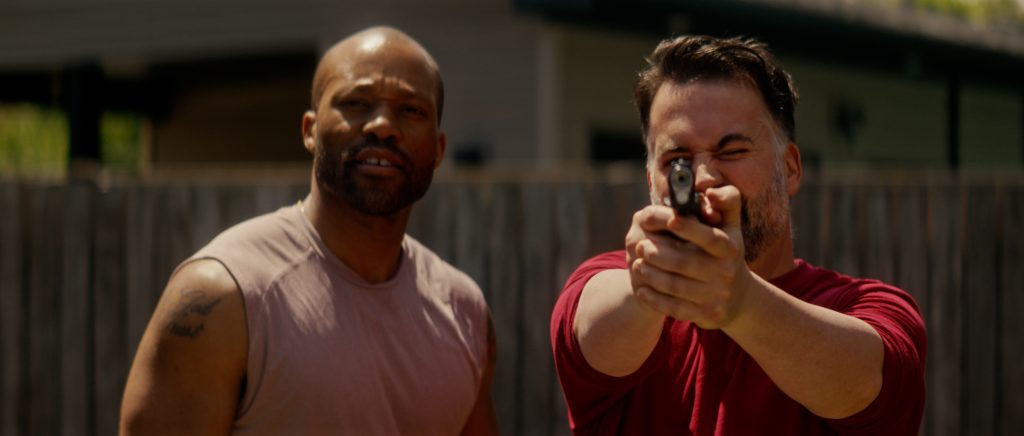
Biosphere: The single-sentence summary on the back of Mel Eslyn’s indie comedy/drama begins “In the not-too-distant future,” and it’s the kind of movie where the MST3K shout-out cannot be accidental; this sci-fi story, written by Eslyn and co-star Mark Duplass, has a similar low-fi energy and subversive sense of humor. Duplass and Sterling K. Brown — an unexpected but inspired comic pairing — play the last two men on earth, who’ve survived environmental catastrophe via the titular structure, but are now faced with the question of how to advance the human race. Zippy, funny, and surprisingly warm. (Includes audio commentary, featurette, and essay by Claira Curtis.)
ON 4K:
Body Heat: Lawrence Kasdan cashed in his cachet as the co-writer of Empire Strikes Back and Raiders of the Lost Ark, with this, his 1981 directorial debut (new to the Criterion Collection). But he wasn’t quoting Saturday serials this time around; he was riffing on the quintessential film noir set-up, a rich husband and a sexy young wife and the horny dope who helps her kill him. But Kasdan was able to take advantage of a freedom in onscreen sexuality that his ‘40s counterparts could only dream of. William Hurt and Kathleen Turner (also making her debut) sizzle in the leading roles, adroitly following the beats of Kasdan’s clever screenplay (which rounds the bases and then throws in a few more twists for good measure), while newcomers Ted Danson and Mickey Rourke have a blast with their small but memorable supporting turns. (Includes new and archival interviews, deleted scenes, trailer, and essay by Megan Abbott.)
Lenny: Bob Fosse followed up the triumph of Cabaret with this stylish 1974 biography of Lenny Bruce (also a new addition to the Criterion Collection). It’s film that doesn’t often get credit for its clear influence on Raging Bull; the look, feel, and structure of the two films are strikingly similar, as both are shot in stark black-and-white (a knockout in this new 4K edition), utilizing a pseudo-documentary format and a non-linear chronology that hopscotches through Bruce’s short life. Fosse has plenty to say about Bruce’s status as a First Amendment martyr (his courtroom breakdown is still affecting), but it’s not a soapbox movie either; Fosse is clearly taken by the irresistible seediness of the burlesque joints where Bruce got his start, and he beautifully dramatizes the generational shift in stand-up comedy that Bruce ushered in. More importantly, it passes the essential biopic test — would these people and their conflict be compelling if they weren’t famous? — thanks to Bruce’s complicated relationship with dancer and wife Honey, played with astonishing verve and heart-wrenching sensitivity by Valerie Perrine. (Includes audio commentary, new and archival interviews, trailer, and essay by Mark Harris.)
The Great Outdoors: KL Studio Classics follows up their 4K release of the John Candy/John Hughes favorite Uncle Buck with this 1988 effort, written by Hughes but helmed by his frequent collaborator Howard Deutch (Pretty in Pink). It’s a naked attempt to recreate the success of the previous year’s Planes, Trains, and Automobiles, this time pairing Candy with Dan Aykroyd as his boorish bullshit-artist brother-in-law. It’s a far inferior picture, but Candy is (as ever) a delight, his fuming byplay with Aykroyd is entertaining, and there are enough throwaway laughs and well-executed set pieces to keep its 91 minutes moving. (Includes audio commentaries and trailers.)
Terror Train: The slasher movie craze that Jamie Lee Curtis helped kick off with Halloween was in full swing by the time of this 1980 entry, which gets the 4K treatment from KL — and deserves it, thanks to the classier-than-average personnel involved (it’s photographed by John Alcott, Kubrick’s go-to guy in the ‘70s, and it’s the debut effort of director Roger Spottiswoode). The story is classic early-slasher fodder, a tale of teen humiliation and revenge with a whodunit flavor; Curtis anchors the silliness with her customary empathy, though poor (top-billed) Ben Johnson is reduced to essentially spending the picture doing corpse discovery, and there’s way too much of co-star David Copperfield’s magic act. But the third act cooks exactly as you’d like, and Spottiswoode’s skill at building and maintaining tension is already evident. (Includes audio commentaries and trailer.)
Motel Hell: I’ve always meant to check out this 1980 cult fave (out in a new 4K Steelbook from Scream Factory), primarily because of Roger Ebert’s three-star review — a rave, when you put it on the curve of the slasher subgenre that he and Siskel so loathed at the time. And he was right about it; this is a rare horror comedy that gets the balance just right, sending up the conventions of the genre and building unique comic characterizations while still delivering a creepy mood and a handful of genuine jolts. The performers are particularly noteworthy, playing the roles with a wink that’s present, but not broad enough to undercut the storytelling; Rory Calhoun is especially strong as Farmer Vincent, purveyor of “honest-to-goodness hickory-smoked meat” (he doesn’t get more specific than that), whose affability makes him an especially effective villain, particularly when he drops it at the end. Seen from our vantage point, it feels like the missing link between the first and second Texas Chain Saw Massacre movies, deploying gross-out gore and dark laughs in roughly equal proportion. (Includes audio commentary, featurette, interviews, TV spots, and trailers.)
The Swordsman Trilogy: Shout’s marvelous “Hong Kong Cinema Classics” line continues apace with this thrilling trio of ‘90s wuxia adventures from producer Tsui Hark. (He also co-directed the first entry.) The great thing about wuxia movies of this era is their evolution; it’s a blast to watch their well-established conventions merge with the industry’s advances in special effects and shifts in style. The swordplay is especially breakneck in these pictures, while the fight choreography is deliciously elaborate and the supernatural flourishes land nicely. The only bad news about this set is that only the first film is presented in 4K UHD; Swordsman II and Swordsman III: The East is Red are Blu-ray only, which is a bit of a bummer since the middle film is probably the best (if for no other reason than the participation of Jet Li in the starring role.) (Includes interviews, featurette, and trailers.)
Tiger on the Beat I & II: One of the other pleasures of ‘90s Hong Kong action flicks is how they unapologetically swipe the conventions and even individual elements of Hollywood hits of the era, but give them their own, unique (sometimes insane) spin. Tiger on the Beat, for example, is an HK riff on the buddy cop action/comedy, but cranked up to borderline absurdity by director Lau Kar-leung and stars Chow Yun-Fat and Conan Lee. Their wardrobes are stolen from Miami Vice and they even re-enact the “throw down your pants” bit from Running Scared, but the fights are uniquely Eastern bone-crunchers, and the ending goes absolutely crazy. Tiger II is a bit of an oddity, telling a barely-related story with a mostly new cast (though Lee returns, playing a different character?), and in a much goofier style. But the stunts are astonishing — including a famously misbegotten leap that seriously injured Lee and temporarily delayed production — the pre-Hard Boiled hospital set piece is killer, and by the time they’re stealing the glass-and-bare-feet business from Die Hard, you won’t even mind. (Includes audio commentaries, interviews, and trailers.)
I Love Maria: Tsui Hark again — but this time as an actor, co-starring in this batshit nutty 1988 sci-fi/action/comedy that feels very much like a quickie HK riff on Robocop. In a rather chintzy future dystopia, a cub reporter (Tony Leung), scientist (John Shum), and criminal (Hark) team up to stop a ruthless gang that’s using robots to do its dirty work. Among said robots is the title character (Sally Yeh), modeled after the beautiful girlfriend of a gang boss, whom they all fall in love with after she’s reprogrammed for good. It’s delightfully silly stuff, mounted with gonzo, take-no-prisoners energy by director David Chung. (Includes audio commentary, interview, and trailer.)
ON BLU-RAY:
Nickelodeon: In the 1970s, Peter Bogdanovich followed a trilogy of critical and commercial smashes (The Last Picture Show, What’s Up Doc, and Paper Moon) with three films that failed to connect with either critics of audiences: Daisy Miller, At Long Last Love, and this 1976 ode to the earliest days of motion pictures. That run of flops nearly ended his career, but their failure likely had less to do with their quality than the outsized backlash to the filmmaker himself; all have been reappraised in recent years, and this may well be the best of the bunch. Bogdanovich started out as a film journalist and historian, and based his witty script (co-written with W.D. Richter) on the tall tales he was told by such industry vets as Leo McCarey, Raoul Walsh, and Allan Dwan. The cast is full of pros — including Bogdanovich’s past and future stars Burt Reynolds, Ryan O’Neal, Tatum O’Neal, and John Ritter — and his direction nicely combines the manic comic energy of early silent movies with the screwball snap of a later era. Bogdanovich always claimed part of its failure was due to Columbia insisting he make the movie in color, so in 2009, he re-edited it to his original director’s cut and desaturated it to black and white; Sony’s new Blu-ray thankfully includes both that version and the original, color theatrical cut, on separate discs. (Includes audio commentary, video essay, interview, and trailer.)
Fresh Kill: Last fall, the Criterion Collection added Born in Flames, Lizzie Borden’s incendiary pseudo-documentary story of radicalism in a post-revolution America. It was released in 1983, a product of New York’s downtown art scene; this sharp-edged mixed media mélange was released eleven years later, and feels like a companion piece, this time borne of the cultural restlessness that gave us the ‘90s indie movement and its queer cinema revolution. New York underground and art world figures pop up in small roles, Staten Island jokes land easy laughs, and early cyberpunk vibes abound; director Shu Lea Cheang and writer Jessica Hagedorn cook up a strange, funny parable that’s nearly as hard to describe as it would be to replicate. (Includes interviews, featurettes, and essay by Mindy Seu.)
Talk Radio: Between the controversial, high-profile Wall Street and Born on the Fourth of July, Oliver Stone knocked out this low-budget big-screen adaptation of Eric Bogosian’s play, which Stone then fused with the true story of slain Denver talk show host Alan Berg (whose murder was more recently dramatized in The Order). Stone seems to revel in the opportunity to work on this smaller scale, seizing on the claustrophobia of the play’s radio studio set and squeezing it like a vice, while Bogosian’s inspired performance is intensely theatrical and bracingly brilliant. Watch out for young Alec Baldwin and John C. McGinley in supporting roles, as well as a post-Little Shop Ellen Greene; the blown-out brights and deep shadows of Stone’s frequent collaborator, the great cinematographer Robert Richardson, are especially sharp in KL’s new Blu-ray edition. (Includes audio commentary, interview, and trailer.)
The Rubber Gun: The debut feature from Pump Up the Volume and Empire Records director Allan Moyle (new on Blu from Canadian International Pictures) messily blurs the lines between documentary, narrative, and performance, with Moyle starring as a Montreal college kid fascinated by “the street action in the city” who falls under the spell of its central figure, the charismatic drug dealer Steve (Stephen Lack), and decides to make his “family” the subject of his graduate thesis. The characters are complicated gradually and with real care — we understand how and why everyone is who they are — and the occasional narrative meandering, inherent in the subject matter, pay off handsomely with a charged ending that grapples with the ethical dilemmas of reportage, journalism, and filmmaking itself. (Includes Includes interviews, Q&As, trailer, and essay by Nathan Holmes.)
Girl Internet Show: A Kati Kelli Mixtape: “Well, this is deeply weird,” I wrote in my notes, early in this compilation of the work of video performance artist Kati Kelli, and I stand by that assessment; initially deeply off-putting, Kelli’s work is, at times (sometimes simultaneously) absolutely nonsensical, strangely surreal, and wildly insightful. A YouTube fixture for roughly a decade before her untimely death in 2019, Kelli’s “Girl Internet Show” had the aesthetics of a million bedroom YouTube vlogs, but used that packaging as cover for a piercing satire of performative femininity and online oversharing (“I’m clinically diagnosed as being a brat,” she explains, adding, “I’m also diagnosed with being an amazing kisser”). Kelli had big Aubrey Plaza energy, and was clearly ahead of her time; this collage of her moods and modes, assembled by I Saw the TV Glow director Jane Schoenbrun and Kelli’s partner and collaborator Jordan Wippell, should net her some overdue recognition. (Includes featurettes, short film, photo galleries, and Marva the MILF web series.)
Deathsport: There was something so quaint and charmingly homemade about Roger Corman’s dystopian sci-fi movies, a sense of a future assembled from spare parts from other productions, the paint still drying, the scotch tape barely holding them together. This 1978 production was clearly intended to recreate the success of Death Race 2000, but director and co-writer Nicholas Niciphor was no Paul Bartel, and Hollywood Boulevard co-director Alan Arkush was brought in to save the picture — and nearly did. In spite of its flaws, it’s fun to watch, mostly thanks to the personnel involved: returning Death Race star David Carradine, B-movie royalty Claudia Jennings, and late-period Orson Welles cinematographer Gary Graver, whose photography looks about as good as it can on Shout Factory’s new Blu-ray. (Includes audio commentary, TV and radio spot, and trailer.)
Big Bad Mama / Big Bad Mama II: Another new Shout release from the archives of Roger Corman, who chased the success of Bonnie & Clyde with no less than four gender-swapped riffs on Depression-era criminals on the run: Boxcar Bertha, Bloody Mama, Crazy Mama, and the 1974 B-movie hoot Big Bad Mama (directed by Steve Carver). Each is distinguished by its leading lady, and this is a perfect fit for Angie Dickinson’s specific style of seen-it-all sexiness; she plays a single mother of two whose crime spree (with a scenery-chewing Dick Miller in hot pursuit) draws in Tom Skerritt and William Shatner, both clearly unconcerned with coming off sleazy. The ending didn’t exactly lend itself to a sequel, but in 1987 Corman financed one anyway — more accurately, an ahead-of-its-time reboot, retelling the story with new actors and situations surrounding Dickinson. It’s a frankly fascinating experiment, a snapshot of how the same story can be told in two different eras of exploitation, particularly since Mama II director Jim Wynorski would become one of the mainstays of the direct-to-VHS era. (Includes audio commentaries, interviews, trailers and TV spots.)