Kayleigh Donaldson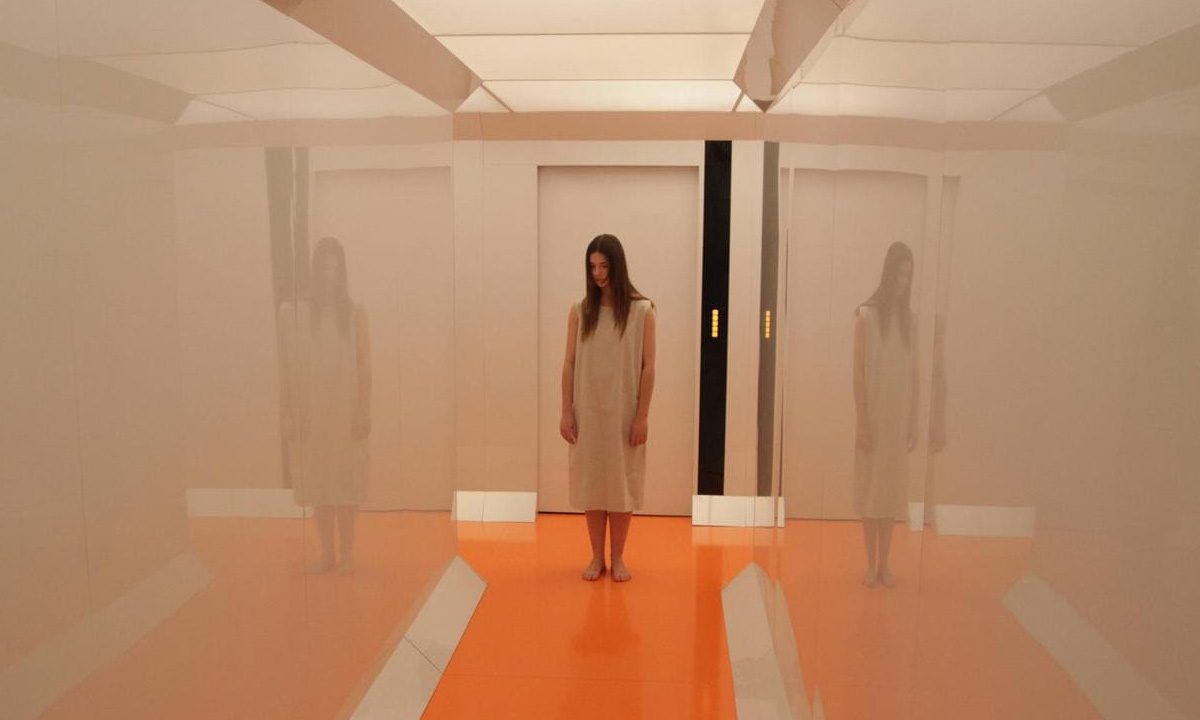
The internet is terrified of liminal spaces. Long corridors with seemingly endless doors. A mall devoid of customers. Classrooms with no students. The idea of a perfectly ordinary space that is empty, abandoned, or just plain off has fuelled some of online storytelling’s most viral lore. Backrooms, the latest A24 horror film, is the work of 20-year-old Kane Parsons, who got his creative start making videos inspired by an image of a dingy-looking series of rooms posted on 4chan. Inspired by his take on the lore, the feature-length adaptation follows a therapist who slips into an otherworldly dimension in search of a missing patient.
Backrooms might end up being the first successful adaptation of creepypasta, the phenomenon of community-led internet horror that gave us Slenderman (and a really bad Hollywood take on it). But Parson is also working from a long genre tradition that blends the mundane, the unseen, and the otherworldly, inspired by the likes of David Lynch, Cat People, and H.P. Lovecraft. It’s a combination of analog and retro styles with the intrusion of the cosmic. Liminal horror fans looking for more to fuel their fears should delve into the realm of Panos Cosmatos.
Before he sent Nicolas Cage into a surreal killing spree in Mandy, Italian-Canadian director Cosmatos made his debut with 2010’s Beyond the Black Rainbow. Inspired by his childhood re-imaginings of what the movies in the horror section of his local video store were about, the film follows a research facility dedicated to a New Age-esque philosophy of “serenity through technology.” Dr. Barry Nyle (Michael Rogers), the new head of research, has focused his efforts on Elena (Eva Allan), a captive with telepathic powers who is desperate to find a way out before Nyle crushes her (perhaps literally).
Heavily inspired by Lovecraft but also films like Enter the Void, Altered States, and Solaris, Beyond the Black Rainbow rejects the sterile aesthetic of many of its sci-fi contemporaries in favor of pure sensory overload. The slow-burn drama lulls you into a trance-like state, and then it’s too late for you, and poor Elena, to realize you’re trapped. It’s technicolor claustrophobia, lit like Dario Argento’s Suspiria as smothering as if the walls were closing in around you. A lot of backrooms and liminal lore prefers brightly-lit and more mundane spaces than what Cosmatos offers (how many prismatic devices do you have in your house?), but Beyond the Black Rainbow retains the essence of liminal unease. It takes very little for something you see everyday to take on an unsettling aura.
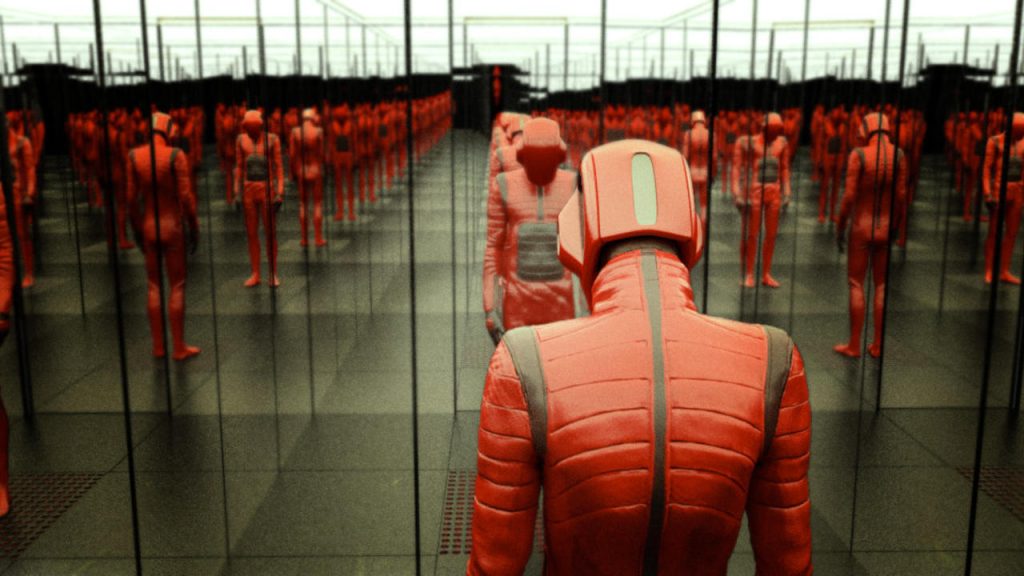
The best creepypasta works because of its malleability and how it allows anyone to reimagine its ideas and themes. While Beyond the Black Rainbow isn’t technically a part of that tradition, it shares a lot of common ground: heavy influences from classic horror, a connection to technologies old and new, and a distinct understanding that the most terrifying of spaces are often those where every little detail can be seen. There is a reason that every liminal space YouTuber loves a vintage cinema or retro-futurist building (Vancouver’s Bloedel Floral Conservatory was used prominently in Beyond the Black Rainbow). Nostalgic locales offer a true sense of the liminal: a place where time has seemingly stopped, and the rules of the future do not apply.
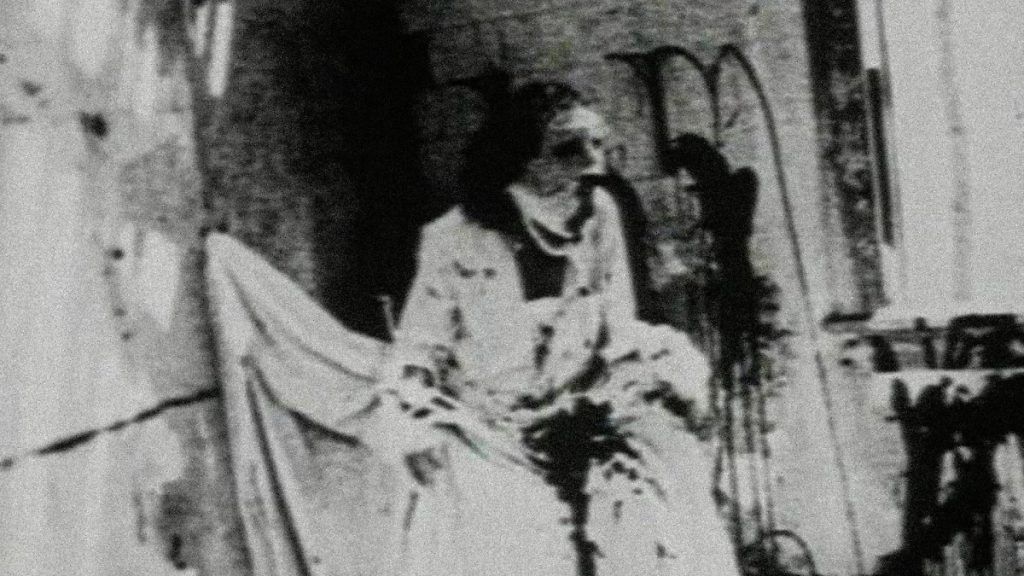
Where internet backrooms lore keeps its supernatural invasions pretty minimal to maintain a sense of the familiar, Cosmatos triples down on it with Dr. Nyle’s descent into psychic hell with a Rorschach test-style flashback that is pure anti-realist nightmare. It’s a scene that has more in common with E. Elias Merhige’s experimental horror Begotten than creepypasta, although its sense of the abstract would not feel out of place in the realms of the backrooms. Both are curious about decay, about the ways that the known rot and morph into something truly unknown. Beyond the Black Rainbow is full of the kind of tech we were told was our future, but now seems like a failed relic of the past. In the backrooms lore, school desks, crackling TV sets, and dust-covered furniture bleeding into the walls are plentiful reminders that this is not our world. Trust nothing and nobody.
Beyond the Black Rainbow is a film haunted by the broken promises of the past, turned into the regrets of a new generation. All the promises offered about a bright future were shredded before our eyes, dreams turned into nightmares that occupy spaces where we used to feel safe but are now a threat. Cosmatos himself said that the work was heavily inspired by his disdain for the New Age fads of the Baby Boomers and how their good intentions disintegrated into a thirst for power and control. “That is the ’Black Rainbow’: trying to achieve some kind of unattainable state that is ultimately, probably destructive,” he said. What is more liminal than the generation gaps that left so many of us in existential limbo? It’s no wonder that Gen-Z’s ultimate scary place in the backrooms lore looks like an abandoned office.
Cosmatos and Parsons seem to occupy opposite ends of the horror spectrum, but the genre in the current era is one forever linked by its exploration into the liminal. The curdling of nostalgia and discomfort of the familiar morphing before our eyes is what good horror is built on.
“Beyond the Black Rainbow” is streaming on Kanopy, Hoopla, Amazon Prime Video, and an array of ad-supported streaming services.