Steve Erickson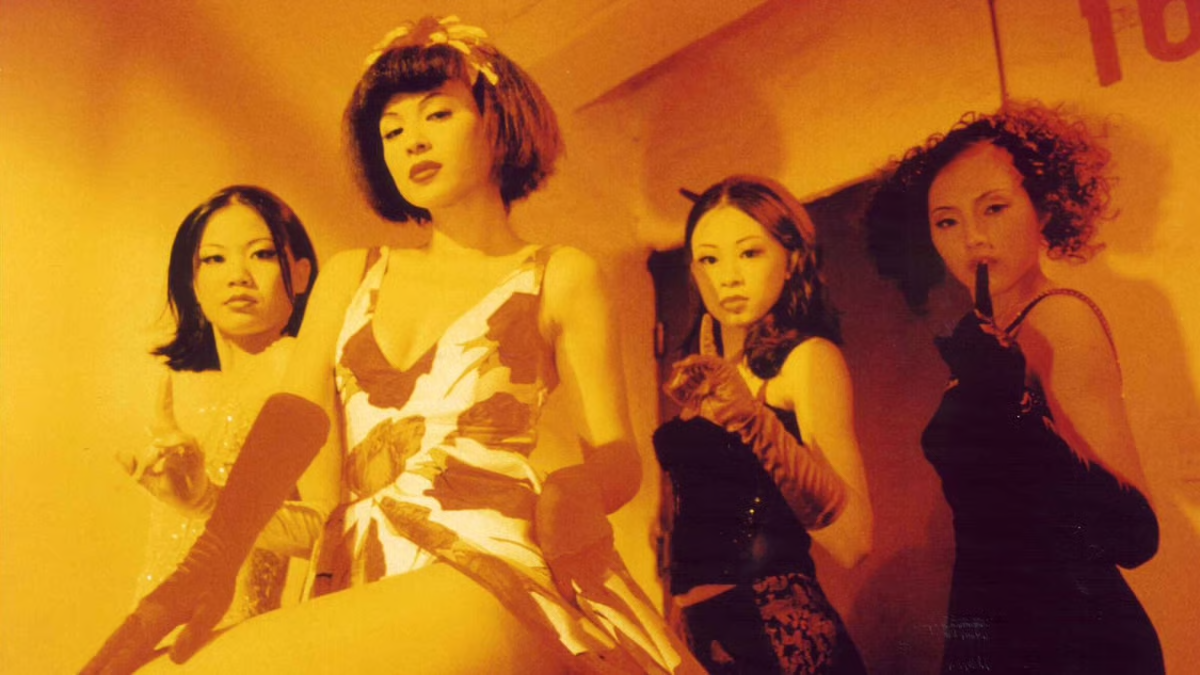
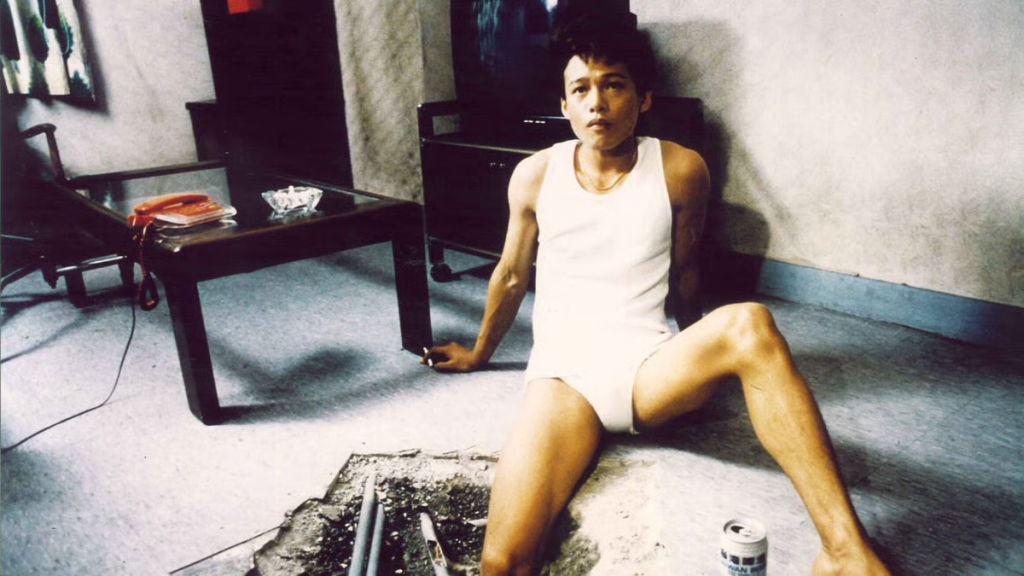
Long before liminal spaces became a buzzword, The Hole transformed Taiwan into one. Set amidst two catastrophes, it reduces the city to a de-populated apartment building. Although it’s a musical, its main soundtrack is steady, pounding rain. The building is a wonderfully foul space, functioning like a decrepit body, springing holes and leaking fluids; one can almost smell the mold on its walls. Among this unpromising setting, an unnamed man (Lee Kang-sheng) and woman (Yang Kuei-mei) forge an extremely tentative connection.
Produced for the 2000 Vu Par series, which was commissioned in 1998 by La Sept France, The Hole played U.S. theaters as part of the entire program of 10 films, each made in a different country. (They included work by Walter Salles, Hal Hartley, Don McKellar, Abderrahmane Sissako, and Ildiko Enyedi.) Its current run marks the first time it’s received a release of its own. Now that we’re nearly three decades removed from its production, it’s easier to see it outside the fears of its time. 2000 Vu Par was made in expectation of major changes at the start of the 21st century. Eerily, The Hole offers premonitions of the COVID pandemic and widespread climate change.
It’s the last week of 1999, and Taipei is undergoing a catastrophe brought on by ceaseless rain, which might be the source of a deadly virus. The government is forcing its residents to leave their homes; running water will be shut off on January 1, 2000. Lee and Yang’s characters have remained behind. (He even continues working at a grocery stall, although only one customer ever shows up.) Her apartment is breaking down quickly. Placing towels on the floor, she attempts to prevent a flood of leaks, but her efforts are fruitless. He lives in the apartment directly above her, so when a plumber opens up a hole in his floor, they’re finally forced to interact.
The Hole features five songs by pop singer Grace Chang. Lip-synched by Yang and turned into dance numbers, they function as fantasies of escape and love she can’t possibly live out. Her yearnings are impossible; while singing about calypso, she’s stuck in her building’s elevator, not enjoying a Caribbean beach. These songs help unlock her inner life, dramatizing an attraction to the man. They’re edited so that they connect directly to her life. (Her sneezing turns into the first line of a song: “Gesundheit!”) An ordinary woman imagines herself as a glamorous movie star. These performances are a dream of a better world which The Hole’s characters can’t possibly reach.
Its attitude towards their sentiments is complex. The Hole ends with an intertitle from Tsai, stating that “in the year 2000, at least we have Grace Chang’s songs to comfort us.” This could be a tribute to her music’s potency or a critique of the inability of pop culture to affect material conditions. (Still alive, Chang’s a nostalgic icon for fans of Hong Kong films of the ‘50s and ‘60s.) Yang’s musical performances never leave behind the reality of life in the decaying apartment building. During them, its colors become more attractive, but the basic setting remains. No matter how sugary Chang’s music is, it’s staged against the same backdrop of a constant rain as the film’s more naturalistic scenes. The rest of The Hole is no less fantastic. It’s defined by its production design and gallon upon gallon of artificial rain on the set’s edges.
Since there’s very little dialogue, sound design occupies the space it usually takes up. As in Kiyoshi Kurosawa’s Cure, offscreen space becomes subliminally jarring. One only realizes how grating the drip of water into a kettle is once it’s turned off. Although the man and woman watch TV news, its images are never shown, but the soundtrack is a constant presence. Listening to its speculation and advice is a form of doomscrolling.
Tsai has pursued an idiosyncratic path in the last decade, sticking by Lee as his muse. (Until his documentary Afternoon revealed otherwise, they were widely assumed to be lovers due to their very close working and personal relationship.) Its departures from Tsai’s usual practice mark it as something new. In The Wayward Cloud, made in 2006, he returned to Chang’s music and a sci-fi premise, turned even darker. By now, Tsai’s given up on narrative altogether. Placing his style, reliant on long takes, and preoccupations with urban loneliness into genre forms proved extremely fruitful. The performances sketch out a romance the man and woman will be unlikely to act out, since she shows the first symptoms of the virus. Even if all this comes to nothing, the simple act of reaching out a hand to a person who’s suffering and trying to end one’s isolation still matters.
“The Hole” opens at Film at Lincoln Center on July 10 in its first-ever dedicated New York theatrical release.