Max Borg
As fate would have it, the second week of the 79th Cannes Film Festival overlapped with the broadcast of the final episode of The Late Show with Stephen Colbert, a cancellation viewed by many as a means to curry favor with the current White House occupants. France was also no stranger to talk of undue influence in the media landscape, as hundreds of film workers signed an open letter decrying the impact the actions of Vincent Bolloré, the majority shareholder of the Canal+ group, might have on the film industry. The CEO of Canal+ (one of the major financiers of French cinema) promptly responded with a threat to blacklist everyone who had signed the letter.
All this went down while the festival screened numerous films looking back on the first half of the 20th century, specifically from the European perspective. The pre-opening slot, whereby a restored film from the Cannes Classics section serves as the amuse-bouche before the inaugural screening proper, went to Guillermo del Toro’s Pan’s Labyrinth, set in Francoist Spain, and the Mexican filmmaker highlighted in his introduction how the movie had lost none of its relevance. The actual opener The Electric Kiss, a carnival-set comedy-drama about grief and performance, felt decidedly quaint by comparison, although it remained a pleasant viewing experience thanks to the solid ensemble cast.
In fact, one of the actors from that film, Gilles Lellouche, wound up playing the lead in one of the most politically charged entries in the main competition: Moulin, the fourth feature by Hungarian director László Nemes, and his first movie made in French. Less formally daring than usual, Nemes was nonetheless quite energetic in telling the story of Jean Moulin, the leader of the French Resistance during World War II, and his fateful encounter with the terrifying Gestapo officer Klaus Barbie (played by Lars Eidinger).
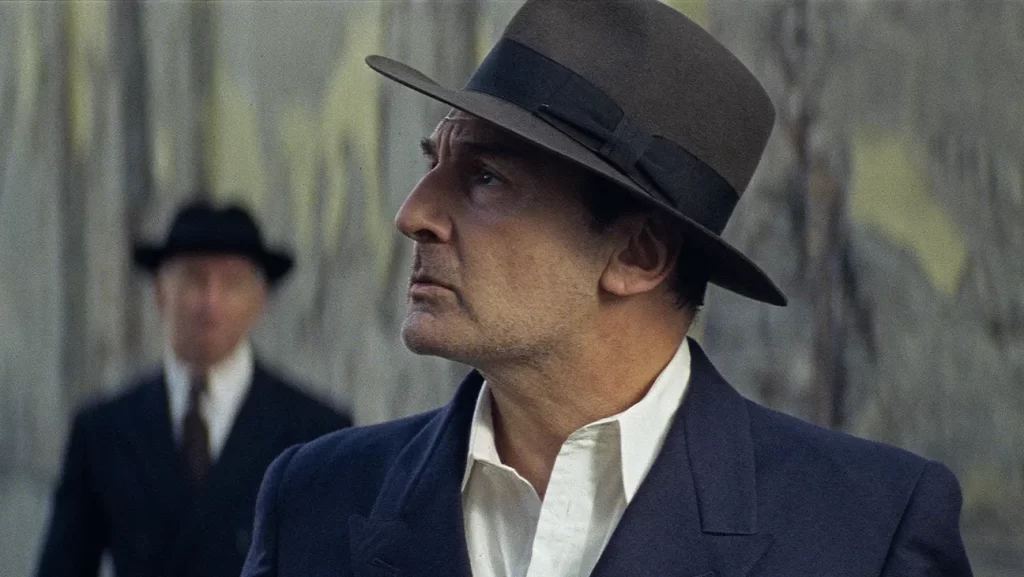
Some joked that this was the start of a French MCU – the Moulin Cinematic Universe, as it were, for after having an entire film devoted to him, the man also popped up in a cameo in the festival’s big Out of Competition event: the first half of Antonin Baudry’s two-part epic De Gaulle, a blockbuster-sized celebration of the general who embodied French resilience during the war (the two films are scheduled for release in June and July, just before Bastille Day). Furthermore, Moulin is mentioned – but not seen – in A Man of His Time, which goes into the bureaucratic minutiae of the Nazi-friendly Vichy regime. While the story is fictional, it is loosely inspired by the correspondence of the great-grandparents of director Emmanuel Marre, whose take on the material impressed the jury enough to win the award for Best Screenplay.
Wartime eras were also at the center of two other prize-winners: Best Director (shared with Pawel Pawlikowski for Fatherland) went to the Spanish duo known as the Javis (Javier Ambrossi and Javier Calvo) for The Black Ball, a riveting, decade-spanning drama that focuses on the interconnected lives of three gay men in 1932, 1937 and 2017, with an unfinished play by Federico García Lorca acting as the connective tissue (in a major coup, Netflix circumvented the rule preventing its films from competing for the Palme d’Or by scooping up the North American rights); Best Actor was shared by Emmanuel Macchia and Valentin Campagne for their magnificent work in Lukas Dhont’s Coward, about the queer bond between two Belgian soldiers during World War I.
Also shared was the Best Actress prize, which went to Virginie Efira and Tao Okamoto for their performances in Ryusuke Hamaguchi’s All of a Sudden, the Japanese filmmaker’s first movie shot predominantly in a language other than his own. Set in the Parisian suburbs, the film is a tender look at the tribulations of old age in the context of a nursing home, whose director (Efira) has a life-changing experience when she meets a terminally ill playwright (Okamoto). Hamaguchi’s work, much like Nemes’s, was also indicative of another trend, with international directors telling stories set in France. Iranian filmmaker Asghar Farhadi was part of that group with Parallel Tales (amusingly, also starring Efira), as was the Romanian enfant terrible Radu Jude, who entertained the Directors Fortnight crowd with his irreverent adaptation of Diary of a Chambermaid.
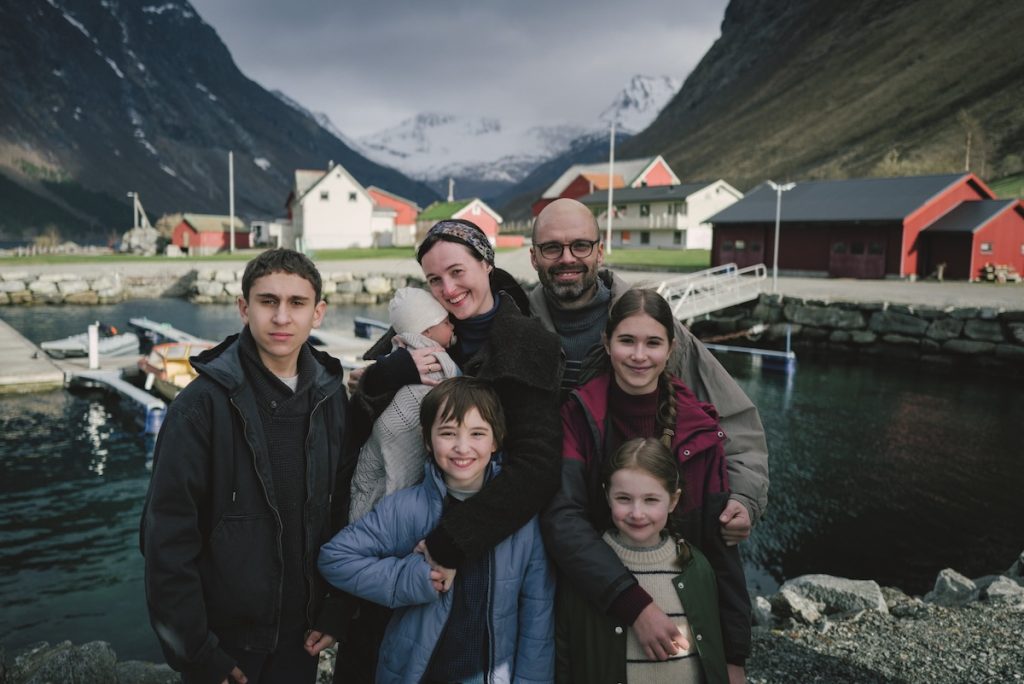
Another Romanian returning to Cannes was, of course, Cristian Mungiu, who wound up winning his second Palme d’Or in 19 years thanks to Fjord (which continued Neon’s streak of having US distribution rights to the big winner). Shot in Norway with an international cast (and perhaps too much English dialogue to be eligible for the International Feature Film Oscar), it explores the gray areas of a seemingly progressive society, as a Romanian family that relocated to the Nordics comes under scrutiny when the father’s (Sebastian Stan) religiously conservative approach to parenting, shared by his Norwegian wife (Renate Reinsve), is revealed to potentially entail physical violence. This being a Mungiu film, there are no easy answers. A quietly effective drama, with wonderfully understated work by Stan who, in reconnecting with his Romanian roots, plays a man for whom English is a second language and every sentence a possible source for misunderstanding.
Speaking of religious elements, the hottest ticket at the festival was for a screening I was sadly unable to attend: the world premiere of the new 4K restoration of The Devils, Ken Russell’s controversial 1971 masterpiece. Long unseen in its original form (as we detailed in this piece five years ago), it will now be available as Russell intended, in a move that marks a strong beginning for Warner Bros. Clockwork, the studio’s new specialty label. On the Classics front, I had to settle for a midnight screening of the 4K remaster of The Fast and the Furious, not exactly a typical movie for the Cannes late night crowd. Then again, it showed a bit more flair than some of the actual midnight movies, like Quentin Dupieux’s Full Phil (an intermittently entertaining father-daughter comedy that takes a bit too long to get to its punchline) or Marion Le Coroller’s Species, a body horror set in a hospital with echoes of Julia Ducournau and Coralie Fargeat, but little of their wit.
Dupieux fared a little better with the other movie he had playing at the festival, the Directors Fortnight closer Vertiginous, a deliberately vintage-looking digital animation (aesthetically reminiscent of The Sims) where two longtime friends have their daily routines upended when one of them starts claiming what we perceive as reality is a simulation. In fact, animation as a whole had a strong presence at the festival, though sadly not in the main competition (25 years ago, for his first edition, Cannes chief Thierry Frémaux boldly selected Shrek as one of the Palme d’Or hopefuls). It also accounted for what was arguably the single funniest movie seen on the Croisette this year: Jim Queen, a surreal queer comedy where the gay community is ravaged by a mysterious virus that makes everyone straight. Well observed, at times quite moving, not to mention gloriously puerile when it needs to be, it’s destined for cult status everywhere. Not the kind of film one necessarily seeks out in Cannes, but the kind we’re glad we stumbled upon, justifying two weeks of sleep-deprived movie-watching frenzy.