Jason Bailey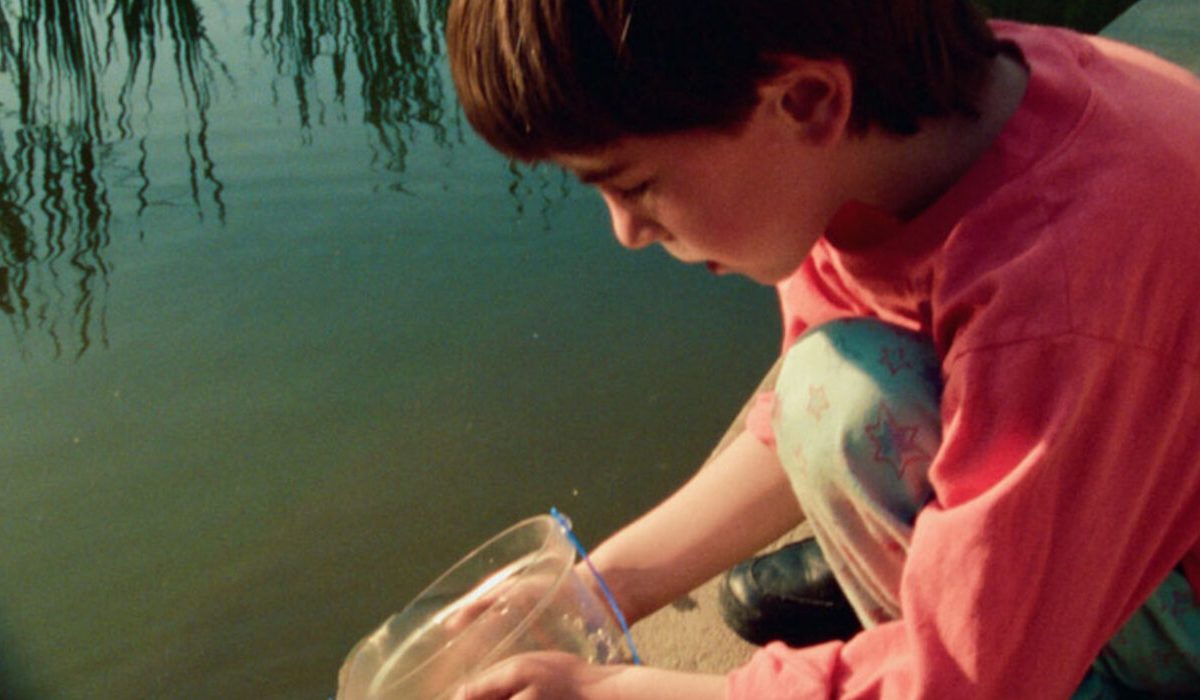
“I used to call myself a filmmaker,” he says. “A documentary filmmaker.” His voice is familiar to those who love non-fiction cinema — the soft accent, the gently sideways demeanor, the unavoidable folksiness. But it’s older, gravellier, worn down a little, and so is he. It’s been forty years since Ross McElwee released Sherman’s March, which was conceived as a straightforward historical account of General William T. Sherman’s march through the Confederacy and became a self-reflective examination of his dating woes and personal insecurities, seemingly because he had no choice in the matter. Sometimes you make the movie; sometimes the movie makes you.
He made more films after Sherman’s March, further defining his specific style and voice, but not many, and Sherman’s remains his best-known — so much so that the ostensible subject of his new film Remake is a proposal from a producer to adapt the documentary, first into a narrative feature, then into a streaming series (the shifts of an industry in a nutshell, right there). One expects a funny and self-deprecating exploration of that process — is Sherman’s March IP? — and there’s a bit of that, but that’s not really what Remake is about. McElwee tips the actual subject in his opening voice-over, speaking to (and over footage of) his son Adrian. “We were both moving closer to the day that you would die,” he says. “It’s been seven years, and I still miss you every day.”
It’s not surprising that McElwee is sharing something so personal, so traumatic — Adrian died at 27, of a drug overdose, on Christmas Eve — since so much of his work from Sherman on could be described as “home movies, but loaded.” Perhaps the difference is that a certain degree of hopefulness usually shone through in the earlier work, and that’s simply not the case here. “Things at home became more and more strained,” he says, explaining that not only his son but his wife and daughter decided they didn’t want him to film them anymore; he eventually separates and then divorces from his wife, while Adrian’s issues with drugs and alcohol become steadily more present, and serious.
He tries to involve Adrian in the work. The director is contractually allowed to make a documentary about the making of the remake, and there’s a wonderful moment where he’s filming himself signing that contract, and Adrian chastises him to get “more interesting shots” — and then takes the camera and does just that. (Another scene filmed by Adrian, as he interviews a neighborhood kid, suggests he’s got the old man’s gift for drawing people out.)
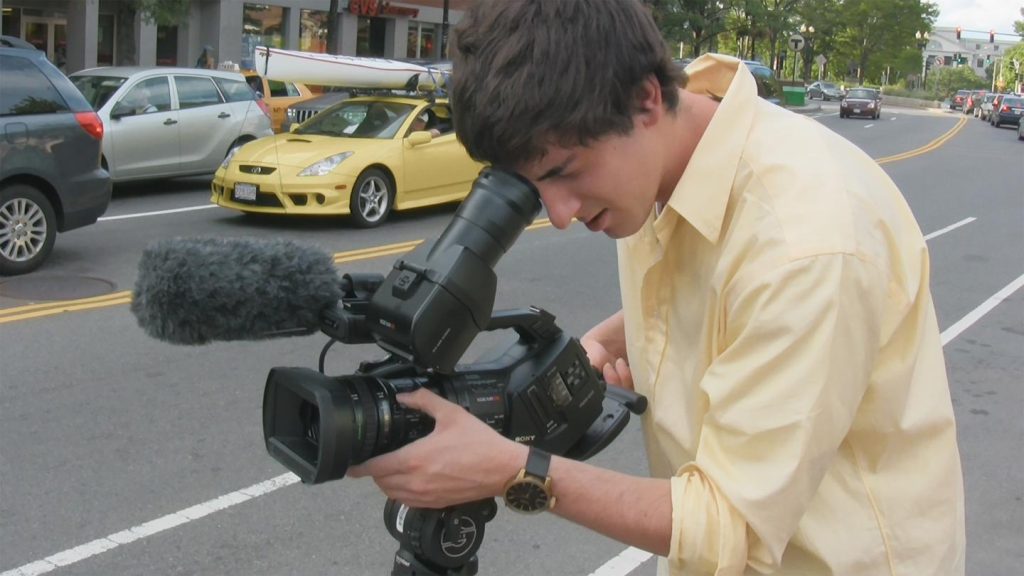
Contrary to the title, Remake isn’t really about the ins and outs of this adaptation process, primarily because it ultimately came to naught; it’s just one of many proposed projects that wither and die on the vine in Hollywood every day. But it allows McElwee to explore, late in his career, the dynamics and dialectics of documentary cinema itself. There’s an inherent time machine quality to the form, best exemplified by the Up series but poignantly encapsulated by his interactions with Charleen Swansea, a major character in Sherman and several of his other films. We see clips of her then, young and vibrant and funny and eccentric, and then we see her now, struggling to remember any of the moments he tells her about and shows her. “Thing just disappear,” she shrugs. “They just disappear.”
That contrast, the physical manifestation of that passage of time and the changing of character, is even more poignant when it comes to Adrian. McElwee shot footage of his son through his entire life, and one cannot help but flinch at the jarring contrast of this charming, kind, inquisitive kid, and his eventual, sad fate. “You’re alive in this footage, but you’re no longer alive in the real world,” McElwee says in voice-over, still trying to reconcile one to the other while navigating the heaviness and intensity of the cuts, which span years or decades, across moods, cities, continents. It’s unsurprising that his style has evolved since his breakthrough film, where the edits are all but invisible; here, purposefully, they call attention to themselves, dramatizing how everything can change in the blink of an eye.
The closing passages are the most devastating of McElwee’s filmography, beginning with a section in which he explains via on-screen text — not, notably, in voice-over — that “what follows is that year, the last year of your life.” There is quite a lot of footage Adrian shot himself, of his day-to-day life half a country away from his family, ostensibly for a documentary he’d make one day about his recovery. It glimpses a world far removed from his father’s, a video diary of an addict, essentially. And so Remake becomes something very different from Ross McElwee’s other films, because his son became something very different from himself.
Earlier, in what almost feels like an aside, he muses about how the versions of our stories we tell can so easily become the objective truth in our mind, so the softer and more hopeful version of Adrian in McElwee’s Photographic Memory, who was having a rough time but would surely bounce back, became a Hollywood happy-ending comfort that allowed him to soften what he saw, felt, and thought. But the cold, hard objects he finds in his son’s room tell a story he can’t finesse. He continues intercutting those images with the footage of his child, so bright-eyed and funny and precocious, his whole life ahead of him, and it breaks your heart, because his whole life is over. And, that, ultimately, is what Remake is about: how difficult yet necessary it is to reconcile those glowing memories with a harsher, harder reality that’s right in front of us.
A
“Remake” opens at New York’s Film Forum on Friday.