Sean Burns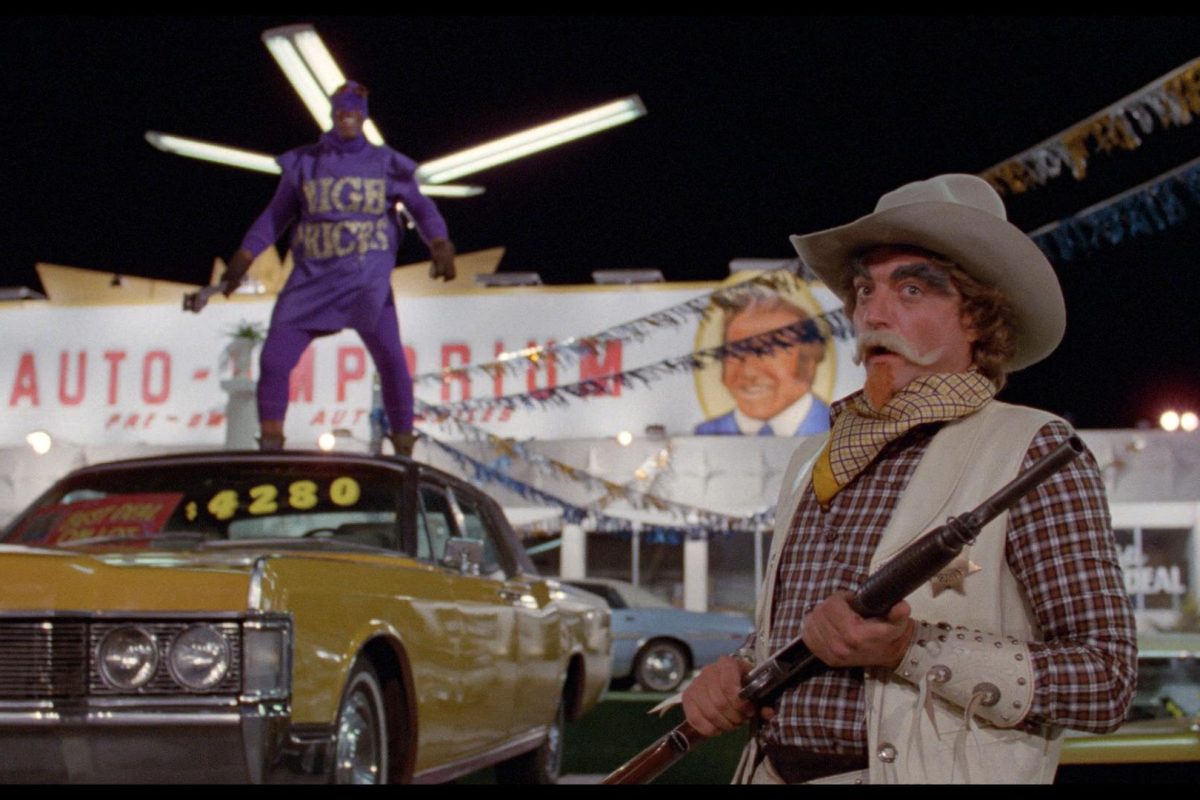
It took 1994’s Forrest Gump to enshrine Robert Zemeckis as his generation’s official pop Herodotus, having crafted a literal idiot’s guide to post-WWII history as bloated, lachrymose and self-regarding as the baby boomers themselves. But Zemeckis has been on this beat since his earliest work. His 1978 debut, I Wanna Hold Your Hand, chronicled the first flush of Beatlemania in a slapstick adventure following a quartet of teenage girls trying to shriek and scam their way in to see the Fab Four’s first appearance on The Ed Sullivan Show. (Zemeckis makes a roundabout reference to his first film in his latest, 2024’s mawkish digital mausoleum Here, in which The Beatles are on TV in the background of a scene featuring the freakishly de-aged Tom Hanks and Robin Wright playing teenagers. It’s tough to think of a better metaphor for generational stasis.)
Yet for all the times the director has been lauded for looking in the rearview – his most beloved and artistically successful movie, Back to the Future, was about returning to the era of his childhood – one seldom hears as much about his greatest act of prophecy. Zemeckis’ sophomore effort, the screamingly funny flop Used Cars, was (barely) released four months before the election of Ronald Reagan and foretold what would soon become a cultural revolution. The broadly satirical farce follows a cadre of gleefully amoral salesmen and rip-off artists pushing junkers while trying to screw the competition across the street even harder than they’re screwing their customers. Zemeckis saw the ‘80s coming a mile away.
Former Disney kid Kurt Russell stars in his first grown-up theatrical lead. (A year earlier he’d played his old It’s Happened at the World’s Fair scene partner Elvis Presley in a TV movie directed by John Carpenter, but his career-redefining role as Snake Plissken was still on the horizon.) He delivers a brash, ridiculously charming turn as Rudy Russo, a small-time grifter in an unenviable procession of plaid blazers, trying to hustle up enough cash to bribe his way into local politics. The corruption in the movie is hilariously flagrant, with a new freeway project threatening to provide unfair access advantages to one of two dueling car lots owned by feuding twin brothers, both played by Jack Warden.
The more villainous of the two – though it’s really a matter of degrees – laments how all his hand-delivered, overstuffed envelopes were to little avail: “It used to be when you bought a politician, that son-of-a-bitch stayed bought.” Alas, the times they are a’ changin’. The screenplay by Zemeckis and his regular co-writer Bob Gale contrives a series of increasingly absurd, at times wildly illegal schemes to be pulled off by Russell and his co-workers, played by former Chicago Bear Frank McRae and regular Brian De Palma movie weirdo Gerrit Graham. The story starts with them hiding a dead body in an Edsel and only gets more tasteless and outrageous from there.
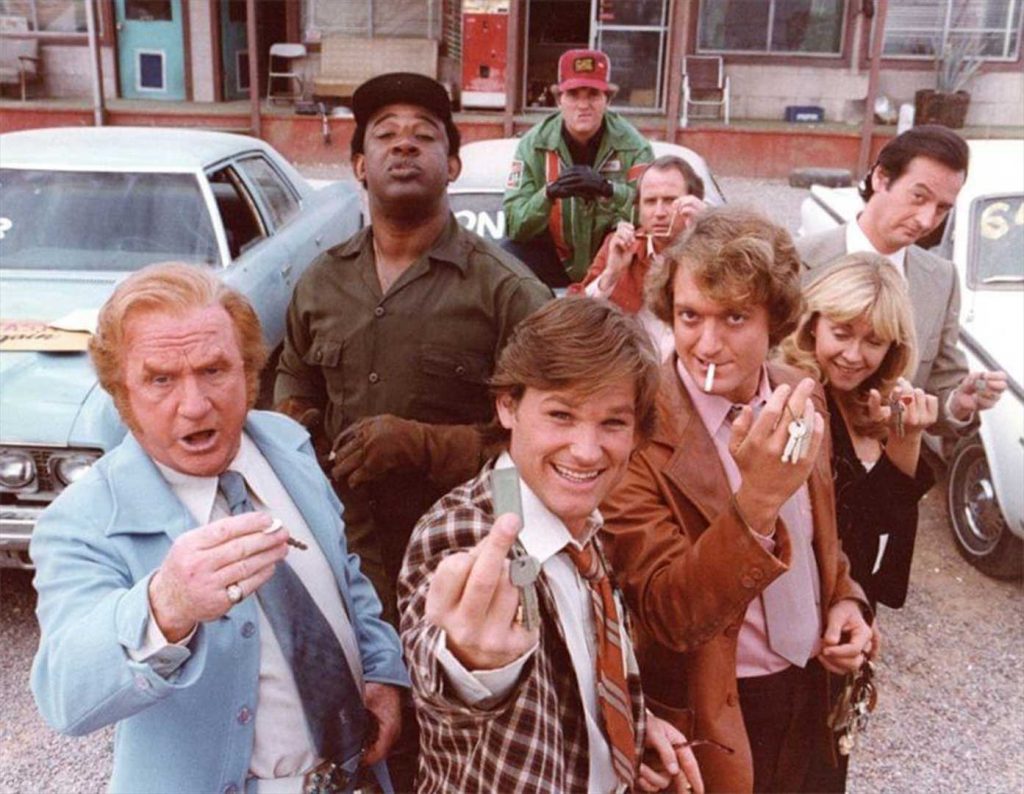
“Trust me,” Russell repeats as if it were Rudy’s mantra, his back-slapping brio and Herb Tarlek fashions all but screaming that you’d be insane to do so. A contemporary viewer watches Used Cars waiting for it to become the story of Rudy’s redemption, especially after he finds himself falling for the boss’ ethically principled daughter, a doe-eyed do-gooder played by an undistinguished Deborah Harmon. Will the love of a decent woman help this silver-tongued huckster see the error of his ways? Not at all. Their romance actually works the other way around, with Rudy rescuing the damsel in distress by convincing her to commit perjury, and the two walk off into the sunset together while scamming an old lady.
The fun of Used Cars is the brazenness of the schemes. Even the pets get in on it, with a dog playing dead after pretending to be run over by a prospective buyer on a test drive, so they can guilt the guy into making a purchase. Russell literally reels customers onto the lot by dangling a $10 bill on the end of a fishing line, luring suckers across the street in highway traffic. What’s refreshing about the movie is that it’s so unrepentant, trusting the affable charisma of the performers and the movie’s antic energy to carry us along past any pesky ethical qualms. We root for these guys not because we think they’re right, but because it’s fun.
American comedies have become so timid in recent years, preoccupied with wanting the audience to like the protagonists and constantly reassuring us that they’re in the right. (A director told me last year about how studio executives demanded a “kindness pass” on his screenplay, removing any moments in which the characters weren’t nice to each other. Always great for comedy.) Since the Judd Apatow era, seemingly every comedy has become about an immature manchild learning to grow up and become a suburban dad; overlong advertisements for conformity with soggy, “heartwarming” third acts. Used Cars comes from a time when comedies were still allowed to be about antisocial misfits and assholes, unconcerned with the consequences.
Besides, everyone at City Hall is just as crooked as these car salesmen, only they’re not as charismatic as Kurt Russell. Zemeckis once described Used Cars as a Frank Capra movie, except Jimmy Stewart is corrupt. When the boys get busted jamming the satellite signal of Carter’s presidential address to broadcast an obscene commercial instead, their defense sounds even more relevant today: “Do you think we like being associated with the President of the United States? We run an honest business here.”
“Used Cars” is streaming on Tubi and the Roku Channel.