Jason Bailey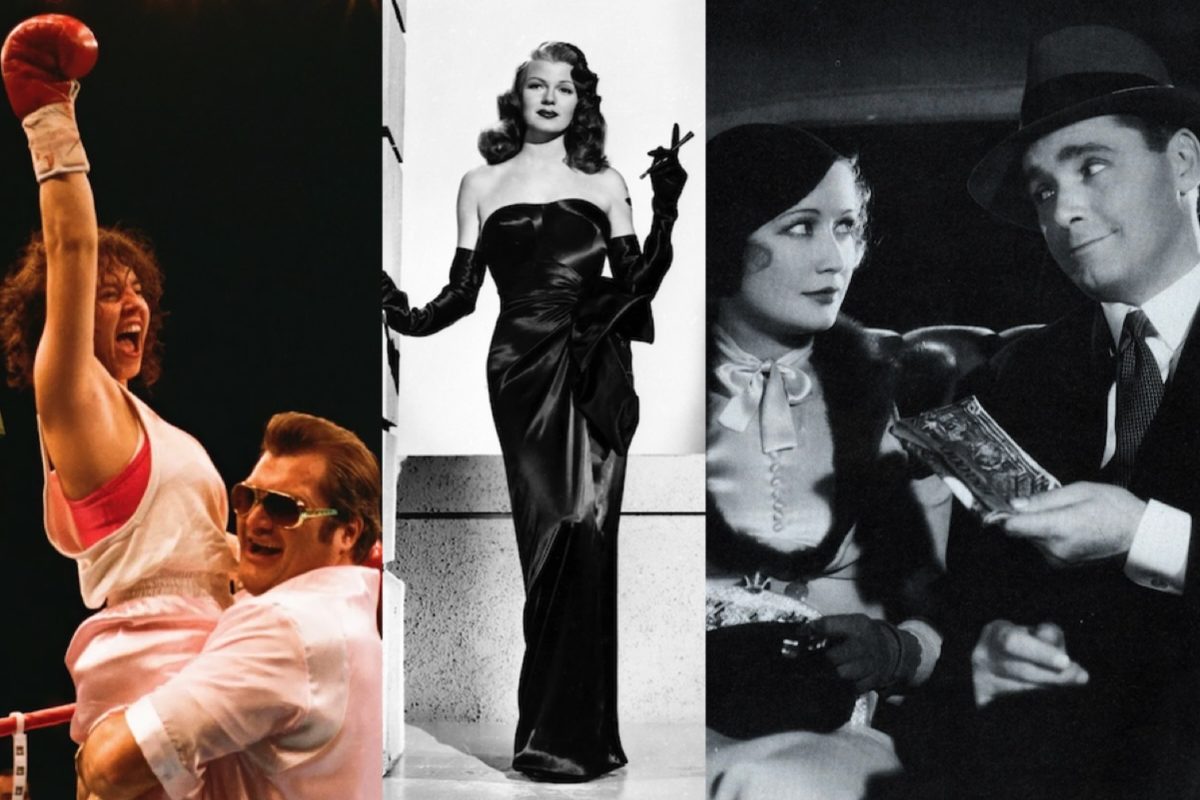
Every Tuesday, discriminating viewers are confronted with a flurry of choices: new releases on disc and on demand, vintage and original movies on any number of streaming platforms, catalogue titles making a splash on Blu-ray or 4K. This twice-monthly column sifts through all of those choices to pluck out the movies most worth your time, no matter how you’re watching.
PICK OF THE WEEK:
Trouble in Paradise: A year before Design for Living, Ernst Lubitsch made his other great pre-Code love-triangle comedy, and like that masterpiece, Trouble in Paradise benefits from the equality of its characters — when multiple combinations all make sense, you’ve got real stakes on your hands. Gaston (Herbert Marshall) and Lily (Design co-star Miriam Hopkins) are a con artist couple who worm their way into the home of Madame Colet (Kay Francis), planning to rob her blind, a plan complicated considerably when Gaston falls for the mark. It’s all gorgeous and sophisticated, with director Lubitsch and screenwriter Samuel Raphaelson juggling witty dialogue, bedroom farce, and genuine longing with equal aplomb. Hopkins is a whiz at rattling off dizzy-dame dialogue, while Francis bewitchingly smolders and purrs; her chemistry with Marshall is off the charts. Criterion’s 4K upgrade is a knockout as well. (Includes audio commentary, introduction, video essay, and essay by Farran Smith Nehme.)
ON HBO MAX:
Christy: David Michôd’s dramatization of the life of boxer Christy Salters (Sydney Sweeney) starts out looking like your typical sports underdog story, and plays well enough on that level seeming to set up the standard relationship between the underestimated fighter and the tough-as-nails but ultimately saintly corner man. And then it takes a turn. That turn is what makes Christy special, as her trainer Jim Martin (Ben Foster, whom it took me three full scenes to recognize) sees her soft spots, and goes in for the kill. He’s a manipulative monster, which creates parallel tracks of doom and dread as she fights tooth and nail to stay on top of the burgeoning world of women’s boxing, all while eyeing the door of a physically and emotionally abusive marriage. Sweeney’s choice to star (and produce) a de-glammed “physical transformation” vehicle feels calculated, and it probably is. But it’s a genuinely excellent and complicated performance, and she has a gut-punch moment near the end that absolutely made a mess of this viewer. You’ll know it when you see it.
ON NETFLIX:
Benedetta: A truly strange brew, coupling probing, thoughtful questions of faith and religion with the kind of sexual ribaldry and scatological humor you’d expect from a modern-day “nun-spoloitation” effort. Director Paul Verhoeven loves to have it both ways – he takes what’s happening between his protagonists seriously, but he also can’t resist having a giggle at the prurient elements. Yet the picture poses more serious questions of faith than we might expect from a heaving-bosom Sapphic melodrama – of divine visions, faith, and doubt, and how those might (or might not) intertwine with pleasures of the flesh. Are the title character’s visions genuine? Or merely manifestations of her newfound desire? Or both? Could a spiritual awakening also be a sexual awakening? That material is provocative, and Verhoeven clearly sees himself as a provocateur; he’s playing with dynamite, toying with the most loaded of symbols and ideas, casting them as both divine and dirty. And good on him for that.
ON 4K UHD:
Monty Python’s Life of Brian: I know souls who firmly believe Monty Python’s 1979 religious satire (another 4K bump from Criterion) was their finest cinematic achievement, and to those souls I chuckle and shrug; Holy Grail is funnier, Meaning of Life is more ambitious, and this one has a handful of bits that run too long and are revisited too often, which is not something you can usually say about their work. But Python’s third-best movie is still funnier, smarter, and more provocative than most comedies, and so much of it works that I get the love for it: Terry Jones is a scream as the ultimate Jewish mother, Graham Chapman is superb as the title character, the critiques of organized religion are as pointed as ever, and the central premise — the life of the baby born the next manger over from Jesus — remains deliciously rife with comic possibilities. (Includes audio commentaries, making-of documentaries, behind-the-scenes footage, deleted scenes with commentary, illustrated early screenplay recording, radio spots, trailer, and essay by Bilge Ebiri.)
Gilda: More people have probably seen the single moment from Gilda flashed on a prison screen in Shawshank Redemption than have seen the movie itself. But it’s a key scene – from the moment Rita Hayworth’s title character does “that shit with her hair,” you know poor Glenn Ford is a goner. The story of a scruffy gambler who goes semi-straight yet can’t resist the temptation of the boss’ new wife (and his old girl), Charles Vidor’s slinky 1946 picture (absolutely glistening in its 4K upgrade from Criterion) is film noir par excellence: hard-boiled narration; cheerfully cynical point of view; gorgeous use of light, shadow, and silhouette (lovingly captured by Criterion’s A-plus transfer); a lunk of a protagonist; and one of the screen’s great femme fatales. There’s plenty of plot, but Vidor is primarily interested in the psychosexual game of chicken between slimily charismatic Ford and fiercely sensual Hayworth, who’s like Jessica Rabbit made flesh. The happy ending’s a teensy bit of a cop-out, but that aside, this is a tough, nasty little item. (Includes audio commentary by Richard Schickel, featurette with Martin Scorsese and Baz Luhrman, interview with film noir historian Eddie Muller, a Hayworth television appearance, trailer, and essay by Sheila O’Malley.)
Office Killer: The first and last directorial effort from the great visual artist Cindy Sherman (new to 4K from Vinegar Syndrome) was this 1997 black comedy, which begins as a cross between the corporate drone satires of the era (such as Clockwatchers and Office Space) and darker fare like The Player and A Shock to the System. But Sherman takes it a step further, allowing her title character and protagonist (played with gusty verve by Carol Kane) to move past the slimy co-workers who had it coming and into straight-up psychopath territory, to great effect. The gore effects are queasy, the ensemble cast (which includes Jeanne Tripplehorn, Molly Ringwald, Michael Imperioli, and Eric Bogosian) is tip-top, and Kane’s performance, which starts out mousy and ends with a feral, primal scream, is a sharp reminder that she should have played far more leads than she did. (Includes audio commentary, interviews, and behind-the-scenes footage.)
Badge 373: The French Connection was such a gigantic hit that it spawned, essentially, three different follow-ups from three different parties: Gene Hackman did the official French Connection II; Roy Scheider, producer Philip D’Antoni, and much of his team reunited for the spiritual sequel The Seven-Ups; and then Eddie Egan, the inspiration for “Popeye” Doyle, further inspired and even co-starred in this 1973 bruiser (new on 4K from Cinématographe) from director Howard W. Koch and screenwriter Pete Hamill. Robert Duvall is the Egan avatar this time around, and he’s the right man for the job, refusing to soften the character’s considerable rough edges; in fact, it’s such an unvarnished portrait that it’s often ugly in ways the filmmakers perhaps did not intend. But Duvall is so solid, Koch’s direction so sturdy, and the portraiture of ‘70s New York so visceral that it’s worth at least a curiosity glance. (Includes audio commentary, interview, video essay, Q&A with yours truly, and essays by Mark Asch, Paul Corupe, A.S. Hamrah, and Justin LaLiberty.)
ON BLU-RAY:
Vinyl: Director Alan Zweig explains his mission in the first direct-to-camera address: as opposed to his self-probing written journals, this will be a video diary where “I’m only gonna talk about records.” And then he almost immediately breaks that rule. This shattering documentary (out in a new 25th anniversary Blu-ray from Canadian International Pictures) has less to do with similarly-titled docs like Vinyl Nation and The Vinyl Revival than something like Sherman’s March, in which the ostensible subject quickly gives way to something far more personal and vulnerable. Sure, Zweig and the various collectors he interviews discuss their oddities and rarities, their strategies of acquisition and disposal, and so on. But he’s more interested in exploring his various theories about the “compulsion to collect” — “I loved the music, but I was obsessive and I was compulsive,” interviewee Harvey Pekar (American Splendor) confesses — often contentiously (“There are freaks out there who are freakier than I am,” one insists, to which he immediately replies, “That’s what all the freaks say”). You don’t have to be a record collector for it to hit close to home, but Vinyl never feels like a lecture; it’s so seemingly, off-handedly free-form that you don’t see where he’s going until he lands there, forcefully. (Includes audio commentaries, feature-length alternate version, extended interviews and outtakes, introduction, and essay by Bruce McDonald.)
Wildwood, NJ: This hour-long anthropological study of life “down the shore” was first released in 1994, shot on 8mm film by an all-women crew, and if it seemed at the time like a giggly found object along the lines of Heavy Metal Parking Lot, it has evolved (as that film has) into a fascinating time capsule of a specific time and place. All of the young women interviewed by directors Carol Weeks Cassidy and Ruth Leitman are memorable characters, brash and funny (sometimes on purpose), doling out the kind of observation and wisdom you can only get from Jersey girls on subjects like sex, romance, friendship, self-image, parents, and dreams. AGFA’s excellent Blu-ray release supplements its slender running time with a pair of companion films: Mall City, “taped on location at Roosevelt Field Mall, Long Island, NY,” made only a decade earlier but feeling like a dispatch from another planet, and Girls at the Carnival, a frightfully authentic snapshot of a typical night out for good-time-hunting teens, which gets a bit of an extra kick from its origin as a home movie, and the inherent, additional candor that allows. (Includes audio commentaries.)