Steve Erickson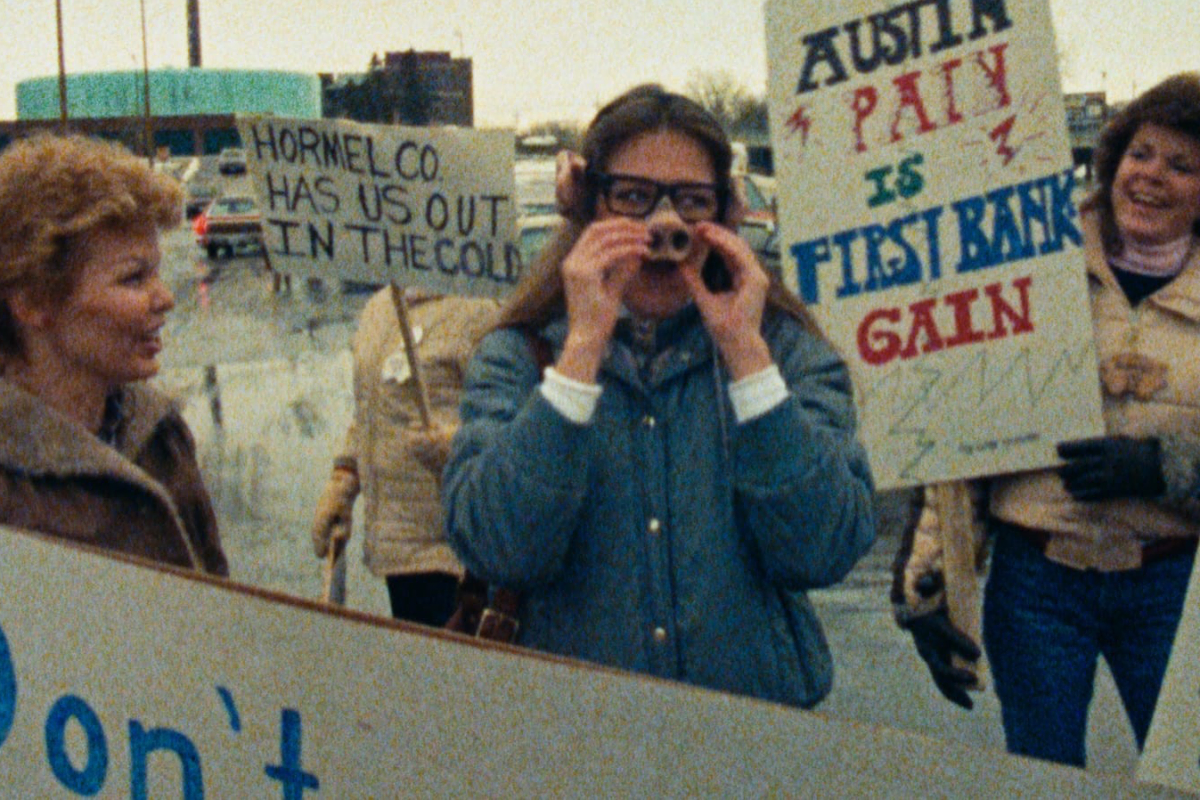
Barbara Kopple’s second feature-length documentary, American Dream, possesses a more complex and startling story than most fiction. Depicting a strike among meatpackers at a Hormel factory in Austin, Minnesota during 1985 and 1986, It shines a light on questions which have no good answers. Poverty can drive people to terrible depths, and political conflicts get played out among families. (In this case, a man betrays his own brother, a union organizer, by working as a scab.) Although Kopple films Hormel’s corporate leaders, she’s savvy enough not to treat them and the workers as equal sides. The issue of complicity grows deeper when workers are forced to debate each other about their goals. How many people are willing to risk losing their homes so that they might be treated better in the future? The longer the strike drags on without achieving any resolution, the larger these problems loom. As much as American Dream supports the union’s efforts, it takes pains to detail the cost, both financial and emotional, behind them. This is much more pessimistic than Kopple’s debut, Harlan County, USA, where she faced death threats during the shoot around a Kentucky mine, despite the absence of violence.
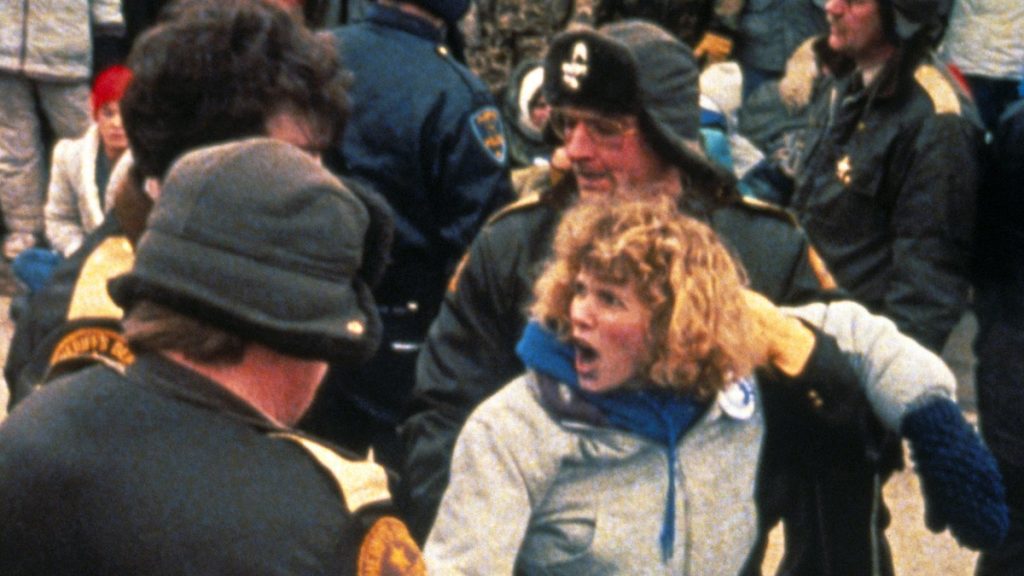
Hormel workers rebelled against cuts to their wages and benefits. The company was getting along fine, with $30 million a year in profits, yet it insisted it had to slice workers’ paychecks substantially to have a future. One man testifies that his wages had been halved over the last few years, while he’s working twice as hard for the same 47 hours a week. The international P-9 union saw no point in contesting these changes. They sent professional negotiator Lewie Anderson to Austin to negotiate, but Hormel refused to give. The strike rolled on past anyone’s expectations, putting many livelihoods in jeopardy. The longer it lasted, the harder it became for former Hormel workers to justify a hand-to-mouth existence. When Hormel began hiring scabs, Austin residents found it tempting to join their ranks, even if strikers yelled furiously at them as they approached the factory.
Grainy 16mm footage, in Academy ratio, adds to American Dream’s immersiveness. While Kopple’s approach takes many cues from cinema vérité, her voice can be heard speaking to her subjects, even if she never delivers narration or appears onscreen. Her style is relatively self-effacing. She clearly could have made a far longer film: the rigor of the edit, which took several years, is noticeable. Although the 1985-6 strike takes up the bulk of its running time, American Dream begins earlier and updates the principal participants through 1989. If the filmmakers did not know where things were heading when they began shooting, they were able to cut with hindsight.
The fact that Hormel operated a factory that turned living animals into a commercial product becomes a running metaphor. The opening scenes show gory images of pigs being torn apart; aptly, “hog cutting” is a common job there. By the time they reach the supermarket shelves, packaged neatly into cans of spam or sealed packages of ham, any connection to their own existence or the presence of workers who get them there has been made invisible. American Dream reminds the viewer of it by returning to shots of pig carcasses as a running motif.
Despite Harlan County, USA’s eventual Oscar win for Best Documentary, Kopple had a hard time getting it made. Producing American Dream turned out to be even more difficult. (After its 1992 release, it too won an Oscar in the same category.) Intended as a collective work, not “a film by Barbara Kopple,” it credits editors Cathy Caplan, Thomas Haneke, and Lawrence Silk as co-directors. The fact that Kopple embedded herself in the communities she filmed comes through in Harlan County, USA and American Dream, but it also feels like one that couldn’t be repeated sustainably. Afterwards, Kopple made a string of documentaries about celebrities, including Mike Tyson, Woody Allen, Gregory Peck and the Chicks. (Her one turn towards fiction, Havoc, is generally written off as a failure.) The most acclaimed film she’s made since American Dream, Shut Up And Sing, united these two strains of her work, finding the country trio grappling with their rejection by conservative audiences following singer Natalie Maines’s condemnation of George W. Bush.
In the mid ‘70s, one might have reason to hope that the U.S. could progress towards treating working people fairly. Reagan’s election in 1980 dashed that notion to this day. American Dream becomes a bleak vision of ordinary people crushed under capitalism. It depicts a form of corporate culture that no longer feels any need to maintain a pretense of humanity by providing a living wage. No wonder Kopple, who turns 80 this year, is now in production on a film about unionization at Amazon.
The new restoration of “American Dream” opens Friday.