Jason Bailey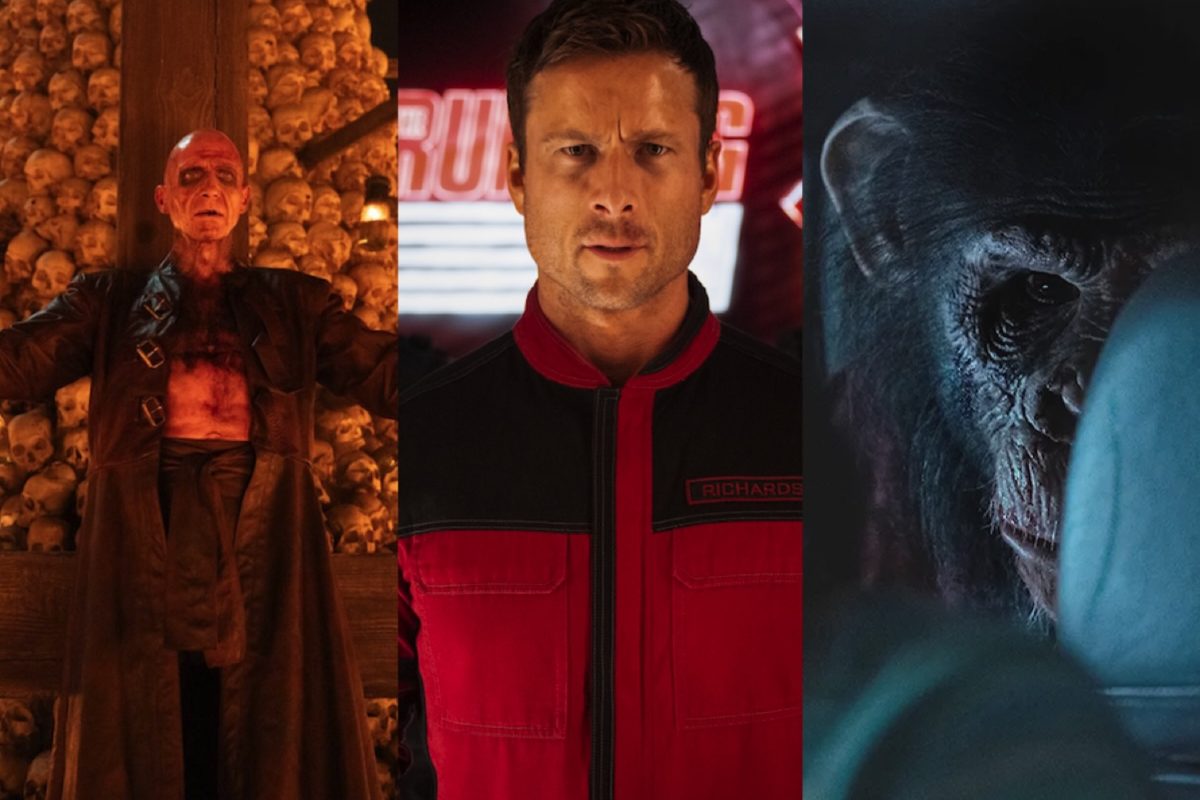
Every Tuesday, discriminating viewers are confronted with a flurry of choices: new releases on disc and on demand, vintage and original movies on any number of streaming platforms, catalogue titles making a splash on Blu-ray or 4K. This twice-monthly column sifts through all of those choices to pluck out the movies most worth your time, no matter how you’re watching.
PICK OF THE WEEK:
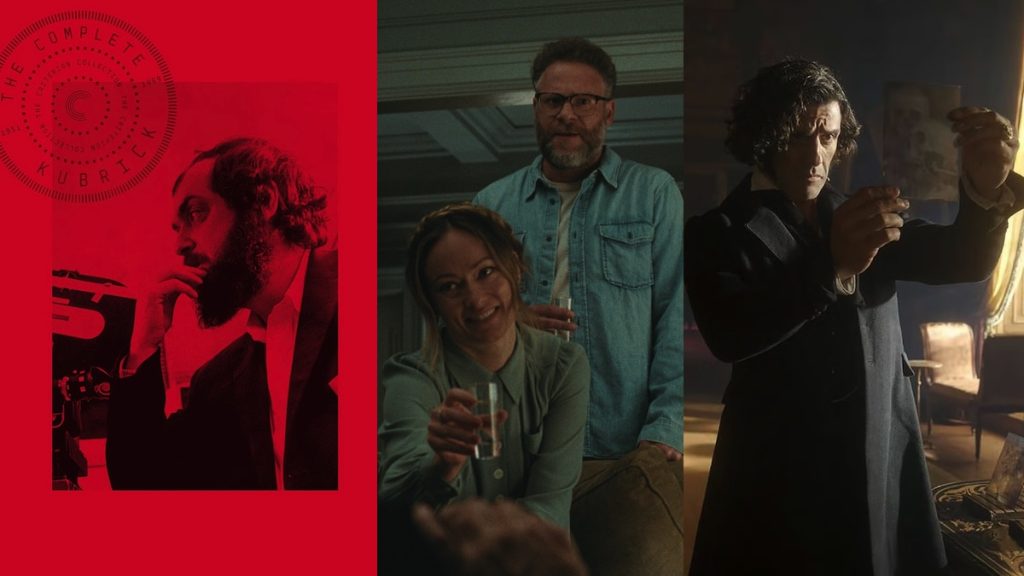
Point Blank: This 1967 adaptation of Donald E. Westlake’s first “Parker” novel (a welcome addition to the Criterion Collection) could’ve been exactly like any number of conventionally made, crowd-pleasing late ‘60s crime pictures. But director John Boorman wasn’t interested in making one of those; he turned Westlake’s pulp prose into a juiced-up art film, deploying experimental editing, sound, and storytelling techniques without defanging the muscularity (or the humor) of the narrative. Lee Marvin may have never been better than he was here, playing the wronged man looking for payback with steel-jawed intensity and no-nonsense brevity, while Angie Dickinson uses both her curves and hard edge as his only real ally. (Includes audio commentary, new and archival interviews, video essay, archival featurette, trailer, and essay by Geoff Dyer.)
ON PARAMOUNT+:
Cheech & Chong’s Last Movie: Director David Bushell wisely chose to make both a bio-doc and a Cheech & Chong comedy (“So is this a documentary or a movie?” “I don’t know, man!”), with copious scenes of our now-aged heroes driving through the desert, discussing their careers, and (of course) making dope jokes. Bushell has some fun with the form, having observers and collaborators show up along the ride, and uses cute animations to both fill in gaps and get laughs in the biographical sections. All of that material is fun, and funny, but the film is at its best and most poignant when things start to fall apart; the duo’s observations and understanding of their shifting dynamics are astute, and Bushell intermingles and interrogates them skillfully. (At one point, Tommy observes ruefully, “Wow, people do have different memories.”) These are age-old arguments and resentments, but they still feel like open wounds, and that kind of honesty and pain is often in short supply in hagiographies like this so easily could have been.
ON 4K UHD / DVD / VOD:
Good Luck, Have Fun, Don’t Die: Gore Verbinski’s filmography is hit and miss (to put it kindly), but his latest is perhaps his best, a fusion of sci-fi and social commentary with an eccentric comic rhythm and a properly cynical (borderline nihilistic, frankly) worldview. Sam Rockwell is pitch-perfect — fast-talking, fast-thinking, funny as hell — as a time traveler who bursts into a diner late one night with a far-fetched story about a looming disaster: across town, in about an hour, a nine-year-old kid will finish creating the code for an AI that will eventually wipe us all out. He asks for volunteers, assembles a crew of outsiders, and off they go. The tonal balance is tricky, and Verbinski occasionally lets it wobble. But there’s a thoughtfulness to its rhetoric, an energy to its execution, and a charmingly handmade quality to the entire enterprise (particularly its concluding scenes). Most importantly, it’s one of the few contemporary films that feels like an honest reflection of our screen-obsessed, attention-deficit culture, and it’s frankly chilling in its accuracy. (Includes featurette.)
Die My Love: Lynne Ramsay’s adaptation of Ariana Harwicz’s novel has the punk energy of the filmmaker’s best work, full of forceful compositions, knife-sharp edits, and intermingling flashbacks and detours, cultivating a dread-filled, anything-can-happen vibe. Jennifer Lawrence is magnificent (you absolutely cannot take your eyes off her) as a young mother suffering from a combination of postpartum depression and the mental illness of your choice; it’s a slow-motion spiral into a bottomless pit of despair and fury, and she slowly but surely loses her damn mind. It’s a tightrope of a performance, somehow retaining empathy while doing the most unsympathetic things, and the extent to which both the actor and director give no quarter to the expectations of a general audience is, frankly, sort of inspiring. (Also streaming on MUBI.)
The Running Man: Edgar Wright’s adaptation of Stephen King’s dystopian sci-fi novel (originally published in 1982 under his pseudonym Richard Bachman) is much closer to the source material than the 1987 Arnold Schwarzenegger vehicle, giving protagonist Ben Richards (Glen Powell) a more sympathetic backstory and motivation, and undoing the combination of its villains back into a producer (Josh Brolin) and host (Colman Domingo). Powell is a bit miscast — the stone-seriousness of the character, especially early on, undercuts what makes him so fun to watch — but he’s a sturdy anchor, Brolin and Domingo are electrifying, and Michal Cera is an enjoyable addition, adjusting his persona just a couple of notches towards tragic (and nuts). Wright’s pacing and sense of camera movement remain top-tier, and he builds the picture nicely to a strong conclusion. (Also streaming on Amazon Prime and Paramount+.) (Includes audio commentary, deleted scenes, featurettes, in-film commercials, camera tests, trailers, and digital spots.)
Highest 2 Lowest: The most recent collaboration between director Spike Lee and actor Denzel Washington is probably the least successful of their five to date — and it’s still better than just about anything out there. A riff on Kurosawa’s High and Low, it features the same basic setup of the wealthy man who first believes his son has been kidnapped, only to discover it was the similarly-aged son of his loyal chauffeur. The first half, most faithful to the original, is the least successful, with Lee and screenwriter Alan Fox letting scenes in the far-removed penthouse play out for too long, with too little life. But once Lee gets to ground level, the picture comes to life; the set piece of the ransom drop, which Lee stages on a subway to Yankee Stadium in the midst of the Puerto Rican Day Parade, is one of the best of his career. And the second half, which divulges wildly from the police procedural elements of original film (and novel), explores fascinating questions and tensions surrounding class and art. (Also streaming on Apple TV+.) (Includes featurette, interview, and music video.)
ON BLU-RAY / DVD / VOD:
Resurrection: The latest from Bi Gan (Long Day’s Journey into Night) falls into one of my favorite cinematic subgenres: kinda-sorta science fiction, in which vague futures are populated by old technology and new social woes. (Brazil is the ne plus ultra of such pictures.) There is a plot of sorts, mostly allowing for meditations on the direct, almost urgent, connection between dreams and cinema, sometimes aping the aesthetics of silent movies. And there are wide diversions from that plot, long side stories, including the snazzy tale of a card-sharp in training and a meet cute between two young lovers that feels like vintage Wong Kar-wai. But the longer Gan goes, the more it starts to feel like late Lynch: the images are so striking that you end up just letting them wash over you. You can figure out what they all mean later. (Also streaming on the Criterion Channel.) (Includes interview, trailer, and essay by Siddhant Adlakha.)
28 Years Later: The Bone Temple: Nia DeCosta takes over for Danny Boyle with a quick follow-up to last year’s 28 Years Later, and the results are an inspired mixture of the existing mythos created by Boyle and screenwriter Alex Garland and her own cinematic flourishes. Ralph Fiennes, whose supporting role was a highlight of the previous picture, here takes center stage, and he really can do anything; the relationship between his Dr. Ian Kelson and the infected giant “Samson” (Chi Lewis-Parry) creates an unexpected but affecting spine. Fiennes is matched evenly by Jack O’Connell, whose chilling affability makes him one of the great movie villains of recent years, and their face-off an hour in a delicious and audacious bit of duet acting, sending the picture into a satisfying conclusion and a killer cliffhanger ending. Boyle’s return to the franchise initially felt like something of a desperation move, but this may be the most exciting horror franchise we’ve got. (Also streaming on Netflix.) (Includes audio commentary, deleted scene, bloopers, and featurettes.)
Primate: Co-writer/director Johannes Roberts’s horror programmer has the logline and ad campaign of a “when nature attacks” film, dealing as it does with a research chimpanzee who is infected with rabies and goes berserk. But it’s executed like an ‘80s slasher movie, in ways both good and bad; the dialogue is insipid and the characters are mostly unlikable, but once the exposition is out of the way, there’s no denying the efficiency of the filmmaking. The gore is copious, the complications are worked through, the set pieces are well-executed, and the chimp is terrifyingly convincing. (The imitation John Carpenter score is fun too.) Primate isn’t terribly memorable, but it delivers on its promises. (Also streaming on Paramount+.) (Includes audio commentary and featurettes.)
ON 4K UHD:
John Singleton’s Hood Trilogy: When Boyz N the Hood landed in theaters in 1991, it was a revelation, a good, old-fashioned coming-of-age story (with echoes of Stand by Me and American Graffiti, amongst others) imbued with the urgency of rising crime in South Central Los Angeles. It marked the debut of 23-year-old writer/director John Singleton, and showcases his off-hand naturalism, masterful control of image and sound, and sharp eye for casting; he would become the youngest person and first Black director nominated for the Academy Award for Best Director. His follow-up, Poetic Justice, was met with a comparatively mixed response, but it aged well, serving as a fine time capsule of post-Rodney King L.A. and an excellent showcase for the considerable gifts of co-star Tupac Shakur. The third new addition to the Criterion Collection, Baby Boy, is the least of the batch, hobbled significantly by an unsympathetic protagonist and a sense of Singleton’s creative stagnation, but it’s still worth watching for the stellar supporting work of Ving Rhames and Taraji P. Henson. Taken together, they mark a significant turning point in American cinema, in which new kinds of stories could be told by filmmakers previously shut out of the studio system. (Includes audio commentaries, new and archival interviews, featurettes, press conference, deleted scenes, audition footage, music videos, trailers, and essay by Julian Kimble.)
Moneyball: It’s appropriate that Bennett Miller’s adaptation of Michael Lewis’s best-selling book would have so little baseball action in it, since it tells the true story of a general manager who embraced a system which saw the men on his team as numbers and statistics rather than “players.” There’s probably less than ten minutes of actual game play in the 133-minute film; even GM Billy Beane (Brad Pitt) doesn’t watch the games, opting instead to drive and listen to them on the radio, if that. So this is a sports movie about the business of sports, rather than the thrill of victory or the agony of defeat—it doesn’t lead up to an onscreen “big game,” with dramatic music and a come-from-behind victory, because the last game of this season is only seen as an affirmation of whether Beane’s big scheme worked. Instead of pop-flies and stolen bases, the thrills in Moneyball are found in the whip-smart fast pace of Steven Zaillian and Aaron Sorkin’s screenplay, the elegance of Miller’s direction, and the lived-in performances of Pitt, Jonah Hill, and Philip Seymour Hoffman. (Includes deleted scenes, featurettes, and trailer.)
Mutant: There are other, classier, “better” movies to buy this week, but if you’re looking for great trash, look no further. Stuntman-turned-director John ‘Bud’ Cardos (Satan’s Sadists, Outlaw of Gor) helms this story of two brothers on a bro-cation whose detour into a shitkicker town goes from mere dive bar bullying into death and destruction. Cardos keeps things moving at a clip, with help from a cast of B-movie all-stars, including Bo Hopkins, Lee Montgomery, and star Wings Hauser, who seems somewhat out of sorts playing a “good guy” but really delivers when he goes buck wild at the end. Ditto the movie, which builds slowly but effectively to a well-orchestrated crescendo of backwoods horror and solid creature effects. (Includes new and archival audio commentaries, new and archival interviews, and trailer.)
Faces of Death: There’s something wonderfully subversive about one of the most disreputable movies of the VHS era getting a shiny 4K edition, but here we are. Timed to the new not-quite-remake from Daniel Goldhaber and Isa Mazzei, Vinegar Syndrome’s pristine restoration reminds us that the O.G. was always more sizzle than steak, combining the “ethics” of Mondo Cane with the aesthetics of TV’s In Search Of… to create a gross-out boogeyman clearing house of stomach-churning footage (most of it staged) within an unconvincing documentary framework. It’s hard to believe anyone ever bought any of this, much less was entertained by it, but there’s no denying the chokehold it had on us Gen-Xers. Overall, I’m reminded of Roger Ebert’s review of the re-release of Pink Flamingos, which concluded, “I am not giving a star rating to Pink Flamingos, because stars simply seem not to apply. It should be considered not as a film but as a fact, or perhaps as an object.” (Includes audio commentary, isolated music track, outtakes, new and archival featurettes, and trailer.)
Innerspace: Joe Dante’s sci-fi/action/comedy (new to 4K via Arrow Video) was a box office disappointment in the summer of 1987—surprisingly, as it bore the valuable “Steven Spielberg Presents” label and a story (a test pilot’s miniaturization experiment goes awry, and he winds up inserted into a hypochondriac nobody) concocted of equal parts Fantastic Voyage, All of Me, and Back to the Future. Such schematization occasionally mars the final product, which has a bit too much flab and car chase action, but it’s a likably goofy buddy movie that offers up slapstick opportunities for co-star Martin Short, showcases for several ace character actors, some knockout special effects—which won a richly deserved Oscar—and a light touch from director Dante, who doesn’t take the elaborate machinations of the plot too seriously. (Includes new and archival audio commentary, featurettes, storyboards, and trailer.)
ON BLU-RAY:
Gutter Auteur: The Lost Legacy of Andy Milligan: The primary attraction of Severin’s second collection of fringe filmmaker Milligan’s work is the new documentary The Degenerate: The Life and Films of Andy Milligan, in which co-directors Josh Johnson (Rewind This!) and Grayson Tyler Johnson profile the no-budget filmmaker renowned among cult movie fanatics for his chaotic handheld camerawork, claustrophobic framing, over-the-top acting, and copious gore. Most of Milligan’s movies aren’t good, in any traditional sense, but they’re also fascinating, and the value of The Degenerate is its desire to understand why—to probe his recurring themes, preoccupations, and obsessions, as well as providing valuable background into the avant garde theater and exploitation cinema scenes in which he was so deeply entrenched. Masterfully edited and surprisingly soulful, this is a must-see for a certain kind of film fanatic; you know who you are. Filling out the set are The Degenerates (1967) and Kiss Me! Kiss Me! Kiss Me! (1968), a pair of long-thought-lost Milligan features that are both compelling in their own ways, and two more rarities, Compass Rose and House of the Seven Belles. (Includes audio commentaries, Q&A, deleted scenes, new and archival interviews, featurette, and trailers.)
Boarding Gate: Every month, when my big box of movies from Vinegar Syndrome and their partner labels shows up on my doorstep, I’ll root through it and find myself flabbergasted by a movie I’ve never even heard of, much less seen. This, for example, is an erotic thriller directed by Olivier Assayas, starring Asia Argento and Michael Madsen. You’re listening, right? ME TOO. And it delivers on the odd promise of that combination of names, proving less a conventional erotic thriller than a meditation on the themes and standbys of the genre, exactly the kind of unconventional approach Assayas has taken throughout his career. The central relationship is already over before the story begins, which puts palpable tension into their interactions from frame one, and the constantly shifting power plays between these two ferocious actors are riveting. And then… well, it takes a turn you’re unlikely to expect (I certainly didn’t), moving into the kind of contemplative, interior storytelling that this director does better than just about anyone. (Includes new and archival interviews, featurette, and trailer.)
Liebestraum: In the wilderness years between the breakthrough of Internal Affairs and the triumph of Leaving Las Vegas, Mike Figgis wrote and directed this bizarre yet intriguing erotic thriller, new on Blu from Cinématographe. It’s a mood piece, and occasionally tough to hook into — Kevin Anderson is perhaps too blank a slate to fill its center — but it’s full of striking dream imagery, anything-goes storytelling, and a killer performance by Bill Pullman, whose slithering sleazeball turn (dig the darkness of his little monologue about his wife’s haircut) now feels pointedly predictive of his unforgettable work in Lost Highway. (Includes audio commentaries, interviews, video essay, deleted scenes, trailer, and essays by Nadine Whitney, Travis Woods, and Neil Young.)
Mississippi: God bless Universal for the not one, not two, but three classic W.C. Fields comedies that are getting the Blu-ray treatment this month, a feat so admirable that we can easily overlook how middling this one is. Its main problem is that there’s just not enough Fields in it (not entirely director and longtime Fields collaborator A. Edward Sutherland’s fault, as The Great Man was in the midst of one of his periodic unhealthy periods), and co-star Bing Crosby hadn’t yet quite learned how to hold the screen. (There’s also about as much casual racism as you’d expect from a story of The Old South.) But he makes the most of his moments, and even a mid-tier Fields is still worth watching.
Million Dollar Legs: This 1932 effort is much stronger, pairing Fields with not only his frequent director Edward Cline (My Little Chickadee, Never Give a Sucker an Even Break) but screenwriters Joseph L. Mankiewicz (All About Eve) and Henry Myers. Their collaboration feels like a foreshadowing of the following year’s Marx Brothers classic Duck Soup, what with its fictional foreign country setting, satirical inclinations, and surrealist touches, and Fields is an absolute hoot as the shameless president of the bankrupt country of Klopstokia. As with Mississippi, co-star Jack Oakie takes up a bit more screen space than he should, but Susan Fleming (the future Mrs. Harpo Marx) is beguiling and funny as his would-be lady love.
International House: The following year, Fields stole scenes by the handful in this ensemble comedy (also directed by Sutherland) — which was no mean feat, considering that his co-stars included a delightfully game Bela Lugosi, character actor extraordinaire Franklin Pangborn, gossip target and occasional actress Peggy Hopkins Joyce (the Kardashian of her day), and the great comedy team of George Burns and Gracie Allen. The appearances of Cab Calloway and Rudy Vallee make this one feel, at times, less like a narrative than a grab-bag variety show, but when it’s as funny and wild as this, who cares?
Here Comes Cookie: On the silver screen, Burns and Allen mostly either starred in short films or appeared in the ensembles of comedies like International House and the later Fields picture Six of a Kind. But occasionally they were the main attraction, albeit in B-movies like this 1935 charmer. Gracie is the kooky younger daughter of a recently retired millionaire; he signs all of his money over to her in an attempt to smoke out the motives of her sister’s gold-digging beau, but his plan backfires when Gracie starts spending his money in inventively insane ways, resulting in Brewster’s Millions-style shenanigans. Director Norman Z. McLeod (one of the best in the business) wisely orchestrates an enemies-to-lovers arc for George and Gracie, and Burns is fun to watch, calling upon a bottomless well of incredulity and quiet rage. But this is Gracie’s show — she singes, she dances, she does Shakespeare, and she charms, seemingly effortlessly.
Confessions of a Police Captain: This 1971 poliziotteschi film from co-writer/director Damiano Damiani offers up, in abundance, the pleasures of that subgenre: rough-and-tumble gunplay, sweat and sleaze galore, and an international cast of great faces. In this case, the latter are what make it worth your time: Martin Balsam is delightfully disreputable as the titular corrupt police captain, while Django himself, Franco Nero, turns up as the idealistic district attorney who’s sniffing around him. It’s a hoot to watch the two of them spar, a battle of wills, intellects, and world view in which two sworn enemies slowly but surely become allies. But this is a poliziotteschi, after all, dramatizing a world that’s all so crooked and cooked that it doesn’t matter much anyway. These films’ home video presence has been patchy, to say the least, so kudos to Radiance Films for this crisp, clean restoration. (Includes interviews and trailer.)
Romancing in Thin Air: We Westerners tend to associate director Johnnie To solely with his action/crime pictures (like Drug War and The Big Heat), but he’s a wildly versatile filmmaker, as evidenced by this 2012 romantic drama (also new to Blu from Radiance), which is essentially a gender-swapped Notting Hill. Louis Koo stars as a world-famous movie star who is left at the altar by his lady love and co-star, sending him off the grid on a drinking binge which lands him at a remote mountain retreat owned and operated by Sue (Sammi Cheng), who turns out to be a super-fan. But she’s clinging to the memory of her dead husband, and the nesting of their lovely but bittersweet romance within this one turns out to be a thrifty two-for-one for the viewer, and To ties it all up with a clever, meta-textual bow. (Includes audio commentary, video essay, featurettes, and essay by Jake Cole.)