Josh Bell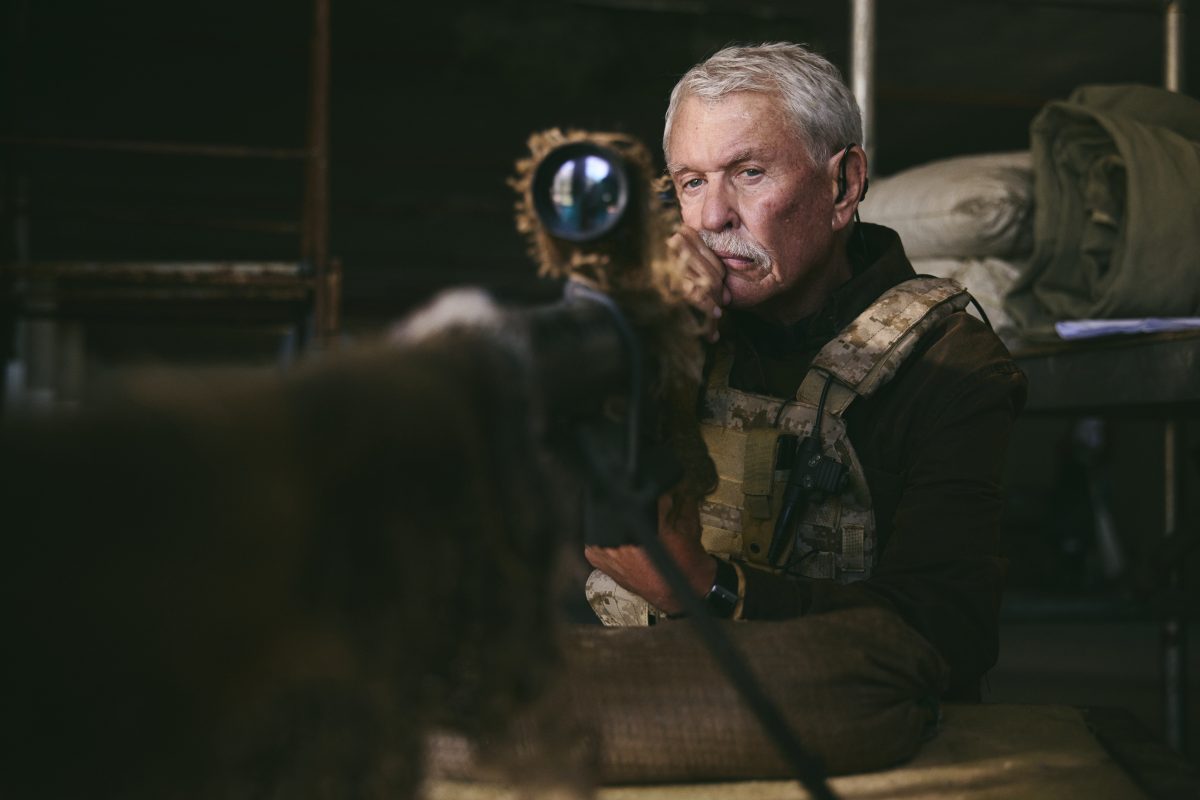
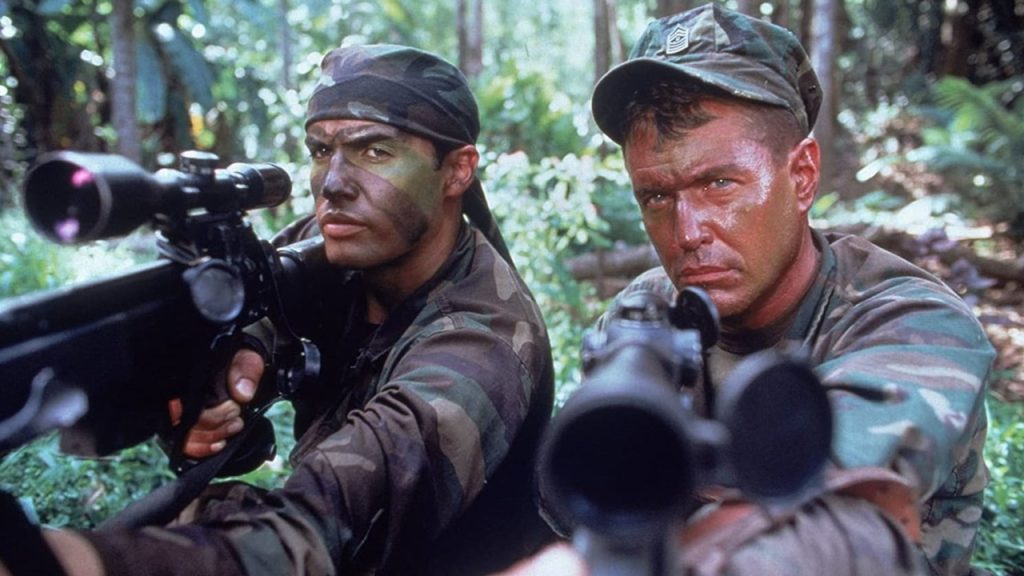
Among Hollywood releases of 1993, there’s nothing particularly notable about Sniper. The military action movie starring Tom Berenger and Billy Zane made a respectable but not spectacular $19 million at the box office, debuting in second place the week it was released. Critical response was mixed: Siskel and Ebert gave it two thumbs up, while The New York Times’ Vincent Canby called it “a badly choreographed action drama.”
It seems unlikely, however, that any of them could have envisioned what’s happening this week, when the 12th movie in the astonishingly long-running Sniper franchise, Sniper: No Nation, is released on VOD and DVD. Berenger and Zane have both continued to make regular appearances in the numerous direct-to-video sequels, and the 76-year-old Berenger shows up once again to wield a long-range rifle in No Nation, alongside current franchise lead Chad Michael Collins. While DTV follow-ups to recognizable titles (often with no connection to the original movies) have proliferated in recent years, Sniper has surpassed nearly every one of those zombie-like franchises, as well as blockbuster action series like The Fast and the Furious or Mission: Impossible.
It’s even more remarkable given just how unremarkable Sniper is. There’s no high concept to the original movie, in which veteran Marine Master Gunnery Sergeant Thomas Beckett (Berenger) is sent on a mission to take down a rebel leader in Panama, and assigned the inexperienced but arrogant Richard Miller (Zane) as his spotter. There aren’t any large-scale action set pieces, although director Luis Llosa injects some excitement into the sniping by zooming his camera along with the bullets as they fly toward their targets.
“We’re getting a little long in the tooth for this kind of thing,” Beckett’s commanding officer (J.T. Walsh) tells him, in what now qualifies as an especially ironic observation, given that Beckett will spend the next 30-plus years returning to the same type of mission. Berenger was already in his mid-40s when he made Sniper, and he gives Beckett a sense of weary resignation that stands in for more detailed character development. There are brief references to his desire to return to his home state of Montana for retirement, and he has occasional traumatic flashbacks to past kills.
Both 2002’s Sniper 2 and 2004’s Sniper 3 double down on the aging Beckett’s increasing infirmity. In Sniper 2, he suffers from occasional blurred vision as he focuses on his targets, and in Sniper 3, he learns that he has nerve damage in his hand, thanks to the finger he lost to torture in the first movie. The character is canonically 50 in Sniper 2, and one government functionary in Sniper 3 derisively says, “He’s just … old.” Berenger’s grizzled grumpiness in these early DTV sequels fits with the somewhat threadbare productions.
With Berenger effectively exhausted after Sniper 3, the series took another break before returning with 2011’s Sniper: Reloaded, casting Collins as Beckett’s heretofore unmentioned son and fellow Marine Brandon, and bringing back Zane as the now older, wiser — but still snarky — Miller. Reloaded offers just as unremarkable a start to the new Sniper era as the original movie did for the series as a whole, and in his initial appearances, the eager, clean-cut Collins comes off like a poor man’s Mark Wahlberg.
There are hints of something more ambitious and offbeat in every Sniper movie, though, and that’s part of what makes the series so compelling as a whole, even when individual elements fall short. Every installment has at least one or two rock-solid action sequences, and over time, the filmmakers develop quirky supporting characters who balance out the Becketts. The series has yet to come up with a more fascinating villain than Sniper 3’s Paul Finnegan (The Wire’s John Doman), a Colonel Kurtz-like figure who fought with Thomas Beckett in Vietnam and stayed behind to become a crime lord, giving his old comrade a personal connection to taking him down.
But there are plenty of associates and colleagues of the Becketts who make an impression over the course of 12 movies, including Zane’s Miller, who pops up again in 2016’s Sniper: Ghost Shooter and 2017’s Sniper: Ultimate Kill. Berenger makes his first return as Thomas Beckett in 2014’s Sniper: Legacy, although it’s not until 2020’s Sniper: Assassin’s End that he and Collins get any genuine moments together as father and son. Their relationship is hand-waved away with a single line from Thomas (“A sniper is just not a father”) in Legacy, and Brandon more often calls his father “Sir” or the honorific “Master Guns” than “Dad” in their first couple of appearances together.
Beginning with Sniper’s Llosa (whose later credits include Anaconda and the Sylvester Stallone action movie The Specialist), the series has been a home for B-movie journeymen (and one woman) at various points in their careers. The Sniper movies represent a microcosm of the evolution of low-budget action filmmaking, from Sniper 2’s Craig R. Baxley, who got his start with 1980s and ’90s video-store favorites Action Jackson and Stone Cold, to Danishka Esterhazy of 2025’s Sniper: The Last Stand, whose indie-horror credits include Tubi original movie Match. At best, these competent craftspeople put their full efforts into the material, elevating what are often rote, recycled storylines with interchangeable characters.
DTV sequel specialists P.J. Pesce, Claudio Fäh and Don Michael Paul (who’ve collectively made sequels to 11 different franchises in addition to Sniper) take over the series from its third through seventh entries, with only Fäh’s Ultimate Kill truly standing out. That’s the lone installment to bring together Berenger, Collins and Zane, and it looks more cinematic than any Sniper movie since the first one, shot in a widescreen 2.35:1 aspect ratio and featuring both an elegantly brutal opening-credits scene set to classical music and a mid-film Michael Mann-esque car-crash ambush followed by a firefight.
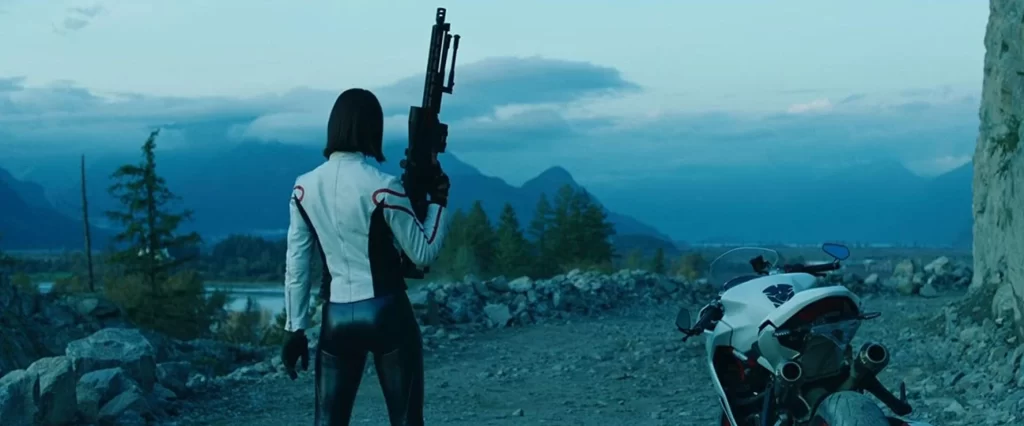
Improbably, though, this is a franchise that peaks with its eighth installment, thanks to the stylish, inventive direction from comic-book artist Kaare Andrews on Assassin’s End. His use of moody colors, split screens and creative blocking reflects his background in graphic novels, and the story is heavily influenced by both the Mission: Impossible movies and the Marvel Cinematic Universe. Assassin’s End introduces future franchise staples Ezekiel “Zero” Rosenberg (Ryan Robbins) and Yuki “Lady Death” Mifune (Sayaka Akimoto), and pretty much every major character has a superhero-sounding code name. The inciting incident, an assassination for which Brandon is framed, takes place in Costa Verde, a fictional country often featured in Marvel comic books.
Andrews also works well with his actors, and the Becketts engage in some heartfelt bonding when Thomas shelters Brandon at his Montana cabin, with federal agents closing in. The political perspective of the Sniper series could charitably be described as muddled, but Berenger doesn’t hold back during Thomas’ anguished recollections of his time in Vietnam, and he and Collins establish a convincing familial rapport, at least briefly. The actual sniping takes a backseat over the course of the franchise, but it’s satisfying to see father and son get to snipe together.
Assassin’s End closes on such a perfect grace note that it’s a bit disappointing to see where the series goes next. To his credit, writer-director Oliver Thompson puts a distinct stamp on the next two installments, 2022’s Sniper: Rogue Mission and 2023’s Sniper: G.R.I.T. – Global Response & Intelligence Team, turning them into candy-colored caper movies that more closely resemble McG’s Charlie’s Angels or Guy Ritchie’s Operation Fortune: Ruse de Guerre than the James Bond and The Expendables influences of their predecessors. Brandon, Zero, Lady Death, computer expert Intelligence Pete (Silicon Valley’s Josh Brener) and recurring character Colonel Gabriel Stone (Dennis Haysbert) put together an absurd top-secret organization known as G.R.I.T., which is about as subtle as G.I. Joe.
The problem is that Thompson’s belabored sense of humor is wildly out of place for these characters, which makes it even more jarring as the series swerves back into grim seriousness for The Last Stand and No Nation. Zero and G.R.I.T. stick around, but these latest movies overcompensate for Thompson’s awkward shtick, with grand, somber pronouncements of patriotism in The Last Stand and grisly torture scenes in No Nation. An unprecedented seven characters from previous movies return for No Nation, which strains for larger resonance in a way that is outside the grasp of such a small-scale production.
Taking yet another cue from Mission: Impossible, No Nation ends on a cliffhanger, with preview scenes from the upcoming Sniper: No Nation – Part 2, which is presumably already in post-production. It’s easy to laugh at the shamelessness of it all, to make jokes about things like Sniper in Space or A Very Sniper Christmas. Yet there’s real care in the way these movies are made, and both Berenger and Collins take their characters seriously, even when the material they have to work with is subpar.At this point, the now-middle-aged Collins has built up the same level of grit that Berenger had in the first movie, 33 years ago, and in No Nation Brandon gets to lament his own advancing age. “We’re not old — we’re experienced,” he says to Zero, and the same sentiment applies to this apparently eternal franchise. Long live Sniper.