Abby Olcese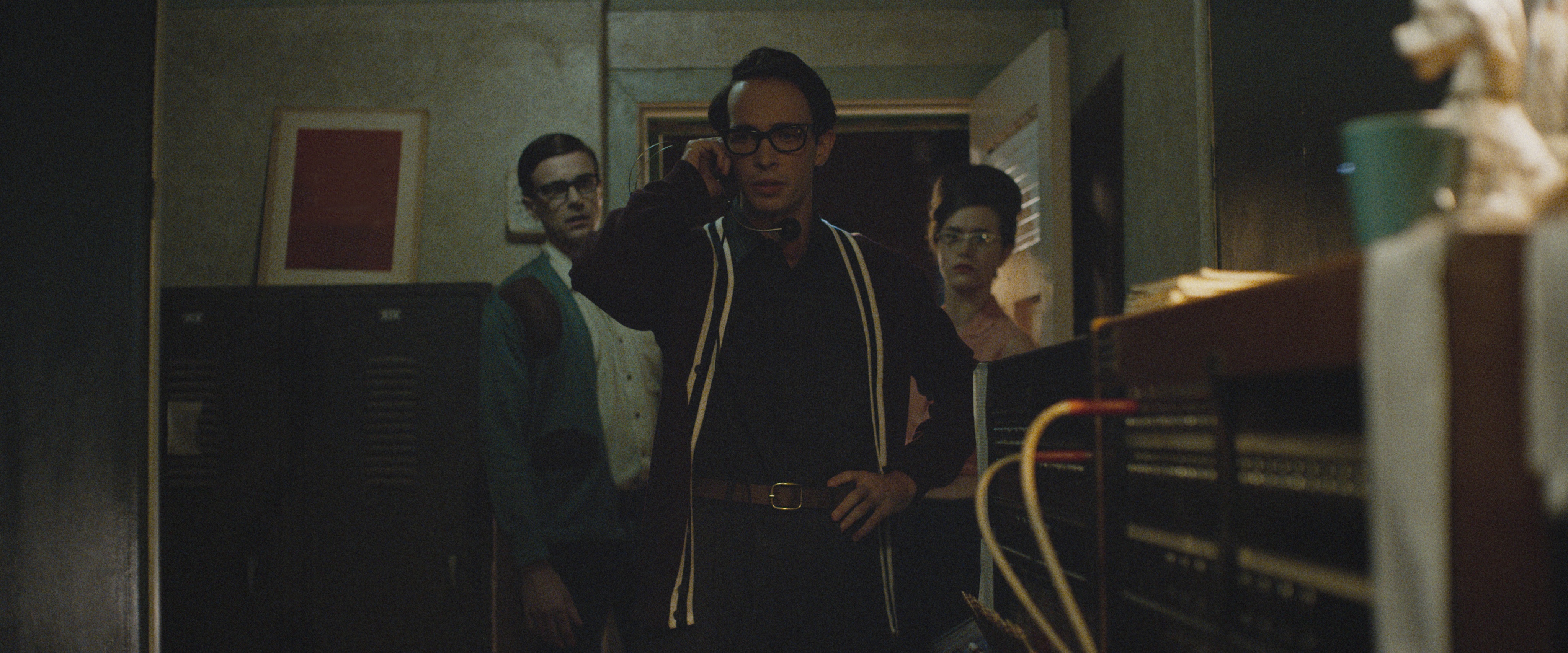
When watching The Vast of Night, the Slamdance phenomenon currently streaming on Amazon Prime, it’s hard not to be reminded of Brad Bird’s now-famous quote about Colin Trevorrow when Bird recommended him to direct Jurassic World: “There’s this guy who reminds me of me.” Making claims about the future of cinema is a somewhat risky gamble at the moment, but this first film from director Andrew Patterson is such a knockout, it’s clear his career is one to watch.
The Vast of Night is a retro sci-fi adventure that feels equally inspired by The Twilight Zone, American Graffiti and Close Encounters of the Third Kind. There’s also a mysterious, melancholy vein running through it that, combined with the creative low-budget sensibility, recalls the magical realist indie video game Kentucky Route Zero. The movie’s gorgeously balanced tone feels genuinely unique, combining mainstream-friendly nostalgia and thrills with an intangible sense of darkness.
The film is framed as an episode of a Twilight Zone-style TV show called “Paradox Theater,” set in a small New Mexico town in the late 50’s. Radio DJ Everett (Jake Horowitz) is helping the high school set up to record the first basketball game of the season. Teenager Fay (Sierra McCormick) is heading to the local switchboard office to start her shift as an operator. As the rest of the town gathers in the gym to watch the game, Fay and Everett encounter a strange sound that’s interrupting phone calls and messing with Everett’s radio signal. Their investigation leads to disconcerting accounts from a pair of locals, and troubling eyewitness reports about something strange in the sky.

Patterson’s film is suffused with a wistful Spielbergian Americana, bolstered by impressive production design, warmly-filtered cinematography and Erick Alexander and Jared Bulmer’s score–equal parts John Williams and Michael Giacchino. McCormick and Horowitz have a crackling, classic dynamic. Everett’s the newly-minted adult who’s far too cool to stay in their small town; Fay is bright, curious, and clearly smitten.
The Spielberg influence is likewise evident in M.I. Littin-Menz’s cinematography. The Vast of Night is made up of incredible tracking shots, one in particular that zooms through the length of the town, wandering through backyards and floating over obstacles like an observant ghost. Usually single shots in films like this are showy. These are, too, but never pointlessly so. Patterson and Littin-Menz use them to follow meandering conversations, or establish geography. The effect is not so much performative as economical, with an occasional flourish.

There are a few instances where you can feel Patterson straining with the limitations of the film. The Vast of Night does much with its small budget, but a few sequences end up more talky than visual by necessity. In one particular scene, it seems Patterson doesn’t quite know what to do with the camera, leading to some distracting visual shifts during a moment with important story information, making it easy to miss.
Still, The Vast of Night is about as impressive as first films get, made with care and enormous heart. Its visual and structural touchstones may be obvious, but its emotional resonance feels a little more intangible, and thrillingly so. Watching Patterson’s film gives you the same feeling as going out into the middle of nowhere on a summer night to look at the stars: a little romantic, magical, and eerie all at the same time. After this, it feels like a no-brainer for a studio exec to offer Patterson some kind of massive franchise entry. We can only hope that whatever he does next has this much craft and sensitivity.