Sean Burns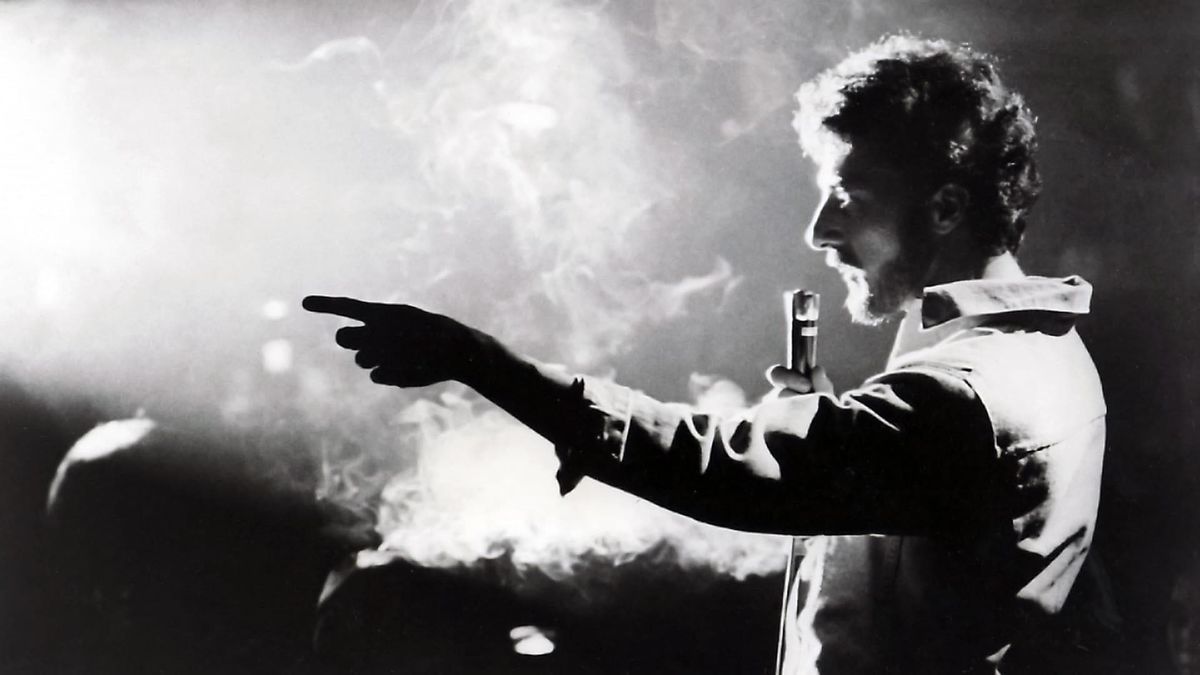
The toughest thing to get past when watching Lenny is that Dustin Hoffman isn’t funny. This isn’t to say that Dustin Hoffman is not capable of being funny — the man played Tootsie, for goodness’ sake. But he’s not funny in the way that Lenny Bruce was funny. Whether lumbering through the seduction scene in The Graduate or pounding on the taxicab hood in Midnight Cowboy, Hoffman is funny because of what a big, heavy presence he is, especially for such a small guy. (That’s what made Tootsie so hilarious.)
Lenny Bruce was light on his feet, riffing at the speed of sound. His voice was higher than Hoffman’s, too. Bruce had a naughty boy’s playful, infectious energy that helped him get away with the comedy equivalent of murder. In Bob Fosse’s stark, occasionally harrowing 1974 portrait of the dirty comic’s persecution and self-destruction, Hoffman repeats a few of Bruce’s most famous standup routines verbatim. He repeats every stammer and “dig” exactly where they were on the records, except he’s not funny. Hoffman’s comes off as hectoring. He sounds like what the real Lenny Bruce hated most in the world: a scold.
This is one of the reasons that Hoffman and Fosse butted heads so hard on the set, their pairing a textbook case of two territorial alphas destined to drive each other crazy. Editor Alan Heim has said that the splintered, elliptical cutting style he and Fosse introduced in Lenny and perfected in All That Jazz began as a way of working around Fosse’s unhappiness with Hoffman’s performance. Such tsuris was immortalized in All That Jazz, during which the director’s stand-in gave himself a heart attack futzing in the cutting room with a very Lenny-looking movie called The Stand-Up, starring Cliff Gorman, who had played Bruce on Broadway. (Gorman, by the way, is very funny.)
One could argue that Hoffman doesn’t need to be funny in Lenny because this isn’t supposed to be a funny movie. It’s actually incredibly upsetting. The film follows the comedian from his squalid beginnings as a strip club entertainer cracking up the band to his short-lived, spectacular success as a counterculture hero, liberating the art of standup comedy with freewheeling riffs that took on then-untouchable subjects like sex and religion. Bruce’s irreverent routines called out the day-to-day hypocricies of American life and left no sacred cow untipped. His “How to Relax Your Colored Friends at Parties” remains such a scorching takedown of self-righteous liberalism you can still read unironic versions of it every day on Bluesky. Bruce’s “Thank You, Masked Man” might be the final word on how America treats its heroes.
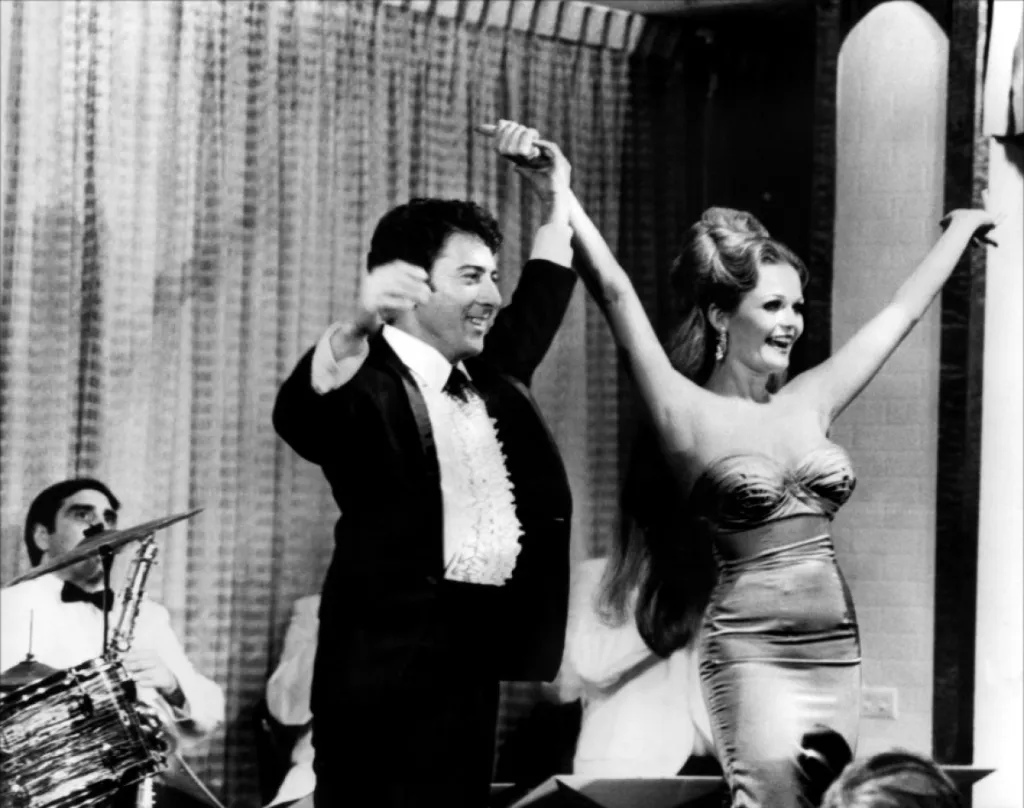
Notably, neither of those routines appears in Lenny, which is far more interested in Bruce’s toxic relationship with his stripper wife, “Hot” Honey Harlow, a destructive duet that made them the Sid and Nancy of the burlesque set. She’s played by Valerie Perrine, a statuesque blonde known mainly for bimbo roles. (You probably remember her as Lex Luthor’s ditsy arm candy in the early Superman movies.) Her turn as the hard-partying Honey conveys both a giggling innocence and a junkie’s ruthlessness. It’s one of those performances that make you sit up and realize that someone was capable of so much more than what they were usually called upon to do.
Lenny called Honey his “Shiksa goddess.” Perrine towers over Hoffman. Just seeing them together is practically a sight gag. Lenny knows from the start that Honey’s out of his league, and part of the ugly pathology of their relationship is him trying to drag her down to his level. As a filmmaker, Fosse was fascinated by fears of inadequacy and secret shames. We get searing, quicksilver glimpses of how the hangups and double standards that Lenny ridicules onstage are rooted in his own experiences. It takes one to know one.
Fosse fragments Julian Barry’s hit Broadway play into a faux documentary. An unseen interrogator grills Perrine as well as the actors playing Lenny’s surviving friends and associates. Cinematographer Bruce Surtees shoots the picture in harsh, high-contrast black and white. It’s a strategy that replicates the glare of the spotlight, but it also looks like they’re sweating it out under the lights at the police station. You can feel Fosse’s kinship with the comic as a fellow creature of show business, reveling in the bottom-rung Catskills dressing rooms and backstage camaraderie of musicians and show-people talking trash and shooting junk.
The back half of the picture is a grim, unsparing study of Bruce’s legal persecution and psychological collapse. It’s terrifying how chronologically close we still are to a time when a performer could face years in prison simply for saying the word “cocksucker” to a room full of adults, but Lenny doesn’t dwell so much on the First Amendment issues as on the systematic snuffing of a man’s spirit. It all builds to a chilling, unbroken seven-minute take of Hoffman falling apart onstage, all of Lenny’s rhetorical genius washed away in a sea of drugs, debt and Kafkaesque legal torment. This tiresome, slouched pariah is not funny. As comedians like to say, he’s dying.
“Lenny” is streaming on MGM+, Hoopla, and Tubi.