Josh Spiegel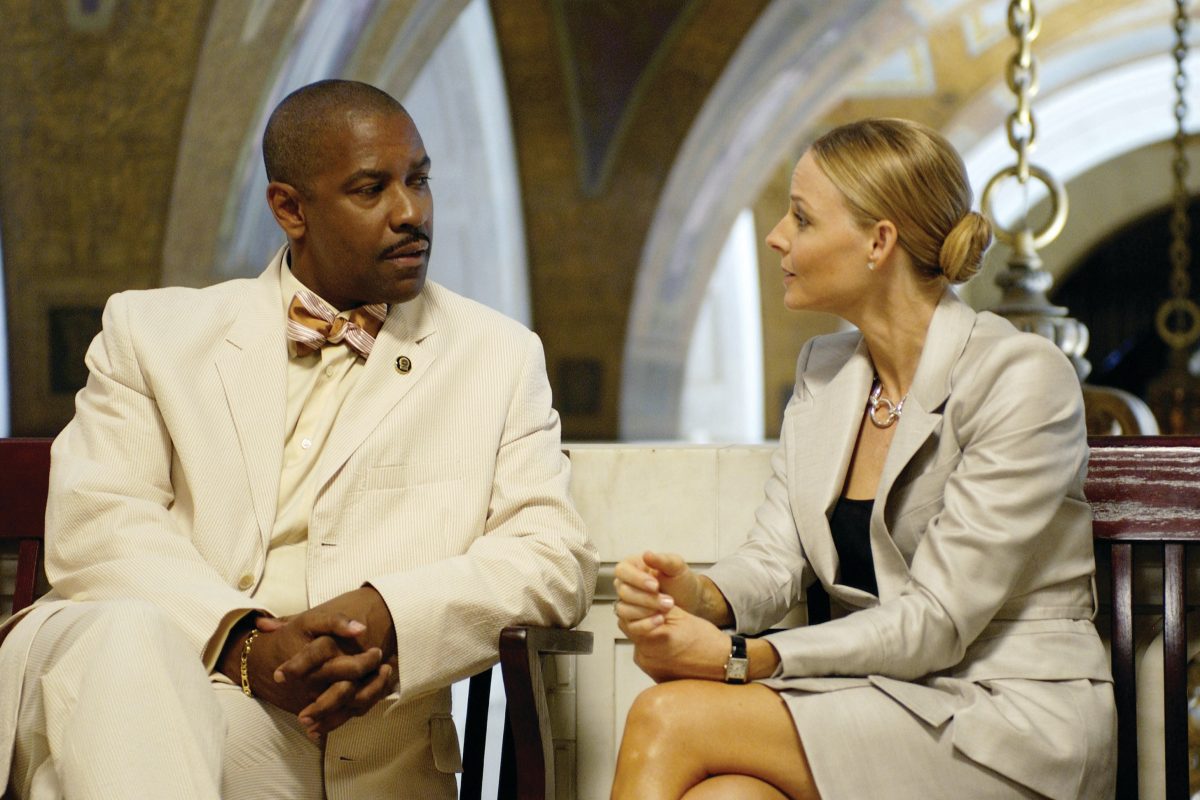
Sometimes, you only know the elements of a good subgenre of film when they’re screwed up by a filmmaker who doesn’t know what they’re doing. The flip side is when an overqualified filmmaker pays homage to that subgenre without overstepping. The latter is true for the heist movie Inside Man, turning 20 this week. The film was fortunate to boast a cast and crew wildly disproportionate to the standard-issue bank heist: a stacked ensemble led by Denzel Washington and Clive Owen, featuring Jodie Foster, Christopher Plummer, and Willem Dafoe (the latter playing the bog-standard part of a gung-ho cop, but because he’s played by Willem freaking Dafoe, he stands out); a crew led by director Spike Lee, with composer Terence Blanchard and cinematographer Matthew Libatique along for the ride. It’s Lee’s presence that establishes Inside Man as a film with far too many talented people to fail, and ensures its excellence.
The script, credited to Russell Gewirtz, makes clear from the outset that it has something up its sleeve, as the first image is that of Dalton (Owen) a sly and calm bank robber who stares directly into the camera and explains himself while stuck in what appears to be a prison cell – but not the kind we’re thinking of. Lee’s presence is also instantly recognizable, not simply because of the direct address but because we get a slowed-down version of a quintessential touch in his cinematic joints: a reverse dolly shot as Dalton slowly recedes back into the concrete wall behind him. Inside Man (a title with a very literal meaning) is primarily the equivalent of an esteemed jazz musician playing a riff on a familiar piece of music, but since it’s such an impressive combination, that only heightens the joy.
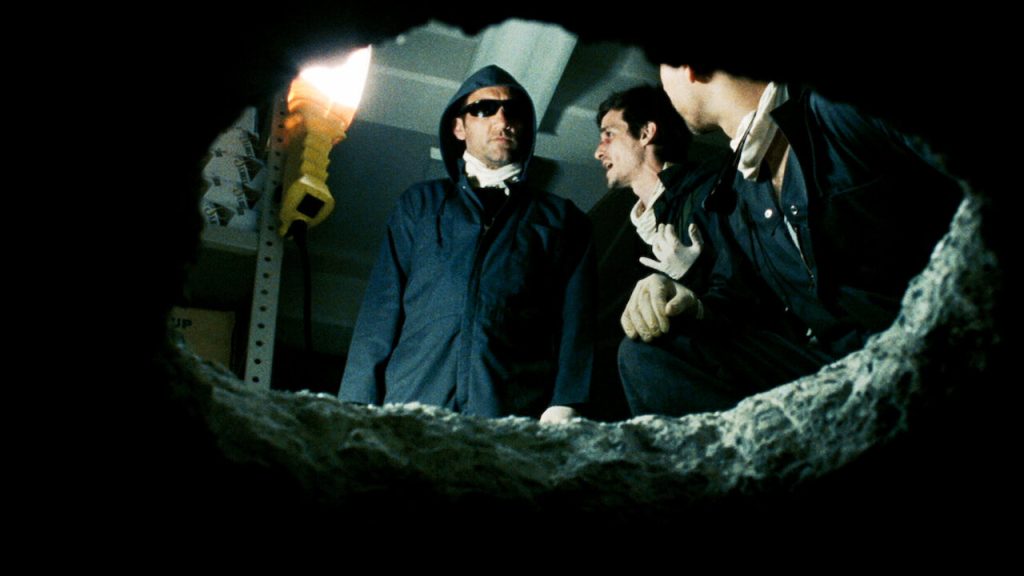
The basics of Inside Man are that Dalton and the rest of his crew, all nicknamed a version of “Steve”, have taken over a well-to-do New York bank whose elderly owner (Plummer) is so personally invested in ensuring something specific doesn’t get stolen that he calls in a powerful and mysterious fixer (Foster). That’s in the background, all while Detective Keith Frazier (Washington) and his young partner (Chiwetel Ejiofor, in one of his earlier Stateside roles) attempt to figure out who’s robbing the bank, why, how to protect innocent hostages, and in the end, whether or not the bank was actually robbed. The script does have some fun tricks, such as flashing to after the robbery is over as Frazier playfully but intensely interviews the hostages to make some sense of what’s happened.
What ends up making Inside Man feel so special 20 years later? First, just as fellow heist movies Dog Day Afternoon and The Taking of Pelham One Two Three stand the test of time because they capture life in the Big Apple in the mid-70s, Inside Man effectively depicts what it was like to live in New York City in the mid-2000s. (In some ways, it’s the less tragic version of what Lee did in the 2002 masterpiece 25th Hour.) The film is able to pause, believably, for a debate about what it means to be Sikh in NYC, a few years after 9/11, as well as seed in believable commentary about violent video games, all while ticking the boxes of the heist picture. That, too, is part of what makes this work so well; the characters in this film know the cultural touchstones of bank heists, nodding to classics of the genre. (Lee has some fun here too, casting Marcia Jean Kurtz as a hostage, after playing one in Lumet’s Dog Day Afternoon. It’s easy to miss, but Kurtz is playing the exact same character again.)
And then, there’s Lee and his frequent collaborators behind and in front of the camera, playing in a sandbox and loving every minute. Just as Steven Soderbergh and a cavalcade of celebrities got a kick out of robbing some casinos in Ocean’s Eleven and its follow-ups, Lee, Washington, and the rest are perhaps not grappling with the headiest, most mature subject matter here (in spite of surprise invocations of the Nazis that hover over the bank owner’s head throughout the affair), but they’re able to rely on slick filmmaking, smart writing, and effortless charm. That Denzel Washington is one of the most raffishly charismatic actors living today is no surprise, but his work as the dapper but slightly over-his-head Frazier is an underrated gem in his career.
It’s a grim reality that they don’t make movies like Inside Man anymore. Yes, there was a straight-to-video sequel in 2019, but none of the cast or filmmakers returned. Lee and the others have all continued to make movies in the intervening two decades (with Washington getting a franchise with the Equalizer series), but there’s been nothing like this. Lee’s made at least two brilliant films since (Da 5 Bloods and BlackKklansman), but those are much weightier; Inside Man belongs to a particularly special subgenre. It’s not just a heist movie, it’s not just a New York movie, and it’s not just an ensemble cast showcasing plenty of excellent character actors. It’s the kind of movie that, when you scroll by it on streaming or stumble upon it on cable, you can’t help but watch. Movies like this feel effortless, and their joys come from the knowledge that the people involved were able to make great cinematic art while having a hell of a lot of fun.
“Inside Man” is streaming on Amazon Prime Video, and is available for digital rental or purchase.