Zach Vasquez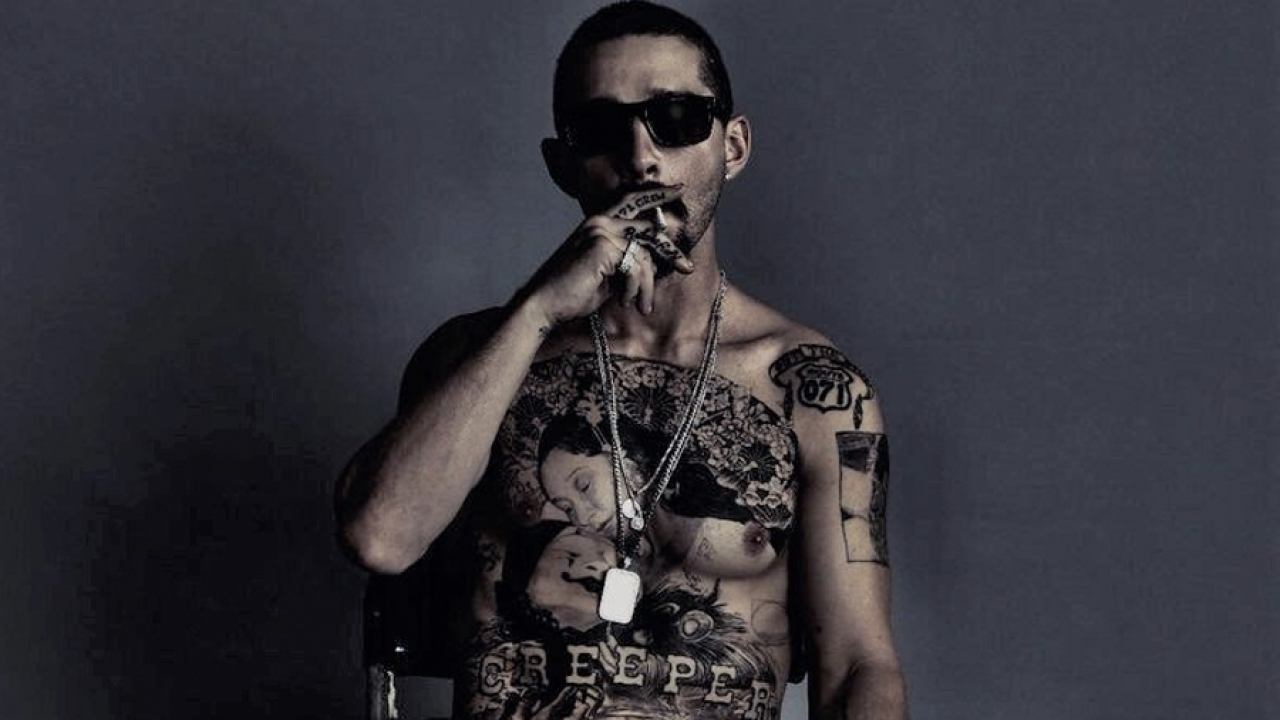
In recent weeks and months, Hollywood’s legacy of cultural appropriation and racism has come under increased scrutiny, with the latest controversy erupting over the lack of Emmy nominations for Latinx television actors (a dialog which then morphed into a heated debate over charges of “anti-Blackness” within said community). Special ire, meanwhile, has been directed towards examples of white actors portraying people of color.
This tradition usually conjures images of blackface, with minstrel shows predating movies by roughly half a century and the practice featuring heavily in the very first sound picture, 1927’s The Jazz Singer. However, the application of makeup and prosthetics to transform an actor into a member of a different race has been used for all ethnicities and identities, including (perhaps even especially) Latinx and Hispanic peoples.
And now, right on cue, a fresh example comes surwalking into the discourse by way of The Tax Collector, the latest desert-washed L.A. crime saga from director David Ayer, co-starring Shia LeBeouf as a goateed, tatted-up, Chicano-accented uber-vato named Creeper. Not surprisingly, such brazen casting has spurred loud charges of cultural appropriation and brownface.
For what it’s worth, Ayer has vehemently denied those charges, noting that LeBeouf is playing “a whiteboy who grew up in the hood” (although this point is not made explicit within the film itself). White cholos certainly do exist in real life, but such an explanation has hardly abated the criticism.

Even if, like me, your natural inclination is to defend The Tax Collector on the grounds of artistic expression (not to be confused with artistic merit), it is impossible to deny that, on the face of it, the film follows the long pattern of Latinx representation on screen, which is and always has been rife with whitewashing and brownface.
This has been the case from the word go, when Mexicans and Mexican Americans were hired by the dozen to portray Native Peoples in westerns. Even though Latinx actors had a slightly higher rate of success than other minority groups during the silent and classic periods (as evidenced by the stardom—brief as it sometimes was—of Ramon Navarro, Carmen Miranda, Lupe Valez, Dezi Arnez, Cesar Romero, Rita Moreno and a handful of others), more often than not, Hollywood turned to white actors to portray brown characters.
Some of the most iconic performances of all time fit this bill, from Natalie Wood in West Side Story to Al Pacino in Scarface (and also Carlito’s Way). Westerns in particular were just as rife with brownface as they were redface—see Paul Muni in Juarez, Marlon Brando in Viva Zapata, Horst Buchholz and Charles Bronson in The Magnificent Seven (and Bronson again in Once Upon a Time in the West), Burt Lancaster in Valdez is Coming…the list goes on and on.
Just as routine is the whitewashing of Latinx roles, which is different from the use of brownface only in that it doesn’t always necessitate the darkening of an actor’s skin. There’s your standard lazy anglicizing, as seen in films like House of the Spirits, The Mask of Zorro, and even Martin Scorsese’s Silence, but for whatever umbrage is to be taken at them, they’re really little different in their intent (if not necessarily their effect) than movies set in ancient Rome in which English or American actors keep their native accents.
More egregious are films in which real-life Latinx figures are portrayed by white actors: Madonna as Eva Peron in Evita springs to mind, as does Alive, wherein Ethan Hawke and a handful of other young white guys play an Uruguayan soccer team. The same is true of cases in which real Latinx figures have their ethnicity completely scrubbed, as happens in Oscar-winning prestige pics like A Beautiful Mind, Spotlight, and Argo. You’ll notice that, unlike for every other major character and actor in that latter film, there’s no side-by-side comparison between Ben Affleck and the person he portrayed—Mexican American CIA agent Tony Mendez—during the closing roll call.

For all that Hollywood loves to whitewash, it’s important not to lump all cases of non-Latinx actors playing Latinx roles together. Things get complicated when you consider examples of Latinx roles going to non-Latinx Hispanic actors (take your pick from Antonio Banderas and Javier Bardem’s respective filmographies) or even non-Latinx, non-Hispanic actors of color. New Zealand-born Maori actor Cliff Curtis has played more than his share of Mexican and South American tough guys, while the Filipino Lou Diamond Philips made his career portraying Chicanos. (To be fair, there is debate over whether Filipinos should be categorized as Hispanic, but regardless, LDP is pretty much considered an honorary Mexican at this point, having done us so proud for so long.)
This all gets extra tricky when you take into account the number of Latinx performers who have played various other ethnicities themselves. Rita Hayworth (born Margarita Cansino) is probably the foremost example of an actor of Mexican heritage passing for white (although in spite of the popular misconception, her ethnicity was never kept secret; in fact, it was initially used to exoticize her). There’s also the Mexican-born Anthony Quinn, a proud and outspoken activist for civil rights and greater industry representation, whose most iconic turns saw him playing Greek (Zorba the Greek), Italian (La Strada) and—more problematically, no doubt—Arabic (Lawrence of Arabia). A number of actors today vacillate just as successfully between Latinx and white ethnic or even WASP roles, foremost amongst them Benecio Del Toro, Jessica Alba, Alexis Bledel, Oscar Isaac and the great Clifton Collins Jr.
Inherent to all of the above-mentioned cases is the question of colorism, which plays an outsized role in deciding which actors of color are given greater opportunities, and which requires its own separate examination. But more specific to the current discourse are cases of out-and-out Latinx brownface.
The most infamous example of this is, without a doubt, Charlton Heston’s godawful turn as a Mexican federale in Orson Welles’s otherwise impeccable border-set noir Touch of Evil (1958). Despite the historical retconning sparked by a short scene in Ed Wood, which posits that the studio forced that casting on Welles, the truth is that Heston was actually instrumental in getting Welles onto the picture. A fair trade off, even though the end result is a great film hampered by an embarrassing central performance, with the disconnect between Heston’s gruff Midwestern drawl and his truly terrible make-up proving unavoidably distracting. (Co-star Marlene Dietrich, also in brownface, comes off a little better by comparison.)

Even though Touch of Evil remains the go-to example of Mexican brownface, its grotesquerie is hardly representative. Other examples range from the similarly insulting (Brando in Viva Zapata) to the distracting, but mostly still respectful (Lancaster in Valdez is Coming) to the unassailable.
In this latter camp is Polish-Jewish American Eli Wallach as the irascible gunslinger and thief Tuco in Sergio Leone’s The Good, the Bad and the Ugly. His performance is so good, so iconic, that it has rightfully managed to float above any culturally-minded criticism.
(Personally, I would also throw Rod Stieger’s outrageously over-the-top turn as a Mexican bandito in Leone’s forgotten spaghetti western epic, Duck, You Sucker, as well as Alan Arkin low-key badass performance in the greatest of all buddy cop comedies, Freebie and the Bean, into that same unassailable category; however, both films plays as so wildly transgressive today that there’s no point in even attempting to reconcile them to modern mores.)
Over the past two decades, most cases of out-and-out brownface are to be found in comedic movies. These are, by their very nature, even dicier prospects than their dramatic counterparts, since they usually come off about as well as a white person wearing a sombrero on Cinco de Mayo and drunkenly bellowing “La Cucaracha” in your face. But, for as flat as some of these examples fall—see, or rather don’t, Nacho Libre and Casa de Mi Padre—there are a handful that manage to legitimately succeed.
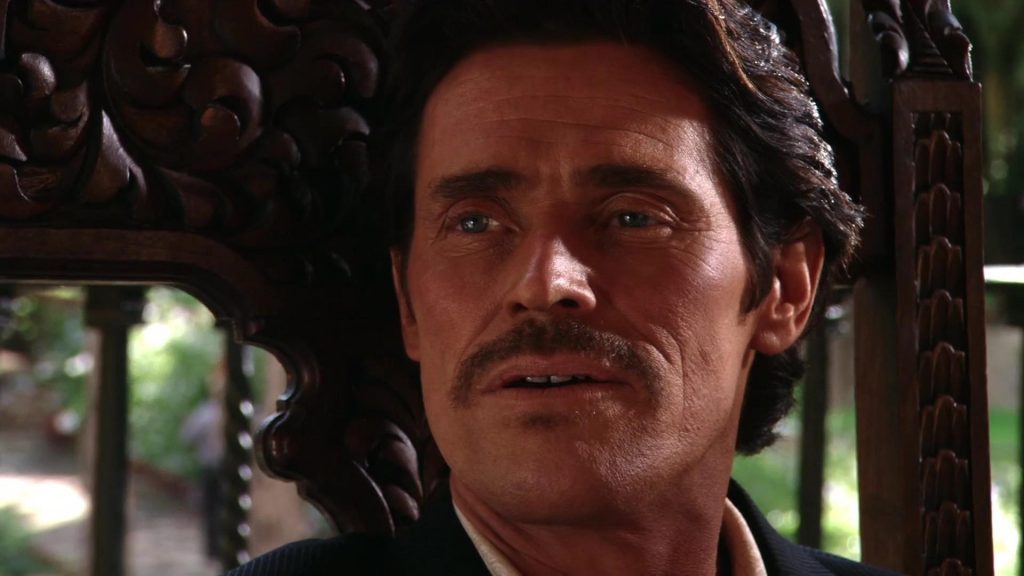
The stunt casting by Robert Rodriguez of Willem Dafoe as an evil narco kingpin in Once Upon a Time in Mexico is as brilliant as it is hilarious, and the same can be said for Joe Mantegna’s lovingly cartoonish caricature of a Chicano huckster with a heart of gold in Stuart Gordon’s The Wonderful Ice Cream Suit (where, to the movie’s credit, he co-stars alongside four actual Latinx leads). The world, meanwhile, would be a far poorer place had it never got to experience the delirious antics of The Big Lebowski’s Jesus Quintana, who could be played by no one but John Turturro (although we’ll just keep pretending The Jesus Rolls doesn’t actually exist).
If it seems as though I’m defending these examples of brownface… it’s because I am. I know that’s not a particularly popular position to take at the moment, but given the complicated legacy of our people on screen from the earliest days of cinema, I truly feel there is more room for nuance than other cases of racial transmogrification. And while I absolutely do not pretend to speak for anyone else, I will say that, speaking from personal experience, the Mexican Americans I know tend to take a more tongue-in-cheek approach to the examples I’ve mentioned, while embracing some of them outright.
Moving forward, I expect the dual practices of whitewashing and brownface continue to subside, as it’s hard to fathom filmmakers and actors willing to risk the blowback that inevitably follows these days. (Then again, we’re less than a year out from no less a star than Meryl Streep browning up for Steven Soderbergh’s The Laundromat, so who knows.) Regardless, I only hope that, even as the movie industry changes, we the audience don’t overcorrect by dismissing them outright or especially by demanding the removal of films from easy access. Not all brownface is created equal, and in the end, all that does is whitewash the whitewashing.