Craig J. Clark
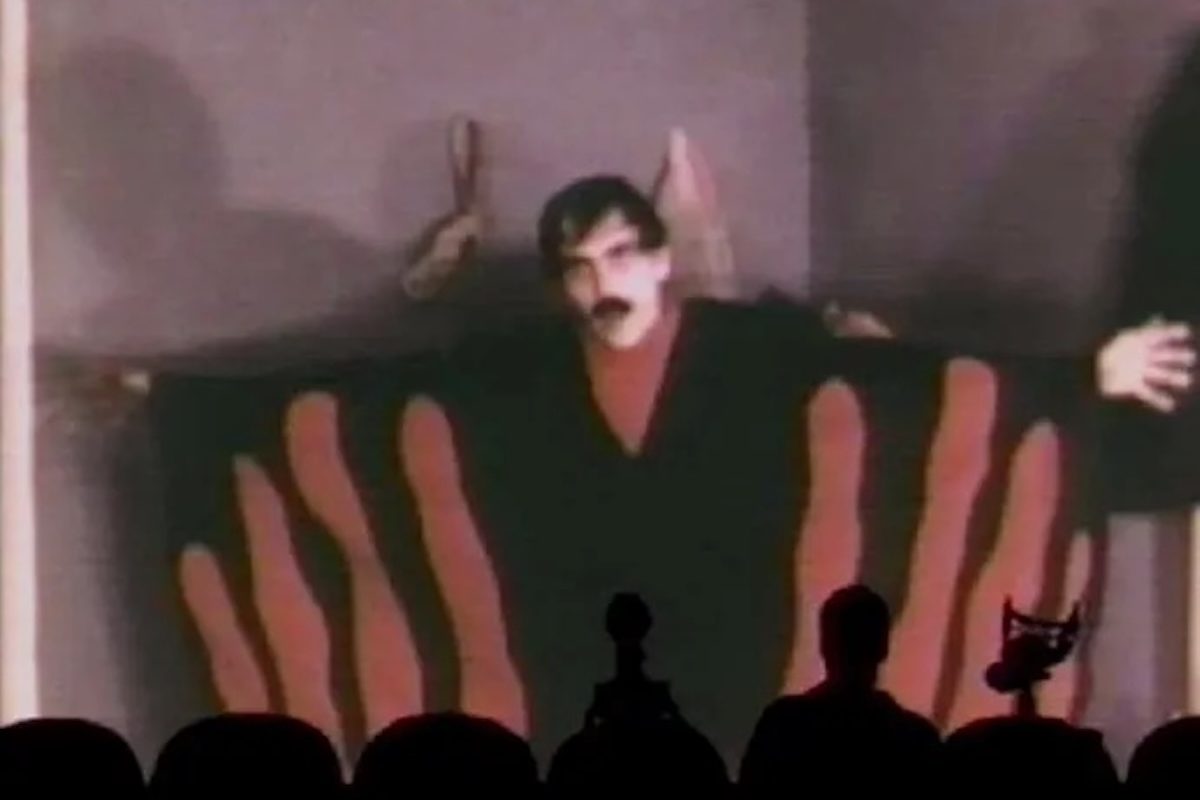
“Your average Joe has never seen a film like today’s experiment. Your average person on the street has not even begun to conceptualize the horror which is your experiment today.” –Dr. Clayton Forrester introducing Manos: The Hands of Fate
For fans of the show, Mystery Science Theater 3000 and Thanksgiving have long been intertwined. This is not only due to the “Turkey Day” marathons that were a mainstay of its years on Comedy Central and the Sci-Fi Channel (and continue to this day on its YouTube channel), but also because it premiered on Minneapolis’s KTMA on Thanksgiving Day, 1988, with a double feature of “films” cobbled together from episodes of two different Gerry and Sylvia Anderson series from the ’60s. As both were made using the Andersons’ “Supermarionation” method, they were a fitting inaugural outing for creator Joel Hodgson’s “cow town puppet show.”
Right from the start, Hodgson and company saw the value in associating themselves with turkeys of all stripes. The KTMA season was heavy on Japanese TV compilations and films (including most of the Gamera series), plus a number of domestic TV movies the station had in its library. MST3K’s move to the Comedy Channel in 1989 raised its profile nationally, but it hit its stride in 1991 with its third season on the reconstituted Comedy Central. That year saw Joel and robot pals Tom Servo and Crow T. Robot revisit movies from KTMA and set the table for some of their most beloved episodes and notorious films, two of which premiered 60 years ago this month.
If any film is synonymous with MST3K, it’s Manos: The Hands of Fate, which was plucked from its well-deserved obscurity when it was chosen as the finale of the fourth season. Manos was the sole cinematic venture of El Paso fertilizer salesman Harold P. Warren, who wrote, produced, directed, and starred as the harried head of a family that picks the exact wrong spot to vacation. Similarly overtaxing his talents, Coleman Francis took the lead in Red Zone Cuba, his third and final film as writer, director, and (with Anthony Cardoza) producer. Both films demonstrate that even the most carelessly made dreck can achieve cult status if the right light is shone on it.
In Francis’s case, MST3K zinging all three of his features in one season exposed him as a filmmaker of breathtaking ineptitude. While Ed Wood had long been enshrined as the worst director of all time (indeed, the show riffed his Bride of the Monster right before Manos), viewing 1961’s The Beast of Yucca Flats, 1963’s The Skydivers, and Red Zone Cuba in close proximity showed how far Francis outstrips him. Whatever flair Wood had for florid drama (and comedy), Francis was woefully lacking, and his stray attempts at profundity (e.g. the “flag on the moon” voice overs that litter Yucca Flats) fall utterly flat.
If Red Zone Cuba has anything going for it, it’s the fleeting appearance of “guest star” John Carradine, who shows up in the opening sequence, sings the title song (“Night Train to Mundo Fine,” the film’s original title), and then is never seen or heard from again. The balance of the ramshackle narrative details the misadventures of escaped convict Griffin (Francis, whose resemblance to Curly Howard does not go unnoticed) and two migrant workers (one played by Cardoza) who sign up to take part in the Bay of Pigs invasion as paid mercenaries. Alas, most of their screen time in Cuba is spent as prisoners because they’re captured minutes after making landfall, but Francis includes scenes of Fidel Castro (Cardoza in a fake beard) tooling around in a jeep to compensate for the lack of action.
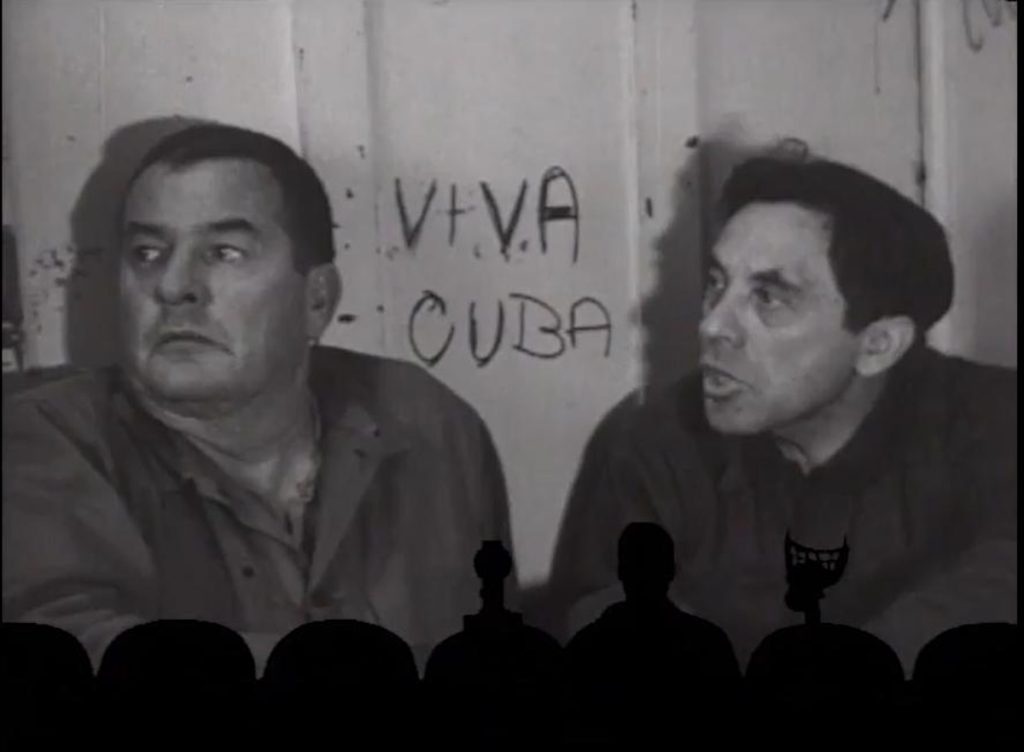
“This film dares you to watch it,” quips Crow, and that’s not an easy task, what with all the jump cuts, dimly lit interiors, and unpleasant characters. Then again, by the time MST3K tackled Coleman Francis’s oeuvre, they had weathered dozens of bad movies, as well as a change of hosts since Joel Hodgson departed in the middle of season five, to be replaced by head writer Michael J. Nelson. Joel was still at the helm when the team faced down Manos: The Hands of Fate, though, and his steady hand was necessary in light of what they had to contend with.
A stinkburger so pungent Dr. Forrester and his second banana TV’s Frank both feel compelled to apologize to Joel and the Bots for inflicting it on them, Manos made its MST3K debut in January 1993, but this writer first encountered it during that year’s Turkey Day marathon. I was in the habit of taping episodes whenever I was home from college and bringing them back with me to show my friends. Right from the first poorly framed shot, I knew there was something different about Manos, a film where so little happens, there are times when Joel, Tom, and Crow can only murmur its title at each other, as if that will somehow jog it into some kind of coherence. They save their most pointed barbs for Warren’s ineffectual Mike, though, as when Joel asks, “When is this guy going to show some basic competence?”
Manos was a watershed film for MST3K, proof they could spin comedy gold out of pure dross. The episode also introduced one of the show’s most frequent recurring characters, the fidgety, slovenly Torgo (played by Nelson), whose “haunting” theme continued to pop up long after the credits rolled. And it’s a movie that would itself be referenced in future experiments. There’s even a Manos riff in Red Zone Cuba, when they have one character say, “The Master says you can’t stay here.”
If not for the intervention of some guy in space and his two robots, Manos would likely be gathering dust in a storage closet and Red Zone Cuba little more than a footnote in John Carradine’s filmography. But thanks to a scrappy, basic-cable puppet show from Minnesota, both can be the centerpiece of any Turkey Day gathering.
The Master says “Manos: The Hands of Fate” is streaming all over the place in its original form should you dare. “Red Zone Cuba” is confined to its MST3K version, which is on Tubi.